
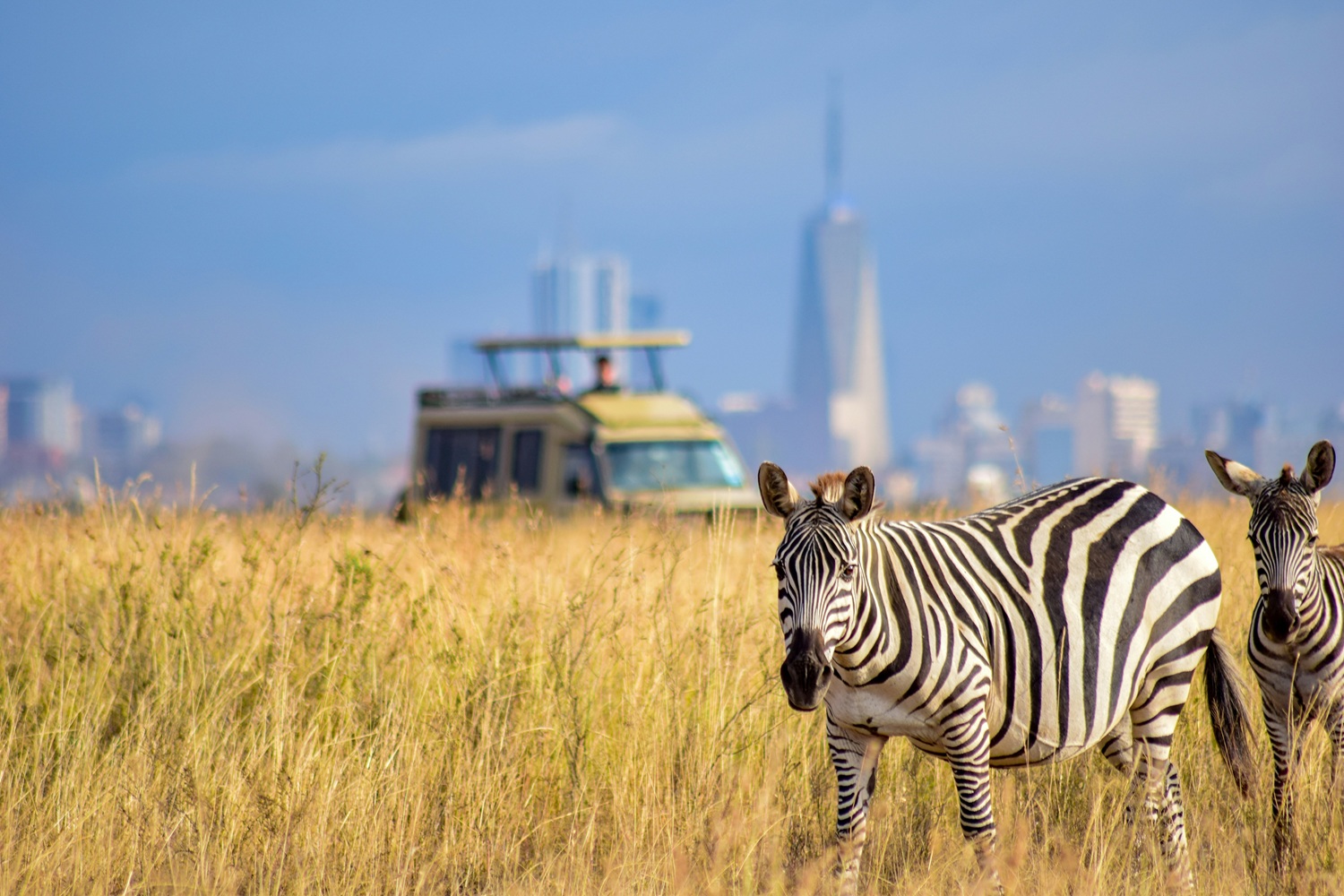
Nairobi National Park
A practical, scroll-friendly guide to wildlife, birds, and typical plants — plus a road map to help you plan your drive.
Table of contents
Animals (25)
- 1. Impala
- 2. Plains zebra
- 3. Masai giraffe
- 4. African buffalo
- 5. Warthog
- 6. Olive baboon
- 7. Vervet monkey
- 8. Blue monkey (Sykes’ monkey)
- 9. Spotted hyena
- 10. Lion
- 11. Cheetah
- 12. Leopard
- 13. Black rhinoceros
- 14. White rhinoceros
- 15. Hippopotamus
- 16. Nile crocodile
- 17. Eland
- 18. Coke’s hartebeest (Kongoni)
- 19. Thomson’s gazelle
- 20. Grant’s gazelle
- 21. Waterbuck
- 22. Bushbuck
- 23. Common duiker
- 24. Aardvark
- 25. Black-backed jackal
Birds (10)
Road network map


25 Common Animals

Impala
More info
How to identify: Reddish-brown coat, lighter belly, black tail stripe; males have lyre-shaped horns.
Male vs female: Males have horns; females are hornless and slightly smaller.
What it eats: Grazes and browses (grass + leaves).
Where to look: Open grassland edges; Athi-Kapiti plains side; along main loops
Something unique: Known for high, stiff-legged ‘pronking’ leaps when alarmed.

Plains zebra
More info
How to identify: Bold black-and-white stripes; stripes differ per individual like fingerprints.
Male vs female: Males are slightly larger with thicker neck/crest.
What it eats: Grazer (mostly grass).
Where to look: Open plains and short grass near water
Something unique: Stripes may confuse biting flies and help with heat control.

Masai giraffe
More info
How to identify: Jagged ‘leaf-like’ patches; long eyelashes; slow, graceful gait.
Male vs female: Males are heavier with larger ossicones; often darker with age.
What it eats: Browser (acacia leaves, shoots).
Where to look: Acacia woodland and bushy edges
Something unique: Can deliver powerful kicks; heart adapted for high blood pressure.

African buffalo
More info
How to identify: Heavy body, broad horns; often in herds; ‘boss’ horn shield in mature males.
Male vs female: Males have thicker horn boss; females lighter, narrower horns.
What it eats: Grazer (grass).
Where to look: Near water and thicker grass; river lines
Something unique: Notoriously tough—often stands its ground when threatened.

Warthog
More info
How to identify: Facial ‘warts’, curved tusks; sparse mane; tail held like an antenna when running.
Male vs female: Males have larger tusks and facial pads.
What it eats: Grazer + roots/tubers; opportunistic omnivore.
Where to look: Open plains; near burrows; roadside verges
Something unique: Uses abandoned aardvark burrows for shelter.

Olive baboon
More info
How to identify: Dog-like muzzle, olive-grey fur, large troops on the ground and in trees.
Male vs female: Males are much larger with bigger canines.
What it eats: Omnivore (fruit, seeds, insects, small animals).
Where to look: Wooded edges; near picnic sites and gates (keep food secured)
Something unique: Highly social with complex hierarchies and communication.

Vervet monkey
More info
How to identify: Grey coat, black face with white fringe; long tail; agile leaps.
Male vs female: Males have a blue scrotum (often visible).
What it eats: Omnivore (fruit, leaves, insects).
Where to look: Riverine trees; picnic sites; woodland
Something unique: Uses distinct alarm calls for different predators.

Blue monkey (Sykes’ monkey)
More info
How to identify: Grey-blue coat, white throat patch; more arboreal than vervets.
Male vs female: Males larger; both sexes have similar coloration.
What it eats: Fruit + leaves; also insects.
Where to look: Denser riverine/woodland pockets
Something unique: Prefers forested pockets and moves quietly through canopy.

Spotted hyena
More info
How to identify: Sloping back, spotted coat, strong jaws; ‘laughing’ vocalizations.
Male vs female: Females larger and dominant; external genitalia look similar (hard to sex in field).
What it eats: Meat—scavenges and hunts.
Where to look: Open plains at dusk/night; near carcasses
Something unique: Crushes bone with immense bite force.

Lion
More info
How to identify: Large cat; males may have mane; pride behavior around kills or shade.
Male vs female: Males larger; mane (variable).
What it eats: Carnivore (antelopes, zebra, etc.).
Where to look: Open plains and thickets; often near prey concentrations
Something unique: Cooperative hunting and social pride structure.

Cheetah
More info
How to identify: Black ‘tear marks’ from eyes to mouth; small head; long tail for balance.
Male vs female: Males slightly heavier; often in coalitions; females often solitary with cubs.
What it eats: Carnivore (gazelles, small antelope).
Where to look: Open plains with visibility; termite mounds as lookouts
Something unique: Designed for speed: flexible spine, non‑retractable claws for grip.

Leopard
More info
How to identify: Rosette spots (not solid like cheetah); long tail; often in trees with kills.
Male vs female: Males larger with broader head/neck.
What it eats: Carnivore (wide prey range).
Where to look: Thick bush, riverine woodland; dusk/night
Something unique: Strong climber; often drags prey into trees.

Black rhinoceros
More info
How to identify: Hooked upper lip (browsing); two horns; more solitary than white rhino.
Male vs female: Males more massive neck/shoulders; females often with calf.
What it eats: Browser (shrubs, twigs).
Where to look: Rhino Sanctuary zones; bushy areas
Something unique: Poor eyesight but great smell/hearing; very protective mothers.

White rhinoceros
More info
How to identify: Wide, square mouth (grazer); long head; larger than black rhino.
Male vs female: Males larger with thicker neck; females often with calf.
What it eats: Grazer (short grass).
Where to look: Open grassland in sanctuary; near water
Something unique: Despite size, can move surprisingly fast in short bursts.

Hippopotamus
More info
How to identify: Huge barrel body; nostrils on top; yawns show big canines.
Male vs female: Males larger with bigger tusks.
What it eats: Grazer (night).
Where to look: Rivers/pools; look for eyes/ears above water
Something unique: Among Africa’s most dangerous animals—give wide berth.

Nile crocodile
More info
How to identify: Armored scales, powerful tail; eyes above waterline.
Male vs female: Males larger; hard to sex at distance.
What it eats: Carnivore (fish, mammals, birds).
Where to look: Rivers and still pools; sunny banks
Something unique: Ambush predator with explosive acceleration.

Eland
More info
How to identify: Large dewlap; faint stripes; clicking knee tendons when walking.
Male vs female: Males heavier with thicker neck; both sexes have spiral horns (males thicker).
What it eats: Browser + grazer.
Where to look: Open plains and bush edges
Something unique: Can jump high despite size.

Coke’s hartebeest (Kongoni)
More info
How to identify: Sloping back, long narrow face, ringed horns curving outward then inward.
Male vs female: Males have thicker horns; females slightly slimmer.
What it eats: Grazer.
Where to look: Open grassland plains
Something unique: Often posts sentinels while the herd feeds.

Thomson’s gazelle
More info
How to identify: Bold black side stripe; tan back with white belly; short tail.
Male vs female: Males have thicker, longer horns; females smaller horns.
What it eats: Grazer/browse mix.
Where to look: Short grass plains
Something unique: Famous for high-speed zig‑zag escapes.

Grant’s gazelle
More info
How to identify: Pale coat, white rump; long horns with distinct rings; no strong black stripe like Thomson’s.
Male vs female: Males have longer, thicker horns; females slimmer.
What it eats: Browse + graze; can go long without drinking.
Where to look: Drier open plains; bushy edges
Something unique: Highly adapted to arid habitats.

Waterbuck
More info
How to identify: Grey-brown shaggy coat; white ‘target’ ring on rump (common waterbuck).
Male vs female: Males have long ridged horns; females hornless.
What it eats: Grazer.
Where to look: Near watercourses; taller grass
Something unique: Oily coat helps with water resistance and scent.

Bushbuck
More info
How to identify: Rich brown coat with white spots/stripes; prefers dense bush near water.
Male vs female: Males have spiral horns; females usually hornless.
What it eats: Browser (leaves, shoots).
Where to look: Thickets and riverine cover
Something unique: Freezes and slips into cover rather than running far.

Common duiker
More info
How to identify: Small size, arched back; short horns on males; ‘duiking’ into shrubs when alarmed.
Male vs female: Males have short straight horns; females usually hornless.
What it eats: Browser (leaves, fruit).
Where to look: Bush edges; woodland; near tracks at dawn/dusk
Something unique: Can live close to humans if cover is available.

Aardvark
More info
How to identify: Pig-like snout, large ears, powerful digging claws.
Male vs female: Hard to distinguish in field; males slightly larger.
What it eats: Ants and termites.
Where to look: Nocturnal; open plains—look for burrows and tracks
Something unique: Its burrows provide shelter for many other species.

Black-backed jackal
More info
How to identify: Reddish sides with distinctive black ‘saddle’ on back; upright ears.
Male vs female: Similar; males slightly heavier.
What it eats: Omnivore/scavenger (small prey, carrion, fruit).
Where to look: Open areas, road verges, scavenging spots
Something unique: Often follows larger predators to scavenge.
Top 10 Birds

Ostrich
More info
How to identify: Huge body, long neck/legs; males black-and-white, females brown-grey.
Male vs female: Male black plumage; female drab.
What it eats: Omnivore (plants, seeds, insects).
Where to look: Open plains
Something unique: Powerful kick; lays very large eggs.

Secretarybird
More info
How to identify: Long legs, crest ‘quills’ behind head; walks with purposeful stride.
Male vs female: Similar; females slightly smaller.
What it eats: Carnivore (snakes, rodents).
Where to look: Open grasslands
Something unique: Kills prey with rapid stomping strikes.

Lilac-breasted roller
More info
How to identify: Lilac chest, turquoise wings; long tail streamers; acrobatic display flights.
Male vs female: Similar; males slightly longer tail streamers.
What it eats: Insects, small lizards.
Where to look: Perches on acacias along roads
Something unique: Display flight includes rolling turns (name source).

Grey crowned crane
More info
How to identify: Golden crown of stiff feathers; white wings with chestnut patches.
Male vs female: Similar; males slightly larger.
What it eats: Omnivore (insects, seeds).
Where to look: Wetlands, grass near water
Something unique: National bird of Uganda; performs graceful dances.

African fish eagle
More info
How to identify: White head/chest, chestnut body; loud ringing calls.
Male vs female: Females larger.
What it eats: Fish and waterbirds.
Where to look: Near watercourses
Something unique: Grabs fish with talons; often steals from other birds.

Marabou stork
More info
How to identify: Bald head, large bill, hanging throat pouch.
Male vs female: Similar; males slightly larger.
What it eats: Scavenger, fish, small animals.
Where to look: Open areas; near carcasses/urban edges
Something unique: Excellent thermal soarer—rarely flaps.

Helmeted guineafowl
More info
How to identify: Spotted dark body, bony ‘helmet’ on head; loud calls.
Male vs female: Males slightly bigger casque/wattles.
What it eats: Seeds, insects.
Where to look: Road edges, open ground
Something unique: Great tick-eater; popular with farmers.

Superb starling
More info
How to identify: Bright blue head/wing panels, orange belly, white breast band.
Male vs female: Similar.
What it eats: Omnivore (insects, scraps, fruit).
Where to look: Picnic sites, open woodland
Something unique: Highly tolerant of human presence.

Cattle egret
More info
How to identify: White plumage; breeding adults show buff patches; follows animals for insects.
Male vs female: Similar.
What it eats: Insects, small frogs.
Where to look: Grasslands near grazers
Something unique: Famous for ‘hitchhiking’ on grazing animals’ insect flush.

Hadada ibis
More info
How to identify: Dark iridescent ibis with long decurved bill.
Male vs female: Similar.
What it eats: Worms, insects.
Where to look: Wetlands and lawns
Something unique: Forages by probing soft ground with its bill.
Top 10 Trees

Whistling thorn acacia
More info
How to identify: Straight thorn pairs with swollen bases; ants often present.
Something unique: Ant symbiosis: ants defend tree; wind through swollen thorns can ‘whistle’.
Where to look: Open savannah soils

Yellow-barked acacia
More info
How to identify: Smooth yellow bark, feathery leaves, paired thorns.
Something unique: Bark color from powdery coating; used as landmark tree.
Where to look: Riverine edges, wetter flats

African olive
More info
How to identify: Opposite narrow leaves; small dark fruits.
Something unique: Valuable dense wood; fruits eaten by birds and mammals.
Where to look: Woodland pockets, rocky edges

Cape chestnut
More info
How to identify: Large glossy leaves; pink star-like flowers; capsule fruits.
Something unique: Ornamental; oil from seeds historically used in cosmetics.
Where to look: Moist woodland pockets

Croton
More info
How to identify: Leaves often aromatic when crushed; small green capsules in clusters.
Something unique: Many crotons have latex and aromatic compounds that deter herbivory.
Where to look: Bushland edges; disturbed ground

Sycamore fig
More info
How to identify: Large spreading crown; figs on short stalks along branches.
Something unique: Keystone fruit source—feeds many birds and mammals.
Where to look: Riverine lines

Wild date palm
More info
How to identify: Multiple stems, feathery fronds; orange-brown dates.
Something unique: Provides nesting habitat and edible fruits.
Where to look: Wet spots and riverine patches

Red thorn (umbrella thorn)
More info
How to identify: Reddish-brown bark; straight thorns; small yellow flowers.
Something unique: Gum and tannins; classic savannah silhouette.
Where to look: Open savannah, plains

Sausage tree
More info
How to identify: Large dangling fruits; maroon flowers at night (bat-pollinated).
Something unique: Fruits not usually eaten fresh by humans; used traditionally in remedies.
Where to look: Riverine and moist valleys

African redwood
More info
How to identify: Needle-like or scale leaves; blue ‘berries’.
Something unique: East Africa’s only native juniper; fragrant wood.
Where to look: Higher, cooler woodland edges (where present)
Top 10 Flowers & Bushes

Aloe
More info
How to identify: Thick fleshy leaves with toothed edges; tubular flowers.
Something unique: Stores water in leaves; flowers attract sunbirds.
Where to look: Sunny rocky spots; open bush

Wild sage
More info
How to identify: Square stems; aromatic leaves; bilabiate flowers.
Something unique: Many sages are pollinator magnets; leaves used traditionally.
Where to look: Open edges and disturbed patches

Lantana
More info
How to identify: Rough aromatic leaves; multicolor flower heads.
Something unique: Often invasive—forms dense thickets.
Where to look: Roadside and disturbed edges

African basil
More info
How to identify: Aromatic leaves; small white/purple flowers on spikes.
Something unique: Essential oils deter insects; used in traditional cooking/remedies.
Where to look: Sunny edges, disturbed ground

Stinking passionflower
More info
How to identify: Hairy leaves; net-like bracts around fruit; small passionflower blooms.
Something unique: Sticky hairs trap small insects; fruits eaten by birds.
Where to look: Scrubby edges

Mexican sunflower
More info
How to identify: Large lobed leaves; tall stems; sunflower-like blooms.
Something unique: Often used as green manure due to nutrient-rich leaves.
Where to look: Road verges and sunny disturbed areas

Bottlebrush
More info
How to identify: Cylindrical ‘bottlebrush’ blooms; narrow leaves.
Something unique: Excellent nectar source for sunbirds and insects.
Where to look: Planted around edges/picnic areas

Bougainvillea
More info
How to identify: Papery purple/pink bracts around tiny white flowers; thorny stems.
Something unique: Bracts (not petals) provide the color.
Where to look: Around facilities/gates (ornamental)

Tickberry
More info
How to identify: Opposite rough leaves; tight flower clusters; small dark berries.
Something unique: Berries attract birds; can spread quickly.
Where to look: Edges and disturbed spots

Wild hibiscus
More info
How to identify: Five-petaled flowers with prominent staminal column.
Something unique: Many species are used for teas or fiber.
Where to look: Open bush and garden edges
Things to do
Walking safari
Nairobi Safari Walk (next to the Main Gate) is the easiest way to get a short “on-foot” wildlife experience in the same ecosystem as the park.
Inside the park, short ranger-accompanied walks are sometimes offered at specific spots and times. Ask at the gate or KWS HQ before planning one.
- Hippo Pools (near junction 13): good for river scenery and sometimes hippos/crocodiles.
- Caves / old cave paintings: visitor maps place them close to junction 16 (check at the gate for current access).
Accommodation
There are a few lodges/camps with access close to the park boundary. Many stays/visits require advance booking and gate coordination.
- Nairobi Tented Camp
- Ololo Lodge
- The Emakoko
Also popular nearby: Ole Sereni (great for transit), plus many hotels in Lang’ata and along Mombasa Road.
Food & picnics
Self-drive visitors usually bring snacks and water. Use designated picnic sites and pack out all rubbish.
- Kingfisher Picnic Site (near junction 29B)
- Other picnic sites are signed on the ground even if not shown on every map.
Plastic bottles: Kenya restricts single‑use plastics in protected areas. Bring a refillable drinking‑water bottle instead of disposable plastic.
The Big Five
Nairobi National Park is famous for hosting 4 of the Big Five:
- Lion — best early/late, especially in open plains and along main loops.
- Leopard — present but usually seen as quick glimpses in thicker cover.
- Buffalo — often in herds in grassland and near water.
- Black rhinoceros — a key highlight of the park.
Elephants are not typically resident here due to the park’s size and urban boundary.
Park essentials
Opening hours
Daily: 6:00 AM – 6:00 PM (plan to be at the gate before closing). (KWS)
Important contacts (Kenya Wildlife Service)
Toll free: 0800 597 000
General lines: +254 (20) 2379407, +254 (20) 2379414, +254 (20) 2379415
Email: customerservice@kws.go.ke
Plastic bottles
Kenya enforces a single‑use plastic ban in protected areas. Avoid disposable plastic water bottles, cups, plates, cutlery, and straws. Bring a refillable bottle and reusable containers instead.
Brief history
Nairobi National Park was established in 1946 — Kenya’s first national park. The park is especially known for rhino conservation and the famous ivory burn site (1989).
FAQ
What are Nairobi National Park opening hours?
The park is generally open daily from 6:00 AM to 6:00 PM. Gates typically close around sunset, so plan to enter early enough to exit comfortably before closing.
Are plastic water bottles allowed inside the park?
Kenya enforces a ban on single‑use plastics in protected areas. To avoid issues at the gate and to reduce litter, bring a refillable metal bottle (or other reusable container) instead of disposable plastic bottles.
How can I save money on a Nairobi National Park visit?
Bring a refillable water bottle, snacks packed in reusable containers, and download offline maps before you arrive. If you’re doing a self‑drive, keep fuel topped up—short drives add up with slow wildlife viewing.
When is the best time to see animals?
Early morning and late afternoon are usually best: temperatures are cooler and many animals are more active. Midday often means more animals resting in shade.
Can you see the Nairobi skyline from inside the park?
Yes — on clear mornings and late afternoons you can often get the classic “wildlife + city skyline” view.
- Impala Observation Point (closest junction: 2A) — a well-known skyline photo spot.
- Leopard Cliff Observation Point (closest junction: 14A) — elevated views (skyline visibility depends on haze).
- For wide skyline backdrops, try the northern open plains around junctions 3 and 4A and look north.
Visibility changes with haze, rain, and time of day — if the city looks “washed out”, come back later.
Share with others which spots are the best to find which animals in the comments below!
Leave a Reply