
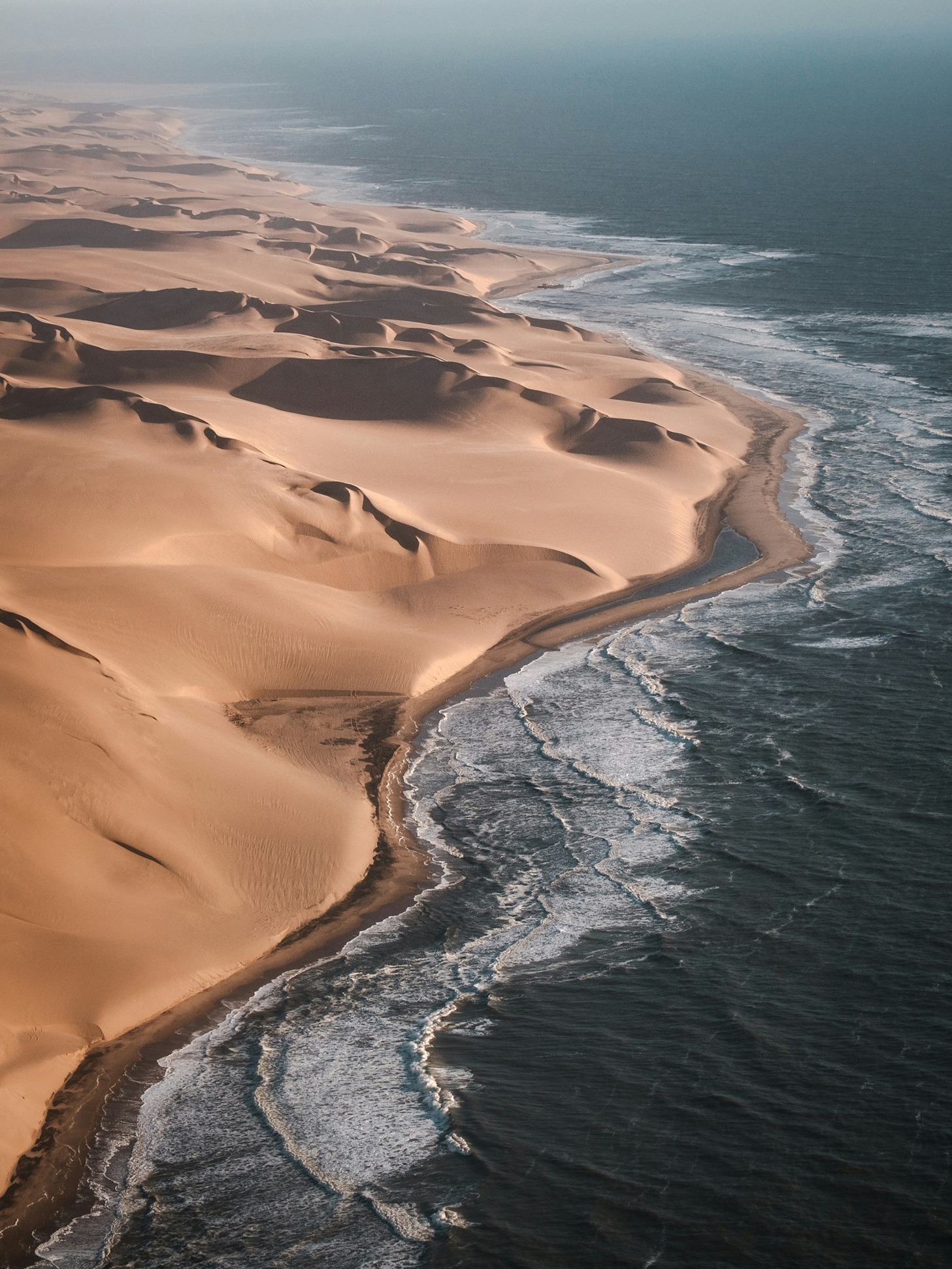
Skeleton Coast National Park
Namibia’s “edge of the world”: cold Atlantic fog, shipwreck beaches, seal colonies, and desert-adapted wildlife. This guide focuses on how access works, when to go, what to see, and how to plan a realistic route.
▶ Table of contents
Quick facts
Seasons & month planner
Choose your travel month
The Skeleton Coast can be visited all year. Fog is common, driven by the cold Benguela Current meeting desert air. Many travelers prefer Oct–Mar for warmer nights and often clearer mornings, while May–Sep is popular for cooler daytime temperatures and comfortable road-tripping.
Skeleton Coast zones cheat sheet
Pick your base and access style first. Then add wildlife/photography “targets”.
Most travelers reach the park via the Ugabmund or Springbokwasser gates. Expect gravel/salt roads, strong winds, and wide-open scenery.
Terrace Bay is the main inside-park base for overland routes. Torra Bay camping is seasonal and known for angling and wild coastline vibes.
The far north is the iconic “no roads” wilderness: Cape Fria, river mouths, dunes, and truly empty beaches. Usually accessed via fly-in or specialist guided trips.
Cape Cross seal colony is outside the national park but is a common “best wildlife stop” on the way north from Swakopmund/Henties Bay.
SafariBookings tours (hand-picked)
Top tour ideas (mix of access styles)
These are examples from SafariBookings to help you compare itineraries that include Skeleton Coast NP (and often Damaraland + Etosha). Prices and availability change—always re-check inclusions (park fees, flights, vehicle type, and whether the itinerary reaches the far north).
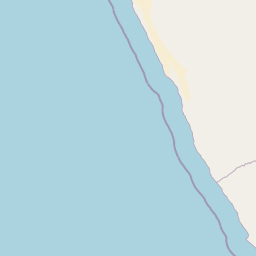
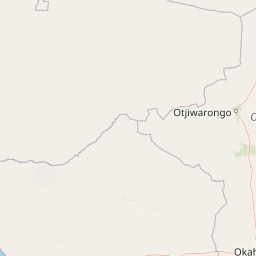
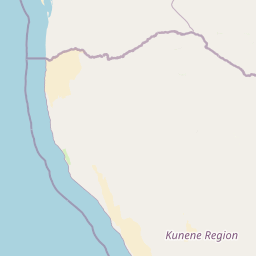
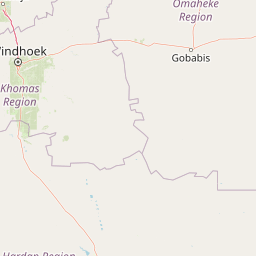
Map (gates, camps, shipwreck viewpoints & airports)






25 Animals & Sea-life (Skeleton Coast ecosystem)

Cape fur seal
The Skeleton Coast’s headline wildlife — huge colonies and endless sound. Expect strong smell and nonstop motion.
▶ More info
- How to identify: Large eared seal; thick neck (males); crowded beaches.
- Male vs female: Males much larger; defend territories during breeding season.
- What it eats: Fish and squid (Benguela Current productivity).
- Where to find it: Cape Cross (nearby), Cape Fria, and other coastal colonies.
- Unique: Best colony energy in pup season (roughly Dec–Apr).

Brown hyena
Often the “most Skeleton Coast” predator—scavenging around beaches and seal colonies, mostly at night.
▶ More info
- How to identify: Shaggy coat, sloping back, pale stripes on legs.
- Male vs female: Sexes similar; females slightly smaller.
- What it eats: Scavenger/hunter: carrion, small animals, eggs, fruit.
- Where to find it: Coastal plains and around seal colonies; also inland dunes.
- Unique: More likely at dawn/dusk or after dark near colonies.

Black-backed jackal
You’ll often see jackals patrolling the edges of seal colonies and roadside dunes.
▶ More info
- How to identify: Black “saddle” on back; upright ears.
- Male vs female: Sexes similar.
- What it eats: Omnivore: small prey, carrion, insects.
- Where to find it: Coastal plains, dunes, and colony edges.
- Unique: Watch for smart behavior around colonies and camps.

African bush elephant (desert-adapted)
A special bonus sighting: desert-adapted elephants roam riverbeds and can travel huge distances between water and food.
▶ More info
- How to identify: Large tracks in sandy riverbeds; look for broken branches and dung.
- Male vs female: Males larger; family groups led by females.
- What it eats: Browse + graze; needs water (often in riverbeds).
- Where to find it: Ephemeral river systems (e.g., Huab/Hoanib/Hoarusib areas, wider region).
- Unique: In dry years they range widely; sightings vary hugely.

Lion (desert-adapted)
Desert-adapted lions exist in the wider northwest. Seeing them on the coast is rare and luck-based.
▶ More info
- How to identify: Tracks in sandy riverbeds; early morning is best.
- Male vs female: Males larger; females do most hunting.
- What it eats: Large prey and scavenging.
- Where to find it: Riverbeds and inland plains (wider Kaokoveld / Damaraland region).
- Unique: When prey moves after rains, predators may follow.

Cheetah
A rare bonus in the wider ecosystem — more likely inland than on the coast itself.
▶ More info
- How to identify: Slender body; black tear marks on face.
- Male vs female: Males sometimes in coalitions.
- What it eats: Medium antelope and smaller prey.
- Where to find it: Open plains and desert-edge areas (rare).
- Unique: Sightings are highly variable — treat as a lucky surprise.

Leopard
Very elusive here — more likely in rocky inland areas and riverine cover.
▶ More info
- How to identify: Rosette coat; often nocturnal.
- Male vs female: Males larger.
- What it eats: Antelope, small mammals, birds.
- Where to find it: Rocky terrain and riverine thickets (rare).
- Unique: Most sightings are chance encounters, often at night.

Black rhinoceros
Present in the broader northwest; occasionally mentioned as part of the park’s desert-adapted wildlife story.
▶ More info
- How to identify: Hooked upper lip; usually solitary.
- Male vs female: Males often larger; both have two horns.
- What it eats: Browser: shrubs and small trees.
- Where to find it: Arid bush and river valleys (very rare sightings).
- Unique: If you want rhino-focused viewing, consider guided conservancy areas inland.

Hartmann’s mountain zebra
A classic northwest Namibia species — often around rocky hills and riverbeds.
▶ More info
- How to identify: Narrow stripes; dewlap; prefers rugged terrain.
- Male vs female: Sexes similar.
- What it eats: Grazer: grasses and tough desert forage.
- Where to find it: Rocky slopes and river valleys (wider park edge).
- Unique: Often seen in small groups on hillsides.

Gemsbok (oryx)
The iconic desert antelope — built for heat and long dry spells.
▶ More info
- How to identify: Black-and-white face mask; long spear-like horns.
- Male vs female: Both sexes have long straight horns (females often slightly longer).
- What it eats: Grazer/browse mix; very drought-adapted.
- Where to find it: Open desert plains and gravel areas.
- Unique: A “must see” desert animal on Namibia road trips.

Springbok
Small antelope adapted to arid environments; numbers can vary with rainfall.
▶ More info
- How to identify: White face with dark stripe; ‘pronking’ leaps when excited.
- Male vs female: Males have thicker horns.
- What it eats: Grazes and browses; can go long without drinking.
- Where to find it: Open plains and sparse scrub.
- Unique: After good rains, you may see more movement and herds.

Giraffe
More of a riverbed and inland sighting than a coastal one, but possible in the wider northwest ecosystem.
▶ More info
- How to identify: Very tall; patterned coat; long neck.
- Male vs female: Males larger; darker patches.
- What it eats: Browser: acacia and other trees.
- Where to find it: Riverine woodland and inland areas.
- Unique: Often a ‘wow’ sighting in stark desert landscapes.

Greater kudu
Usually in thicker bush and valleys inland; occasionally encountered on desert-edge routes.
▶ More info
- How to identify: Vertical white stripes; big ears; males with spiraled horns.
- Male vs female: Males have long spiral horns.
- What it eats: Browser.
- Where to find it: Bushy valleys and riverine thickets.
- Unique: Most likely at dawn/dusk near cover.

Common ostrich
Often seen striding open plains; a classic silhouette against dunes and sky.
▶ More info
- How to identify: Largest bird; cannot fly.
- Male vs female: Males black-and-white; females brown.
- What it eats: Plants, seeds, insects.
- Where to find it: Open plains and desert edges.
- Unique: Very photogenic in wide-open landscapes.

Bat-eared fox
A lucky sighting in open areas—often most active in cooler hours.
▶ More info
- How to identify: Huge ears; small fox body.
- Male vs female: Sexes similar.
- What it eats: Mostly insects (especially termites).
- Where to find it: Open plains and short grass areas (wider region).
- Unique: Ears help locate insects underground.

Caracal
Elusive desert-edge cat; mostly nocturnal and rarely seen on standard routes.
▶ More info
- How to identify: Tufted ears; reddish coat.
- Male vs female: Males larger.
- What it eats: Small mammals and birds.
- Where to find it: Rocky edges and bushy cover.
- Unique: Incredible jumper; hunts birds mid-air.

Honey badger
Tough and fearless; mostly a night sighting near camps or in valleys.
▶ More info
- How to identify: Black body with white/grey ‘cape’ stripe.
- Male vs female: Males larger.
- What it eats: Omnivore: small mammals, insects, honey, reptiles.
- Where to find it: Varied habitat; often near water and prey burrows.
- Unique: Famously bold—give it space if encountered.

Cape ground squirrel
More common in arid Namibia generally than on the foggy coast itself, but possible on inland stretches.
▶ More info
- How to identify: Bushy tail; uses tail as sunshade.
- Male vs female: Sexes similar.
- What it eats: Seeds, bulbs, insects.
- Where to find it: Open dry areas with burrows.
- Unique: Often very visible in open terrain.

Meerkat
Iconic small carnivore, more typical of drier inland areas; occasionally encountered in Namibia itineraries.
▶ More info
- How to identify: Upright ‘sentinel’ posture; social groups.
- Male vs female: Sexes similar.
- What it eats: Insects, small reptiles, eggs.
- Where to find it: Arid savanna and desert-edge areas.
- Unique: A lucky daylight sighting if you hit the right habitat.

Namib sand gecko
A Namibia desert celebrity: adapted to soft sand and fog moisture. Usually seen on guided night drives or specialist desert trips.
▶ More info
- How to identify: Translucent/pale gecko; webbed feet; big eyes.
- Male vs female: Sexes similar.
- What it eats: Insects.
- Where to find it: Coastal dune fields in the Namib region (specialist sightings).
- Unique: Often linked to fog-harvesting desert life stories.

Darkling beetle (fog-basking beetles)
Small creatures are the real masters here. Some Namib beetles harvest moisture from fog on dune crests.
▶ More info
- How to identify: Dark beetles often seen on sand after fog or at cooler times.
- Male vs female: —
- What it eats: Detritus and plant matter.
- Where to find it: Dunes and gravel plains (especially after fog).
- Unique: Classic “fog harvesting” behavior is one of Namibia’s best nature stories.

Nile crocodile
Not a typical ‘coast road’ sighting, but possible near the Kunene River mouth and wetlands.
▶ More info
- How to identify: Armoured scales; basks on banks.
- Male vs female: Males larger.
- What it eats: Fish, birds and mammals.
- Where to find it: Kunene River mouth and wetter river sections.
- Unique: A reminder that the park includes wetlands at the far north boundary.

Heaviside’s dolphin
Small coastal dolphin of the Benguela system—often seen on coastal boat trips near Walvis Bay/Swakopmund.
▶ More info
- How to identify: Small grey dolphin; fast surface bursts.
- Male vs female: Sexes similar.
- What it eats: Fish and squid.
- Where to find it: Coastal waters (Benguela Current).
- Unique: Usually easier on dedicated dolphin cruises than from the shore.

Green sea turtle
Occasional visitor along the coast; more likely noticed via boat trips or stranded sightings.
▶ More info
- How to identify: Smooth olive-green shell; paddle-like flippers.
- Male vs female: Males have longer tails; females larger.
- What it eats: Seagrass and algae (adults).
- Where to find it: Coastal waters.
- Unique: A rare find in Namibia’s cold current system.

Southern right whale
Seasonal offshore sightings are possible (more often further south), usually during migration periods.
▶ More info
- How to identify: Large black whale; callosities on head; no dorsal fin.
- Male vs female: Females slightly larger.
- What it eats: Krill and plankton.
- Where to find it: Offshore waters (seasonal).
- Unique: If you’re whale-focused, time your trip and consider dedicated coastal viewpoints/tours.
Top 10 Birds (coast + desert edge)

Greater flamingo
Elegant pink flamingos are a Namibia coast classic, especially around lagoons and shallow waters.
▶ More info
- How to identify: Larger and paler than lesser flamingo; thick bill.
- Male vs female: Sexes similar.
- What it eats: Small invertebrates and algae.
- Where to find it: Coastal lagoons, bays and wetlands (seasonal).
- Unique: Numbers vary with water levels and food.

Lesser flamingo
Often in large flocks; vivid pink when feeding conditions are right.
▶ More info
- How to identify: Smaller; deeper pink; dark bill.
- Male vs female: Sexes similar.
- What it eats: Algae and micro-organisms filtered from water.
- Where to find it: Shallow coastal waters and lagoons (seasonal).
- Unique: Great subject for telephoto photography.

Cape cormorant
One of the most visible seabirds on the Namibian coast.
▶ More info
- How to identify: Black seabird; often seen drying wings.
- Male vs female: Sexes similar.
- What it eats: Fish.
- Where to find it: Coastline, roosts and offshore islands.
- Unique: Often mixed with other cormorants and gulls.

Bank cormorant
A range-restricted coastal cormorant; a nice “special” for birders.
▶ More info
- How to identify: Large cormorant; pale underparts in adults.
- Male vs female: Sexes similar.
- What it eats: Fish and benthic prey.
- Where to find it: Rocky coast and offshore islands.
- Unique: Often associated with Namibia/South Africa cold-water coast.

Damara tern
A Namibia coast specialty; breeds on desert gravel near the sea.
▶ More info
- How to identify: Small tern; quick, fluttery flight.
- Male vs female: Sexes similar.
- What it eats: Small fish.
- Where to find it: Coastal desert breeding areas (seasonal).
- Unique: Often better with a guide who knows breeding sites.

African black oystercatcher
Striking black shorebird with a red bill; patrols rocky shores and beaches.
▶ More info
- How to identify: All-black body; bright red bill and eye ring.
- Male vs female: Sexes similar.
- What it eats: Mussels and other shellfish.
- Where to find it: Rocky shores and beaches.
- Unique: A classic photo subject on low tide.

Kelp gull
The big, tough gull you’ll see around the coast and camps.
▶ More info
- How to identify: Large gull; dark back; yellow bill with red spot.
- Male vs female: Sexes similar.
- What it eats: Omnivore/scavenger.
- Where to find it: Coastline, lagoons, harbors.
- Unique: Very opportunistic around food.

Great white pelican
Big, unmistakable birds sometimes seen along Namibia’s coast and wetlands.
▶ More info
- How to identify: Huge white body; large bill pouch.
- Male vs female: Sexes similar.
- What it eats: Fish.
- Where to find it: Coastal waters and wetlands.
- Unique: Often seen gliding in formation.

Lappet-faced vulture
One of Africa’s largest vultures; more likely inland but recorded in the park region.
▶ More info
- How to identify: Massive vulture; pinkish bare head and folds (‘lappets’).
- Male vs female: Sexes similar.
- What it eats: Carrion.
- Where to find it: Inland plains and desert-edge areas.
- Unique: A powerful gliding silhouette when seen.

Gray’s lark
A Namib Desert specialist—small, subtle, and perfectly camouflaged.
▶ More info
- How to identify: Small sandy-brown lark; blends into gravel.
- Male vs female: Sexes similar.
- What it eats: Seeds and insects.
- Where to find it: Gravel plains and desert scrub.
- Unique: A “desert birding” highlight if you enjoy the small details.
Top 10 Trees & Signature Plants

!Nara plant
One of the Namib’s iconic dune plants; produces nutrient-rich fruit and supports desert wildlife and people historically.
▶ More info
- How to identify: Spiny, leafless-looking vine/shrub; produces ‘nara’ melons.
- Male vs female: Separate male/female plants.
- What it eats: —
- Where to find it: Dune fields and coastal desert (localized).
- Unique: A famous example of desert survival without conventional leaves.

Mopane
A key tree in arid southern Africa; appears in drier river valleys and inland zones.
▶ More info
- How to identify: Butterfly-shaped leaves; often forms mopane woodland.
- Male vs female: —
- What it eats: —
- Where to find it: Drier river valleys and inland areas.
- Unique: Important for many insects and browsing animals.

Wild tamarisk
Riverbed specialist; tough tree that handles salinity and aridity.
▶ More info
- How to identify: Fine twiggy branches; feathery look.
- Male vs female: —
- What it eats: —
- Where to find it: Ephemeral riverbeds.
- Unique: A ‘green line’ clue to water under the sand.

Makalani palm
Palm found in northern Namibia river systems; can appear in suitable riverbed habitats.
▶ More info
- How to identify: Fan-shaped palm leaves; often in small clusters.
- Male vs female: —
- What it eats: —
- Where to find it: Riverbeds and groundwater areas (north).
- Unique: Signals groundwater close to the surface.

Welwitschia
One of the world’s strangest plants—some specimens live for centuries. More typical of the Namib but part of the wider desert story.
▶ More info
- How to identify: Two long strap-like leaves that fray over time.
- Male vs female: Separate male/female plants.
- What it eats: —
- Where to find it: Gravel plains in the Namib Desert (localized).
- Unique: A living fossil—iconic Namibia experience on the right routes.

Dollar bush
A low, drought-tough shrub mentioned in park vegetation lists—common in arid plains when conditions suit.
▶ More info
- How to identify: Succulent small leaves; low rounded shrub.
- Male vs female: —
- What it eats: —
- Where to find it: Arid plains and gravel areas.
- Unique: Survives in very harsh soils and salt wind.

Vygies (ice plants)
Succulents that can flower after rains, bringing sudden color to desert edges.
▶ More info
- How to identify: Fleshy leaves; bright daisy-like flowers.
- Male vs female: —
- What it eats: —
- Where to find it: Plains and rocky ground (after rains).
- Unique: Short bloom windows—timing matters.

Stipagrostis (Namib grasses)
Hardy grasses that anchor dunes and provide forage in sparse rainfall zones.
▶ More info
- How to identify: Tufted grass clumps; tough narrow leaves.
- Male vs female: —
- What it eats: —
- Where to find it: Dunes and arid plains.
- Unique: Key to stabilizing sand and supporting grazers.

Euphorbia (candelabra types)
Succulent shrubs/trees in arid southern Africa; some species occur in northwest Namibia.
▶ More info
- How to identify: Milky latex; branching candelabra form in some species.
- Male vs female: —
- What it eats: —
- Where to find it: Rocky slopes and arid scrub.
- Unique: Latex is irritant—don’t touch.

Lichen fields (many species)
A Skeleton Coast signature: rich lichen fields fed by fog. Look for textured “living crust” on gravel plains.
▶ More info
- How to identify: Crusty patches in greens/oranges/greys; avoid stepping on them.
- Male vs female: —
- What it eats: —
- Where to find it: Fog belt gravel plains near the coast.
- Unique: They grow extremely slowly—stay on tracks.
Top 10 Flowers & Bushes (seasonal + desert specialists)

Lithops (living stones)
Tiny succulents that mimic stones—classic desert camouflage and a fun “micro-safari” find.
▶ More info
- How to identify: Stone-like paired leaves; small daisy flower in season.
- Male vs female: —
- What it eats: —
- Where to find it: Gravel plains (localized).
- Unique: Easy to miss—look closely!
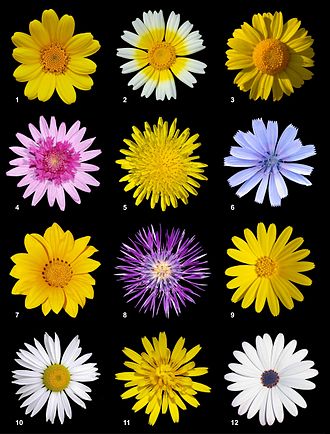
Namaqualand daisies (after good rains)
In exceptional rainfall years, parts of Namibia can explode with wildflowers—timing is everything.
▶ More info
- How to identify: Daisy-like blooms; often short-lived.
- Male vs female: —
- What it eats: —
- Where to find it: Desert-edge and coastal plains (good rain years).
- Unique: If you hit it right, it’s unforgettable.

Desert aloe
Aloes add structure and seasonal color with tall flower spikes.
▶ More info
- How to identify: Rosette of succulent leaves; orange/red/yellow spikes.
- Male vs female: —
- What it eats: —
- Where to find it: Rocky slopes and arid scrub (wider region).
- Unique: Blooms can draw birds and insects.

Salsola (tumbleweed relatives)
Hardy shrubs of arid zones; often part of the sparse desert plant community.
▶ More info
- How to identify: Bushy shrubs; sometimes break off and tumble in wind.
- Male vs female: —
- What it eats: —
- Where to find it: Arid plains and saline soils.
- Unique: Built to survive salt, wind and drought.
Nara melon (fruiting season)
When in fruit, it becomes a key resource in the dunes—one of the best “food chain” stories in the Namib.
▶ More info
- How to identify: Spiny plant; melon-like fruit.
- Male vs female: Separate male/female plants.
- What it eats: —
- Where to find it: Dune fields (localized).
- Unique: Supports insects, small animals, and historically people.
Vygie blooms
Bright blooms that can appear suddenly after rain—often the most colorful desert moment you’ll see.
▶ More info
- How to identify: Daisy-like flowers; succulent leaves.
- Male vs female: —
- What it eats: —
- Where to find it: Open plains and rocky ground (after rain).
- Unique: Best in sun; flowers often close in cloudy weather.
Stipagrostis seed heads
Not a “flower show” plant, but the grasses define the texture of dunes and provide crucial forage.
▶ More info
- How to identify: Tufted grasses; delicate seed heads in season.
- Male vs female: —
- What it eats: —
- Where to find it: Dunes and desert plains.
- Unique: Desert life depends on these tough grasses.
Wild tamarisk flowers
When riverbed trees flower, they can attract insects and add subtle color to otherwise pale landscapes.
▶ More info
- How to identify: Tiny pale flowers on feathery branches.
- Male vs female: —
- What it eats: —
- Where to find it: Ephemeral riverbeds.
- Unique: A sign of groundwater and seasonal change.
Euphorbia flowering tips
Euphorbias have small flowers but big presence—sculptural silhouettes in arid scrub.
▶ More info
- How to identify: Milky latex; small clustered flowers near tips.
- Male vs female: —
- What it eats: —
- Where to find it: Rocky slopes and scrub.
- Unique: Handle with care: latex can irritate skin and eyes.
Fog-fed lichens
Not flowers, but they make the “living desert skin” of the Skeleton Coast fog belt. Treat them as fragile.
▶ More info
- How to identify: Crusty, colorful patches; very slow-growing.
- Male vs female: —
- What it eats: —
- Where to find it: Gravel plains in the fog belt near the coast.
- Unique: A signature reason the Skeleton Coast feels ‘alive’ despite the emptiness.
Things to do
1) Drive the southern Skeleton Coast (gates → bays)
The classic overland experience: salt road, shipwreck viewpoints, huge skies, and the feeling of being far from everything.
2) Seal colonies (Cape Cross / Cape Fria)
The coast’s “most guaranteed wildlife.” December–April is peak pup season, but seals are present year-round.
3) Shipwreck-hunting + fog photography
Visibility and mood shift fast. When fog rolls in, the coast becomes cinematic—perfect for minimalist photo compositions.
4) Terrace Bay stay (inside the park)
One of the most iconic places to spend a night: remote shoreline, strong winds, and chances of seeing jackals and hyenas around the coast.
5) Angling (Torra Bay / Terrace Bay)
The Skeleton Coast is legendary for surf fishing. Licenses and rules apply—confirm requirements before you enter.
6) Fly-in / guided north for “true wilderness”
If you want the far north: empty beaches, river mouths, dunes, and a genuine “no roads” feeling—look for fly-in or specialist guided trips.
FAQ
Is Skeleton Coast worth it if I want “lots of animals”?
If your goal is dense big game sightings, parks like Etosha usually win. Skeleton Coast is about landscape, atmosphere, and coast wildlife (seals and birds)—with desert-adapted mammals as a bonus when conditions line up.
Do I need a 4×4?
For many overland routes, a high-clearance vehicle is helpful, and a 4×4 is the safest choice—especially if you plan to go beyond the easiest coastal stops. Always check current road conditions and restrictions.
How many days do I need?
Many travelers do 1 day for Cape Cross + lower coast, or 2–3 days if staying at Terrace Bay. Add more time (and often fly-in logistics) if your goal is the remote far north.
What should I pack?
Windproof layer, warm top for foggy mornings, sun protection, lots of water, and offline maps. A zoom lens or binoculars helps for distant wildlife and seabirds.
Where should I base myself?
Swakopmund or Henties Bay for the lower coast and day trips; Terrace Bay for a real “inside the park” experience; and fly-in camps/guided routes for the far north.
Leave a Reply