
Mt Kenya National Park Guide
Mt Kenya National Park combines high-altitude trekking, rare montane wildlife and some of East Africa’s most dramatic scenery. Use this 2026 guide to plan a Mt Kenya safari, choose a Point Lenana route, compare gates and fees, explore the map, and know what wildlife to look for.
Mt Kenya National Park at a glance
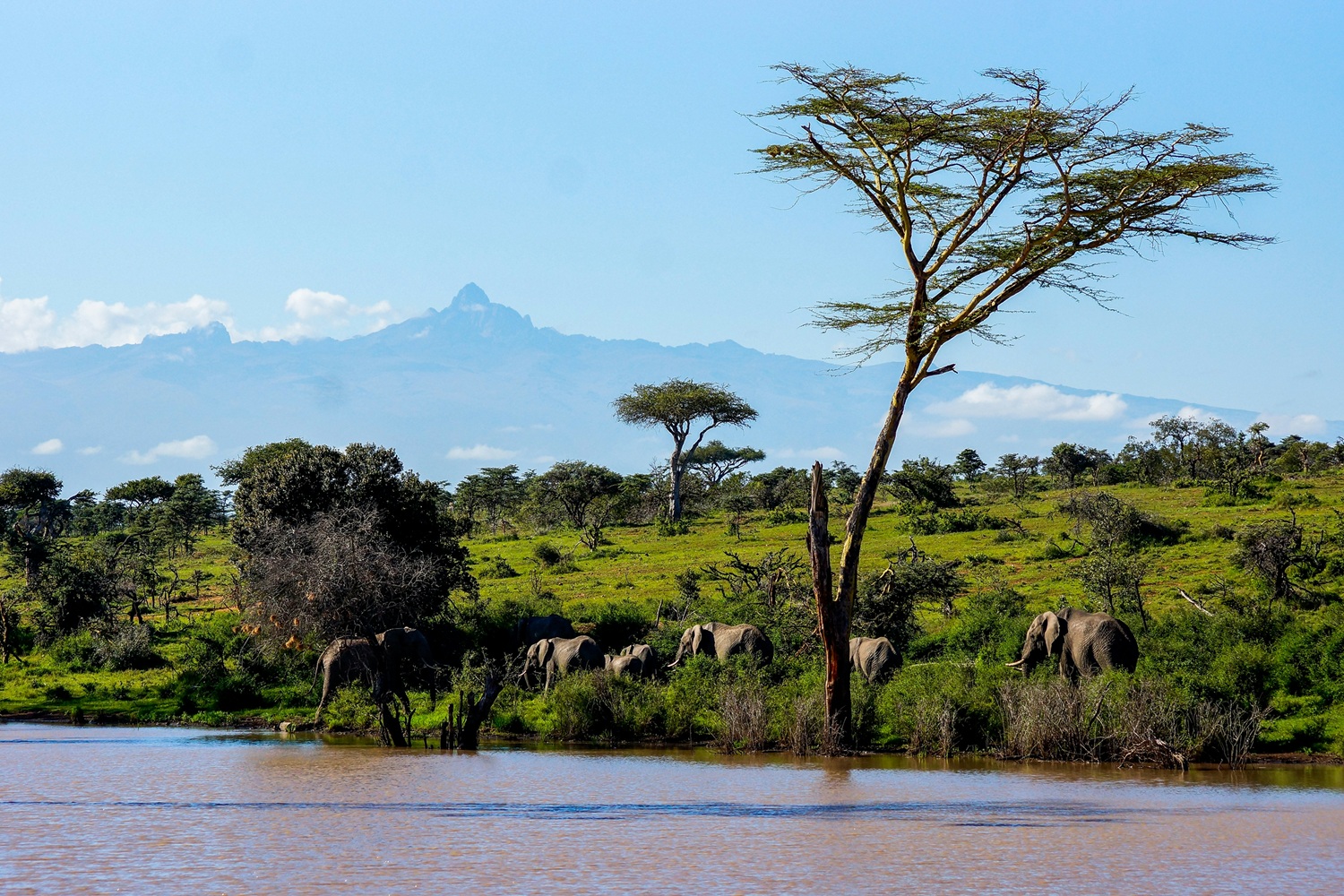
Mt Kenya National Park protects the upper slopes of Mount Kenya, an extinct volcano on the equator and Africa’s second-highest mountain. The landscape changes rapidly with altitude: montane forest gives way to bamboo, heather and moorland, then surreal Afro-alpine vegetation, glacial valleys, tarns and the rocky summit massif.
Best time to visit Mt Kenya National Park
The most popular trekking windows are generally January–February and July–October, when drier spells are more likely. Mount Kenya creates its own weather, however, so rain, cloud, wind and cold can occur in any month. Wildlife on the lower slopes is possible year-round.
For Point Lenana
Choose enough days to acclimatize. A 4–6 day itinerary is a much better default than an ultra-fast summit attempt.
For a Mt Kenya safari
Lower forest zones are productive in cool hours. Wildlife is less predictable than in a classic savannah reserve, so treat sightings as part of the mountain experience.
For photography
Early mornings often bring the cleanest light; cloud can build quickly around the massif later in the day.
Mt Kenya National Park entrance fees (2026)
These are the rates displayed by Kenya Wildlife Service when checked on 13 August 2026. Fees can change, so confirm the live KWS page before payment.
Mt Kenya National Park gates & access
KWS lists three official road access gates to the peaks. Your best gate depends mainly on the trekking route and where you are staying before the climb.
Sirimon Gate
KWS places Sirimon about 200 km from Nairobi, off the Nanyuki–Meru road. It is a popular start for a gradual ascent toward Old Moses and Shipton’s Camp.
Naro Moru Gate
KWS lists Naro Moru Gate at about 188 km from Nairobi via the Nyeri–Nanyuki road, close to Naro Moru town. This is the most direct of the main trekking routes.
Chogoria Gate
KWS places Chogoria Gate on the Embu–Meru side, about 210 km north of Nairobi. The Chogoria route is famous for Gorges Valley and alpine lakes.
Mt Kenya National Park map: gates, camps & routes
Use this map for orientation between Sirimon, Naro Moru, Chogoria, the main high camps and Point Lenana. Route lines are deliberately simplified and are not GPS tracks.
Coordinates and route lines are approximate orientation aids. Mountain trails, weather and access conditions change. Use current KWS information, a guide and/or a proper offline topographic/GPS source for navigation.
Mt Kenya safari: what to expect
A Mt Kenya safari is different from a Masai Mara or Amboseli game drive. The national park is first and foremost a mountain ecosystem: wildlife is concentrated in forest, bamboo, glades and lower slopes, while the high moorland and alpine zone offer fewer large-mammal encounters. Elephants, buffalo, bushbuck, colobus monkeys, Sykes’ monkeys, giant forest hog and rare mountain bongo occur in the wider Mount Kenya ecosystem.
Best for
Travellers who want to combine hiking, scenery, birding and the possibility of wildlife rather than maximise big-cat sightings.
Not a classic Big Five drive
Do not plan Mt Kenya National Park as a substitute for a dedicated savannah safari. Large animals can be elusive in dense forest.
Lower slopes matter
Slow down around forest edges, glades and access roads, especially early and late in the day. Never approach wildlife on foot.
Best combination
Pair the mountain with a dedicated safari destination before or after the trek. This creates a stronger Kenya itinerary than expecting the mountain alone to deliver classic game viewing.
Mt Kenya routes: Sirimon, Chogoria & Naro Moru
For most visitors, the route decision is about Point Lenana (4,984 m). The three main approaches have very different personalities.
Sirimon Route
A popular acclimatisation-friendly approach from the north. Typical itineraries pass Old Moses/Judmaier Camp and Shipton’s Camp before the summit circuit.
Chogoria Route
Known for dramatic valleys, Lake Ellis, Lake Michaelson and big landscape views. Often used as the descent half of a Sirimon–Chogoria traverse.
Naro Moru Route
A shorter, direct western approach through the Met Station and Mackinder’s area. Efficient, but it can feel steeper and wetter underfoot.
Point Lenana
The standard trekking objective. A pre-dawn summit push is common, but altitude, darkness, cold and weather still make it serious.
Batian & Nelion
These are technical rock-climbing summits, not extensions of a normal hike. Plan them as mountaineering objectives with specialist skills, gear and guiding.
12 mammals to know in Mt Kenya National Park
Wildlife sightings vary sharply by altitude, vegetation, season and luck. This is a recognition guide for species associated with the Mount Kenya ecosystem, not a promise that every animal is routinely seen on a trek.
African bush elephant
Elephants move through the wider mountain landscape and connected northern conservation areas. Tracks and dung may be more common than a direct sighting.
Field notes
- Never approach an elephant on foot.
- Dense forest can hide a very large animal surprisingly well.
- Give right of way and follow ranger/guide instructions.
African buffalo
Buffalo use forest and glades on the lower mountain. In thick vegetation they can be difficult to see until close, which is exactly why guided hiking discipline matters.
Mountain bongo
A conservation flagship of Kenya’s highland forests. It is exceptionally shy; seeing one in the wild is not a realistic expectation for an ordinary trek.
Giant forest hog
A large dark forest hog associated with montane habitats. Glades and quieter lower zones offer the better chance.
Bushbuck
A secretive browser often associated with dense vegetation, streams and forest margins.
Waterbuck
More likely around wetter, lower-elevation habitat than in the high trekking zone.
Black-and-white colobus
One of the most visually distinctive forest mammals, with long white mantle hair contrasting with a black body.
Sykes’ monkey
Active forest monkeys that can be easier to detect by movement and calls than by a clear stationary view.
Leopard
Present in the wider ecosystem but very difficult to see in forested mountain habitat. Do not choose a Mt Kenya safari specifically for leopard viewing.
Common duiker
A small, alert antelope that may dart across open edges or disappear quickly into cover.
Rock hyrax
One of the more characteristic small mammals around rocky terrain, cliffs and some higher camps.
Serval
A long-legged spotted cat associated with grassy and wetter habitats; a sighting is a special bonus.
10 birds to look for around Mt Kenya
Mount Kenya’s steep vegetation gradient makes birding part of the appeal: forest species dominate low down, while moorland and high ridges bring a different set of specialists and raptors.
Hartlaub’s turaco
A colourful highland-forest bird often detected by its calls and flashes of crimson wing in flight.
Augur buzzard
A classic highland raptor to scan for above open moorland and mountain ridges.
White-necked raven
A large raven of cliffs and high country, often comfortable riding strong mountain air currents.
Crowned eagle
A powerful forest eagle; a clear view is a special sighting rather than something to expect.
Silvery-cheeked hornbill
A large fruit-eating hornbill associated with montane forest.
Jackson’s spurfowl
A Kenya highland speciality of forest edge, bamboo and moorland habitats.
Abyssinian thrush
A familiar highland thrush in forest and edge habitat.
Malachite sunbird
Watch flowering highland vegetation for long-billed nectar-feeding sunbirds.
Speckled mousebird
A social, long-tailed bird of scrub and forest edge, usually moving in small groups.
African dusky flycatcher
A small forest bird that repeatedly sallies from a perch to catch insects.
Mt Kenya flora: 10 plants to recognise
UNESCO highlights Mount Kenya’s vegetation sequence as one of the site’s defining ecological features. As you climb, forest and bamboo give way to heather, moorland and some of Africa’s most distinctive giant Afro-alpine plants.
African pencil cedar
A signature East African highland conifer of drier montane forest.
Yellowwood
Important evergreen trees within Mount Kenya’s montane forest belt.
Highland bamboo
Dense bamboo forms a major vegetation belt on parts of the mountain between forest and higher heath.
Hagenia
A distinctive upper-montane tree often associated with the forest–heath transition.
Giant heather
Twisted heather creates one of the mountain’s most atmospheric transition zones.
Giant lobelia
An iconic Afro-alpine rosette plant adapted to intense sun, freezing nights and high-elevation moisture cycles.
Giant groundsel
A Mount Kenya icon that can form strange tree-like stands across the high moorland.
Highland St John’s wort
A yellow-flowering shrub common in highland heath and moorland vegetation.
Everlasting flowers
Silvery, cold-adapted shrubs and herbs that add texture to the high moorland.
Red-hot poker
Bright flower spikes can punctuate wetter highland areas and attract nectar-feeding birds.
Things to do in Mt Kenya National Park
Compare other Kenyan highland stays in the Aberdare guide and the Kenya-side Mount Elgon guide. Aberdare adds waterfalls and forest wildlife, while Elgon combines caves, forest and a separately planned mountain trek.
1. Trek to Point Lenana
The classic non-technical summit experience. Give yourself enough days for acclimatisation rather than optimizing only for speed.
2. Cross Sirimon–Chogoria
Combine a gradual northern approach with the dramatic valleys and lakes of the Chogoria side.
3. Plan a Mt Kenya safari day
Focus on lower slopes, forest edges, birding and wildlife signs. This is a mountain safari, not a high-density savannah drive.
4. See the alpine lakes
Lake Ellis and Lake Michaelson are major scenery rewards on the Chogoria side when your itinerary and weather allow.
5. Bird the forest belt
Slow down before the high trek begins: montane forest often holds the mountain’s richest concentration of visible wildlife and birds.
6. Photograph Afro-alpine plants
Giant lobelias and groundsels are as distinctive to Mount Kenya as the summit skyline itself.
7. Stay in or near the park
KWS currently lists Batian Guest House and Sirimon Bandas plus several public and private campsites. Check current availability before building an itinerary around a specific facility.
8. Technical climb Batian/Nelion
Only for appropriately skilled and equipped climbers. Treat these peaks as technical mountaineering objectives.
Mt Kenya tours & safari combinations
When comparing operators, focus on itinerary length, route, guide qualifications, acclimatisation, porter arrangements, sleeping style, transfers and whether KWS fees are included. A cheap express trek can be poor value if it sacrifices acclimatisation.
Rules & safety that matter
KWS states these gate hours unless you are spending overnight.
Applies to park roads; stay on established roads and trails.
KWS gives this as the minimum viewing distance.
KWS national parks are plastic-free.
Carry food securely and pack out rubbish.
Headache, nausea, unusual fatigue or worsening symptoms should not be ignored.
Carry warm layers, rain protection, water, sun protection and a headlamp.
Batian and Nelion require specialist mountaineering competence and equipment.
Mt Kenya National Park FAQ
Is Mt Kenya National Park worth visiting?
Yes—especially if you value mountain scenery, trekking, birding and unusual Afro-alpine ecosystems. It is less suitable if your only goal is a high-density classic safari with frequent big-cat sightings.
Can you do a Mt Kenya safari without climbing the mountain?
Yes. A Mt Kenya safari can focus on the lower forest, wildlife, birding, scenery and short walks rather than Point Lenana. For classic savannah game viewing, combine the mountain with a dedicated wildlife reserve.
What animals can you see on a Mt Kenya safari?
The Mount Kenya ecosystem supports elephant, buffalo, bushbuck, waterbuck, giant forest hog, primates, leopard and the very rare mountain bongo, among other species. Sightings are less predictable than in open savannah because much of the habitat is forested.
How many days do you need for Mt Kenya National Park?
For Point Lenana, 4–6 days is a sensible range for many travellers because it gives more time to acclimatise. A non-summit visit can be one or two days, while technical climbs need longer specialist itineraries.
Which Mt Kenya route is best?
For many first-time trekkers, a Sirimon–Chogoria traverse is the best all-round option: Sirimon offers a gradual approach and Chogoria delivers dramatic valleys and alpine lakes. Naro Moru is more direct.
Do I need climbing equipment for Point Lenana?
Point Lenana is the standard trekking summit and does not normally require technical rock-climbing equipment. You still need proper mountain clothing, footwear, a headlamp and a safe acclimatisation plan. Batian and Nelion are technical climbs.
What is the best time to visit Mt Kenya National Park?
January–February and July–October are commonly favoured for trekking because drier weather is more likely. Conditions can change quickly in any month, so waterproof and cold-weather gear remain essential.
How much is Mt Kenya National Park entry in 2026?
When checked on 13 August 2026, KWS displayed adult rates of KES 800 for East Africa citizens, KES 1,100 for Kenya residents, USD 30 for African citizens and USD 70 for non-residents. Re-check KWS before payment because fees can change.
What are the official Mt Kenya National Park gates?
Kenya Wildlife Service lists Sirimon Gate, Naro Moru Gate and Chogoria Gate as the three official access gates to the peaks.