
Skeleton Coast National Park Guide
The practical 2026 guide to Skeleton Coast National Park: best time to visit, permits, gates, Terrace Bay, self-drive access, interactive map, shipwreck coast, desert wildlife and route planning.
Skeleton Coast National Park at a glance
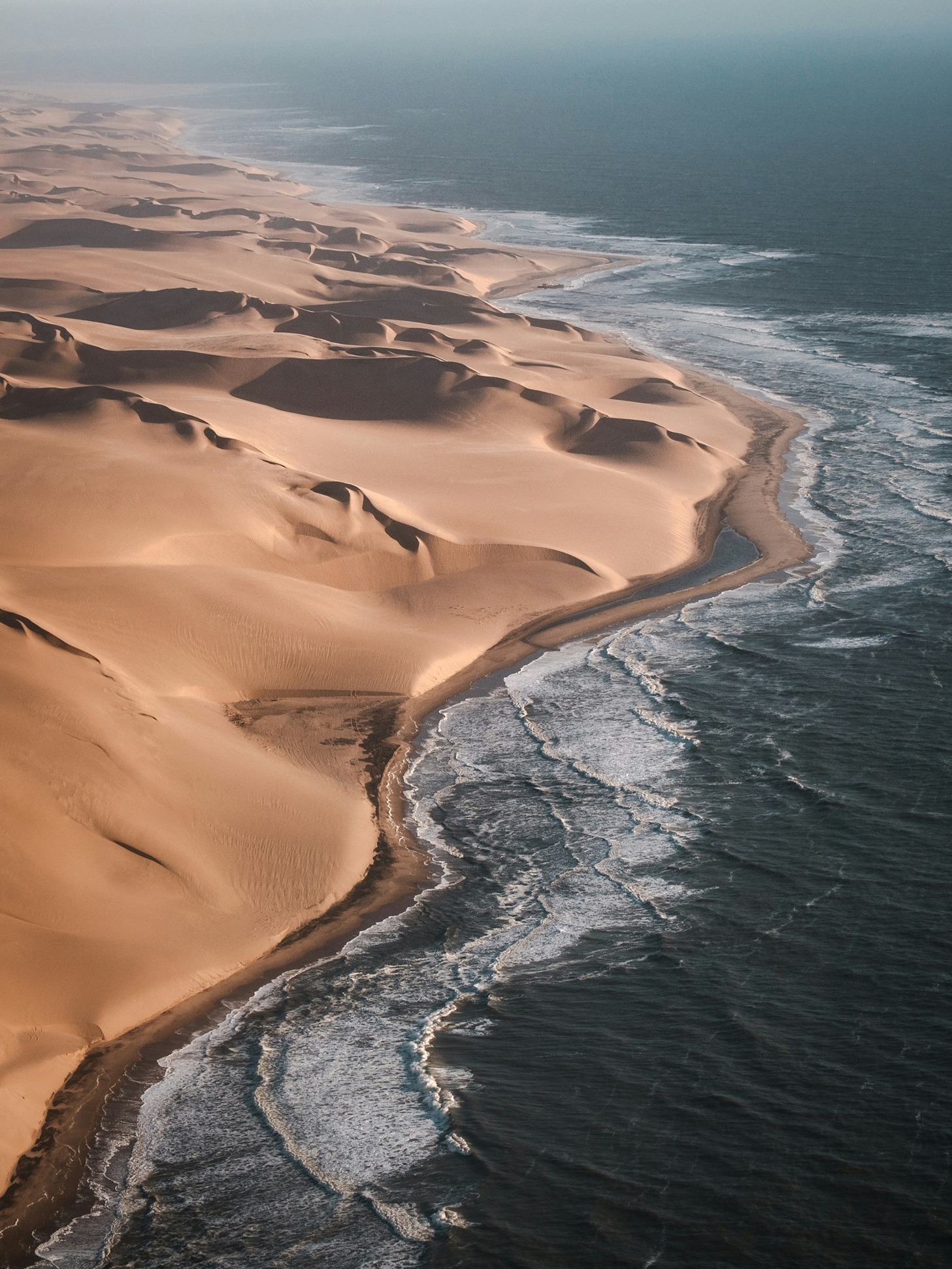
Skeleton Coast National Park is one of Namibia’s most remote protected landscapes. It runs roughly 500 km from the Ugab River north to the Kunene River on the Angolan border and reaches about 40 km inland. The experience is less about dense safari traffic and more about fog, empty beaches, dunes, ephemeral riverbeds, shipwreck history and wildlife adapted to an exceptionally dry coast.
Best time to visit Skeleton Coast National Park
There is no single bad season for Skeleton Coast National Park. Namibia’s coast is cooler than the interior because of the Benguela Current, and fog is common year-round. October to April gives warmer conditions, while May to September suits travellers who prefer cooler road-trip weather. If Torra Bay is part of the plan, its opening season is decisive: NWR currently lists the campsite as open only in December and January.
For the classic road trip
Any month can work. Choose around the rest of your Namibia itinerary and allow for fog, wind and sudden visibility changes rather than expecting predictable beach weather.
For warmer coastal conditions
October–April is Namibia’s warmer half of the year. The coast remains moderated by the Atlantic, so pack a wind layer even in summer.
For Torra Bay camping
December–January is the important window because NWR currently operates Torra Bay as a seasonal fishing campsite only in those two months.
What is the best way to visit Skeleton Coast National Park?
For most independent travellers, the best Skeleton Coast National Park trip is a one- or two-night overland route through the accessible southern/central section, ideally with Terrace Bay as the park base. Travellers who want the far northern wilderness should use a specialist fly-in or guided itinerary rather than assuming the public road continues unrestricted to the Kunene River.
| Trip style | Best for | Route idea | Important limitation |
|---|---|---|---|
| Transit self-drive | Road-trippers linking coast and Damaraland | Ugabmund → coastal section → Springbokwasser | Respect permit and same-day gate conditions. |
| Terrace Bay stay | Atmosphere, fishing, coast photography | Enter via Ugabmund or Springbokwasser and overnight at Terrace Bay | Book first; don’t plan on arriving without confirmed accommodation. |
| Torra Bay season | Camping + angling | Seasonal coastal stay | NWR lists Torra Bay as open only in December and January. |
| Remote north | Maximum wilderness | Specialist fly-in/guided access toward the far north | Independent road access is restricted; arrangements must match current rules. |
Skeleton Coast National Park permits and fees
Park entrance and usage fees are separate from NWR accommodation. NWR states that park fees are paid per person and per vehicle per day. Skeleton Coast access also depends on the type of visit: a transit route is not the same as an overnight Terrace Bay or Torra Bay stay, and more remote areas use tighter controls.
Visitor + vehicle charges
Budget for the applicable visitor category and the vehicle. Current rates can change, so check the live official fee schedule rather than relying on an old blog price.
Book before you drive north
Official park information says Terrace Bay entry is booking-controlled. Torra Bay is also a booked seasonal stay rather than an improvised roadside campsite.
How to get to Skeleton Coast National Park
Ugabmund Gate
The classic entrance for travellers driving north from Swakopmund, Henties Bay and Cape Cross. NWR currently lists opening at sunrise/07:00 with latest entry at 15:00.
Springbokwasser Gate
The inland entrance for routes connecting the park with north-western Namibia. NWR likewise lists sunrise/07:00 opening and 15:00 latest entry.
Terrace Bay
NWR’s main resort inside Skeleton Coast National Park. It provides rooms/chalets, a restaurant, bar and kiosk and is the logical base for travellers who want more than a same-day transit.
Torra Bay
A seasonal NWR campsite and fishing retreat inside the park, currently open only during December and January.
Skeleton Coast National Park map: gates, stays and route
Use this map to understand the scale of the coast and the relationship between Cape Cross, Ugabmund, Torra Bay, Terrace Bay and Springbokwasser. Pins marked approximate are for trip planning only, not navigation-grade coordinates.
The route overlay is a planning sequence, not turn-by-turn navigation. Follow the official road network, signs, permit conditions and ranger/NWR instructions. The far north is shown only for geographic context and should not be interpreted as public self-drive access.
How to plan a Skeleton Coast National Park self-drive day
A good Skeleton Coast self-drive day is built around early entry, slow coastal travel and a conservative finish. Fog and remoteness make this a poor place for a rushed mileage target. If you are staying at Terrace Bay, use the afternoon to arrive with daylight to spare; if you are transiting toward Springbokwasser, protect enough time for the permitted exit/access conditions on your booking.
Before the gate: fuel + paperwork
Start with the permit or NWR booking saved offline, enough fuel margin for remote driving, drinking water and a downloaded map. Do not rely on mobile coverage for the day’s critical information.
Early morning: enter and slow down
Use the first part of the day for the southern coastal section. Fog can be thickest near the Atlantic, so treat visibility—not the speed limit—as the real pace setter.
Late morning: coast + desert detail
Stop only at legal accessible points and scan gravel plains, dunes and ephemeral-river habitat rather than racing between famous names. Oryx, springbok, jackal and birdlife may reward slower travel.
Midday: Terrace/Torra area
If your route and booking allow it, use the central coast for a meal/rest break, photography or angling preparation. Torra Bay is seasonal; Terrace Bay is the main year-round NWR base.
Afternoon: position for the night or exit
Overnight visitors should reach Terrace Bay comfortably before dark. Transit travellers should avoid using the final hours for unscheduled detours and should follow the gate/permit conditions applying to their direction of travel.
Phone + emergency preparation
Keep your route, accommodation details and emergency contacts available offline. A power bank, spare water and a realistic fuel reserve matter more here than squeezing another stop into the itinerary.
Where should you stay at Skeleton Coast? Our top 3 options
Accommodation is very limited inside the park, and different stretches of coast have separate access rules. These three options range from a remote luxury concession to NWR resort accommodation and a lodge outside the park at Cape Cross. Our separate Top 10 Skeleton Coast accommodation guide also includes Expedia-bookable stays in Henties Bay and Swakopmund.

Shipwreck Lodge
Remote guided luxury accommodation inside the northern Skeleton Coast concession.
Check availability on Expedia ↗
Terrace Bay Resort
The practical NWR-operated base for properly planned overnight stays inside the national park.
Official NWR booking information ↗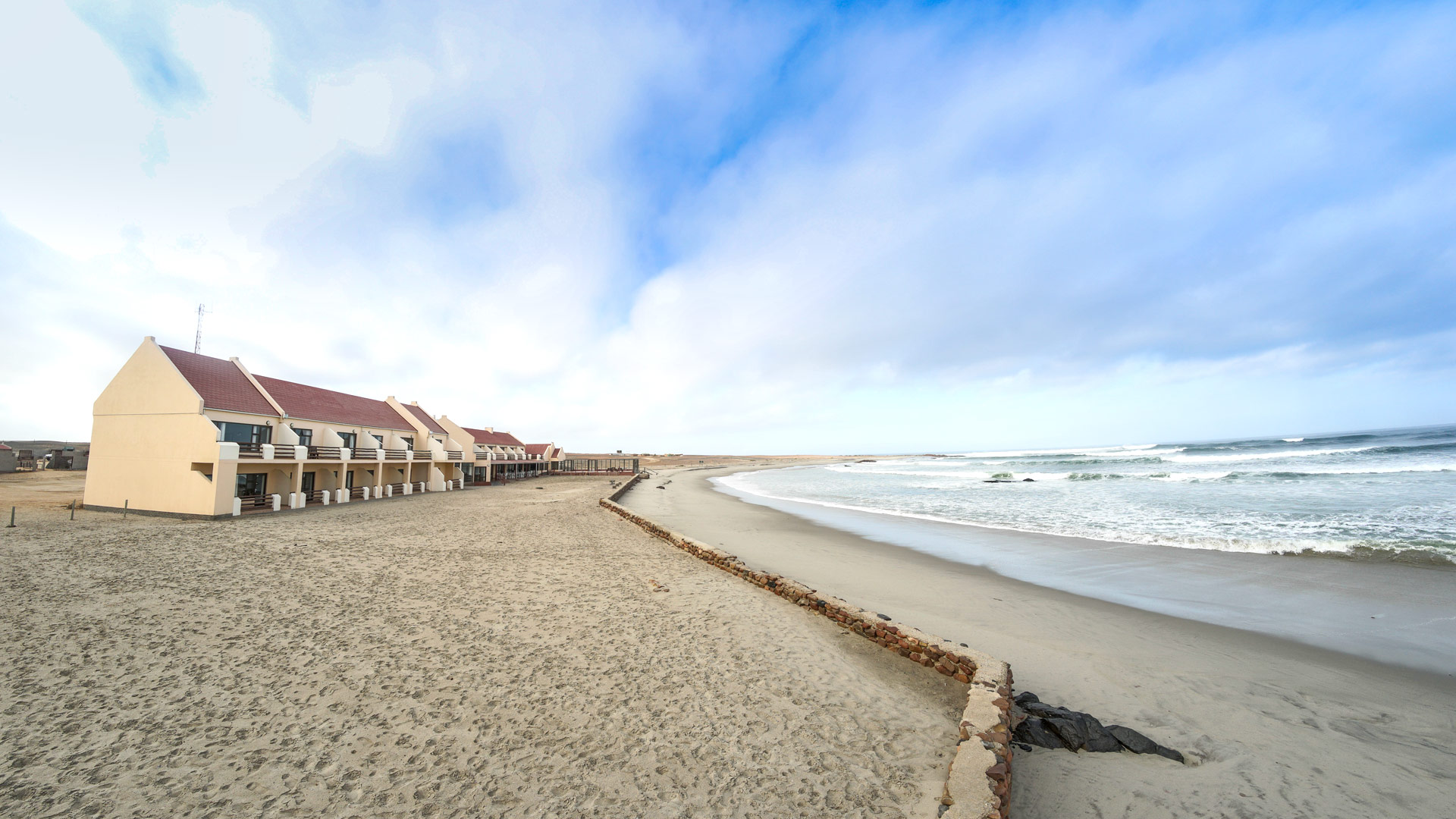
Cape Cross Lodge
Atlantic-facing lodge near Cape Cross Seal Reserve, outside the southern park boundary.
Visit lodge website ↗Map note: Terrace Bay and Cape Cross Lodge have verified positions on the park map. Shipwreck Lodge has been deliberately left unpinned because its published map coordinates are inconsistent. Follow the operator’s Möwe Bay transfer instructions, not an approximate pin.
Affiliate disclosure: see.africa may earn a commission from Expedia bookings at no extra cost to you. Terrace Bay and Cape Cross are linked directly to their operators.
12 mammals to know around Skeleton Coast National Park
The Skeleton Coast is not a high-density game park. Its wildlife value comes from extraordinary adaptation: desert-dwelling elephants, black rhino and lions use river systems and inland desert, while seals and dolphins belong to the cold Benguela coast. Treat large-predator and rhino sightings as exceptional rather than expected.
10 birds to know on a Skeleton Coast route
MEFT records 306 bird species in Skeleton Coast Park. The first five below are specifically named in the park’s official species summary; the remaining coastal species are strong additions for the Cape Cross/Dorob approach immediately south of the park.
Plants and lichens of Skeleton Coast National Park
The coast can look almost lifeless until you slow down. Official park information highlights more than 100 lichen species plus highly adapted succulents, shrubs and riverbed plants. Fog is an ecological resource here, not just weather.
Trees & shrubs
Succulents, lichens & ground-layer plants
Best Skeleton Coast National Park experiences
1. Drive into the fog belt
The landscape itself is the headline experience: cold Atlantic air, pale gravel, dunes and shifting visibility.
2. Stay at Terrace Bay
An overnight inside the park changes the trip from a transit into a true remote-coast experience and gives more time for nearby dunes, birds and wildlife.
3. Photograph shipwreck country
Use legal public viewpoints and accessible remains; many famous wrecks are remote, deteriorated or outside normal independent access.
4. Fish legally
Angling is a major Skeleton Coast activity. Obtain the required licence and follow the designated access and fishing rules.
5. Watch desert wildlife slowly
Scan ephemeral riverbeds and inland margins for oryx, springbok, jackal, zebra and rarer large mammals rather than expecting Serengeti-style density.
6. Add Cape Cross on the approach
Cape Cross is a separate reserve south of the park but makes a natural coastal add-on, especially for Cape fur seals and shorebirds.
7. Bird the coast
Look beyond big wildlife: flamingos, desert larks, korhaans, vultures and coastal birds make the route much richer.
8. Fly or go guided for the far north
If the Kunene-end wilderness is your main goal, use a specialist itinerary designed around the current restricted-access system.
Skeleton Coast National Park rules that matter
Stay on permitted roads
MEFT warns that off-road driving can leave desert scars for centuries. Do not make your own track across gravel plains or lichen fields.
Respect gate timing
NWR currently lists latest entry at 15:00 for Ugabmund and Springbokwasser. Your permit/booking conditions may impose additional timing requirements.
No plastic bags
NWR’s national-park terms prohibit bringing plastic bags into game parks and nature reserves.
Fishing requires a licence
Anglers must obtain the required fishing licence and use permitted areas rather than treating the full beach as open access.
Access is permit-specific
A transit route, Terrace Bay stay, Torra Bay stay and remote northern concession are not interchangeable permissions.
Prepare for remoteness
Fog, long distances and limited services make conservative fuel, water and timing margins more important than squeezing in one more stop.
Skeleton Coast National Park FAQ
What is the best time to visit Skeleton Coast National Park?
Skeleton Coast National Park can be visited year-round. October to April is warmer, while May to September is cooler. Fog is common throughout the year because the cold Benguela Current strongly influences the coast. Torra Bay is currently seasonal, opening only in December and January.
Can you self-drive Skeleton Coast National Park?
Yes, independent travellers can use the public southern/central access routes. However, access becomes much more restricted toward the far north, where specialist guided or fly-in arrangements are the realistic option.
Do you need a permit for Skeleton Coast National Park?
Yes. Entry and use are controlled. Your access depends on whether you are transiting, staying inside the park or using a concession/guided area. Park-use fees are separate from NWR accommodation.
What time do Skeleton Coast National Park gates open?
NWR currently lists Ugabmund and Springbokwasser as opening at sunrise/07:00 with latest entry at 15:00. Recheck the current rule immediately before travel because operating conditions can change.
Where can you stay inside Skeleton Coast National Park?
Terrace Bay is NWR’s principal resort inside the park. Torra Bay is a seasonal campsite and fishing retreat currently open only in December and January.
Is Cape Cross part of Skeleton Coast National Park?
No. Cape Cross Seal Reserve is a separate protected area south of Skeleton Coast Park, but it is a natural stop for travellers driving north from Swakopmund or Henties Bay.
What animals live in Skeleton Coast National Park?
Official park information lists desert-dwelling elephant, lion, black rhino, cheetah, springbok, Hartmann’s zebra, gemsbok, Heaviside’s dolphin and other desert/coastal wildlife. Wildlife is spread over a huge landscape, so sightings of the rare large mammals are never guaranteed.
Can you see shipwrecks in Skeleton Coast National Park?
Shipwreck history is central to the Skeleton Coast, but not every famous wreck is accessible to independent visitors. Use legal public viewpoints and do not drive off-road or enter restricted areas to chase a wreck location.
How many days do you need for Skeleton Coast National Park?
One day works for a transit; one or two nights is much better if you want the park to be a destination rather than a road connection. A Terrace Bay overnight is the simplest way to slow the trip down.
Where to go after the Skeleton Coast
The Skeleton Coast fits naturally into a wider Namibia road trip. If you continue inland, Etosha gives you the classic wildlife contrast; if you head south, Sossusvlei adds the red-dune landscape that completes many first Namibia itineraries.
Etosha National Park
Switch from foggy Atlantic desert to Namibia’s best-known waterhole safari.
Plan Etosha →Etosha self-drive route
Use a 3-, 4- or 5-day Etosha itinerary if your Namibia trip continues north-east.
See the self-drive plan →Sossusvlei stays
Continue south for red dunes, Sesriem and the Namib desert lodge circuit.
See Sossusvlei lodges →How this Skeleton Coast National Park guide was checked
See.Africa reviewed time-sensitive information on 15 August 2026 against Namibia’s Ministry of Environment, Forestry and Tourism, Namibia Wildlife Resorts and the official Visit Namibia tourism portal. Access, fees, accommodation opening periods and gate rules can change; current permit, NWR and ranger instructions override this web guide.