
Okavango Delta Safari Guide
The practical 2026 guide to the Okavango Delta: best time to visit, annual flood, Moremi and Khwai, mokoro safaris, interactive map, wildlife, birds and how to plan a first trip.
Okavango Delta at a glance
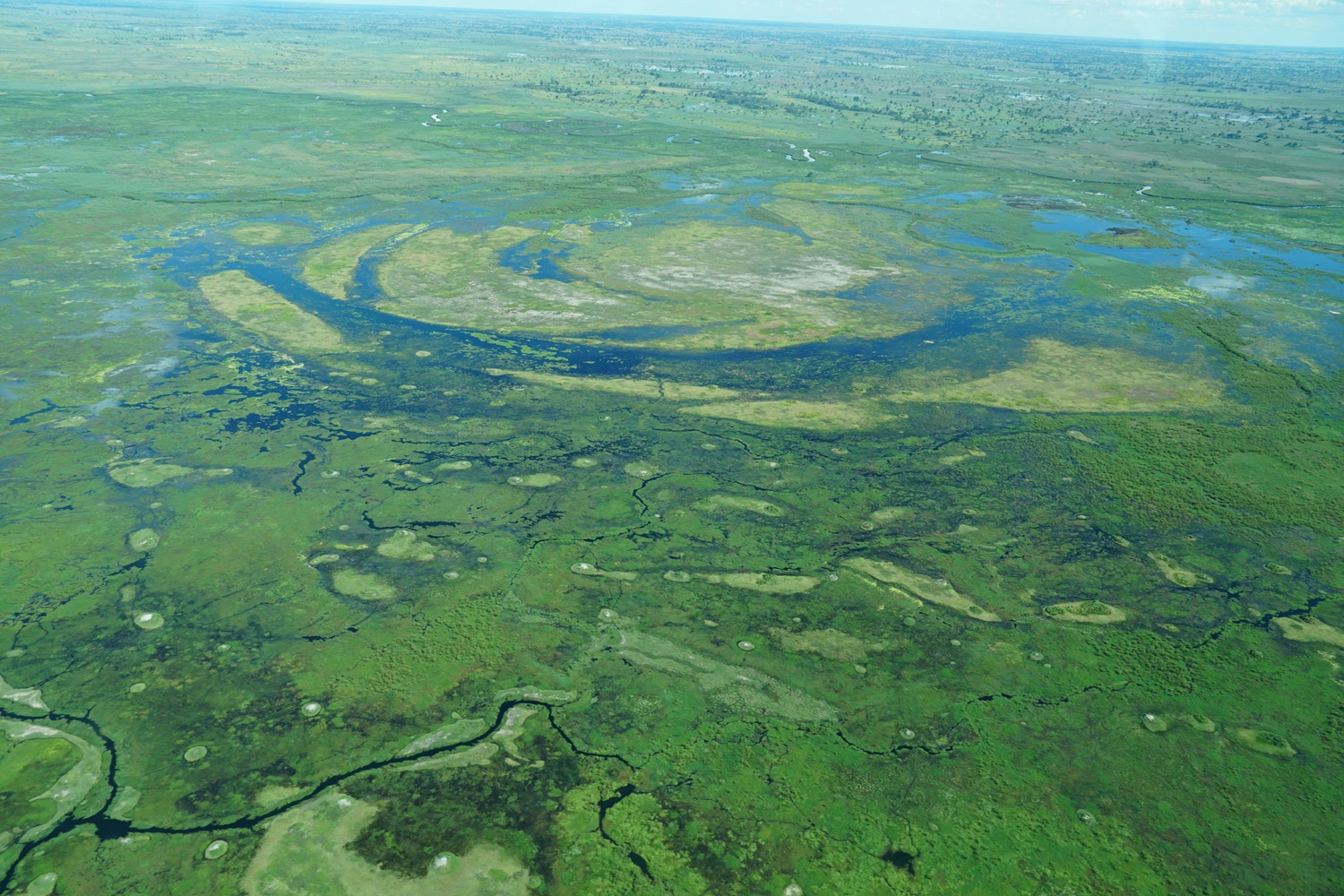
The Okavango Delta is a vast inland wetland in north-west Botswana. Water arriving from the Angolan highlands spreads across channels, lagoons, islands, permanent marshes and seasonally flooded grasslands instead of reaching the sea. Its unusual timing is central to safari planning: much of the annual flood reaches the Delta during Botswana’s dry winter.
Best time to visit the Okavango Delta
For most first-time visitors, May to October is the best overall period for an Okavango Delta safari. The weather is generally drier, wildlife becomes easier to concentrate around water and the flood pulse creates classic water landscapes in many parts of the Delta. If mokoro and boating are your priority, June to August is a strong default; exact water conditions still vary by year and concession.
For mokoro + boating
June–August is the safest broad planning window for a classic high-water feel, especially in camps with reliable permanent-water access.
For predators + game drives
July–October can be excellent in Moremi and Khwai as the dry season progresses and animals concentrate around productive floodplains and remaining water.
For birds + green scenery
November–March brings summer rain, lush vegetation, breeding activity and migratory birds. Expect heat, storms and more variable road conditions.
Okavango Delta fees and permits: what should you budget for?
There is no single “Okavango Delta entry fee.” Costs depend on whether you enter a public protected area such as Moremi Game Reserve, use a private/community concession, camp, self-drive or book an all-inclusive lodge package. For Moremi and other DWNP-managed areas, confirm the current park-entry, vehicle and camping tariffs before paying or building a self-drive budget.
Moremi / public reserve travel
Expect separate protected-area rules and, where applicable, park-entry, vehicle and camping charges. Self-drivers should verify the current tariff and reservation requirements directly with Botswana’s wildlife authorities or their confirmed campsite operator.
Private concessions / fly-in camps
Concession and conservation charges are commonly incorporated into, or added to, the lodge quote. Ask for a written breakdown covering accommodation, transfers, activities, conservation/park charges and any aviation costs.
Fee status checked 15 August 2026. Prices and regulations can change after publication.
Which Okavango Delta safari area is best?
For a first trip, the strongest Okavango safari usually combines one land-heavy wildlife area with one water-focused area. Moremi and Khwai are excellent for vehicle-based game viewing; deep-Delta concessions deliver the classic channel-and-island experience; the Panhandle is a quieter choice for birding, boating and fishing.
| Area | Best for | Main advantage | Planning note |
|---|---|---|---|
| Moremi Game Reserve | First safari, predators, varied habitats | Floodplains, lagoons, woodland and strong game drives | Experienced self-drivers can access parts by 4×4; camp activities depend on location. |
| Khwai / community areas | Wildlife + flexible safari style | Productive corridor beside Moremi | Night-drive and walking options depend on the operator and exact concession/community rules. |
| Deep Delta concessions | Mokoro, boating, water scenery | Channels, islands and intimate water safaris | Many camps are fly-in; seasonal water levels can change the activity mix. |
| Panhandle | Birding, boating, fishing, slower pace | Permanent river and papyrus landscapes | Often paired with Shakawe; less focused on classic big-cat game drives. |
How to get to the Okavango Delta
Maun
Maun sits on the southern fringe of the Delta and is the main logistics hub for flights, supplies, safari departures and road access toward Moremi and Khwai.
Light-aircraft transfer
Many interior camps use small airstrips and short bush flights from Maun. Confirm the exact airstrip and luggage rules with your camp or operator.
4×4 to Moremi / Khwai
Self-driving is possible for experienced drivers, but deep sand, water, remote tracks and changing conditions make a capable 4×4 and recovery preparation essential.
Okavango Delta map: Moremi, Khwai, Maun and water areas
Use this map to understand the scale and relationship between major safari zones. Pins are approximate planning references, not official navigation coordinates.
The optional line shows a sample trip sequence, not a driveable route. Some legs require light-aircraft or camp transfers.
How to plan an Okavango Delta safari
Nights 1–2: land-heavy wildlife
Start in Moremi or Khwai for early and late game drives, predator tracking and a strong introduction to the Delta’s floodplain-and-woodland wildlife.
Nights 3–5: water-focused camp
Move to a concession with reliable channel access for mokoro, boating, birding and a quieter view of the Delta from water level.
Add a sixth night for flexibility
An extra night helps if wildlife, flight schedules or weather change your daily plan and reduces the pressure to tick every activity immediately.
Choose activities before room type
Ask what is normally offered in your travel month: game drives, mokoro, boating, guided walks and night drives can differ sharply between areas.
A practical safari-day rhythm
Dawn: prioritise land wildlife
Use the coolest hours for game drives and predator tracking. If you are self-driving, have your route, fuel and offline map ready before first light rather than planning at the gate.
Late morning: shift habitat
As temperatures rise, move toward productive floodplains, shade and water. In a water camp, this can be a good window for a mokoro or boat activity when conditions allow.
Midday: rest + reset
Use the hottest hours for lunch, batteries, camera cards and route checks. Confirm the afternoon activity and any transfer timing with camp staff or your guide.
Afternoon: work back toward camp
Wildlife activity improves as temperatures fall. Leave enough margin for changing tracks, water crossings and any reserve or camp timing instructions—never build a plan around a last-minute dash.
20 mammals to know in the Okavango Delta
The Okavango supports a remarkable mix of wetland specialists, plains game and large predators. Sightings vary strongly by habitat, flood level and concession, so no individual species should be treated as guaranteed.
African bush elephant
One of the Delta’s defining mammals; watch for herds feeding, drinking and crossing channels.
Lion
Strong populations occur in productive land areas, especially where floodplains concentrate herbivores.
Leopard
Search riverine woodland, large trees and shaded edges, particularly early and late in the day.
African wild dog
Packs can cover huge distances; finding them is often one of the most memorable Okavango sightings.
African buffalo
Large herds use productive floodplains and form an important prey base for lions.
Hippopotamus
Channels and lagoons are classic hippo habitat. Follow your guide’s instructions closely on water activities.
Red lechwe
A wetland specialist often seen bounding through shallow water and grazing flooded grasslands.
Sitatunga
A secretive swamp antelope associated with dense papyrus and reed habitats.
Plains zebra
Often mixed with other grazers on open floodplains and grassland edges.
Giraffe
Frequently seen browsing woodland and the drier islands that rise above the floodplain.
Show 10 more Okavango mammals
Spotted hyena
An accomplished hunter and scavenger; listen for calls after dark and scan open ground around dawn and dusk.
Cheetah
Less tied to wet habitat than lions or leopards; look in open, drier areas with room to run and fewer dense thickets.
Blue wildebeest
Uses open grasslands and floodplain margins, often in association with zebra; scan broad grazing areas.
Impala
Abundant around woodland edges and mixed savanna; one of the easiest antelope to learn and a key prey species.
Tsessebe
A fast antelope of open grassland and floodplain systems; look for small groups on short, productive grass.
Sable antelope
A striking but less predictable antelope of suitable woodland and savanna habitat; sightings are a bonus rather than an expectation.
Greater kudu
Elegant browsers that favour woodland and thicker vegetation on drier ground; scan shaded edges and island woodland.
Common warthog
Frequently seen grazing short grass, often dropping to their knees while feeding; watch open lawns and track edges.
Black-backed jackal
An alert small canid that hunts and scavenges around open habitat; scan track edges and short grass at dawn and dusk.
African clawless otter
An uncommon but rewarding water-side sighting; watch quiet banks and channel edges for movement, tracks or brief swimming views.
10 Okavango Delta birds worth learning
African fish eagle
Its carrying call is one of the characteristic sounds of the Delta’s larger channels and lagoons.
Malachite kingfisher
A tiny jewel of reed edges and quiet channels, particularly rewarding from a mokoro.
Pied kingfisher
Easy to recognise as it hovers over open water before plunging after fish.
African jacana
Long toes let it step across floating vegetation and lily pads.
Wattled crane
A special floodplain species and a major target for dedicated wetland birders.
Slaty egret
A regional wetland speciality associated with shallow flooded grasslands.
Saddle-billed stork
A huge, unmistakable stork feeding in shallow marshes and floodplains.
African pygmy goose
A tiny colourful waterfowl species often associated with floating vegetation and lilies.
African openbill
A wetland stork with a distinctive bill adapted to feeding on aquatic snails.
Southern ground hornbill
A large terrestrial hornbill more associated with the Delta’s drier woodland and savanna areas.
Wetland plants, trees and palms of the Okavango
The Delta is a mosaic rather than one continuous swamp. Permanent channels, seasonal floodplains, islands and dry woodland each support different plant communities.
Flowers, reeds & wetland plants
Papyrus
Tall papyrus walls are among the most recognisable features of permanent-water channels.
Common reed
Dense reedbeds provide cover and feeding habitat for many wetland birds.
Water lily
Floating pads and flowers brighten calmer lagoons and channels.
Hippo grass
A robust wetland grass associated with slow water and floodplain edges.
Sedges
Grass-like sedges form important flooded lawns and grazing habitat.
Bulrush / cattail
Dense stands occupy shallow marshes and protected wetland margins.
Pondweeds
Submerged and floating-leaved pondweeds occur in quieter freshwater channels and provide habitat for aquatic life.
Blue water lily
A conspicuous floating-leaved plant of calm lagoons and backwaters; flower colour can vary.
Water smartweeds
Low wetland herbs that can occur along seasonally inundated margins and shallow floodplain edges.
Water primroses
Wetland herbs found around marshy margins and shallow seasonal water; identification to species can be difficult in the field.
Trees & shrubs
Mopane
A dominant tree of drier Botswana woodland, recognisable by butterfly-shaped leaves.
Sausage tree
Large hanging fruits make this riverine tree easy to recognise.
Jackalberry
A substantial shade tree found on better-watered ground and islands.
Sycamore fig
Fruiting figs can attract a wide range of birds and mammals.
Leadwood
A long-lived woodland tree with dark, deeply fissured bark.
Makalani palm
Fan palms add a distinctive silhouette to parts of the Delta and Panhandle.
Knob-thorn
A savanna tree of drier islands and woodland, recognised by dark knob-like thorns on older trunks.
Silver cluster-leaf
A common sandy-soil tree with pale foliage, especially useful for recognising the Delta’s drier woodland habitats.
White raisin
A shrub or small tree of woodland and scrub whose fruits are eaten by wildlife and people in parts of southern Africa.
Fever berry
A moisture-associated tree found around riverine woodland and floodplain margins in northern Botswana.
Best Okavango Delta safari experiences
1. Mokoro safari
Glide quietly through shallow channels with a trained poler. It is the Delta’s signature low-to-the-water experience.
2. Boat safari
Motorboat trips cover more water than a mokoro and are excellent for hippos, elephants, waterbirds and sunset light.
3. Game drive
Moremi, Khwai and suitable concessions provide classic vehicle safaris for predators and larger herds.
4. Guided walking safari
Where permitted, walking shifts attention to tracks, plants, birds and smaller details. Always go with an authorised guide.
5. Night drive
Some concession/community areas permit night drives, opening chances for nocturnal species. They are not available everywhere.
6. Scenic flight
A small-aircraft or helicopter flight reveals the Delta’s channel-and-island pattern in a way that is difficult to understand from ground level.
7. Dedicated birding
Slow down around lagoons and reeds for kingfishers, egrets, cranes, storks and raptors rather than treating birds as a side attraction.
8. Panhandle boating
For a quieter trip, the upper Delta around Shakawe offers papyrus channels, birdlife and fishing-focused experiences.
Which Okavango Delta safari style should you book?
The best format depends on whether you value independence, water activities or maximum wildlife time. Compare the trip structure—not only the lodge photos—before booking.
| Safari style | Best for | Main strength | Watch for |
|---|---|---|---|
| Fly-in lodge safari | First-time visitors, limited time | Easy access to remote Delta areas; activities usually organised | Small-aircraft luggage limits and the exact activity mix at each camp |
| Mobile safari | Wildlife-focused travellers | Moves between productive areas with a guide and camp crew | Comfort level, transfer times and whether water activities are included |
| Self-drive Moremi/Khwai | Experienced 4×4 travellers | Independence and flexible game-viewing time | Deep sand, flooding, remote recovery and campsite availability |
| Maun-based day experience | Short stays / smaller budget | Mokoro, scenic-flight or day-tour taste of the Delta | Less immersion and less dawn/dusk wildlife time than staying inside the safari areas |
Rules that matter in the Okavango
Follow the rule for your exact area
Moremi, community areas and private concessions can have different activity permissions. Your guide, ranger and current permit conditions take priority.
Never approach water casually
Hippos and crocodiles make shorelines and channels potentially dangerous. Leave water access decisions to trained guides.
Stay on authorised routes
Self-drivers should use permitted tracks, avoid habitat damage and never attempt flooded or deep-sand sections beyond their vehicle or experience.
Give wildlife space
Do not block animal movement, crowd sightings or pressure animals for a photograph. Quiet viewing usually produces better behaviour and better images.
Okavango Delta FAQ
What is the best time to visit the Okavango Delta?
May to October is the best all-round period for most first-time visitors. June to August is especially attractive for water-focused safaris, while the later dry season can be excellent for concentrated game viewing.
When is the Okavango Delta flood at its highest?
High-water conditions are generally associated with the middle of the dry season, often around June to August. The exact peak varies by year and the flood reaches different parts of the Delta at different times.
Is flood season the same as rainy season?
No. Most local rain falls in the summer green season, while the major flood pulse arrives later from the Angolan catchment and spreads through the Delta during Botswana’s dry season.
Is Moremi Game Reserve the same as the Okavango Delta?
No. Moremi protects an important part of the central and eastern Delta, but the Okavango is much larger and includes private concessions, community areas, the Panhandle and other wetlands outside the reserve.
How many nights do I need in the Okavango Delta?
Four to six nights is a strong first-trip target. It lets you combine a game-drive area with a water-focused camp. Three nights works if you are concentrating on one ecosystem.
Can I self-drive in the Okavango Delta?
You can self-drive parts of Moremi and Khwai if you have suitable 4×4 experience and preparation. Much of the deep Delta is reached by light aircraft and camp transfer rather than by road.
Is a mokoro safari guaranteed?
No. Mokoro availability depends on camp location, water level, season and local activity permissions. Confirm it with the operator before booking if it is a priority.
What is the main gateway to the Okavango Delta?
Maun is the main safari gateway. It is the common departure point for road transfers, 4×4 trips and light-aircraft flights into Delta airstrips.
Where is best for predators in the Okavango?
Moremi and Khwai are strong first choices for land-based predator viewing. Lion, leopard, spotted hyena and African wild dog can also occur elsewhere, but the exact best area changes with prey, water and season.
Where is best for a classic water safari?
Choose a deep-Delta or permanent-water concession that explicitly offers mokoro and boating during your travel month. Camp location matters more than the word “Okavango” in the property name.
How this guide was checked
See.Africa reviewed time-sensitive information on 15 August 2026 against UNESCO and Botswana Tourism Organisation material. Flood timing, water depth, road conditions, activity permissions and access can change; current camp, guide and authority instructions override this web guide.