
Hotel Manager Interview Series
Between rice paddies and the Atlantic, a forest grows around an off-grid ecolodge.
The conversation
At Le Papayer Écolodge on Senegal’s Casamance coast, living off-grid was initially a necessity, not a selling point. Founder and owner-manager Laurent Piolanti tells us how he built a self-sufficient seafront retreat, planted a forest of more than 250 trees and helps visitors explore the surrounding Diola villages, mangrove creeks and beaches with respect for local traditions.
“It has become a forest.”
Laurent Piolanti, recounting his former gardener’s words
Off-grid on the wild Casamance coast
What makes this hotel—and its surrounding destination—different from anywhere else in Africa?
Laurent Piolanti
Le Papayer is completely off-grid, on a one-hectare seafront plot between the rice paddies and the Atlantic. There is no public water, no mains electricity and no sewer here: everything we use, we produce, store and manage ourselves, with solar and wind power. It was not a marketing choice. At this spot in Casamance there is simply no grid, so autonomy was the condition for living here, and the ecological conviction came along the way.
The destination does the rest. Casamance is cut off from the rest of Senegal by the Gambia, and that isolation kept mass tourism away and left the nature, the Diola villages and the sacred forests intact. It feels like another country within the country: greener, deeper, more alive. Many travellers who tour Senegal tell us the same thing on the way home: their truest memory was all the way down south.
What local traditions, ingredients, art, or experiences do you incorporate into the guest experience?
Laurent Piolanti
Our roofs are traditional thatched straw. It breathes, insulates from the heat and shrugs off the salt air better than anything modern. The restaurant works with what comes in fresh each morning: grilled fish over a wood fire, shrimp, lobster, crab, mangrove oysters, roasted suckling pig and beach picnics. At the bar we serve local drinks such as palm wine, bounouk, cashew wine and sumsum.
Guests can also discover Casamance through excursions we organise à la carte, with local boatmen and guides. They include a pirogue through the bolongs (the mangrove creeks), the island of Carabane, the great kapok trees of Pointe Saint-Georges, and Diola villages with their impluvium houses and sacred forests. We keep these excursions small and respectful of local rules, for example the regulated access to the rice paddies, which are sacred to the community.
When a garden becomes a forest
Can you share a memorable story about a guest, employee, or community member that captures the spirit of this hotel?
Laurent Piolanti
The story I think of first is about the land itself. The elders called our strip of land Kibalaou, “the little forest” in the Diola language of Djiembering. Over the years the axes and the pressure of people had emptied it, and the animals had left. When I started, we planted one tree, then ten, then hundreds.
A while ago I met my former gardener, who had walked beside me for years and knew the lodge in its very first days, when there was almost nothing here. He looked at the trees for a long moment and said, very softly: “It has become a forest.” Just a few words, but from him they held a whole lifetime. That is the spirit of the lodge for me: patience, humility, and doing things with the land and the people around it. Today there are more than 250 trees and about as many flowers planted, and our guests can plant their own during their stay.
Under the thatched roof
Which is your favorite room in the hotel, and what makes it special to you?
Laurent Piolanti
My favourite is Room 3, upstairs, right under the thatched roof. It is a large, spacious room with four beds, and when I lie there I look up at a frame more than twelve metres high, built from rosewood with palmyra-palm (rônier) rafters and red-wood laths. It gives an impression of majesty and solidity that inspires confidence: everything is harmonious and well drawn, designed to stand up to the storms of the rainy season. At night you hear the rain on the roof and the frogs outside. Up there you feel like just a tiny dot in a universe of stars and powerful nature.
What is your ideal day in the area, from morning until evening?
Laurent Piolanti
My ideal day starts early, to enjoy the cool of the morning and the sea. I walk around the tropical garden to see how the plants and trees are doing, then I sit down for breakfast and watch the sunbirds (we call them colibris here) feeding on the flowers.
Then comes the activity of the day, until lunch. The hottest hours are for resting, so as not to be overcome by the sun, and around 4 p.m. I head to the beach. But it is never quite the same: here you can never tell what a day is going to look like until it unfolds.
Harmony, balance and beauty
If you could describe the hotel in just three words, which would you choose—and why?
Laurent Piolanti
Harmony, balance, beauty.
Harmony, because nature is far stronger than we are, and you have to understand it before you try to master it. Balance, because everything seems to be in perfect balance without any need for us to step in and disturb a system that does not need us: we are only visitors. And beauty, because the whole spectacle is simply right, even when it is harsh: nature follows the law of the strongest and of natural selection, and that is part of its truth. Everything is in its place, with colours that change through the seasons and the scents of the mango and cashew blossoms. It is just perfect: nothing to change, only to enjoy it to the full.
How do you balance international hospitality standards with an experience that feels genuinely local?
Laurent Piolanti
We keep the standards that matter for comfort and safety: hot water around the clock from solar heaters, comfortable rooms with quality mosquito nets, fans and private bathrooms, a first-aid kit, a safe, Wi-Fi, a clear welcome booklet and a team on hand. Everything else stays local: thatched roofs, food from the morning’s catch and market, local drinks and guides, and a pace set by the tides and the sun rather than a schedule.
Our off-grid system also helps keep the balance honest. We ask for just one thing from guests, to avoid very high-power appliances like big hair dryers, and we explain why. People adapt gladly when they understand the reason, and many leave charmed by living a few days to the rhythm of the sun.
Growing together
What is the most important leadership lesson that working in hospitality has taught you?
Laurent Piolanti
You never build alone. A hotel like this is a team effort, and if the team has decided to follow you because your choices are coherent, then together you can build something.
What do you do to help employees grow into future leaders?
Laurent Piolanti
I give people responsibility for the things that matter most to me: respect for all living things, listening, and motivation in the hard moments, when what counts is that “we are all in this together”.
The interviewee
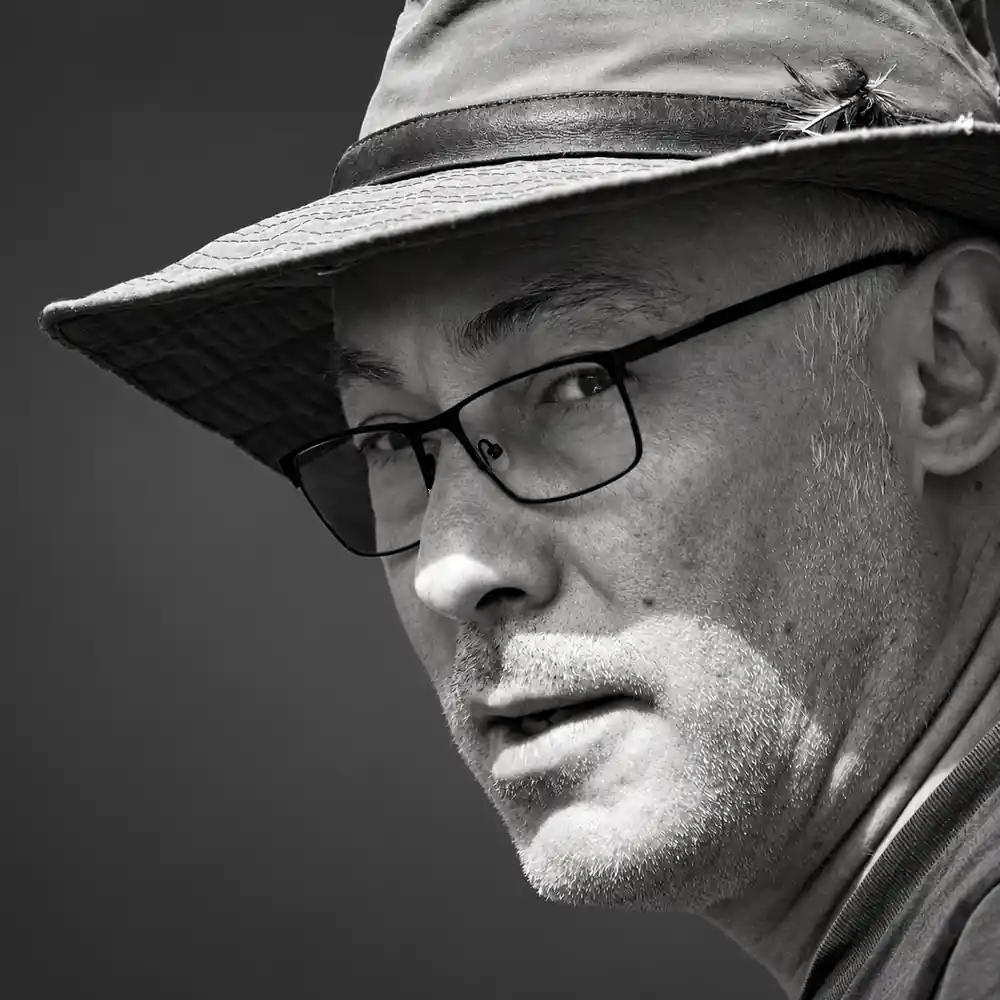
Meet Laurent Piolanti
Laurent Piolanti is the founder and owner-manager of Le Papayer Écolodge in Cap Skirring, Casamance, Senegal. His reflections focus on ecological self-sufficiency, restoring native vegetation, and leading a team through shared responsibility.
Interview answers and manager photograph supplied directly by Le Papayer Écolodge.
The property
Le Papayer Écolodge
A one-hectare beachfront ecolodge operating independently of the public water and electricity grids, between rice paddies and the Atlantic coast of Casamance.
Part of the See.Africa Hotel Manager Interview Series. Answers reflect Laurent Piolanti’s views and have been lightly edited for spelling and clarity. Editorial imagery © Le Papayer Écolodge, used with permission.