
Liuwa Plain National Park Guide
The practical 2026 guide to Liuwa Plain: Africa’s second-largest wildebeest migration, best time to visit, Kalabo access, campsites, interactive map, wildlife and floodplain safari planning.
Liuwa Plain National Park at a glance
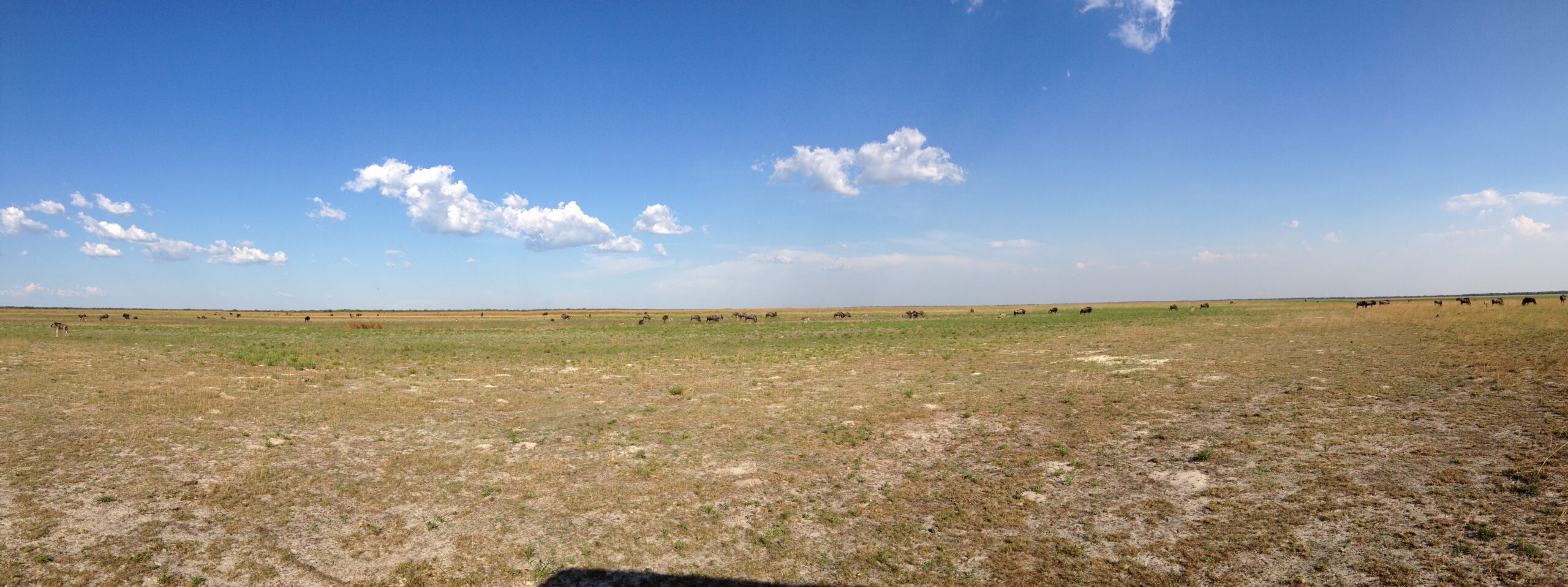
Liuwa Plain National Park protects a vast seasonally flooded grassland in western Zambia near Angola. It is one of Africa’s most unusual safari landscapes: huge skies, pans, open plains and scattered woodland islands, with Lozi communities living within the protected landscape.
African Parks reports that Liuwa now supports more than 47,000 blue wildebeest in Africa’s second-largest wildebeest migration, alongside recovering lion, spotted hyena, cheetah and African wild dog populations.
Best time to visit Liuwa Plain National Park
For the iconic migration experience, aim for late November or early December. The first rains green the plains, wildebeest gather in large numbers and dramatic thunderstorms build over the horizon. For simpler road travel, August to October is easier.
For wildebeest migration
Late November–early December is the classic choice. Herd positions still depend on rainfall, so do not expect a fixed migration route.
For easiest self-drive
August–October gives dry tracks and shorter grass, though October can become very hot.
For water + birds
May–June can be spectacular as floodwater remains in pans and bird concentrations build, provided access has reopened.
Liuwa Plain park fees and campsite costs
Current 2026 Liuwa fees are not published on a clearly dated live public rate page that we could verify. African Parks still hosts a 2022 campsite tariff showing international adult park entry at USD 40/day and community camping at USD 25/night, but those figures are historical planning references — not prices we recommend budgeting as current.
Do not lock your budget to old rates
The official 2022 sheet also lists separate child, vehicle and community-scout charges. Confirm the current tariff directly before departure.
Camping is part of the Liuwa experience
Lyangu, Katoyana, Kwale, Mukalabumbu and Sikale give access to different parts of the park; camping is allowed only at designated sites.
How to get to Liuwa Plain National Park
Mongu → Kalabo
A paved causeway/road across the Barotse floodplain has made Kalabo reachable year-round. Mongu is the practical fuel, ATM and supermarket stop.
Kalabo pontoon ferry
Independent road travellers cross the river using a small vehicle pontoon. After this point the journey becomes sandy and slow.
High-clearance 4×4 only
Air down tyres for the deep sand and carry recovery gear. Zambia Tourism specifically advises 4×4 access.
Liuwa Plain map: Kalabo, campsites and safari areas
This map is for broad orientation. Liuwa’s tracks, pans and usable routes change with seasonal flooding, so several points are approximate and should never replace current African Parks directions.
Suggested route is a planning sequence, not verified road geometry. Follow park signs and current staff instructions.
How to plan a Liuwa safari day
Dawn: predator country
Start early around open plains and pan edges. Spotted hyenas are a Liuwa speciality, while lions, wild dogs and cheetahs reward patient scanning.
Morning: follow grazing and water
Instead of chasing one famous point, read where wildebeest, zebra and lechwe are concentrating. Herd position changes with fresh grass and flooding.
Midday: stay conservative
Heat and deep sand make long cross-park transfers tiring. Use camp shade, carry more drinking water than you think you need and protect your vehicle from overheating.
Afternoon: pans + storm light
In November and December, storm build-up can create spectacular photography. Keep enough time to return to camp before darkness complicates remote navigation.
20 mammals to know in Liuwa Plain
Blue wildebeest
Liuwa supports Africa’s second-largest wildebeest migration. Herd distribution shifts with rainfall and grazing rather than following a tourist timetable.
Spotted hyena
Large clans are one of Liuwa’s defining predator experiences. Watch herd edges and open plains at dawn.
Lion
The population recovered from the Lady Liuwa era and now breeds regularly.
African wild dog
Wild dogs were reintroduced and had grown to 25 animals in two packs by the end of 2025.
Cheetah
The treeless floodplain provides excellent visibility but sightings still require patience.
Plains zebra
Zebra often move with or near wildebeest and are important prey for Liuwa predators.
Red lechwe
Look around shallow floodwater and wet grasslands where their elongated hooves suit soft ground.
Common eland
Eland are part of Liuwa’s restored herbivore community and can form conspicuous herds.
African buffalo
Buffalo returned through restoration work and are often associated with southern and wetter areas.
Common tsessebe
High-shouldered, dark-faced antelope of open grassland; one of Liuwa’s characteristic grazers.
Show 10 more Liuwa mammals
Oribi
Small, fine-boned antelope often seen singly or in pairs. Scan short-to-medium grass and watch for the sudden high bounding escape.
Roan antelope
Large pale antelope with a bold black-and-white face mask; more likely near taller grass and woodland margins than on the barest plains.
Lichtenstein’s hartebeest
Fifty were returned to Liuwa after more than 30 years of local absence. Look for sloping backs, elongated faces and groups in open grazing areas.
Southern reedbuck
Usually associated with taller grass near wet depressions. Often detected when an animal stands up suddenly from cover.
Side-striped jackal
A small omnivorous canid, greyer and less sharply patterned than a black-backed jackal. Best chances come in low light near woodland and open margins.
Banded mongoose
Highly social and usually encountered as a busy group foraging through shorter grass or around better-drained wooded ground.
Common warthog
Often kneels on its front wrists while grazing. When alarmed it usually runs with the tail upright, making it easy to follow visually.
Serval
Long-legged spotted cat adapted to hunting rodents in grassland. A patient dawn or dusk scan near damp cover gives the best chance.
African civet
Heavy-bodied, boldly patterned carnivore. Daytime visitors are far more likely to see tracks or signs than the animal itself.
Leopard
Much less characteristic of Liuwa than hyena, cheetah or lion. Search wooded islands and denser cover rather than the widest open floodplain.
10 Liuwa Plain birds worth learning
African Parks records more than 357 species and highlights globally important populations of cranes, storks and other waterbirds.
Wattled crane
One of Liuwa’s flagship wet-grassland birds.
Grey crowned crane
Elegant crane often seen in pairs or loose groups around wetter plains.
Black-winged pratincole
African Parks says Africa’s entire population passes through Liuwa between June and December.
Great white pelican
Large congregations can build on productive pans and floodwater.
Saddle-billed stork
Huge wetland stork easily identified by its colourful bill.
African openbill
Floodplain specialist feeding heavily on aquatic snails.
African fish eagle
Listen for its call around larger pans and channels.
Southern ground hornbill
Large terrestrial hornbill of open grassland and woodland edges.
Secretarybird
Long-legged raptor hunting across open plains.
African skimmer
Distinctive waterbird that feeds by skimming the lower mandible across calm water.
Grassland, woodland islands and seasonal flowers
Liuwa’s ecology is driven by seasonal water. Vast open grasslands dominate the plain, interrupted by wooded islands and palms. When the first rains arrive, flowers spread rapidly around pans and fresh grazing triggers wildlife movement.
Key trees & palms
Zambezi teak
Characteristic woodland tree of western Zambia’s sandy soils.
Weeping wattle
Woodland species occurring on better-drained islands.
Silver cluster-leaf
Common southern African sandy-soil tree with silvery foliage.
Doum palms
Palms punctuate parts of the otherwise immense grassland horizon.
Wild syringa
A broad-crowned woodland tree of deep sandy soils on better-drained islands.
Sausage tree
A conspicuous tree with heavy hanging fruits; older African Parks campsite notes specifically mention one in the Kwale area.
African ebony
A larger woodland tree associated with more stable, better-watered ground.
Leadwood
A long-lived heavy-wooded tree of stable woodland rather than the most frequently flooded flats.
Paperbark thorn
A thorn tree of seasonally moist savanna and drainage margins.
Bushwillows
Common woodland-island shrubs and trees; exact species often require close inspection of leaves and fruit.
Flowers, reeds, sedges & wetland plants
Burgu grass
Flood-tolerant grass important to herbivores as water retreats.
Hippo grass
Aquatic or semi-aquatic grass associated with floodplain channels and pans.
Pan-edge flowers
After the first rains, colourful flowers can carpet damp margins around pans; exact species vary strongly by microhabitat.
Floodplain sedges
Sedges become conspicuous in wetter depressions and shallow seasonal water.
Thatching grasses
Tall grasses become prominent on less frequently inundated flats and edges later in the growing season.
Panic grasses
A diverse group of grasses found in moist and seasonally flooded habitats; exact species are difficult to separate from a vehicle.
Water lilies
Floating leaves and flowers can occur where pans retain shallow water, supporting insects and waterbirds.
Common reed
Dense stands occur in more persistent wet habitats and provide cover for birds and small mammals.
Pan-edge annuals
After the first rains, short-lived herbs and flowers can colour damp pan margins rapidly; composition changes by site and season.
Shallow-water herbs
Small herbs emerge in newly exposed wet mud as floodwater retreats, adding seasonal structure to feeding areas.
Best Liuwa Plain safari experiences
1. Wildebeest migration drive
Plan several days around late November/early December rather than expecting the full spectacle on one afternoon.
2. Hyena-focused safari
Liuwa’s spotted-hyena clans are a genuine park speciality and deserve as much attention as lions.
3. Community campsite safari
Camping keeps the experience close to the landscape and directs revenue into local community structures.
4. Floodplain birding
Pans can hold cranes, storks, pelicans and migratory waterbirds in remarkable numbers.
5. Storm photography
November–December thunderheads over the open plain create some of Zambia’s most dramatic safari landscapes.
6. Slow self-drive exploration
The pleasure of Liuwa is the scale. Stop chasing mileage and spend time watching herd movement, predators and changing light.
Which Liuwa campsite area is best?
| Area | Best for | Planning note |
|---|---|---|
| Lyangu | Easy first night, western plains | Shorter transfer after entering from Kalabo. |
| Katoyana | Central pans, hyena, lion, cheetah | Strong all-round base for a first visit. |
| Kwale | Southern sector, buffalo, birding | Shadier and useful for exploring a different habitat mix. |
| Mukalabumbu | Northern exploration, Miyanda pools | Good for birding and historically strong lion country. |
| Sikale | Remote north, seasonal wildebeest | Most isolated; self-sufficiency is essential. |
Rules and practical safety in Liuwa
Stay on existing roads
Zambia Tourism explicitly notes that off-road driving is not allowed because the floodplain is environmentally sensitive.
Use a real 4×4
Deep sand after Kalabo is not suitable for ordinary cars or soft-road SUVs.
Camp only where designated
Use official community or park campsites and follow staff instructions on fire, water and waste.
Respect communities
Liuwa is a shared landscape with thousands of Lozi residents. Slow down around villages and livestock and treat people’s homes as homes, not attractions.
Liuwa Plain National Park FAQ
When is the Liuwa Plain wildebeest migration?
Late November to early December is the classic viewing period. Timing changes with rainfall and fresh grazing, so exact herd positions vary every year.
How many wildebeest are in Liuwa Plain?
African Parks currently reports more than 47,000 wildebeest, making Liuwa’s migration the second largest in Africa.
Can I self-drive Liuwa Plain?
Yes, but only with a capable high-clearance 4×4. Deep sand begins after the Kalabo ferry and seasonal flooding can close tracks.
What is the best time to visit Liuwa Plain?
August–October is easiest for dry-road safari travel; late November–early December is best for the migration spectacle.
How do I get to Liuwa Plain?
Drive to Kalabo, usually via Mongu, cross the river by vehicle pontoon and continue on sandy tracks to the park tourism area.
Are there lions in Liuwa?
Yes. African Parks reports a recovered population of roughly 20 lions, a major change from the period when Lady Liuwa was the sole known lioness.
Are there African wild dogs?
Yes. Wild dogs were reintroduced and the population had reached 25 animals in two packs by the end of 2025.
How many nights should I stay?
Three to four nights is a strong first-trip minimum. The park is large, remote and wildlife moves with water and grass.
How this guide was checked
See.Africa reviewed Liuwa information on 19 August 2026 against current African Parks conservation pages and Zambia Tourism access/season guidance. Rates and roads can change; verify live information before departure.