
South Luangwa National Park Safari Guide
The practical 2026 guide to South Luangwa National Park: best time to visit, walking safaris, leopards, Mfuwe access, fees, interactive map, wildlife, lagoons and how to plan your safari days.
South Luangwa National Park at a glance
South Luangwa National Park is one of Zambia’s best-known safari parks, covering about 9,050 km² around the Luangwa River and its oxbow lagoons. Zambia Tourism lists roughly 60 mammal species and more than 400 bird species and describes the park as the place where the now-famous walking safari originated. The river, lagoons, mopane woodland, ebony groves and open floodplains create unusually concentrated wildlife habitat.
Quick answers for South Luangwa National Park
Best time to visit South Luangwa National Park
For most first-time safari travellers, June to October is the best time to visit South Luangwa National Park. The dry season progressively strips back vegetation and concentrates wildlife around the Luangwa River, oxbow lagoons and remaining water. The green season from roughly November to March is lush, excellent for birding and more challenging for classic big-game viewing.
For classic game viewing
July–October gives increasingly concentrated wildlife as water recedes and grass becomes shorter. Expect higher safari demand and hotter conditions late in the season.
For walking safaris
June–September is a strong practical window for dry trails, cooler mornings and excellent tracking conditions. Exact walking programmes depend on camp and guide operations.
For birds + green scenery
November–March transforms the valley into lush woodland and floodplain. Migrant birds arrive, while wildlife spreads away from permanent water.
Where to safari in South Luangwa National Park
For a first visit, the Mfuwe and central Luangwa area is the easiest base; the Nsefu sector and northern bush-camp areas suit travellers wanting a quieter, more immersive second stage. South Luangwa is better understood as a river-and-lagoon ecosystem than as a single loop road.
| Area | Best for | Main advantage | Planning note |
|---|---|---|---|
| Mfuwe / main entrance | First visit, airport access, varied lodges | Fastest introduction to central river-and-lagoon habitat | Most convenient if you have only 3 nights. |
| Central river & lagoons | Leopard, hippo, elephant, night drives | Dense mix of riverine woodland, oxbows and floodplain | Spend time around productive lagoons rather than constantly changing areas. |
| Nsefu sector | Quieter safari, walking, river corridor | Eastern-bank wilderness with river, floodplain, ebony and mopane habitat | Best treated as its own stay rather than a rushed excursion. |
| Northern bush-camp country | Walking safaris, low vehicle density | More remote feel and access to roadless walking areas | Usually lodge/camp-led logistics rather than casual self-drive exploration. |
South Luangwa National Park entry fees
At review on 16 August 2026, Zambia’s government eRegistry lists the non-resident South Luangwa park-entry permit at US$25 per person per day and the resident rate at US$20. Zambia Tourism’s public park-fee table is still explicitly labelled 2025 and also lists US$25 for international visitors, plus a US$30 self-driver category. Because these public sources are not fully synchronised, confirm the current total with the Department of National Parks and Wildlife or your lodge before payment.
US$25 / person / day
Current government eRegistry listing for the South Luangwa Category A national-park entry permit.
US$20 / person / day
Current government eRegistry listing. Carry the documentation required to qualify for the relevant visitor category.
Verify current total
Zambia Tourism’s 2025 table lists a US$30 self-driver category; vehicle and visitor charges should be reconfirmed before independent entry.
How to get to South Luangwa National Park
Fly to Mfuwe International Airport
Mfuwe International Airport is the main air hub. Zambia Tourism lists year-round Lusaka flights, with frequencies increasing in high season. Lodges commonly arrange airport transfers.
Drive to Mfuwe
Zambia Tourism describes the usual approach as about 123 km from Chipata to Mfuwe, taking roughly two hours on a generally good but sometimes corrugated road.
Petauke route
The shortcut from the Great East Road via Petauke should only be attempted well into the dry season in a robust 4×4 by competent, experienced drivers.
Mpika / Munyamadzi corridor
Zambia Tourism says the northern road between North and South Luangwa is generally only open around August–October and can be demanding.
MFU
Mfuwe International Airport uses IATA code MFU. Confirm current airline schedules because routes and frequencies can change.
Ask for live road advice
Seasonal river levels and rains can alter road conditions quickly. Check with your lodge, DNPW or local operator before attempting secondary routes.
South Luangwa National Park map: Mfuwe, river and safari areas
Use this map for orientation, not turn-by-turn navigation. The Mfuwe airport and entrance points use published coordinates; broader safari-area pins are approximate planning anchors.
The optional route is a planning sequence near the Mfuwe/central sector, not a verified road line. Follow DNPW signs, ranger instructions and your lodge/operator directions.
How to plan a South Luangwa safari day
Dawn: predators + river crossings
Start early around riverine woodland, lagoons and open floodplain. Leopard, lion, hyena and wild dog activity is often easier to find before heat builds.
Morning: slow down at lagoons
Work one productive lagoon or river corridor rather than chasing every radio call. Puku, impala, giraffe and baboons often reveal where predators may be moving.
Midday: lodge break or guided walk
Long walks normally start in the cooler morning, but short interpretive activities can shift the focus from big mammals to tracks, insects, plants and birdlife.
Late afternoon into night
Many lodge game drives continue after dark. Spotlighting can reveal leopard, civet, genet, hyena and other nocturnal wildlife not seen on a standard daytime drive.
20 mammals to know in South Luangwa National Park
South Luangwa is famous not only for predator density but also for Luangwa Valley forms such as Thornicroft’s giraffe, Crawshay’s zebra and Cookson’s wildebeest. The river and lagoons add exceptional hippo and elephant viewing.
Leopard
South Luangwa is renowned for leopard habitat. Scan sausage trees, ebony woodland, lagoon edges and quiet tracks, especially late afternoon and after dark.
Lion
Prides use floodplains, riverine cover and prey-rich lagoon systems. Dawn roaring often helps guides locate them.
African wild dog
Packs can cover huge distances quickly. Early morning is especially useful because hunting activity may end once the day becomes hot.
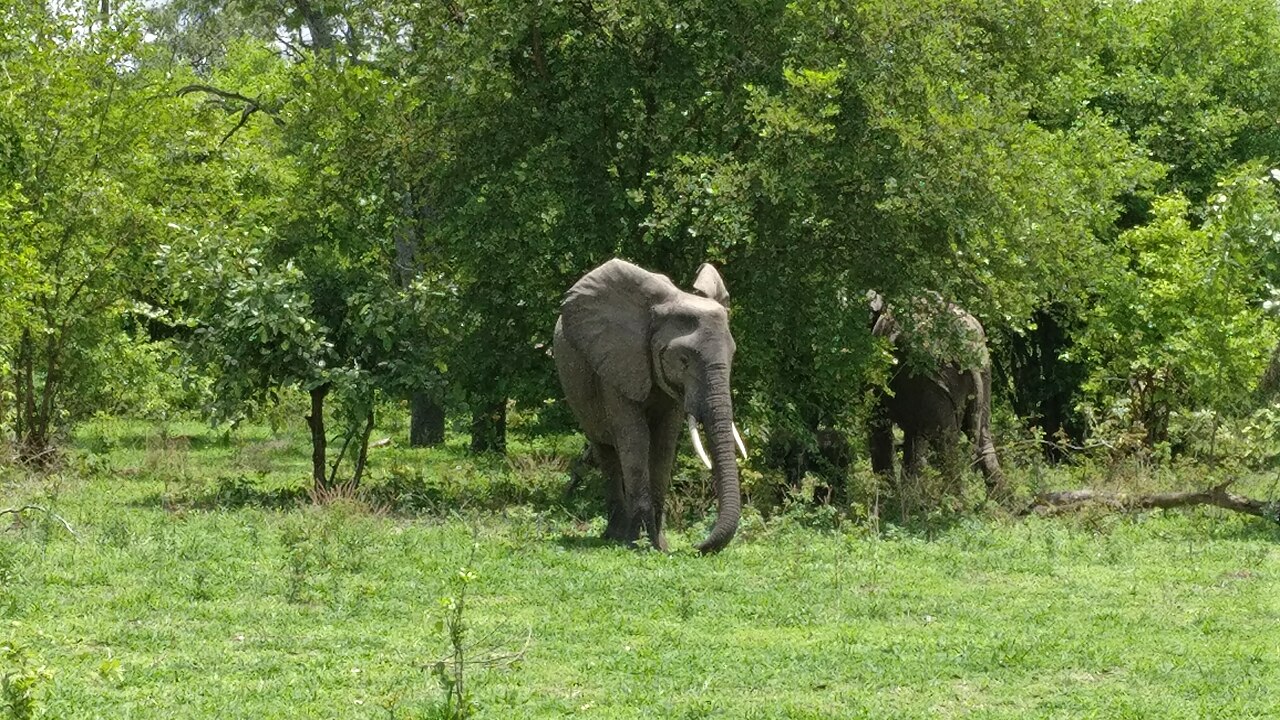
African bush elephant
Large herds move between woodland, lagoons and the Luangwa River. Elephants also wander through some unfenced lodge grounds.
African buffalo
Dry-season herds gather near water and productive grazing, creating some of the park’s most dramatic predator-prey scenes.
Hippopotamus
South Luangwa supports exceptional hippo concentrations. Never approach water edges casually, especially at dawn, dusk or night.
Thornicroft’s giraffe
A distinctive Luangwa Valley giraffe form and a major reason naturalists seek out the park. Look in mixed woodland and open woodland edges.
Crawshay’s zebra
Recognised by unusually narrow striping. Search open grassland and floodplain habitat, sometimes mixed with other grazers.
Cookson’s wildebeest
This geographically restricted wildebeest form occurs in the Luangwa Valley. It favours open grassy country away from dense riverine woodland.
Puku
One of the park’s characteristic antelope. Orange-brown puku are common on grassy floodplains and make useful prey-sign indicators.
Show 10 more South Luangwa mammals
Impala
Look along open woodland margins and short-grass clearings. The pale rump and black tail stripes are useful field marks; alarm snorts can also reveal nearby predators.
Bushbuck
Usually encountered singly in thickets, ebony groves and lagoon-edge vegetation. Their secretive behaviour and white body spots help separate them from more open-country antelope.
Waterbuck
Search greener ground near permanent lagoons and the river. The shaggy coat and white rump ring are distinctive, and animals usually stay closer to water than kudu or impala.
Greater kudu
Large woodland browsers that can vanish into cover despite their size. Mature bulls carry long spiral horns; scan woodland edges rather than only open floodplain.
Common warthog
Often kneels on the front legs while grazing around lagoons and open floodplain. When alarmed, the tail is held upright as animals run toward cover.
Spotted hyena
Listen for whoops after dark and scan open tracks at first light. Spotted hyenas are active hunters as well as scavengers and often investigate lion or leopard activity.
Vervet monkey
Common in riverside woodland and around camps. Watch their alarm calls for clues to nearby predators, but keep food secure and never feed habituated animals.
Yellow baboon
Large troops forage on the ground by day and use tall trees for safety. Barking alarm calls can be a useful clue that leopard or another predator is nearby.
Honey badger
An unpredictable sighting, usually on quiet tracks or night drives. The broad pale back contrasting with dark underparts makes the species unmistakable when seen well.
African civet
Best searched for on spotlight drives after dark. Its bold black-and-white body pattern, crest and low-slung walk distinguish it from genets and mongooses.
10 South Luangwa birds worth learning
With more than 400 recorded bird species, South Luangwa rewards both casual safari birders and specialists. Riverbanks, lagoons, woodland and open floodplain all produce different birds.
Southern carmine bee-eater
Late dry-season colonies can create spectacular colour along sandy Luangwa River banks, especially around September and October.
African fish eagle
Listen for its carrying call around the Luangwa River and larger lagoons; adults often perch conspicuously above water.
Pel’s fishing owl
A prized riverine-forest bird. Detection usually requires local knowledge, mature riverside trees and patient searching.
African skimmer
Look on exposed sandbars and wide river sections, where birds may rest in groups or skim low over the water.
Grey crowned crane
An elegant floodplain and wet-grassland bird, often encountered in pairs or small groups.
Saddle-billed stork
One of the valley’s most striking wetland birds; scan shallow lagoons, channels and river margins.
Lilian’s lovebird
A small green lovebird of the broader Luangwa ecosystem; fast-moving flocks are easiest to notice by voice and group flight.
Martial eagle
A huge eagle best searched for on large trees or soaring over open woodland and floodplain.
Southern ground hornbill
Large family groups walk through open woodland and grassland, probing for reptiles, insects and other prey.
White-backed vulture
Watch thermals and large trees around open country; scavenger gatherings can reveal predator kills before mammals are visible.
Riverine forest, mopane and floodplain plants
South Luangwa’s wildlife density comes from habitat variety as much as the river itself. Zambia Tourism describes ebony and red-mahogany forests, mopane and miombo woodland, open savanna and acacia-rich floodplain habitat.
Key trees & shrubs
African ebony
Creates dark, cathedral-like riverine groves that provide shade, browse and excellent leopard habitat.
Mopane
Butterfly-shaped leaves make this dry woodland tree easy to recognise across large parts of the valley.
Sausage tree
Huge hanging fruits identify this riverside tree; broad branches are classic resting sites for leopards.
East African mahogany
Tall riverine tree associated with richer soils and gallery woodland.
Winter thorn
A valuable floodplain tree whose nutritious pods attract elephants, antelope and other herbivores.
Leadwood
Dense hardwood tree of savanna and drainage areas; old dead trunks can remain standing for decades.
Baobab
Scattered baobabs punctuate drier savanna in the wider Luangwa landscape; the swollen trunk and bare-looking dry-season crown are unmistakable.
Marula
A deciduous savanna tree whose fruit is eaten by many animals. Look in better-drained woodland rather than saturated lagoon margins.
Knob thorn
A thorn tree of savanna and floodplain woodland, recognised by paired dark knobs along older branches and useful browse for giraffes.
Wild date palm
Occurs in wetter riverine and drainage habitats, where clumping palms add a distinctive vertical structure beside channels and lagoons.
Grasses, reeds & wetland plants
Red oat grass
An important savanna grass contributing to the grazing base used by antelope and buffalo.
Common reed
Dense reed growth provides cover around river channels and wetter lagoon margins.
Hippo grass
A water-associated grass of tropical African rivers and wetlands, closely linked to floodplain grazing systems.
Floodplain sedges
Sedges occupy seasonal wet ground and lagoon edges, creating feeding and nesting habitat for many birds.
Couch grass
Short grazing lawns can become highly productive where herbivores repeatedly crop grass close to the ground.
Seasonal floodplain herbs
After rain and flooding, temporary herbs and flowering plants rapidly occupy exposed alluvial soils.
Floating aquatic plants
Still-water lagoons and backwaters support floating and emergent aquatic vegetation that provides cover and feeding habitat for birds, amphibians and aquatic invertebrates.
Water lilies
Floating leaves and flowers appear on suitable lagoons and still-water pools, especially when water levels and temperatures are favourable.
Panic grasses
Several panic grasses contribute to productive grazing around seasonally moist floodplains and dambos after rains or flooding.
Thatching grasses
Tall savanna grasses are most obvious in greener months and can make wildlife harder to spot before drying and collapsing later in the season.
Best South Luangwa safari experiences
To add a different Zambian landscape, compare Kafue’s river country, antelope diversity and seasonal Busanga Plains. Give Kafue its own multi-night stay and arrange the connection around your chosen region rather than treating it as a short extension drive.
1. Guided walking safari
The defining South Luangwa experience. Learn tracks, alarm calls, plants, insects and animal behaviour with a professional guide rather than treating the walk as a slower game drive.
2. Dawn game drive
Cool temperatures, predator activity and soft light make early morning ideal for leopard, lion, wild dog and general wildlife.
3. Night drive
Many lodge afternoon drives continue after dark, creating opportunities for leopard, civet, genet, hyena and other nocturnal species.
4. Birding safari
Slow down for bee-eaters, fish eagles, skimmers, cranes, storks and woodland species rather than focusing only on mammals.
5. Green-season boat safari
When river levels allow, some operators use boats in the rainy season for a completely different perspective on hippos, crocodiles, birds and flooded scenery.
6. Community visit
Choose a community-led visit around Mfuwe or the wider valley with transparent local benefit and enough time for genuine interaction.
South Luangwa National Park safety and rules
Walking is guide-led
Do not leave vehicles or lodges for an informal wildlife walk. South Luangwa walking safaris are conducted with professional guiding and an armed wildlife scout; follow every safety instruction immediately.
Respect hippo routes
Hippos leave water to graze at night and can use paths through lodge areas. Never stand between a hippo and the river.
Unfenced camps are wild
Elephants, hippos, baboons and predators can move through unfenced properties. Use escorts after dark when your lodge requires them.
Road conditions are seasonal
Do not assume a route shown online is currently open. Rains can make secondary roads and northern access difficult or impassable.
South Luangwa National Park FAQ
What is South Luangwa National Park famous for?
South Luangwa is famous for walking safaris, leopards, the Luangwa River, huge hippo populations and excellent predator viewing. It also has distinctive Luangwa Valley forms such as Thornicroft’s giraffe and Crawshay’s zebra.
What is the best time to visit South Luangwa?
June to October is the best overall period for most first-time visitors. Wildlife concentrates near the river and lagoons as the dry season progresses. September and October are particularly productive but hot.
How many days do you need in South Luangwa?
Three nights is a useful minimum; four or five nights is better. Extra time lets you combine daytime and night drives with at least one proper guided walking safari.
Is South Luangwa good for leopards?
Yes, South Luangwa is considered one of Africa’s classic leopard destinations, but sightings are never guaranteed. Riverine woodland, sausage trees, lagoons and night drives create strong viewing opportunities.
How do you get to South Luangwa National Park?
Most fly to Mfuwe International Airport or drive from Chipata. Zambia Tourism lists the Chipata–Mfuwe road at about 123 km and roughly two hours, while Mfuwe receives year-round flights from Lusaka.
Can you self-drive in South Luangwa?
Yes, but independent driving is most straightforward around the Mfuwe approach and should be planned with current road advice. Remote routes require stronger 4×4 skills and may be seasonal.
How much is South Luangwa park entry?
At review in August 2026, Zambia’s government eRegistry lists non-resident entry at US$25 per person per day. Zambia Tourism’s published fee table is labelled 2025 and says rates can change, so reconfirm before travel.
Can you do a walking safari in South Luangwa?
Yes—walking safaris are one of South Luangwa’s signature experiences. They must be arranged with professional guides and the appropriate safety team; this is not an independent hiking park.
How this guide was checked
See.Africa reviewed time-sensitive information on 16 August 2026 against Zambia Tourism and Zambia’s government eRegistry. The park-fee sources are not perfectly synchronised, so current DNPW or lodge guidance should override this web guide for payment and road access.