
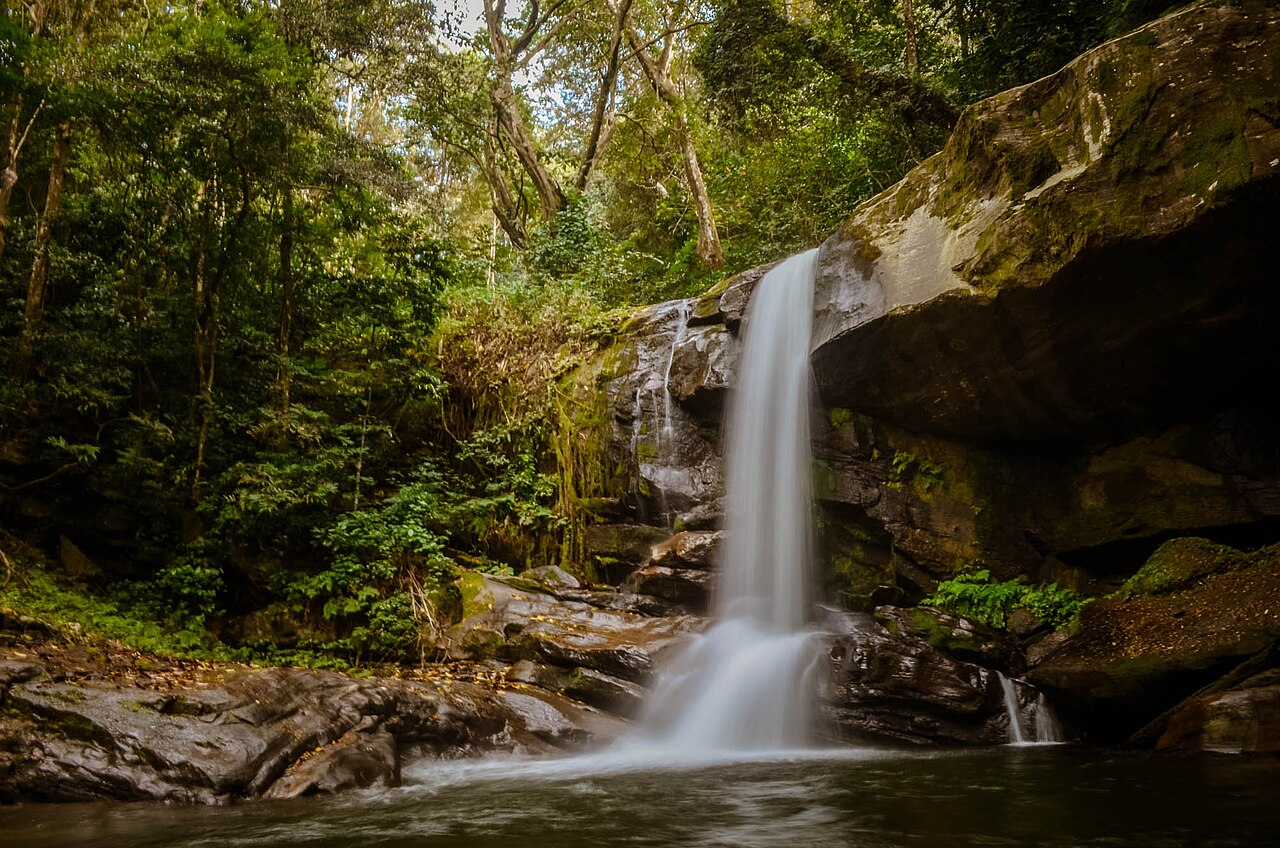
Udzungwa Mountains National Park Guide
Sanje Falls, endemic primates and Eastern Arc hiking. This 2026 guide covers the best trails, current TANAPA fee guidance, Mang’ula access, a detailed hiking map, wildlife, birds, flora and practical trek planning.
Information checked 6 September 2026
Udzungwa Mountains National Park at a glance
Udzungwa is Tanzania’s major rainforest-and-hiking national park rather than a conventional game-drive destination. TANAPA currently lists 1,990+ km² of Eastern Arc forest and ridges, 400+ bird species, tiered waterfalls and endemic primates including the Udzungwa red colobus and Sanje mangabey.
Quick Answers
Pair this guide with the Mikumi National Park guide for the easiest nearby savannah contrast. For country planning see the Tanzania travel guide or browse all National Park Guides.
What is the best time to hike Udzungwa?
June to October is the simplest choice for first-time hikers because trails are generally firmer and humidity is easier to manage. November–February can be hot and stormy but lush. March–May brings the long rains: waterfalls are dramatic, but roots, rocks and steep sections can become slippery and some longer routes may be impractical.
June–October: drier trails, easier stream crossings and cooler starts.
Wet months bring stronger flows, but safety around slick rock and currents becomes more important.
Green months are rich in insects, calls and canopy activity; forest birding is worthwhile year-round.
How much does Udzungwa Mountains National Park cost?
TANAPA’s current Udzungwa park page displays US$50 for international adults, US$15 for international children and TZS 10,000 for East African residents. However, TANAPA’s current visitor guide also says fees vary by visitor category, age and activity, with separate charges possible for guided walks, camping and special permits.
Which Udzungwa trail should you choose?
| Trail / area | Best for | Typical commitment | Planning note |
|---|---|---|---|
| Sanje Falls | First visit, waterfall, views, primates | Half day | The classic introduction; steep enough to feel like a hike without requiring an expedition. |
| Sonjo | Short forest walk, waterfalls, primates | 1–2 hours+ | Good arrival/departure option when time or energy is limited. |
| Njokamoni / Prince Bernhard area | Forest atmosphere, quieter walking | Short to half day | Useful alternative near Mang’ula; exact route availability should be checked at HQ. |
| Mwanihana | Serious trekking, altitude, forest transitions | Multi-day | Requires advance planning, camping and current guide/ranger arrangements. |
| Lumemo | Remote wilderness trek | Multi-day | For experienced trekkers; route status, water and logistics must be confirmed with TANAPA. |
How do you get to Udzungwa Mountains National Park?
Most visitors approach via Mikumi and continue toward Mang’ula on the Kilombero/Ifakara corridor. TANAPA’s current visitor guide lists Mang’ula as the HQ area and notes Dar es Salaam as the nearest major airport, with regional flight options followed by road transfer.
Drive toward Mikumi, then continue south toward Mang’ula. Treat all transfer times as traffic- and road-condition dependent.
This is the easiest two-park pairing: finish a game-drive stay, then continue to Mang’ula for hiking.
Mang’ula has a railway station. Confirm current passenger schedules independently before building a trip around rail arrival.
Udzungwa Mountains National Park map
This map focuses on trailheads, waterfalls, camps and mountain orientation rather than road loops. Some remote trail points are approximate orientation markers rather than navigation-grade coordinates. Follow TANAPA signage and your assigned guide.
How should you plan a Sanje Falls day?
Start at Mang’ula HQ, confirm guide arrangements, weather and swimming conditions, then transfer to the trailhead.
Climb before midday heat. Move quietly through forest sections where primates and birds are easier to detect early.
Use the escarpment viewpoint for the Kilombero Valley panorama rather than rushing straight to the falls.
Visit only signed, guide-approved pool areas. Wet rock around cascades can be extremely slippery.
Start down with enough daylight margin; wet roots and steep steps are slower on descent than many visitors expect.
Screenshot the map, carry at least 2L water on longer hikes, save HQ/accommodation contacts and pack a light rain layer.
16 mammals to know in Udzungwa
Udzungwa is a primate-and-forest-mammal park, not a place to chase a long savannah checklist. The best sightings often come from slowing down, listening and scanning canopy layers.
Udzungwa red colobus
Flagship endemic
Where: mature forest canopy. ID: reddish-brown body tones and long limbs. Behavior: social canopy troops; often detected by branch movement before clear views.
Sanje mangabey
Range-restricted
Where: mature forest and ridge systems. ID: grey-brown monkey with a darker face. Behavior: troops forage through middle and lower forest layers; sightings are never guaranteed.
Blue monkey
Good chance
Where: closed forest and streamside canopy. ID: dark crown, grey-blue body and long tail. Behavior: agile canopy forager often easier to hear than photograph.
Black-and-white colobus
Possible
Where: tall forest. ID: bold black-and-white coat and very long tail. Behavior: leaf-eating troops may sit quietly high in the canopy.
Yellow baboon
Common near edges
Where: woodland, village edges and lower slopes. ID: yellow-brown coat and long muzzle. Behavior: terrestrial troops forage widely.
Vervet monkey
Common
Where: woodland edge and disturbed habitat. ID: grey body and black face with pale fringe. Behavior: adaptable and social.
Grey-faced sengi
Rare endemic
Where: forest floor in suitable habitat. ID: long flexible snout, reddish body and elongated legs. Behavior: fast, secretive and usually glimpsed briefly.
Bushbuck
Possible
Where: dense undergrowth and forest margins. ID: compact antelope with variable pale markings. Behavior: solitary and quick to vanish into cover.
Blue duiker
Possible
Where: dense low forest. ID: tiny dark antelope with short legs. Behavior: darts across trails and disappears rapidly.
Harvey’s duiker
Possible
Where: forest floor and thickets. ID: richer reddish coat than smaller blue duiker. Behavior: shy browser often active in quiet forest.
African buffalo
Present, often unseen
Where: remote forest, woodland and higher routes. ID: heavy dark bovine. Behavior: potentially dangerous; ranger instructions matter on remote treks.
African bush elephant
Present, elusive
Where: remote woodland and forest corridors. ID: tracks, dung and broken vegetation may be more common than direct sightings.
Leopard
Very rarely seen
Where: forest and rocky country. ID: rosette coat. Behavior: secretive and mostly nocturnal in dense forest.
Bushpig
Possible signs
Where: dense forest and stream edges. ID: bristly pig with pale facial markings. Behavior: often nocturnal; rooting signs may be easier to find than the animal.
Genet
Mostly nocturnal
Where: forest edge and canopy-connected habitat. ID: spotted body and long ringed tail. Behavior: active mainly after dark.
Galago
Night specialist
Where: forest and woodland. ID: large eyes and strong jumping legs. Behavior: calls may reveal them before a torchlight glimpse.
12 birds worth learning in Udzungwa
Udzungwa’s birding rewards patience with forest sound rather than roadside visibility. TANAPA currently highlights Eastern Arc specialties, greenbuls, sunbirds and ridge raptors.
Udzungwa forest partridge
Where: remote montane forest floor. A highly localized species; realistic sightings require specialist effort.
Rufous-winged sunbird
Where: montane forest and flowering edges. Small, active nectar-feeder; endemic to the Eastern Arc region.
Udzungwa forest robin
Where: shaded forest understory. Often found by voice and subtle movement close to the ground.
Dark-backed weaver
Where: forest canopy and edges. Search mixed flocks and listen for canopy chatter.
Livingstone’s turaco
Where: tall forest canopy. Green plumage can disappear in foliage; calls are the better clue.
Silvery-cheeked hornbill
Where: canopy and fruiting trees. Large black-and-white hornbill with a substantial casque.
African crowned eagle
Where: mature forest and ridges. Powerful forest raptor; listen for calls and watch gaps above canopy.
White-chested alethe
Where: dark forest floor. Often follows disturbed leaf litter and is easier to hear than see.
Green-headed oriole
Where: forest canopy. Strong fluting calls help locate this shy canopy bird.
Trumpeter hornbill
Where: forest edges and fruiting trees. Broad wings and loud calls make flying groups conspicuous.
Yellow-streaked greenbul
Where: mid-level forest. Often joins mixed feeding parties.
Mountain buzzard
Where: ridges and forest openings. Scan thermals and exposed perches above the canopy.
Flora: lowland forest to bamboo and high ridges
Udzungwa’s altitude range creates unusually strong vegetation turnover. TANAPA describes evergreen and semi-evergreen forest, bamboo thickets, fern-lined streams and montane habitats.
Trees & shrubs
Large canopy trees important in parts of the montane forest.
Forest figs provide fruit for primates, hornbills and other wildlife.
Tall leguminous forest trees in mature Eastern Arc canopy.
Large forest trees associated with lower and mid-elevation rainforest.
Common along moist forest and stream systems, often with fleshy fruit.
Light-crowned trees in forest edges and woodland transitions.
High-elevation tree associated with cooler montane habitats.
More open woody vegetation on drier lower slopes and transitions.
Occur in lower, drier woodland away from the wettest forest core.
Understory shrubs in moist forest; exact species identification needs botanical care.
Ferns, bamboo, flowers & understory
Dense high-elevation stands create a dramatic habitat transition on longer treks.
Moist gullies and shaded stream margins support large fern forms.
Common around spray zones, shaded banks and constantly damp rock.
Moist rock faces near waterfalls are famous for delicate flowering plants in this group.
Shade-loving herbs of wet gullies and forest floor microhabitats.
Colorful forest-floor and streamside flowers in moist conditions.
Epiphytic and terrestrial orchids occur across the humid forest; many need specialist identification.
Abundant on trunks, rocks and saturated streamside surfaces.
Broad-leaved understory herbs in warm, moist forest.
Higher exposed ridges shift away from closed canopy toward cooler open vegetation.
Best things to do in Udzungwa
The signature half-day route combining rainforest, viewpoints, cascades and signed pools.
Use a slower pace to focus on primates, butterflies, forest structure and sound.
Eastern Arc specialists reward an early start, patience and a guide who knows calls.
Forest openings reveal the Kilombero Valley and escarpment scale.
Mwanihana and longer routes add camping, major altitude gain and remote forest.
Use only designated areas and obey current swimming and water-safety instructions.
What rules matter most in Udzungwa?
Register your route, use the guide/ranger arrangement required for that trail and follow current TANAPA instructions. Stay on designated trails, do not feed wildlife, leave no litter, keep respectful distances from primates and use signed pools only when conditions are safe. Drone use requires written permission.
Udzungwa Mountains National Park FAQ
Is Udzungwa Mountains National Park worth visiting?
Yes, especially if you want rainforest hiking, waterfalls, endemic primates and birding rather than another vehicle-based safari.
What is Udzungwa famous for?
Udzungwa is famous for Sanje Falls, Eastern Arc rainforest, endemic Udzungwa red colobus and Sanje mangabey, and a network of guided hiking trails.
What is the best time to visit Udzungwa?
June to October is the simplest period for hiking because trails are generally firmer, although the park is open year-round.
How long does the Sanje Falls hike take?
Most travelers should treat Sanje as a half-day hike. Exact timing depends on pace, viewpoint stops, swimming conditions and the route your guide uses.
Can you visit Udzungwa without a guide?
Trail access and guide requirements are controlled by TANAPA. Register at the park and follow the current guide or ranger requirement for your chosen route.
Can you swim at Sanje Falls?
Swimming is allowed only at signed pools and when conditions are safe. Always follow the guide or ranger’s instruction because currents and slippery rock change with rainfall.
How do you get to Udzungwa from Dar es Salaam?
Most visitors drive via Morogoro and Mikumi, then continue toward Mang’ula on the Kilombero/Ifakara corridor.
Should you combine Mikumi and Udzungwa?
Yes. It is one of the most complementary combinations in Tanzania: Mikumi provides easy savannah game drives while Udzungwa adds rainforest hiking and endemic wildlife.
How this Udzungwa guide was checked
Time-sensitive information was checked against current Tanzania National Parks (TANAPA) Udzungwa, visitor-guide, wildlife and tariff pages. Public OpenStreetMap-based mapping was used for several orientation coordinates. Remote trail points marked approximate are not navigation-grade. Current TANAPA, ranger and local instructions override saved map, route, swimming and fee guidance.