
Makgadikgadi Pans Game Reserve Guide
The practical 2026 guide to Makgadikgadi Pans Game Reserve: best time, zebra migration, Boteti River, gates, camps, interactive map, wildlife and how to plan a salt-pan safari.
Makgadikgadi Pans Game Reserve at a glance
Makgadikgadi Pans Game Reserve protects about 3,900 km² on the western side of the wider Makgadikgadi salt-pan system. Botswana Tourism Organisation describes a reserve of extensive grasslands and acacia woodland incorporating the western end of Ntwetwe Pan. It borders the Nxai Pan National Park area to the north across the Nata–Maun road and becomes especially rewarding when summer rain triggers fresh grass and the movement of zebra and wildebeest toward the Boteti River.
Best time to visit Makgadikgadi Pans Game Reserve
For zebra migration, green grasslands and the most dramatic seasonal change, target roughly December to April after useful summer rain. Botswana Tourism Organisation specifically highlights wet-season wildlife, when zebra and wildebeest move west toward the Boteti. Drier months offer stark salt-pan scenery and may concentrate wildlife along permanent or lingering water on the western side, but conditions depend on rainfall and Boteti flow.
For zebra + wildebeest
January–March is the classic target after good rains. The exact timing shifts with rainfall and fresh grazing.
For cooler self-drive days
May–August brings cooler, drier weather. Wildlife distribution changes, but camping and long drives are generally more comfortable.
For dramatic pans
November–April can transform parts of the broader salt-pan system with storm light, temporary water and migratory birds. Never drive onto wet pans unless local authorities explicitly confirm conditions.
Which Makgadikgadi safari area is best?
For a first safari, combine the Boteti/Khumaga side with one inland grassland or pan-edge drive. The west gives the strongest river-linked wildlife context; the interior gives the scale, openness and salt-pan atmosphere that make Makgadikgadi distinctive.
| Area | Best for | Main advantage | Planning note |
|---|---|---|---|
| Boteti / Khumaga | Wildlife, elephants, zebra, first visit | Reliable ecological anchor on western boundary | Check river crossing/ferry and gate conditions before relying on Khumaga access. |
| Phuduhudu approach | Simple A3 access, northern entry | Logical arrival from Maun or Nata direction | Deep sand can begin quickly once inside. |
| Tree Island / inland grasslands | Remoteness, open plains, migration season | Quieter Kalahari scale away from the river | More fuel, water and time required than a river-focused safari. |
| Ntwetwe western edge | Salt-pan scenery, photography | Huge horizons and seasonal contrasts | Wet pan surfaces can be dangerous and impassable; follow current local instructions. |
Makgadikgadi entrance fees and camping costs
Verify the live Department of Wildlife and National Parks tariff before travel. Botswana reviewed tourism user fees in 2026. A February proposal discussed increasing non-resident park entry from P380 to P500, but on 9 April 2026 the Ministry of Tourism and Environment stated that tourism-sector user fees had not yet been increased and that consultation was still ongoing.
Reserve entry + vehicle
Protected-area entry and vehicle fees are normally separate. Use the current DWNP or authorised booking channel for your dates rather than relying on an old tariff screenshot.
Camping + operators
Public camping, private camps and operator activities have separate prices and booking rules. Popular periods can fill early.
How to get to Makgadikgadi Pans Game Reserve
Phuduhudu Gate
Phuduhudu is just south of the Maun–Nata A3 and is the simplest first-trip entry for most self-drivers coming from Maun, Gweta, Nata or Nxai Pan.
Khumaga Gate
Khumaga sits on the Boteti side. River-crossing arrangements can change with water level, so confirm the current ferry/ford procedure rather than assuming access.
Eastern tracks
Remote eastern access and old gate names appear on maps and travel guides, but conditions and operating status can vary. Use current park instructions before building a route around them.
Makgadikgadi map: gates, Boteti River and safari areas
Use this map for orientation rather than navigation. Several pins away from published gates are deliberately approximate planning points.
The optional line is a planning sequence, not turn-by-turn navigation. Pan-edge and inland points are approximate; follow official signage, ranger and campsite/operator directions.
How to plan a Makgadikgadi safari day
Dawn: start near water or fresh grazing
On the Boteti side, begin early around productive river-edge habitat. In the wet season, use current wildlife information to locate fresh grazing rather than driving huge distances blindly.
Morning: work one habitat slowly
Open grassland can look empty until you slow down. Scan for zebra, wildebeest, jackals, cheetah and vultures rather than chasing a long checklist.
Midday: reset + check conditions
Use the hottest hours to reassess fuel, tyres, water and the return route. Salt-pan edges and sandy tracks can change rapidly after rain.
Late afternoon: stay close to your exit/camp
Finish around river-edge or open grazing habitat, but keep a large daylight margin. Avoid unfamiliar pan tracks late in the day.
20 mammals to know in Makgadikgadi
Wet-season wildlife can be spectacular, while dry-season distribution changes with water and grazing. The Boteti and open grasslands are complementary habitats, so a varied route matters more than a single famous pin.
Plains zebra
Large seasonal movements respond to rain and fresh grazing, making zebra one of Makgadikgadi’s defining wildlife stories.
Blue wildebeest
Often associated with the same wet-season grassland pulse that draws zebra westward toward the Boteti.
Lion
Predators follow prey concentrations. Scan shade, river-edge cover and open grassland around zebra and wildebeest.
Cheetah
The reserve’s open grasslands suit cheetah hunting. Use binoculars on low rises and pan margins.
Spotted hyena
Often linked to large herbivore concentrations and predator activity, especially in low-light hours.
Brown hyena
Botswana Tourism Organisation specifically notes brown hyena as a rewarding but uncommon Makgadikgadi sighting.
African bush elephant
Elephants use the Boteti corridor and adjacent woodland; give them space at crossings and water access.
Giraffe
Most associated with acacia woodland and scrub rather than the bare salt surface.
Gemsbok
A classic Kalahari antelope, well adapted to heat and dry conditions.
Springbok
Look across short-grass areas and drier open country, particularly after rain stimulates new growth.
Show 10 more Makgadikgadi mammals
Red hartebeest
Open-country grazer listed among the reserve’s characteristic herbivores.
Common eland
Large antelope capable of moving long distances between favourable grazing areas.
Greater kudu
More likely in thicker woodland and scrub than on open pan surfaces.
Bushbuck
Associated with denser cover near the Boteti and better-watered woodland.
Steenbok
Small solitary antelope easily overlooked beside larger migratory herds.
Common duiker
A small browser of scrub and woodland edges rather than bare open pan.
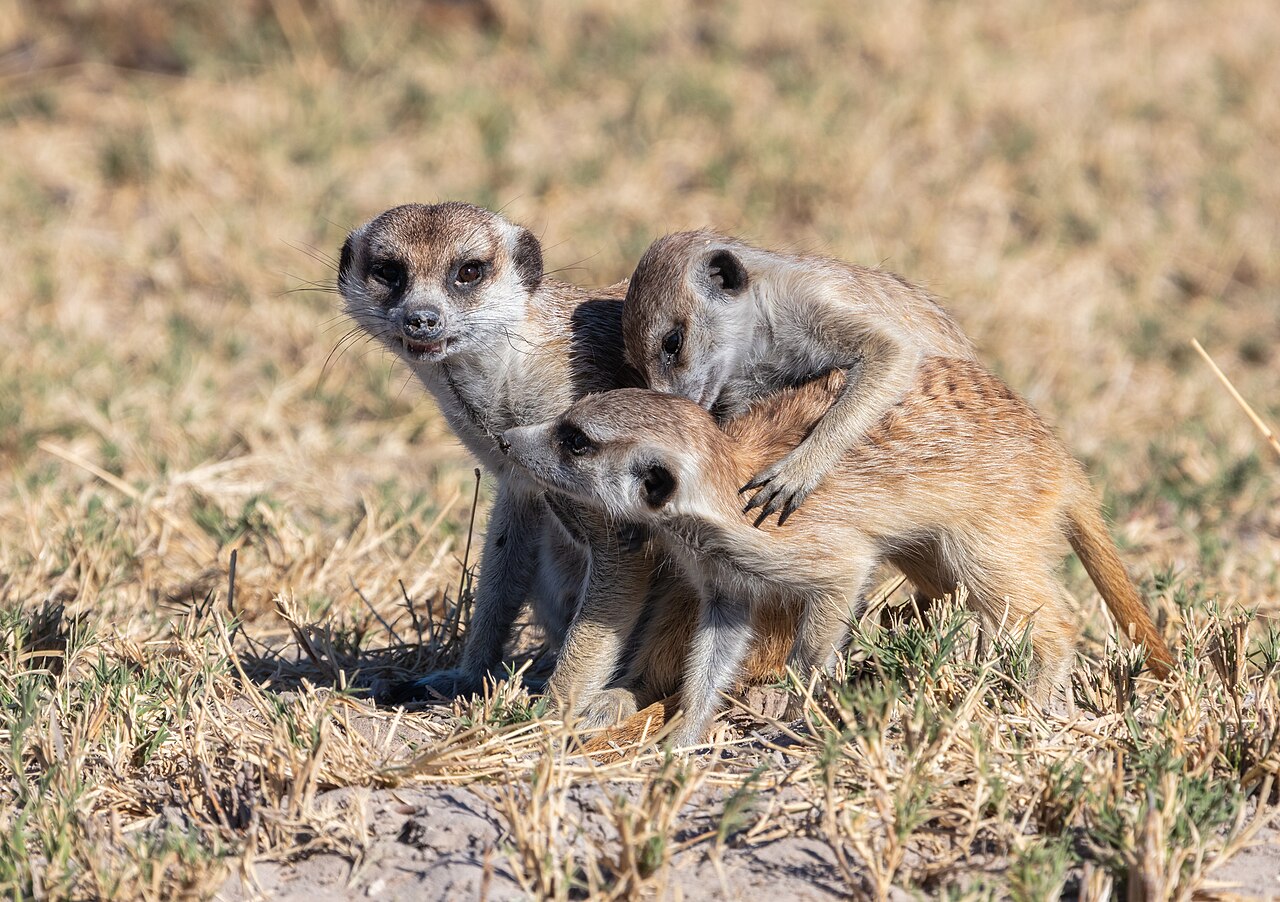
Meerkat
A charismatic Kalahari species. Some authorised operators offer habituated-meerkat walks in the wider Makgadikgadi region.
Bat-eared fox
Search short grass and open country for pairs or family groups hunting insects.
Black-backed jackal
Adaptable hunter and scavenger often seen around open plains and predator activity.
Honey badger
Unpredictable and wide-ranging; most sightings are opportunistic.
10 Makgadikgadi birds worth learning
Greater flamingo
Most spectacular on flooded salt pans in the broader Makgadikgadi system; numbers and exact locations depend heavily on rainfall.
Lesser flamingo
A major regional wet-season highlight, especially farther east around suitable flooded pans.
Kori bustard
Huge open-country bird and an excellent beginner target in dry grasslands.
Common ostrich
Easy to pick out across open pans and grassland from long distance.
Secretarybird
Walks open plains hunting reptiles, insects and small vertebrates.
Bateleur
Frequently seen soaring over large areas while searching for food.
Pale chanting goshawk
A classic dry-country raptor often perched on conspicuous roadside trees.
Lappet-faced vulture
A powerful scavenger worth checking around carcasses and thermals.
Northern black korhaan
Dry grassland specialist often detected first by its repeated call.
White-backed vulture
Scan thermals and large predator kills; numbers can change quickly around a carcass.
Trees, shrubs and grasses of Makgadikgadi
The bare salt surface supports almost no vegetation, but its fringes shift into grassland, scrub and acacia woodland. Baobabs on the wider pan margins are among the landscape’s most recognizable plants.
Key trees & shrubs
African baobab
Iconic on pan fringes and rocky islands across the wider Makgadikgadi landscape.
Camel thorn
Deep-rooted Kalahari tree providing shade and pods used by wildlife.
Umbrella thorn
Classic flat-topped savanna tree on suitable woodland and grassland margins.
Silver cluster-leaf
Common on sandy Kalahari soils away from the most saline surfaces.
Shepherd’s tree
Hardy evergreen tree with a pale trunk, adapted to dry southern African conditions.
Velvet raisin
Kalahari shrub producing berries and useful browse.
Mopane
A characteristic tree of better-drained clay and calcrete areas around the wider Makgadikgadi system.
Leadwood
Slow-growing woodland tree documented in Makgadikgadi parkland and mixed woodland habitats.
Sickle bush
Thorny shrub found on suitable scrub and calcrete habitats away from the saline pan surface.
Black thorn
A dense dry-country shrub associated with Kalahari scrub and calcrete vegetation.
Flowers, grasses & understory plants
Sand grass
Valuable Kalahari grazing grass that responds strongly after rain.
Silky bushman grass
Dry-country grass adapted to sandy soils and low rainfall.
Lehmann lovegrass
Fine-leaved perennial grass found in dry southern African grassland.
Three-awn grasses
Common dryland grasses; species-level identification is easiest once seed heads develop.
Devil’s claw
Low-growing Kalahari plant best known for its hooked fruit and traditional medicinal use.
Devil’s thorn
Low plant with hard spiny fruits that can be noticeable around disturbed sandy ground.
Herringbone grass
Dryland grass of sandy Kalahari soils, useful as a broad habitat indicator away from saline flats.
Bushy signal grass
Seasonal grass that can contribute fresh grazing after summer rain.
Buffel grass
Perennial grass of dry savanna and calcrete soils, more typical of vegetated margins than the salt pan itself.
Wild melon
Trailing cucurbits occur in Kalahari sandy habitats; species-level identification needs care because several wild melons can look similar.
Best Makgadikgadi safari experiences
1. Boteti game drive
Use the western river corridor for elephants, antelope and predators, especially when dry conditions pull wildlife toward water.
2. Wet-season migration drive
After good rain, follow current ranger information toward fresh grazing and zebra/wildebeest concentrations.
3. Salt-pan sundowner
Botswana Tourism Organisation lists sundowners on the pans among Makgadikgadi activity highlights. Use an authorised operator and current access guidance.
4. Meerkat experience
Guided meerkat walks are offered in the wider Makgadikgadi region. Choose an operator with established wildlife-viewing protocols.
5. Quad biking
Official tourism material lists quad biking as a Makgadikgadi activity; it is operator-led and access depends on conditions and location.
6. Birding
Combine dry-country raptors and bustards with wet-season pan birds when rainfall creates suitable habitat.
Rules that matter in Makgadikgadi
Do not improvise routes across wet pans
Salt-pan surfaces can become dangerously soft after rain. Follow official tracks and current local access instructions.
Stay on permitted tracks
Do not cut across grassland or pan surface to reach animals. Wildlife has right of way.
Carry a real self-drive margin
Deep sand increases fuel use. Carry water, recovery equipment, offline maps and enough reserve to turn around safely.
Respect camp wildlife
Public camps are wilderness sites. Secure food, supervise children closely and follow ranger/camp instructions around elephants and predators.
Makgadikgadi Pans Game Reserve FAQ
What is the best time to visit Makgadikgadi?
December to April is the strongest broad window for green scenery and the zebra/wildebeest migration after useful rain. Drier months offer a different landscape and can concentrate wildlife around the Boteti.
How big is Makgadikgadi Pans Game Reserve?
Botswana Tourism Organisation gives the reserve an area of about 3,900 km². The wider Makgadikgadi pan landscape is much larger.
Where is the best wildlife viewing?
The Boteti/Khumaga side is a strong first-trip anchor, while inland grasslands become especially important after summer rain.
Can you self-drive Makgadikgadi?
Yes, but a high-clearance 4×4 is strongly recommended. Deep sand, seasonal mud and long distances require recovery gear and conservative fuel/water planning.
What are the main gates?
Phuduhudu is the main northern entry from the A3, while Khumaga provides river-side access subject to current crossing conditions. Remote eastern access should be confirmed locally before use.
Is the zebra migration guaranteed?
No. Herd timing and distribution depend on rain and grazing. Ask rangers or operators where the animals are currently concentrated.
Can you see flamingos in Makgadikgadi?
Yes in the wider Makgadikgadi system when pans flood, but the most famous flamingo concentrations are often farther east around Sowa/Nata rather than inside the western game reserve.
How many nights should you spend?
Three nights is a useful minimum and four nights is better. Extra time lets you combine Boteti wildlife with inland grassland and salt-pan scenery without rushing.
How this guide was checked
See.Africa reviewed time-sensitive information on 16 September 2026 against Botswana Tourism Organisation and Botswana Government material. Approximate map pins are for orientation; current DWNP, ranger, campsite and operator instructions override map or road guidance.