
Amboseli National Park Guide
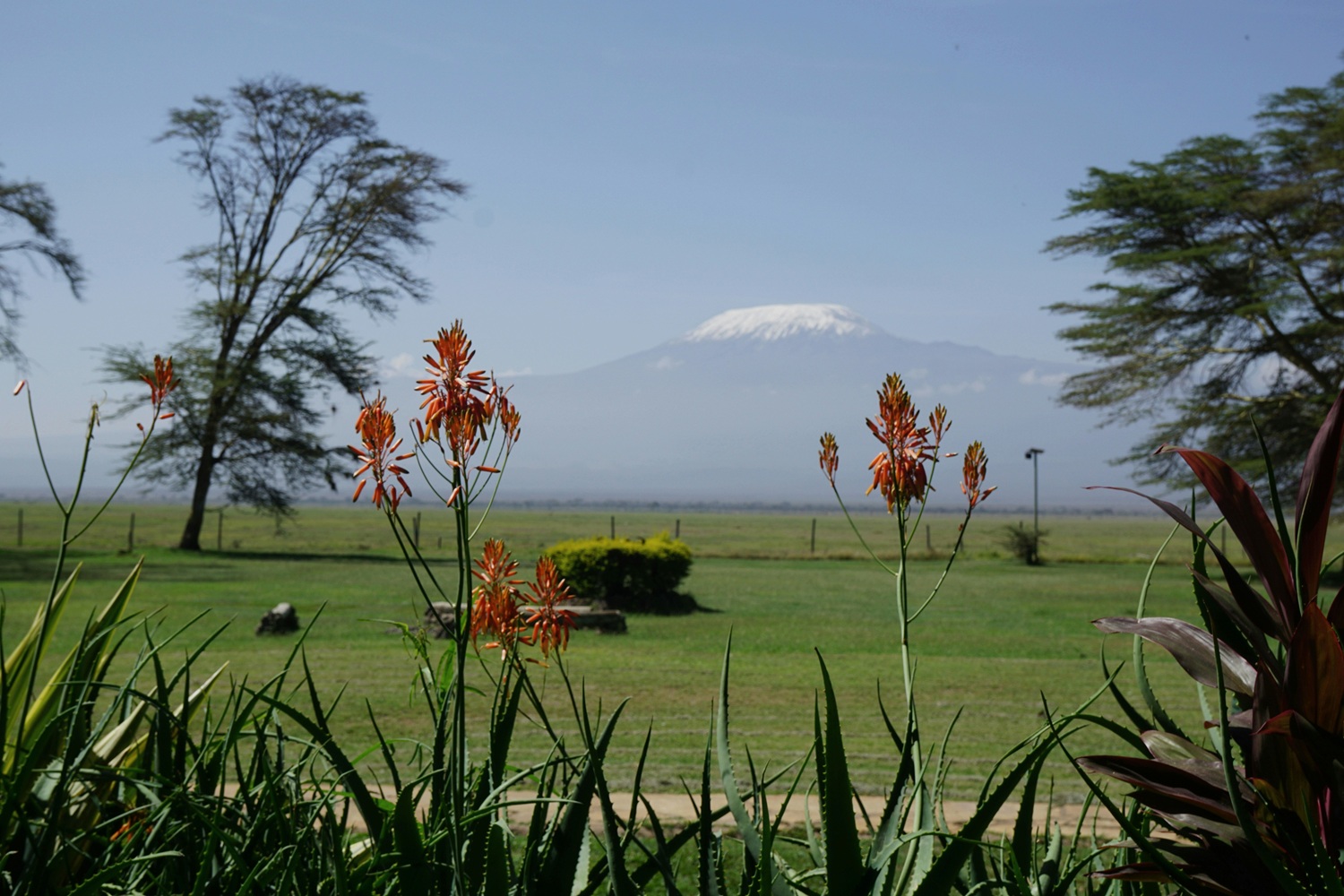
Elephants, Mount Kilimanjaro, permanent swamps and huge open skies — with a phone-first map, current KWS fees, self-drive planning, 24 mammal profiles, birds, trees and seasonal plants.
Amboseli National Park at a glance
Amboseli National Park is a compact southern-Kenya safari park best known for large elephant herds and views toward Mount Kilimanjaro across the Tanzanian border. KWS describes a mosaic of open grass plains, acacia woodland, thorn bush, swamps and marshes, and lists Amboseli among Kenya’s Important Bird Areas.
Best time to visit Amboseli National Park
Amboseli works year-round. The generally drier periods make tracks easier and concentrate many animals around permanent water; rainy periods bring greener scenery, seasonal water and stronger birding. Kilimanjaro can appear in any season, but early morning is usually your best photographic window before cloud builds.
For elephants
Dry periods often concentrate wildlife around Enkongo Narok and Longinye/Loginye wetlands.
For photography
Be on the road at first light. A clear mountain at 06:30 does not mean it will still be clear at 10:00.
For birding
Wetland and migrant activity can make greener months especially rewarding; KWS lists more than 400 bird species in the park.
Amboseli National Park entrance fees (2026)
These are the rates currently displayed by Kenya Wildlife Service. Fees can change, so use the live KWS page immediately before payment.
Which gate should you use?
Iremito Gate
KWS’s direct access option from the Nairobi–Mombasa highway via Emali and the Emali–Loitokitok road. KWS lists the route at about 204 km from Nairobi.
Kimana Gate
Continue toward Kimana shopping centre and follow the park signs. This is useful for many camps and lodges on the eastern side and for the Amboseli–Tsavo West connection.
Meshanani Gate
KWS lists the Nairobi–Namanga–Meshanani route at about 220 km; the road is tarmac to Namanga and then murram toward the gate.
Amboseli National Park map
The map loads automatically so it is ready when you reach this section. Use the fullscreen button for a larger driving view.
Wildlife zones are broad habitat guides, not live animal locations. Road conditions change quickly after rain. Some map pins are approximate orientation points rather than navigation-grade gate coordinates. Follow KWS signage and your lodge/operator directions for the final approach.
Self-drive strategy
Dawn: mountain + plains
Enter as early as rules and your overnight arrangements allow. Use the open plains for silhouettes, elephants and predators while the light is soft.
Morning: swamp circuit
Work the permanent-wetland areas slowly. Elephants, buffalo, hippos and waterbirds often provide long observation opportunities.
Midday: Observation Hill
Use the designated viewpoint for a short break and an elevated read of the swamp/plains system. This is one of the places where visitors can leave the vehicle.
Afternoon: don’t chase
Pick one zone and work it carefully instead of racing between sightings. Dust, corrugations and rain-damaged tracks can make distances slower than they look.
24 mammals to know in Amboseli
These are practical safari profiles, not a population census. “Very common / common / uncommon / rare” describes a visitor’s realistic chance of encountering the species in and around Amboseli, which changes with season and animal movement.
African bush elephant
Amboseli’s flagship animal: family groups and famous large bulls often move between grazing areas and the permanent swamps.
Field notes
- Look for: huge ears, trunk and tusks; calves stay inside family groups.
- Best zone: Enkongo Narok / Longinye wetland edges and open plains.
- Photo idea: dawn with Kilimanjaro behind the herd.
Lion
Prides and solitary lions use open plains, bushy cover and areas close to prey concentrations.
Field notes
- Dawn and late afternoon are usually the best scanning periods.
- Watch zebra/wildebeest behaviour; alert herds can reveal a predator.
- Do not crowd a resting or hunting animal.
Cheetah
Amboseli’s open country can suit cheetahs, but a sighting is a bonus rather than something to plan a day around.
Field notes
- Look for a slim build and black tear marks.
- Scan termite mounds and open ground in cool hours.
- Males may travel in coalitions; females are often alone or with cubs.
Spotted hyena
Powerful hunters and scavengers that patrol large areas; often easiest to encounter early or near predator activity.
Field notes
- Identify the sloping back and spotted coat.
- Females are larger and socially dominant.
- They hunt effectively; they are not simply scavengers.
Leopard
Present in the wider ecosystem but far less predictable than elephants or lions in Amboseli.
Field notes
- Scan woodland edges and shaded branches quietly.
- Rosettes differ from a cheetah’s solid spots.
- Don’t choose Amboseli specifically for leopard viewing.
African buffalo
Large herds often use wetland margins and nearby grassland, especially when conditions are dry.
Field notes
- Adult bulls develop heavy horn bosses.
- Cattle egrets frequently accompany herds.
- Always give buffalo generous space.
Masai giraffe
The region’s giraffe, with irregular vine-like patches, is most associated with browse-rich woodland and bush.
Field notes
- Males are generally heavier with thicker ossicones.
- Watch for browsing on thorn trees.
- They make excellent scale subjects in wide landscape photographs.
Plains zebra
One of the easiest large mammals to find; often mixed with wildebeest on open grazing areas.
Field notes
- Every stripe pattern is individually unique.
- Listen for their barking contact calls.
- Mixed herds can be good places to scan for predators.
Blue wildebeest
Dark-shouldered grazers that use open grassland and frequently mingle with zebras.
Field notes
- Look for curved horns and a bearded face.
- Calving and young animals can attract carnivores.
- Herd size shifts with water and grazing.
Common warthog
Frequently seen grazing on their knees or running with their tails held upright.
Field notes
- Males have larger facial warts and tusks.
- They often reverse into burrows for defence.
- Road verges and short grass are productive places to look.
Hippopotamus
Look for eyes, ears and nostrils above deeper pools and channels within the permanent swamp system.
Field notes
- Hippos feed mainly on land at night.
- Never approach a hippo or stand between one and water.
- Binoculars help when animals remain submerged.
Grant’s gazelle
A pale, relatively large gazelle well adapted to dry country and less dependent on drinking water than many grazers.
Field notes
- Look for a large white rump extending above the tail.
- Both sexes can carry horns.
- Often seen on more arid open ground.
Show 12 more Amboseli mammals
Thomson’s gazelle
Small, fast gazelles with a bold black side stripe, often using short-grass areas.
Field notes
- Smaller and more sharply striped than Grant’s gazelle.
- Alarmed animals may stot — spring stiff-legged into the air.
- A classic cheetah prey species.
Impala
Graceful mixed feeders most associated with bush and woodland rather than the barest plains.
Field notes
- Only males carry lyre-shaped horns.
- Black markings on the rump and tail are useful IDs.
- Can leap remarkable distances when alarmed.
Common eland
A huge but surprisingly agile antelope that may appear in small groups in open bush or plains.
Field notes
- Both sexes carry twisted horns.
- Adult males become much heavier and darker.
- Despite their size, eland can jump high fences.
Defassa waterbuck
A shaggy antelope that stays closer to reliable water and cover than many plains species.
Field notes
- Males carry long ridged horns; females do not.
- Look around greener swamp margins.
- The Defassa form has a broad white rump patch.
Olive baboon
Large, intelligent primates that use woodland, rocky areas and human-adjacent spaces.
Field notes
- Do not feed them or leave food accessible.
- Large males have long canine teeth.
- Troops have complex social hierarchies.
Vervet monkey
Small grey-green monkeys with black faces, often around trees and visitor areas.
Field notes
- They use different alarm calls for different predator types.
- Do not encourage food-stealing behaviour.
- Watch canopy and ground; they use both.
Black-backed jackal
A small, alert canid with a dark saddle, often seen trotting purposefully across the plains.
Field notes
- Frequently scavenges but also hunts.
- Pairs can hold territories together.
- Scan the edges of predator sightings.
Bat-eared fox
A small fox with enormous ears, strongly associated with termites and short open grass.
Field notes
- Most active in cooler hours.
- Its ears help locate insects underground.
- Family groups may forage together.
Kirk’s dik-dik
Tiny paired antelope that freeze in cover and then disappear rapidly into bush.
Field notes
- Males have tiny horns; females are often slightly larger.
- Look along dense shrub edges.
- The elongated nose helps regulate body heat.
Egyptian mongoose
A long-bodied hunter that may flash across a track or work dense vegetation near wet areas.
Field notes
- Long tail and low-slung profile.
- Eats small vertebrates, eggs and invertebrates.
- Sightings are usually brief.
Serval
A long-legged spotted cat adapted to hunting rodents in tall grass and wetter ground.
Field notes
- Huge ears and long legs distinguish it from other cats.
- Can leap vertically onto prey.
- A sighting near swamp-edge grass is special.
Rock hyrax
A compact rock-dweller often associated with rocky outcrops and therefore worth watching for around Observation Hill.
Field notes
- Looks rodent-like but belongs to a very different mammal lineage.
- Often sunbathes on warm rock.
- Listen for sharp alarm calls.
10 birds worth learning before you go
Lilac-breasted roller
A brilliantly coloured safari favourite often perched conspicuously on thorn-tree branches.
Field notes
- Look for lilac breast and turquoise-blue wings.
- Often launches from a perch to catch insects.
- Easy beginner bird.
Secretarybird
A long-legged terrestrial raptor that hunts while walking across open country.
Field notes
- Looks almost crane-like until you notice the hooked raptor bill.
- Scan wide plains rather than trees.
- Threatened across parts of its range.
Martial eagle
One of Africa’s most powerful eagles; scan large trees and the sky for a huge dark-backed raptor.
Field notes
- Adults have a pale spotted underside.
- Often soars high on thermals.
- Use binoculars even for perched birds.
African fish eagle
The classic African waterside eagle; often detected by voice before you locate the bird.
Field notes
- Adults: white head/chest, chestnut body.
- Look around permanent water.
- Fish are important prey, but diet is broader.
Grey crowned crane
An elegant crane with a golden crown, most naturally associated with wetter grassland and marsh edges.
Field notes
- Watch for pairs or small groups.
- Can perch in trees, unusual for cranes.
- Give feeding birds space.
Saddle-billed stork
A striking black-and-white stork with a red-and-black bill and bright yellow saddle.
Field notes
- Walks slowly through shallow water.
- Sexes can be distinguished by eye colour at close range.
- Excellent binocular subject.
African jacana
The “lily trotter,” using extremely long toes to spread its weight across floating vegetation.
Field notes
- Look closely at vegetated pools.
- Females are larger than males.
- Males perform much of the chick care.
Kori bustard
A massive ground bird whose slow walk can make it surprisingly easy to overlook against dry grass.
Field notes
- Males are dramatically larger than females.
- Watch for inflated-neck courtship displays.
- Usually prefers walking to flying.
Superb starling
Small, noisy and spectacularly iridescent — a species you may photograph at closer range than almost any raptor.
Field notes
- White breast band separates blue chest and orange belly.
- Do not feed birds around camps.
- Colours intensify in good light.
Pink-backed pelican
A pale pelican that can occur around productive wetland areas, especially when water conditions are favourable.
Field notes
- Smaller than the great white pelican.
- Watch larger open-water and swamp areas.
- Numbers vary strongly with conditions.
Trees, shrubs & flowering plants
10 trees & shrubs to recognise
Amboseli is dynamic dryland savanna rather than a static “acacia postcard.” Tree cover and plant composition shift with water, elephants, livestock, rainfall and long-term land-use change across the wider ecosystem.
Umbrella thorn
The classic flat-topped savanna tree and one of the most recognisable silhouettes in southern Kenya.
Fever tree
Smooth yellow-green bark makes this moisture-associated acacia relative easy to recognise.
Black thorn
A dense thorny shrub/tree important in dry savanna and browse-rich bushland in southern Kenya.
African myrrh
A dryland shrub/tree with peeling bark and aromatic resin, characteristic of semi-arid bush.
Desert date
A hardy spiny tree able to tolerate dry, heavily used landscapes.
Toothbrush tree
A salt- and drought-tolerant shrub/tree known for traditional use of its twigs as miswak.
East African doum palm
A fan-leaved palm of dry drainage lines and the wider southern Kenyan landscape.
Wild date palm
A clumping palm naturally associated with wetter ground and reliable moisture.
Whistling thorn
Recognisable by swollen ant-associated thorns; more characteristic of some black-cotton savannas in the broader region.
Sycamore fig
A spreading fig of better-watered habitats; fruiting figs can become wildlife and bird magnets.
10 flowers, reeds & understory plants
This section mixes dryland flowering plants with wetland vegetation because that contrast is exactly what makes Amboseli distinctive. Plant occurrence is seasonal and some species are easier to encounter in the wider Amboseli ecosystem or around road/lodge edges than deep inside the park.
Kenya aloe
A drought-adapted aloe whose tall flower spikes can become conspicuous after favourable rains.
Desert rose
A swollen-stem dryland succulent with striking pink flowers; more a broader regional dryland plant than an everyday park sighting.
Lion’s ear
Orange flower whorls attract insects and nectar-feeding birds in disturbed or seasonal vegetation.
Popcorn cassia
A yellow-flowering African shrub sometimes encountered around edges and human-modified areas.
Wild sage
An aromatic shrub used traditionally in parts of Africa and attractive to insects when flowering.
Wild basil
A strongly aromatic herb/shrub whose small flowers are valuable to pollinators.
Candelabra euphorbia
A cactus-like succulent tree of East African dry country; its milky latex is irritating and should not be touched.
Papyrus
A tall wetland sedge associated with permanently wet East African swamp systems and valuable cover for wetland wildlife.
Southern cattail
A robust emergent wetland plant of marshy shallows; elephants and other herbivores can feed within reedbeds.
Common reed
A tall reed of wetland margins, forming dense habitat for birds and other small wetland life.
Things to do
1. Dawn game drive
Prioritise Kilimanjaro light, predators and elephant silhouettes before cloud and heat build.
2. Swamp circuit
Slow down around Enkongo Narok and Longinye/Loginye for elephants, buffalo, hippos and waterbirds.
3. Observation Hill
Climb the designated viewpoint for a panoramic understanding of the wetland, lake basin and plains.
4. Birding
Give binoculars real time: KWS records 400+ species and around 40 raptors in Amboseli.
5. Maasai cultural experience
Choose a respectful community-led or locally benefiting experience outside/around the park rather than treating a village as a quick photo stop.
6. Photography / filmmaking
Amboseli is built for wide environmental images — use space around animals instead of filling every frame with a close-up.
7. Astro / night experience
KWS currently lists Amboseli among parks offering astro-tourism/night-wildlife experiences. Confirm the actual product, availability and rules with KWS or your lodge before planning around it.
8. Connect to Tsavo West
KWS lists a road link between Amboseli and Tsavo West entering/exiting via the Kimana side, useful for a longer southern-Kenya circuit.
Compare Amboseli safari tours
If you use SafariBookings to benchmark operators, compare like with like: same number of nights, private vs shared vehicle, similar lodge tier, and whether conservation fees are included.
Rules that matter on a phone
KWS gate hours unless you are spending overnight.
Drive slowly and stay on established roads/trails.
Do not leave tracks to approach an animal.
KWS says view wildlife from at least this distance.
Except at designated visitor areas.
KWS national parks are plastic-free.
It changes behaviour and creates dangerous dependency.
Keep noise low and do not block animals.
Amboseli FAQ
How many nights should I stay in Amboseli?
Two nights is a strong default. It gives you two dawns for Kilimanjaro and enough time to slow down at the swamps. Three nights adds weather flexibility and better birding/photography time.
Can I do Amboseli as a day trip from Nairobi?
It is possible, but road time makes the day long and you lose the easiest dawn opportunity. If the budget allows, an overnight stay is a much better use of the park.
Is Amboseli a Big Five park?
Do not choose Amboseli mainly to tick all five. It is outstanding for elephants and regularly productive for buffalo and lion; leopard is much less predictable and rhino is not a standard Amboseli sighting.
Which gate is best from Nairobi?
It depends on your route and lodge. KWS officially lists Iremito, Kimana and Meshanani. Iremito is convenient from the Emali route; Kimana serves the eastern side; Meshanani is approached via Namanga.
Do I need a 4×4?
A capable high-clearance vehicle is the safer choice, especially after rain. Even in dry weather, corrugations, dust and local track conditions can make a safari vehicle more comfortable than a low road car.
When is Kilimanjaro most likely to be visible?
There is no guarantee, but early morning is the most useful planning rule. Clouds often develop as the day warms, so use dawn for mountain photography rather than postponing it until afternoon.
Are the park fees on this page current?
They were checked against the KWS Amboseli page on 11 August 2026. Because fees can change, always re-check the live KWS page immediately before payment.