
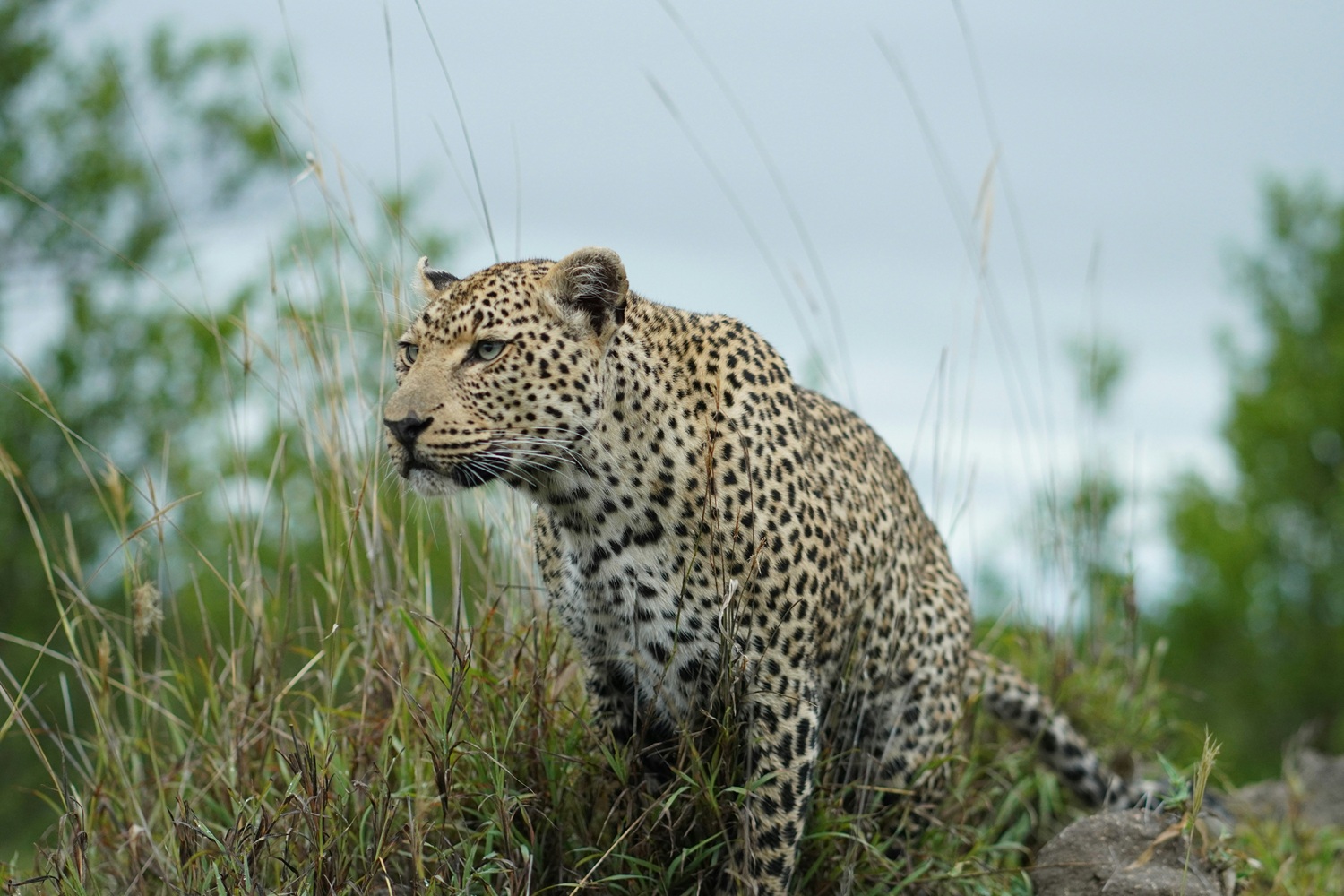
Sabi Sand Safari Guide
The practical 2026 guide to Sabi Sand Nature Reserve: best time to visit, leopard and Big Five safari, 2026 gate fees, interactive map, access, wildlife, malaria advice and how to choose the right lodge experience.
Sabi Sand Nature Reserve at a glance
Sabi Sand is the official reserve name; Sabi Sands is also widely used by travellers, lodges and tourism websites. The private reserve forms part of the open Greater Kruger ecosystem in Mpumalanga. The final game fences with neighbouring Kruger National Park were removed in 1993, allowing wildlife to move across the broader landscape.
Quick answers for planning a Sabi Sand safari
Best time to visit Sabi Sand
May to September is the best time to visit Sabi Sand for most first-time safari travellers. The bush is generally drier and more open, visibility improves and wildlife concentrates around reliable water. Sabi Sand remains a strong year-round safari destination because the Sabie and Sand river systems support wildlife through the seasons.
For easiest wildlife viewing
June–September brings sparse vegetation, cool mornings and strong visibility. August and September can be dusty and warm by day, but sightings around water can be excellent.
For green scenery + birds
November–March is hot, lush and dramatic. Migrant birds return, many herbivores have young and afternoon thunderstorms can produce spectacular skies.
For a balanced shoulder season
April, May and October can combine good game viewing with transitional weather. Exact rainfall and temperatures vary from year to year.
What is the best Sabi Sand safari?
For a first visit, the best Sabi Sand safari is usually 3–4 nights at one well-chosen lodge. Unlike a public national park, the quality of your safari depends heavily on the lodge’s traversing rights, guide-and-tracker team, vehicle policy and the number of guests sharing each drive. Compare those details before comparing room finishes.
| What to compare | Why it matters | Good question to ask | Best for |
|---|---|---|---|
| Traversing area | Determines where your guide can drive for wildlife sightings. | “How large is your normal traverse and is it shared?” | Everyone |
| Vehicle occupancy | Fewer guests can improve sight lines, photography and guide flexibility. | “Maximum guests per vehicle?” | Photographers |
| Private vehicle option | Lets your group control pace and species priorities. | “What is the daily private-vehicle supplement?” | Families / specialists |
| Transfer geography | A lodge near the right gate or airstrip can save hours of road time. | “Which gate and airport should I use?” | Short trips |
| Included costs | Rates may package meals, drives and some drinks but exclude certain fees. | “What is not included in the quoted total?” | Budget control |
Sabi Sand gate fees in 2026
For 1 January–31 December 2026, Sabi Sand Nature Reserve publishes a R170 per-person entry fee and a R370 per-entry fee for a light vehicle under 3,500 kg. The published rates include 15% VAT. A separate Guest Conservation Contribution can apply and is tiered by lodge rack rate.
Per person
R170 per entry. The official access page says the per-person fee applies to guest entries by road or air.
Light vehicle
R370 per entry for vehicles under 3,500 kg GVN. Confirm whether your lodge or transfer has already included it.
Conservation contribution
The 2026 Guest Conservation Contribution varies by lodge price tier, so ask for the all-in amount rather than assuming one universal reserve fee.
How to get to Sabi Sand
Always route to the gate assigned to your lodge. Sabi Sand’s three major guest access gates are Shaws Gate in the south, Newington Gate in the west and Gowrie Gate in the north. Access is provisioned for applicable lodges, so the geographically closest gate is not automatically the correct one.
| Gate | Best planning context | Typical regional approach | Important note |
|---|---|---|---|
| Shaws Gate | Southern Sabi Sand lodges | Skukuza / Hazyview side | Use only when your lodge assigns this gate. |
| Newington Gate | Western Sabi Sand lodges | Western road approaches | Do not follow map shortcuts; use lodge directions. |
| Gowrie Gate | Northern Sabi Sand lodges | Hoedspruit side | Often practical for northern properties, but lodge assignment governs. |
Shaws Gate
A major southern guest entrance. Particularly relevant for lodges whose assigned access runs from the Hazyview / Skukuza side.
Newington Gate
A major western guest entrance. Follow your lodge’s current route instructions rather than a generic map shortcut.
Gowrie Gate
A major northern guest entrance and an important approach for lodges accessed from the Hoedspruit side.
Skukuza Airport (SZK)
Useful for many southern and central Greater Kruger itineraries. Arrange the lodge transfer before booking the flight.
Hoedspruit / Eastgate (HDS)
A practical regional airport for many northern Greater Kruger properties. Transfer time depends heavily on the lodge and gate.
Kruger Mpumalanga (MQP)
A larger regional airport near Mbombela. Road transfers are longer for some Sabi Sand lodges but flight options can be convenient.
Sabi Sand map: gates, airports and safari orientation
Use this map to understand the reserve’s three principal guest gates and surrounding airports. It is an orientation tool, not a substitute for the route your lodge sends you. The optional access guide draws straight planning lines between regional airports and representative gates; these are not road routes or turn-by-turn navigation.
Gate coordinates are based on the reserve’s official access page. Airport and river points are for broad orientation. Your lodge’s directions and current reserve instructions override this map.
How to plan a Sabi Sand safari day
Before sunrise: wake-up + coffee
Most lodge schedules begin early so vehicles can be out as the bush becomes active. In winter, pack a warm layer, beanie and gloves for the first hour.
Morning: 3-hour game drive
Guides and trackers read fresh spoor, alarm calls and the previous evening’s movements. Avoid demanding a checklist; following one story well can produce better sightings.
Midday: breakfast, rest or walk
Use the hotter hours for lodge time. Where your lodge offers a guided bush walk, this is a chance to focus on tracks, plants, birds and smaller wildlife.
Afternoon into night
Evening drives usually start in daylight and may continue after dark, opening opportunities for leopard, hyena, civet, genet, bushbaby and other nocturnal species.
20 mammals to know on a Sabi Sand safari
Sabi Sand shares wildlife with the wider Greater Kruger ecosystem. Leopard is the signature species for many visitors, but the reserve also supports the Big Five, wild dogs, cheetahs, hyenas and a broad range of herbivores.
Leopard
Sabi Sand is internationally known for leopard viewing. Guides use tracks, territorial knowledge and long-term familiarity with individual cats.
Lion
Prides and coalitions range across the reserve. Dawn and late afternoon are especially productive times to search.
African bush elephant
Family groups move between river lines, water and feeding areas. Give elephants space and let your guide read their behaviour.
African buffalo
Large herds and older bulls occur throughout the Greater Kruger ecosystem and attract close attention from lions.
White rhinoceros
Rhino sightings are conservation-sensitive. Guides may limit location detail or viewing time to protect animals.
Spotted hyena
Hyenas are skilled hunters as well as scavengers; night drives can reveal clan activity and interactions around kills.
African wild dog
Packs can move large distances quickly, so a sighting is never guaranteed. When present, their social hunts are a safari highlight.
Cheetah
Cheetahs occur in the wider ecosystem but are less predictable than leopard and lion in Sabi Sand's mixed woodland.
South African giraffe
Tall browsers are easy to spot above the bush, especially around thorn trees and open woodland edges.
Impala
The reserve's key medium-sized antelope and a major prey species for leopard, wild dog and other predators.
Show 10 more mammals
Greater kudu
Large ears and the male's spiral horns make kudu distinctive; shaded drainage lines are good places to look.
Plains zebra
Zebra favour open grass and mixed feeding areas and are often encountered alongside wildebeest and other herbivores.
Blue wildebeest
Resident wildebeest occur here year-round; Sabi Sand is not a Serengeti-style mass-migration destination.
Common warthog
Often seen grazing on their knees or running tail-up toward a burrow when alarmed.
Waterbuck
Shaggy antelope with a conspicuous white rump ring, typically associated with rivers, dams and greener grazing.
Bushbuck
Solitary and secretive, bushbuck are closely tied to thick cover and are important leopard prey.
Hippopotamus
Hippos spend daylight hours in deeper water and emerge to graze after dark. Never approach water edges without a guide.
Nyala
Elegant spiral-horned males and chestnut females favour denser woodland and riverine habitat.
Chacma baboon
Troops forage widely and provide useful alarm calls when predators are nearby.
Ground pangolin
A pangolin sighting is exceptional and cannot be promised. Never choose a lodge based on a claimed guarantee of seeing one.
10 Sabi Sand birds worth learning
Birding is good throughout the year, while the warmer green season adds migrant species and more breeding activity.
Southern ground hornbill
Threatened, slow-breeding groups walk through open savanna and are a memorable Sabi Sand sighting.
Lilac-breasted roller
A colourful roadside favourite that often hunts insects from exposed perches.
Bateleur
A short-tailed eagle frequently seen rocking from side to side while soaring over the bush.
Martial eagle
One of Africa's largest eagles; scan tall trees and the sky for this powerful predator.
African fish eagle
Its carrying call is characteristic around rivers, pools and dams.
Saddle-billed stork
A striking wetland stork best searched for along rivers and larger pools.
Southern yellow-billed hornbill
Common in dry woodland and often seen feeding on the ground beside safari tracks.
Crested barbet
A colourful, vocal woodland bird with a distinctive trilling call.
White-backed vulture
An important scavenger; circling vultures can alert guides to predator activity or a carcass.
African hoopoe
Recognisable by its cinnamon body, black-and-white wings and folding crest.
Trees, shrubs and signature Lowveld plants
Sabi Sand is a mosaic of riverine woodland, drainage lines, mixed bushveld and more open patches. These plants help explain why certain animals concentrate in particular habitats.
Trees & shrubs
These woody plants are among the most useful Lowveld habitat clues for safari visitors.
Marula
An iconic Lowveld tree whose fruit feeds many animals.
Leadwood
Ancient-looking trees and standing dead trunks provide classic raptor perches.
Knobthorn
A characteristic thorn tree, important browse for giraffe and kudu.
Sausage tree
Often associated with riverine areas; large sausage-shaped fruits make identification easy.
Sycamore fig
Large riverine figs provide shade and seasonal food for birds and mammals.
Jackalberry
A tall riverine tree with a dense canopy and fruit eaten by wildlife.
Red bushwillow
A common bushveld tree that can add rusty red tones to the dry-season landscape.
Tamboti
A distinctive Lowveld tree; its milky latex is toxic, so it is a look-don't-touch species.
Silver cluster-leaf
Silvery leaves make this tree easier to pick out in sandy woodland.
Weeping wattle
A graceful woodland tree with yellow flowers in season.
Flowers, grasses & understory plants
These lower-growing plants are easiest to appreciate on guided walks and during the green season. Exact occurrence varies with soils, rainfall and fire history.
Impala lily
A striking succulent shrub that can flower when much of the bush is dry.
Wild dagga
Orange flower whorls attract nectar-feeding birds and insects.
Red grass
A characteristic savanna grass that can take on rich red-brown tones as seed heads mature.
Guinea grass
A tall, palatable grass often associated with shaded or relatively fertile sites and important grazing habitat.
Natal red-top
Fluffy pink-to-reddish seed heads can be conspicuous along disturbed ground and sunny edges.
Common finger grass
A useful grazing grass whose finger-like flowering heads help distinguish it in open savanna.
Spear grass
Its twisting awns and spear-like seeds are easiest to notice on foot with a guide rather than from a moving vehicle.
Mountain aloe
A robust aloe with striking flower spikes; occurrence is patchy, so treat it as a possible rather than universal reserve sight.
African bowstring hemp
Stiff upright leaves form clumps in suitable woodland habitats and are easier to inspect on guided walks.
Wild hibiscus
A small-flowered hibiscus representative of the seasonal herbs that become much more visible after summer rains.
Best Sabi Sand safari experiences
1. Dawn game drive
The core Sabi Sand experience: ranger, tracker, open vehicle, cool air and fresh tracks. This is often the best time to follow cats before they settle for the day.
2. Afternoon-to-night drive
Golden-hour viewing transitions into spotlighting for nocturnal species. Rules and operating style vary by lodge and traverse.
3. Guided bush walk
Where offered, walks shift attention from Big Five sightings to tracks, ecology, insects, trees and the scale of the landscape.
4. Photography-focused drive
Ask about low vehicle occupancy, beanbags, private vehicles and whether the guide is comfortable spending extended time on one photographic subject.
5. Birding safari
Tell your guide before departure if birds matter. A slower pace around riverine habitat can turn a normal game drive into an excellent birding session.
6. Combine Sabi Sand + Kruger
Use Sabi Sand for guided private-reserve safari, then add Kruger for self-drive freedom, public rest camps and a much larger road network.
Sabi Sand rules and practical etiquette
Private driving is not a safari drive
If your lodge permits you to arrive in your own vehicle, follow the assigned gate and lodge road. Do not assume you can independently explore game-drive tracks.
Off-road access is controlled
The ability to leave a main track for a sighting is part of the managed guided-safari system and depends on the lodge’s traversing rules.
Protect sensitive wildlife
Do not share precise rhino locations. Follow your guide’s instructions around elephants, predators, dens and active hunts.
Respect sighting pressure
Good private-reserve guiding is not about surrounding an animal. Vehicle limits and radio coordination help keep high-profile sightings manageable.
Sabi Sand FAQ
What is the best time to visit Sabi Sand?
May to September is the best overall period for most first-time visitors. Dry conditions usually improve visibility and concentrate wildlife near water. November to March is greener, hotter and excellent for birds, dramatic skies and young animals.
How many nights are best for a Sabi Sand safari?
Three to four nights is the best first-trip default. That normally gives you six to eight game drives, enough time for weather and wildlife variability without rushing the lodge experience.
Is it Sabi Sand or Sabi Sands?
The official name is Sabi Sand Nature Reserve. “Sabi Sands” is also widely used in travel searches and by tourism businesses, and usually refers to the same private-reserve destination beside Kruger National Park.
Is Sabi Sand better than Kruger National Park?
Neither is universally better. Sabi Sand is best for a guided private-reserve safari with trackers, lodge service and controlled off-road/night-drive opportunities. Kruger is better for scale, public access, self-driving and a wider range of budgets.
Can I self-drive in Sabi Sand?
You can often drive your own vehicle to your lodge using the assigned guest gate, but you should not expect to self-drive the reserve as a safari. Wildlife viewing is primarily conducted on guided lodge game drives under traversing rules.
How much are Sabi Sand gate fees in 2026?
The official 2026 rates are R170 per person per entry and R370 per light vehicle under 3,500 kg per entry, inclusive of VAT. A separate Guest Conservation Contribution may also apply according to the lodge’s tier.
Is Sabi Sand a malaria area?
Yes, Sabi Sand is in the Greater Kruger malaria-risk region of Mpumalanga. Use bite precautions and ask a travel-health clinician about malaria prevention and prescription prophylaxis for your itinerary.
Which airport is best for Sabi Sand?
The best airport depends on your lodge and gate. Skukuza, Hoedspruit/Eastgate and Kruger Mpumalanga are common regional options, while some lodges can arrange charter flights. Compare total transfer time, not just the flight fare.
How this Sabi Sand guide was checked
See.Africa reviewed time-sensitive information on 15 August 2026 against Sabi Sand Nature Reserve’s official access, fee, conservation and background pages, South African Tourism guidance and current CDC travel-health information. Lodge policies, access roads, fees and health guidance can change, so recheck immediately before travel.