
Chobe National Park Safari Guide
The practical 2026 guide to Chobe National Park: best time to visit, Chobe Riverfront, Savuti, fees, gates, interactive map, elephants, boat safaris, wildlife and how to plan your days.
Chobe National Park at a glance
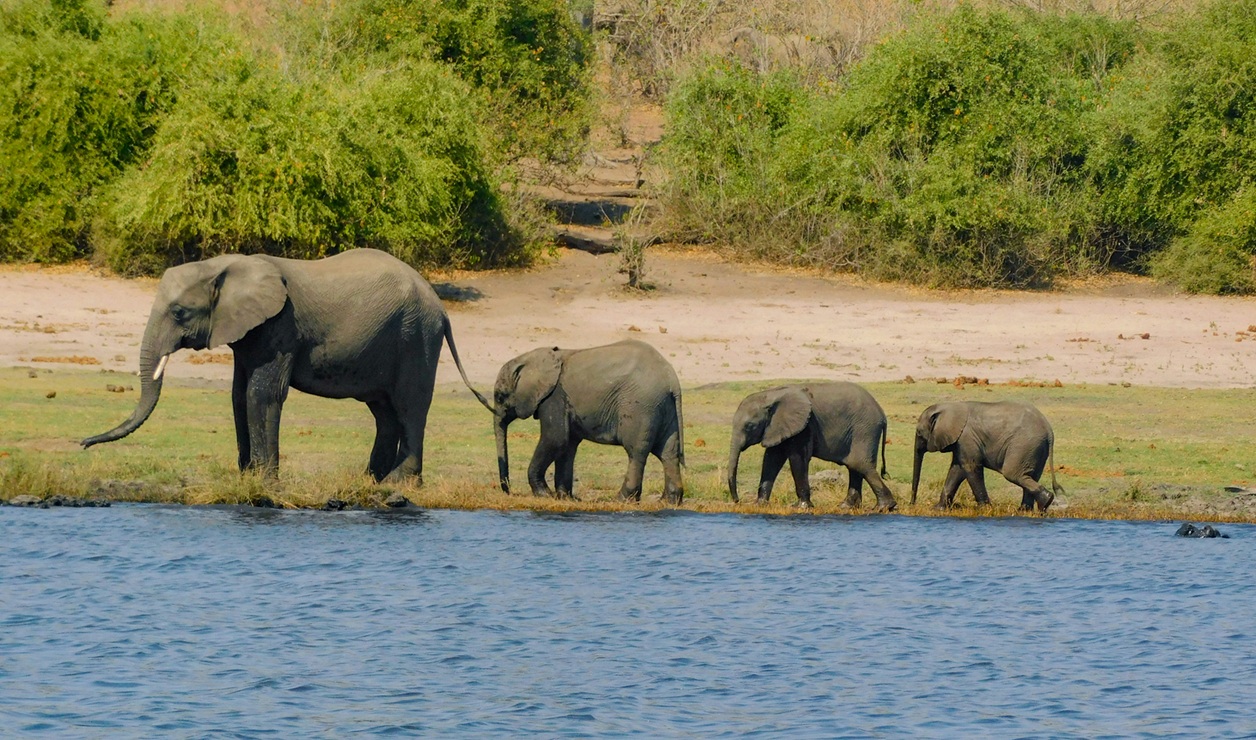
Chobe National Park in northern Botswana combines river floodplains, mopane woodland, seasonal pans and the remote Savuti system. For a first visit, the Chobe Riverfront near Kasane is the easiest place to understand the park: game drives and boat safaris reveal different sides of the same ecosystem, with elephants as the defining wildlife experience.
Best time to visit Chobe National Park
The best time to visit Chobe National Park for concentrated wildlife is usually May to October. As the dry season progresses, permanent water becomes increasingly important and the Chobe Riverfront can hold exceptional numbers of elephants and other large mammals. November to March is greener, quieter and especially rewarding for birders, but wildlife is more dispersed.
For elephants + Riverfront
June–October is the classic choice as wildlife becomes increasingly tied to permanent water. September and October can be extremely hot.
For birds + green scenery
November–March brings fresh vegetation, migrants and dramatic skies. Expect rain pockets and more dispersed mammals.
For balance
May–June often gives a useful compromise: drying conditions and strong wildlife without the hottest late-dry-season temperatures.
Which Chobe National Park safari area is best?
For a first Chobe safari, choose the Riverfront; for a more remote predator-focused trip, add Savuti. Chobe is not one uniform safari zone, and the logistics between areas are significant. The Linyanti name also causes confusion: only part of the broader Linyanti landscape is inside Chobe National Park, while many well-known Linyanti camps sit in private concessions outside the park.
| Area | Best for | Main advantage | Planning note |
|---|---|---|---|
| Chobe Riverfront / Serondela | First safari, elephants, short stays | Game drives + boat safaris from Kasane | Can be busy in peak dry season; early starts matter. |
| Savuti | Predators, wilderness, multi-night safari | Open marsh/pan habitats plus woodland | Long, sandy approaches; allow dedicated nights rather than a rushed day trip. |
| Nogatsaa / interior | Quiet exploration | Far fewer short-stay visitors | Water and wildlife distribution are seasonal; current track knowledge matters. |
| Linyanti corner | Remote elephants + woodland/wetland | Low-traffic wilderness feel | Do not confuse Chobe’s Linyanti section with private concessions outside the park. |
Chobe National Park fees in 2026
Do not treat the proposed P500 non-resident park fee as the confirmed current Chobe entry fee. Botswana’s government announced proposed tourism user-fee revisions in February 2026, but on 9 April the Ministry of Tourism and Environment stated that it had not increased tourism-sector user fees. On 27 April, a government report noted that the newly proposed park fees had been temporarily suspended.
Park + vehicle + camping
Independent travel can involve separate visitor, vehicle and campsite charges. Residency/citizenship categories also matter.
Ask what is included
Guided game drives and lodge packages may bundle some park costs. Confirm whether conservation/park levies are included or payable separately.
How to get to Chobe National Park
Kasane → Sedudu
Kasane is the practical hub for Riverfront safaris, supplies, accommodation and boat departures. Sedudu is the key eastern park access point.
Ngoma Gate
Ngoma provides access to the western Riverfront side and the Chobe Enclave corridor. Build your route around your exact lodge/camp and current gate instructions.
Savuti / Linyanti
Overland access involves long sandy tracks and serious 4×4 preparation. Savuti also has a light-aircraft airstrip for fly-in itineraries.
Chobe National Park map: gates, Riverfront and Savuti
This map is designed for safari planning rather than turn-by-turn navigation. Gate/camp coordinates and remote tracks can change; approximate planning points are labelled as such.
The optional line is a planning sequence, not a mapped road route. Use current park maps, official signs and ranger/operator instructions for actual navigation.
How to plan a Chobe Riverfront safari day
Dawn: start on land
Use the coolest hours for a game drive. Predators are more likely to be active, elephant movement is easier to watch and photographic light is softer.
Late morning: work habitats, not sightings
Move between river edge, woodland and open floodplain rather than racing from one radio call to the next. Read tracks and prey behaviour.
Midday: reset
Return to camp or a designated safe rest point during the hottest hours. Refill water, batteries and memory cards before the afternoon.
Afternoon: switch to the river
A boat safari changes the viewing angle and is particularly good for elephants at water, hippos, crocodiles and birds as the light improves.
Before entering: prepare offline
Download an offline map, save your accommodation and emergency contacts, carry more drinking water than the day appears to require, and start remote sections with a conservative fuel margin. Phone coverage should never be your only navigation or safety plan.
Exit timing: plan backwards
Set a turnaround time from the gate or camp you must reach, then protect that margin as sightings develop. Botswana government guidance lists normal park times of 06:00–18:30 from April–September and 05:30–19:00 from October–March; verify the current rule at entry.
Where should you stay in Chobe? Our top 3 lodges
Your ideal lodge depends on which part of Chobe you plan to explore. Two of these are convenient Kasane hotels outside the park, while the third is a remote Savuti camp. Compare our 10 best Chobe lodges and hotels for other riverfront and western-area options.
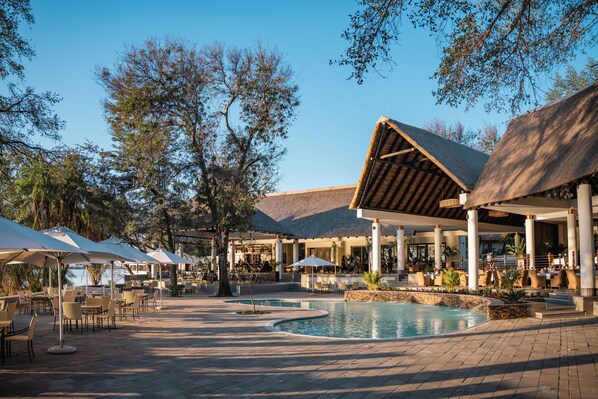
Chobe Safari Lodge
A convenient riverfront base in Kasane for game drives and Chobe boat safaris.
Check availability on Expedia ↗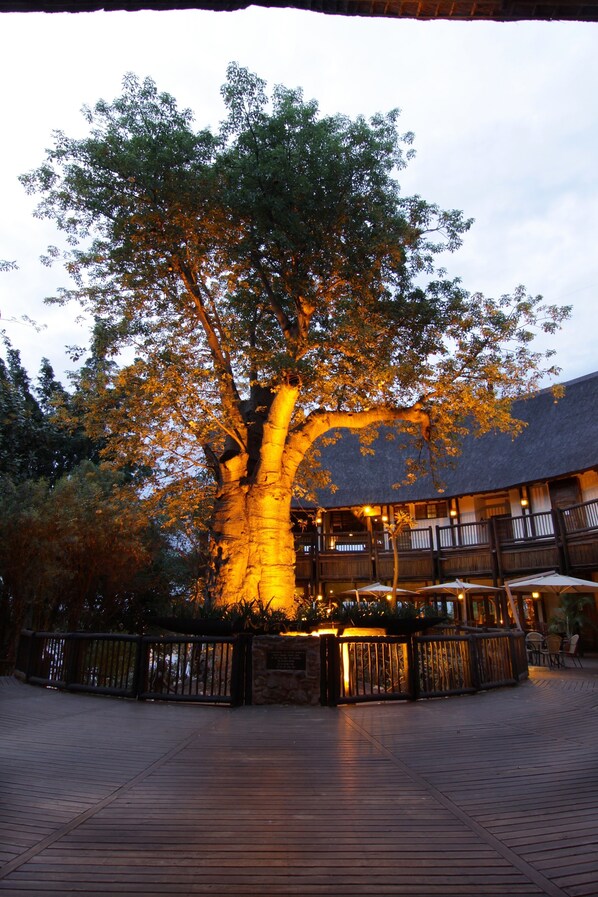
Cresta Mowana Safari Resort & Spa
A higher-service riverside resort with a pool, dining and spa facilities in Kasane.
Check availability on Expedia ↗
Ghoha Hills Savuti
A remote Savuti-region camp for a dedicated wilderness safari, not a Kasane day trip.
Check availability on Expedia ↗Planning tip: Chobe Riverfront and Savuti are not interchangeable bases. For a short safari, consider staying in Kasane and arranging a guided drive and boat trip. Check park fees, transfers, activities and meals before booking.
Affiliate disclosure: see.africa may earn a commission from Expedia bookings at no extra cost to you. Accommodation and safari activities are not necessarily sold together.
20 mammals to know in Chobe National Park
Chobe is best known for elephants, but its mix of river, woodland and Savuti habitats supports a broad mammal community. Likelihood labels are practical visitor guidance, not population estimates.
African bush elephant
Chobe’s signature mammal. In the dry season, watch family herds moving toward the river; give them space and never block a crossing.
African buffalo
Large herds gather near water and grazing. Old bulls may rest in thicker cover while breeding herds use open floodplains.
Lion
Savuti is especially associated with dramatic lion encounters, while prides also use riverfront and woodland mosaics.
Leopard
Scan large trees, drainage lines and shaded woodland at dawn and late afternoon; sightings are never guaranteed.
Cheetah
Most likely where visibility is good and prey is available. Savuti’s open habitats can be productive, but cheetah are wide-ranging.
African wild dog
A prized sighting. Packs move fast over large areas, particularly through Savuti/Linyanti-linked habitats, so recent local reports matter.
Spotted hyena
Both hunter and scavenger. Dawn is excellent for tracks, clan activity and interactions around large predator kills.
Hippopotamus
Boat safaris give excellent views. Hippos leave water to graze after dark, so never treat a riverbank as a safe walking area.
Angolan giraffe
Look for giraffes browsing above impala and kudu in mixed woodland. Patterning is paler and more irregular than some East African giraffes.
Plains zebra
Zebra use open grazing and water routes; seasonal movements around Savuti can create strong predator-prey viewing.
Show 10 more Chobe mammals
Blue wildebeest
Often mixed with zebra on open ground. Their distribution changes with water and fresh grazing.
Impala
One of the most dependable antelope sightings. Watch alarm behaviour: staring, snorting and tight bunching can reveal predators.
Greater kudu
Large ears and white body stripes make kudu distinctive. Males carry long spiral horns and often remain near thicker cover.
Waterbuck
A shaggy antelope closely associated with water. The white rump ring is a useful field mark.
Puku
A particularly relevant Chobe Riverfront antelope. Look on wetter grassland and floodplain margins rather than deep dry woodland.
Sable antelope
A special Chobe sighting. Both sexes have swept-back horns; mature males become strikingly dark.
Roan antelope
Large, pale antelope with a strong facial mask. Quiet interior areas can offer better chances than the busiest riverfront.
Common warthog
Often grazes on its front knees. Tail-up running is a classic clue when animals move toward cover or burrows.
Chacma baboon
Social troops are conspicuous around woodland and water. Never feed them and keep food secured at picnic/camp areas.
Black-backed jackal
Small, alert canid that hunts and scavenges. Watch around predator activity, open pans and short grass.
10 Chobe birds worth learning
The Riverfront is one of the easiest places to add serious birding to a big-game safari because boats can approach river-edge habitat without constantly changing vehicle position.
African fish eagle
Listen for the carrying call, then scan prominent riverside perches. Boat cruises are ideal.
African skimmer
A special Chobe bird. Look for low, fast flight over open water and exposed sandbanks when conditions suit.
Saddle-billed stork
A huge black-and-white stork with a red, black and yellow bill; search floodplain shallows.
African jacana
Long toes spread weight over lilies and aquatic vegetation; often easiest from a boat.
Pied kingfisher
Frequently hovers before plunging for fish, making it one of the easiest kingfishers to detect.
Malachite kingfisher
Tiny and jewel-coloured. Search low reed stems and branches over still water.
Goliath heron
Africa’s largest heron; usually solitary and deliberate while hunting fish in shallow margins.
Southern carmine bee-eater
Bright carmine flocks can be spectacular in season, especially near sandy nesting banks.
Lilac-breasted roller
A colourful roadside favourite that hunts insects from exposed perches.
Southern ground hornbill
Large terrestrial hornbill moving in family groups; listen for deep booming calls early in the day.
Chobe trees and wetland plants
Chobe’s wildlife distribution makes more sense once you recognise the vegetation: the Riverfront is shaped by floodplain and wetland plants, while much of the interior is woodland on Kalahari sands.
Key trees & shrubs
Mopane
The butterfly-shaped leaves are a defining feature of much of northern Botswana’s woodland.
Zambezi teak
A major Kalahari-sand woodland tree; mature stands create a very different habitat from the riverfront.
Leadwood
Dense hardwood with deeply fissured bark; dead trunks can persist for decades.
Sausage tree
Large hanging fruits make this riverine tree easy to remember when encountered.
Jackalberry
Large shade tree associated with well-watered ground; fruits feed birds and mammals.
Sycamore fig
A broad riverine fig whose fruit can attract many animals and birds.
African baobab
The swollen trunk and sparse crown are unmistakable. Baobabs occur in drier Chobe habitats and add an important contrast to mopane and riverine woodland.
Kiaat / African teak
A deciduous woodland tree of northern Botswana’s sandveld and mixed woodland; recognise the broad crown and distinctive round pods.
Silver cluster-leaf
The pale silvery leaves are useful in the field. It is associated with sandy woodland and helps signal a shift away from wet river-edge habitat.
Camel thorn
A deep-rooted thorn tree of drier sandy ground. Pods, shade and structure make mature trees valuable to many birds and mammals.
Flowers, reeds, grasses & understory plants
Papyrus
Tall wetland sedge of permanent-water margins and quiet channels.
Common reed
Dense reedbeds provide nesting and hiding cover along wet margins.
Water lilies
Floating leaves and flowers mark calmer water and provide habitat for insects and birds.
Sedges
Sedge beds are important components of shallow wetland and floodplain vegetation.
Bulrush / cattail
Tall emergent wetland plants that form dense cover where water persists.
Floodplain grasses
Fresh seasonal grass on floodplains is a major reason herbivores concentrate along the Chobe River.
Common finger grass
A useful grazing grass recorded in northern Botswana vegetation communities; fresh growth attracts herbivores after rain.
Guinea grass
A tall perennial grass often associated with relatively productive woodland and riverine margins.
Bushveld signal grass
A seasonal grass of northern Botswana’s woodland and sandveld mosaics; exact identification usually needs close inspection.
Devil’s claw
A low-growing Kalahari-sand plant with distinctive hooked fruit. It belongs to the less conspicuous understory rather than the river-edge reed beds.
Best Chobe National Park safari experiences
1. Dawn Riverfront game drive
The strongest first activity for predators, elephants, buffalo and classic land-based safari photography.
2. Chobe River boat safari
The signature Chobe contrast: elephants at water level, hippos, crocodiles, fish eagles, kingfishers and floodplain views.
3. Multi-night Savuti safari
Give Savuti enough time to justify the transfer. The reward is a much more remote landscape with strong predator potential.
4. Birding-focused cruise
Ask for a slower trip that prioritises skimmers, kingfishers, storks, herons and wetland behaviour instead of only large mammals.
5. Experienced 4×4 camping
Chobe can be superb for independent camping, but remote tracks require recovery gear, fuel margin, water and realistic sand-driving skill.
6. Chobe + Okavango circuit
Combine Chobe’s river-and-elephant focus with the Okavango Delta for a broader northern Botswana safari rather than choosing between them.
Which Chobe safari style should you book?
For a short first visit, a Kasane-based guided game drive plus boat safari is the easiest Chobe setup. Travellers with more time can choose a lodge package, a mobile safari into Savuti, or an independent 4×4 itinerary depending on comfort, budget and driving experience.
| Safari style | Best for | Main strength | Check before booking |
|---|---|---|---|
| Kasane guided activities | 1–3 day first visits | Simple Riverfront access without self-driving | Exact game-drive and boat duration, park fees included, transfer pickup. |
| Riverfront lodge package | Comfort + convenience | Accommodation and activities coordinated together | Whether both boat and land safaris are included and how many guests share each activity. |
| Mobile safari to Savuti | Remote wilderness | Lets Chobe become a multi-zone safari rather than a Kasane day trip | Transfer days, camping standard, park/camping fees and what happens if tracks change. |
| Independent 4×4 camping | Experienced self-drivers | Maximum route control | Campsite confirmation, fuel/water range, recovery equipment, current track advice and gate times. |
Chobe rules and safety that matter
Know current operating times
Botswana government guidance cites 06:00–18:30 from 1 April–30 September and 05:30–19:00 from 1 October–31 March for park access under the regulations. Re-check at the gate.
Give elephants an exit route
Never crowd a herd, block a road crossing or position a vehicle between calves and adults. Back off before an animal has to ask.
Stay in the vehicle where required
Lions, elephants, buffalo and hippos can be close even when you cannot see them. Leave the vehicle only at places explicitly designated as safe.
Do not improvise remote routes
Offline navigation is useful but not a substitute for current road intelligence. Deep sand, water and track closures can change a route.
Chobe National Park FAQ
What is the best time to visit Chobe National Park?
For most first-time safari travellers, May to October is the strongest period because the dry season concentrates wildlife around permanent water, especially the Chobe River. September and October can be extremely hot, while the green season from roughly November to March is better for lush scenery and birding.
How many days do you need in Chobe National Park?
Two nights is a useful minimum for a Riverfront game drive and boat safari. Three nights gives a better first visit. Add more time if you want to travel overland to Savuti or the remote western and interior areas.
Is the Chobe River boat safari worth it?
Yes. A boat safari is one of Chobe’s signature experiences because it gives a different angle on elephants, hippos, crocodiles and river birds than a vehicle game drive.
Which part of Chobe National Park is best?
The Chobe Riverfront is the best default for first-time visitors and short stays. Savuti is better for travellers prioritising remoteness and predators. Nogatsaa and the Linyanti corner suit experienced travellers looking for quieter, more logistically demanding routes.
Can you self-drive in Chobe National Park?
Yes, but a high-clearance four-wheel-drive vehicle is the sensible choice for remote sections. Deep sand, long distances and seasonal track conditions make Savuti and Linyanti more demanding than a short guided visit from Kasane.
Do I need a 4×4 for Chobe National Park?
For serious independent park driving, especially Savuti, Linyanti and interior routes, use a proper 4×4. Visitors staying in Kasane can avoid self-driving entirely by booking guided Riverfront game drives and boat safaris.
How much are Chobe National Park fees in 2026?
Botswana reviewed tourism user fees in 2026, but the government said on 9 April that increases had not yet been implemented and a later government report noted the proposed park-fee increase was temporarily suspended. Verify the current DWNP tariff immediately before travel rather than relying on an old web price.
Can you visit Chobe National Park from Victoria Falls?
Yes. Kasane is the main gateway for Chobe Riverfront and is commonly combined with Victoria Falls. Border formalities and transfer times vary, so a same-day itinerary should leave generous time for immigration and the booked safari departure.
Does Chobe National Park have the Big Five?
Chobe is outstanding for elephant, buffalo, lion and leopard, but rhino should not be treated as a realistic Chobe target. Choose Chobe for its elephants, river ecology, predators and boat safaris rather than for a Big Five checklist.
Is Chobe better than the Okavango Delta?
They offer different safari strengths. Chobe is easier to access from Kasane and excels at elephant-rich Riverfront game viewing and boat safaris; the Okavango is stronger for floodplain wilderness, mokoro experiences and many fly-in camp itineraries. Combining them is better than treating one as universally superior.
How this Chobe guide was checked
See.Africa reviewed time-sensitive Chobe travel information on 15 August 2026. Botswana government and Botswana Tourism Organisation sources were prioritised for fee status, park access, Kasane entry information and the Savuti/Linyanti geography. Approximate map points are for orientation only.