
Hlane Royal National Park Guide
Rhinos at a waterhole, guided lion drives, woodland birdlife and easy-to-plan lowveld safaris: how to visit Hlane responsibly.
Information checked 12 October 2026 • Official operating rules may changeHlane Royal National Park at a glance
Hlane Royal National Park is Eswatini’s major lowveld wildlife destination, known for white rhinos at Ndlovu Camp’s waterhole and ranger-guided access to a separate lion area. The core conservation area covers roughly 22,000 hectares; not all sectors are open to visitors. Source: Big Game Parks.
Quick Answers
Source for prices, payment and hours: official Big Game Parks tariffs; access and facilities: operator park guide.
When is the best time to visit Hlane?
May to September is a practical starting point for cooler, generally drier game-viewing conditions. In the warmer rainy months, vegetation can be greener and birdlife rewarding, but sightings around water may be less concentrated and roads may deteriorate after rain.
Dry-season wildlife
Cooler mornings, sparser vegetation and more predictable waterhole activity can help viewing. Dress warmly for early drives.
Summer birding
Rain can bring dramatic greenery and seasonal bird activity. Take rain protection and ask whether all roads and drives are operating.
What are Hlane Royal National Park entry fees and safari prices?
Official conservation fee: ZAR 95 per person per day on the Big Game Parks rate page checked 12 October 2026. Guided drives and accommodation cost extra. Prices below are quoted as published; confirm at booking because tariffs and availability can change.
| Experience | Published rate | Duration / planning |
|---|---|---|
| Conservation fee | ZAR 95 pp/day | Day visitors 06:00–18:00; gate closes at 18:00 |
| Sunrise / sunset game drive | ZAR 545 pp | 2½ hours, minimum 2 participants |
| Midday guided game drive | ZAR 500 pp | 2½ hours, minimum 2 participants |
| Rhino drive | ZAR 390 pp | 1½ hours, minimum 2; excludes lion sector |
| Guided game / birding walk | ZAR 310 pp | 2 hours, minimum 2; age restrictions apply |
| Ndlovu camping | From ZAR 180 pp | Camping fee; check current conditions |
Official rates page says children under six cannot join guided game drives; the specialist Rhino Drive and guided walks have an age minimum of 13. Book via Big Game Parks / Ndlovu activities centre and verify restrictions for your particular activity before travel.
How do you get to Hlane? Which camp and area should you choose?
Hlane is in Eswatini’s eastern lowveld, off the MR3 near Simunye. Follow the park’s official directions rather than an approximate park-centre pin. Big Game Parks publishes the Hlane approach at 26°15′44.5″S, 31°52′58.0″E, with the gate approximately 500 m off the tarred road and Ndlovu Camp a further roughly 500 m beyond it.
| Option | Best for | Access and restrictions |
|---|---|---|
| Ndlovu Camp | Waterhole, rhino views, game drives, day visitors | Main activity centre and restaurant; no grid electricity in camp |
| Bhubesi Camp | Quieter self-catering bush stay | About 16 km from Ndlovu; activities usually start at Ndlovu; after-dark transfers prohibited |
| Selected self-drive area | Independent wildlife viewing | Only signed public routes; clay soils can become difficult in wet weather |
| Restricted lion area | Guided big-game experience | Only selected ranger-led drives; no independent vehicle access |
Arriving from Manzini
Follow signed main-road access toward Simunye / MR3 and allow for detours or slower travel. Confirm the latest route at the park before departure.
Arriving from South Africa
Check the particular border post’s hours, passports, vehicle tax and whether your rental company permits travel to Eswatini. Carry necessary documentation.
According to the operator, all guests must be at camp or outside the park by sunset; movement between Ndlovu and Bhubesi after dark is not allowed. Guests staying at Bhubesi should organise activities and transfers in advance, because dawn and sunset game drives normally depart from Ndlovu.
Sources: Big Game Parks park information and its published current operator policies (checked 12 October 2026).
Hlane safari map: entrance, camps and nearby landmarks
This auto-loading OpenStreetMap overview shows the operator-published Hlane entrance reference, the Ndlovu Camp area, a broad Bhubesi Camp area and nearby road-trip landmarks. Only the park’s published coordinates are treated as operator-based reference points; all other positions are approximate or general orientation.
The optional plan adds numbered activity sequence markers. It is not a plotted road route. Use the free official driving map at Ndlovu reception and obey closed/restricted road signs. © OpenStreetMap contributors.
Which mammals may you see at Hlane?
White rhinoceros is Hlane’s headline mammal, with elephants and guided lion-sector sightings as additional draws. These 20 field profiles are identification notes for Hlane and the regional lowveld ecosystem: not every species occurs in every visitor-accessible zone, and rare animals cannot be promised.
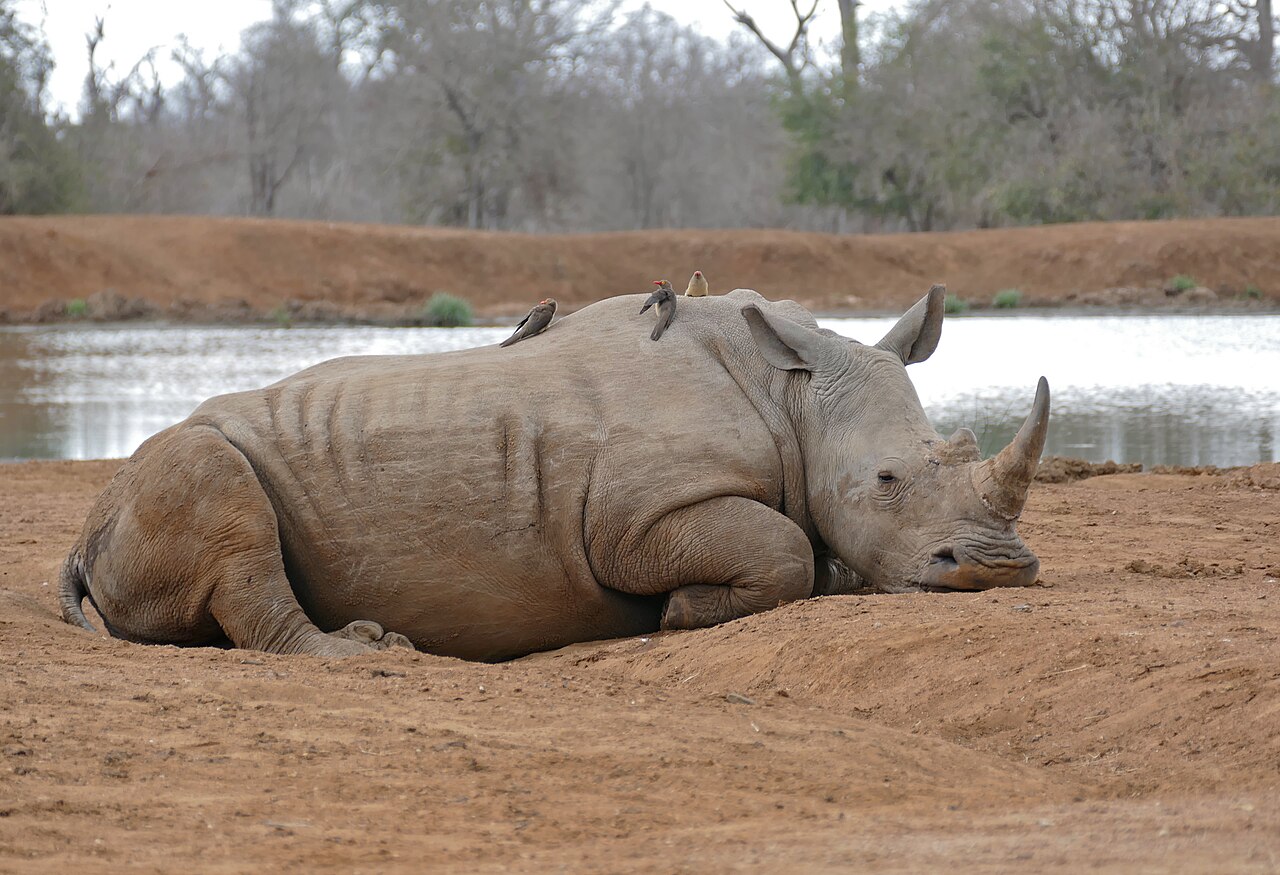 White rhinocerosCeratotherium simum
Key draw
Look for the broad square mouth and grazing posture; often seen around Ndlovu waterhole. Keep a safe distance.
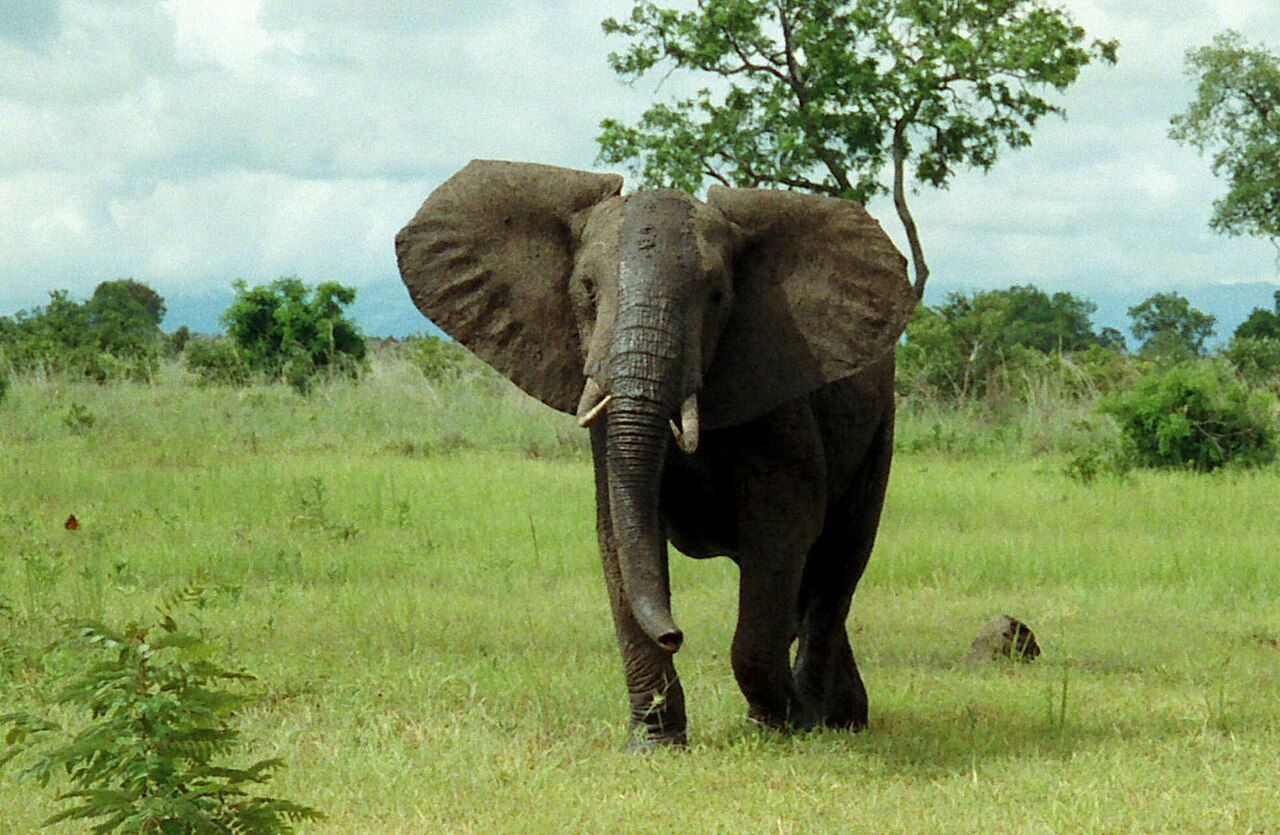 African savanna elephantLoxodonta africana
Possible on appropriate drives
Large ears, trunk and family groups; be cautious near moving herds.
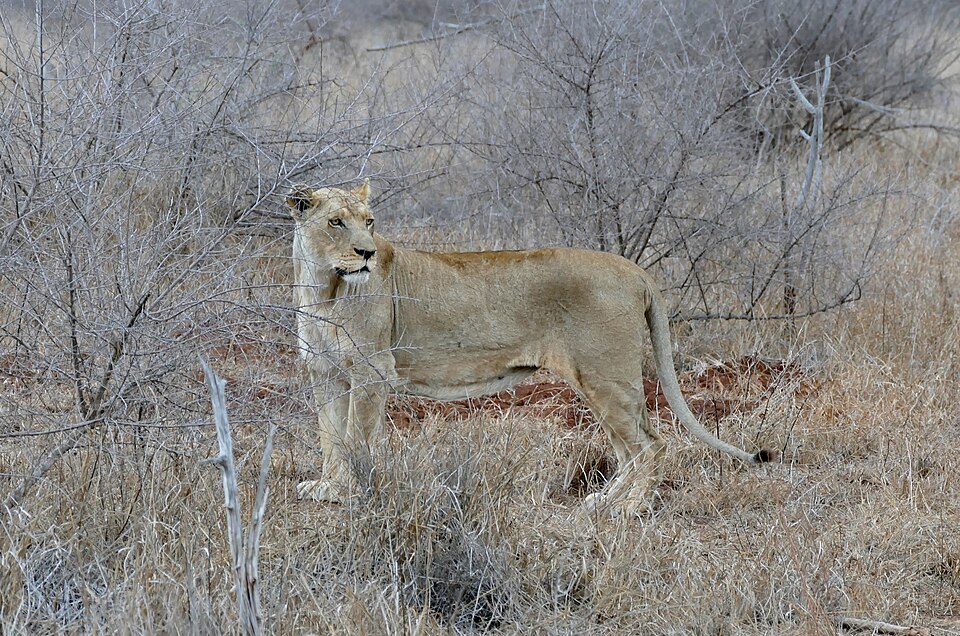 LionPanthera leo
Ranger-guided area
Listen for early roars; independent vehicles cannot access the restricted lion sector.
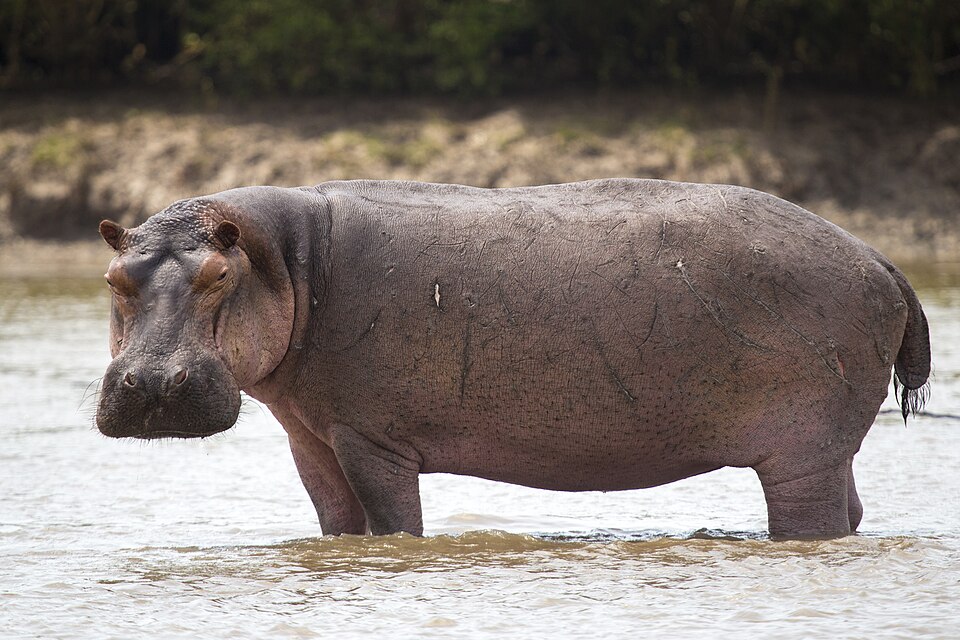 HippopotamusHippopotamus amphibius
Water habitat
Eyes and ears high on the head; remain away from water edges.
 GiraffeGiraffa camelopardalis
Woodland browsing
Look for feeding on tall tree crowns; check where active sightings are occurring.
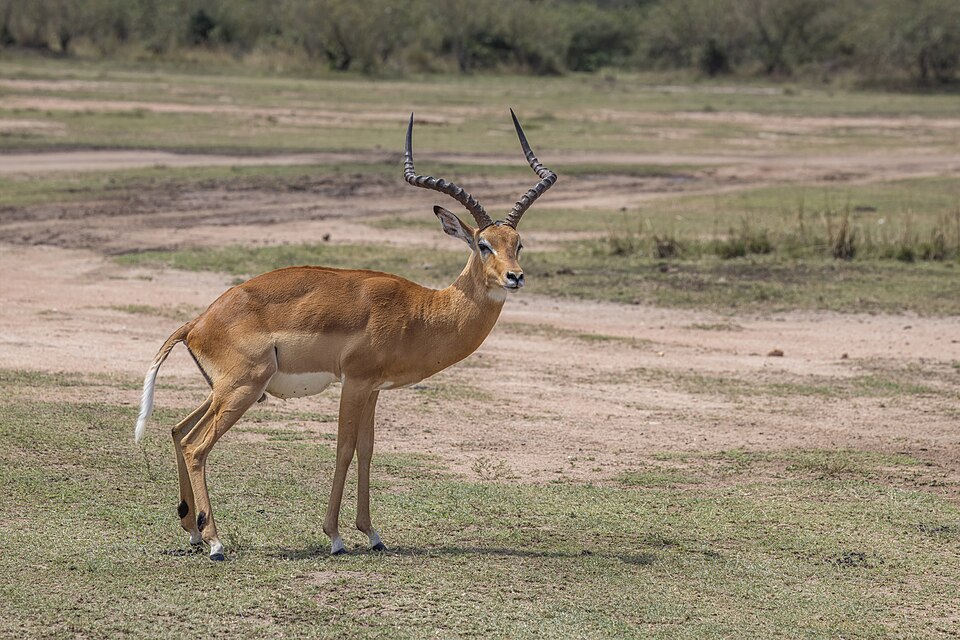 ImpalaAepyceros melampus
Common lowveld antelope
Small, agile herds on woodland edges; males have lyre-shaped horns.
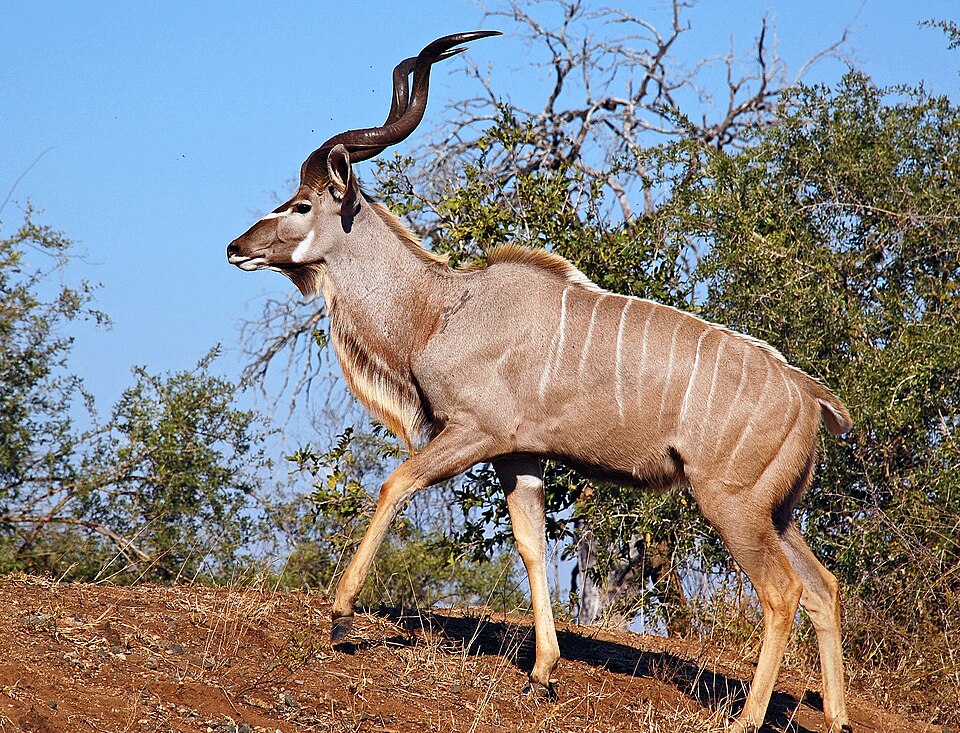 Greater kuduTragelaphus strepsiceros
Wooded habitat
Long spiralled horns in adult males; often partly concealed among trees.
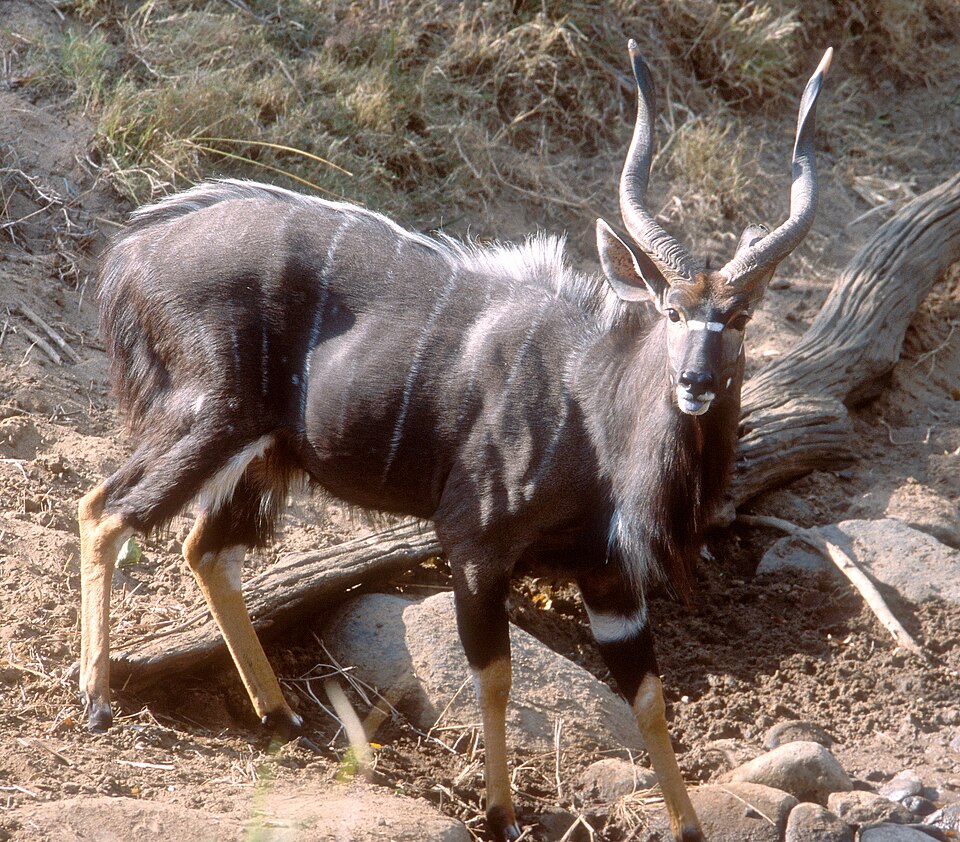 NyalaTragelaphus angasii
Dense thicket
Males are charcoal coloured with spiral horns; females reddish brown.
 Plains zebraEquus quagga
Open habitat
Stripe patterns are individually distinctive; often close to grazing areas.
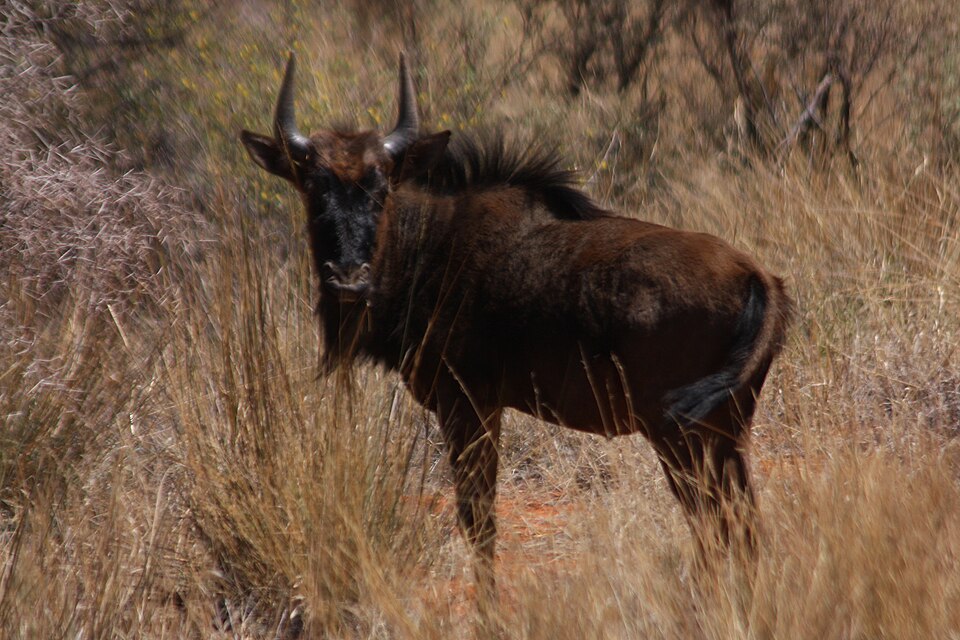 Blue wildebeestConnochaetes taurinus
Grassland
Dark shoulder mane and broad muzzle; watch for groups moving through openings.
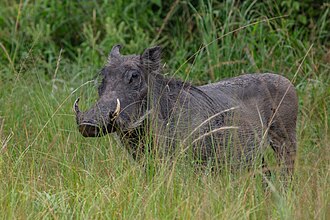 Common warthogPhacochoerus africanus
Open ground
Often kneels while grazing; tail carried high when running.
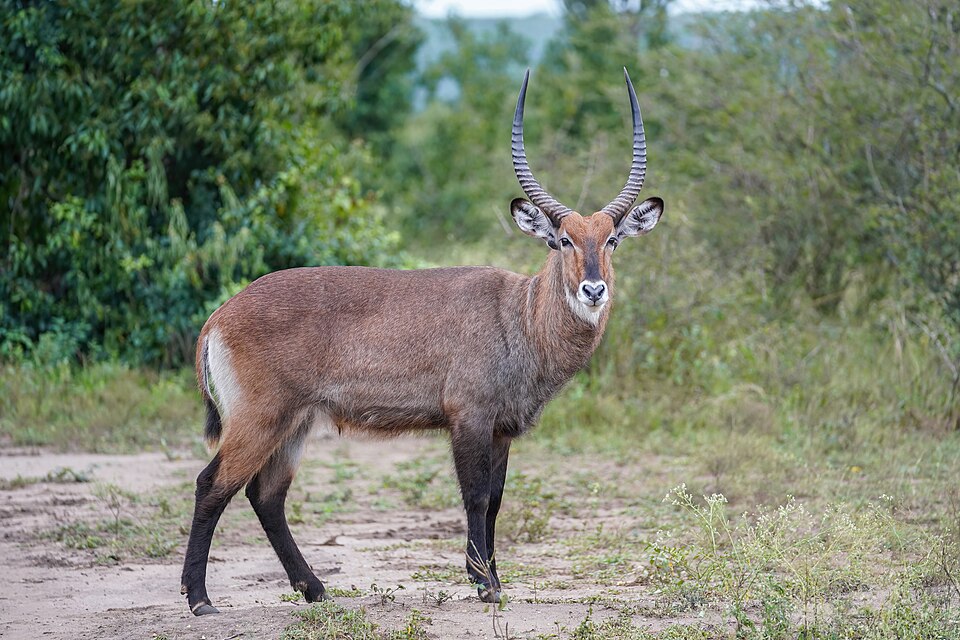 WaterbuckKobus ellipsiprymnus
Near water
Shaggy antelope; white ring on rump typical of common waterbuck.
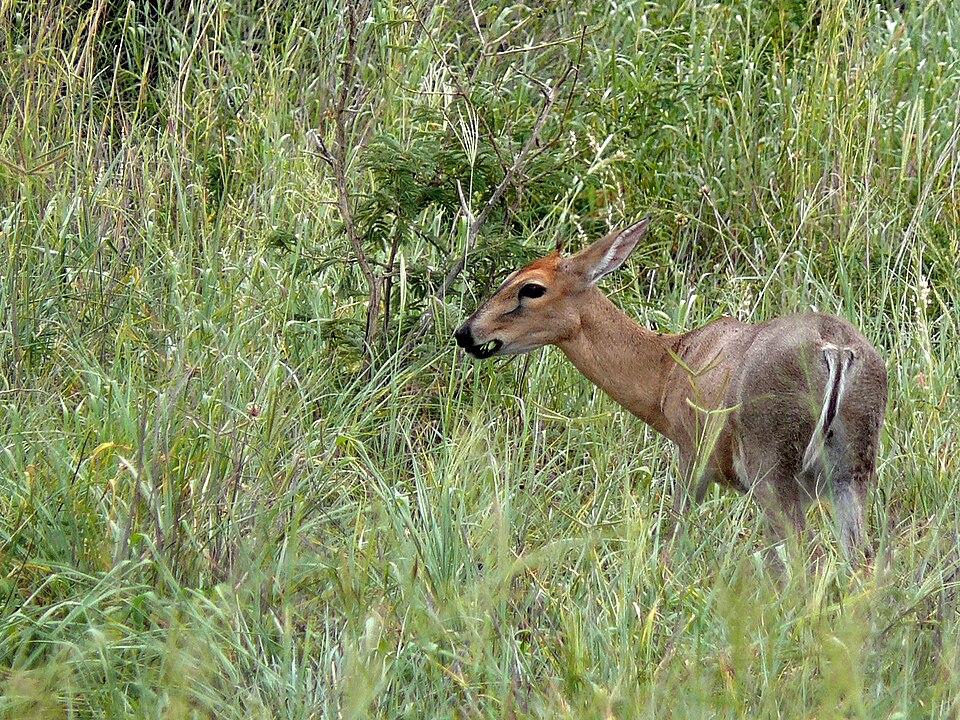 Common duikerSylvicapra grimmia
Woodland edges
Small antelope that may dart into cover; short dark horns on males.
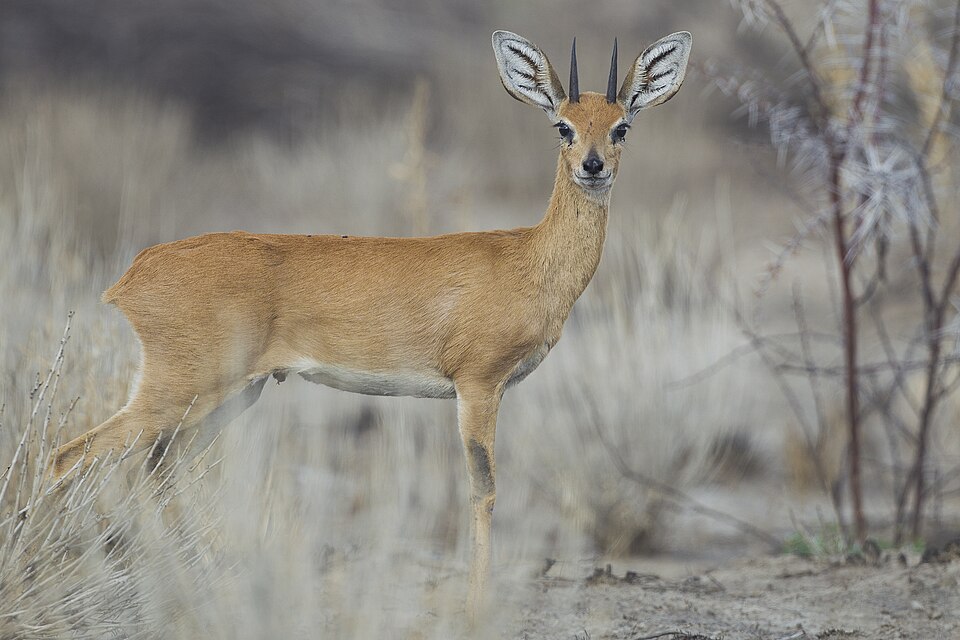 SteenbokRaphicerus campestris
Open scrub
Small solitary antelope; frequently pauses briefly before running.
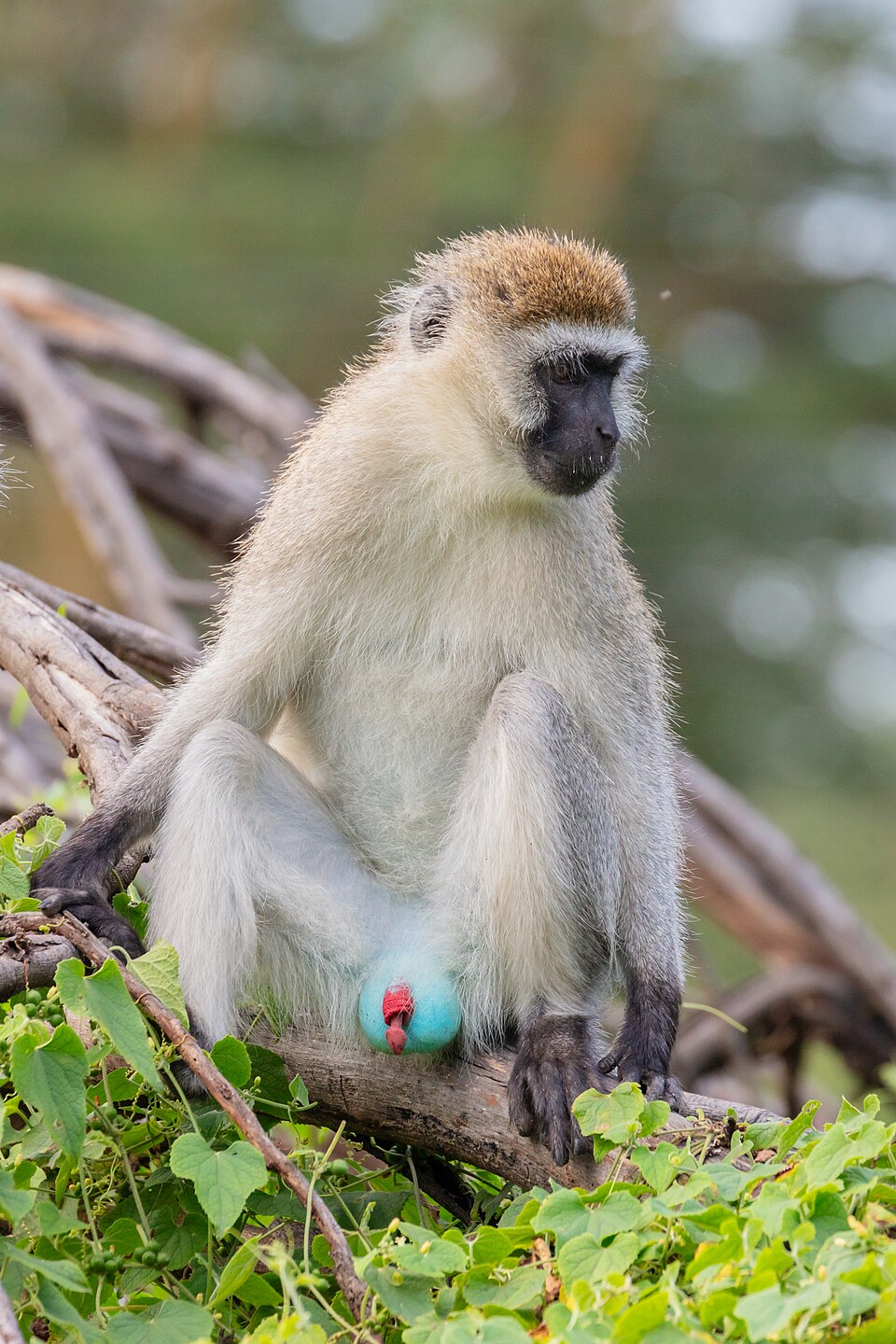 Vervet monkeyChlorocebus pygerythrus
Trees near camp
Grey-brown primate with dark face; never feed.
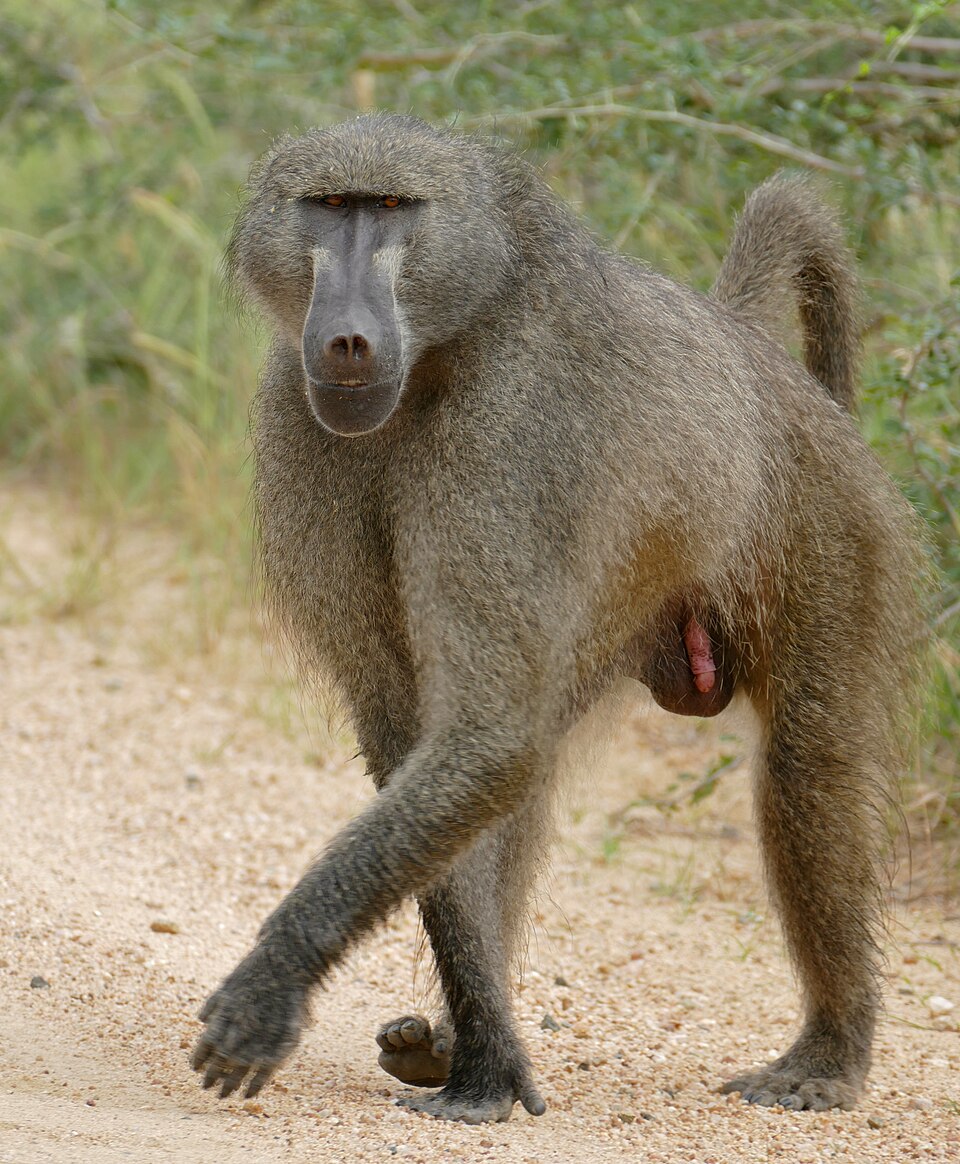 Chacma baboonPapio ursinus
Wooded edge
Large ground-foraging troops; secure food and avoid close contact.
 Spotted hyenaCrocuta crocuta
Elusive
Sloped back, round ears and powerful jaw; sightings unpredictable.
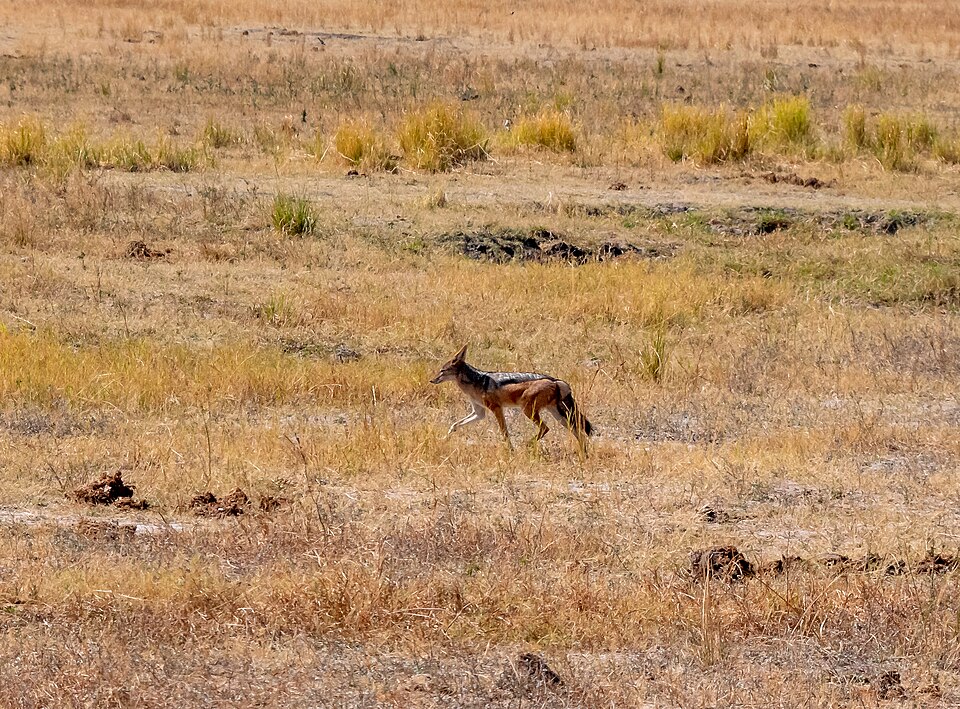 Black-backed jackalLupulella mesomelas
Open savanna
Dark saddle along back; may forage on edges or roads.
 Common genetGenetta genetta
Nocturnal
Slender spotted mammal with banded tail; rarely observed on day visits.
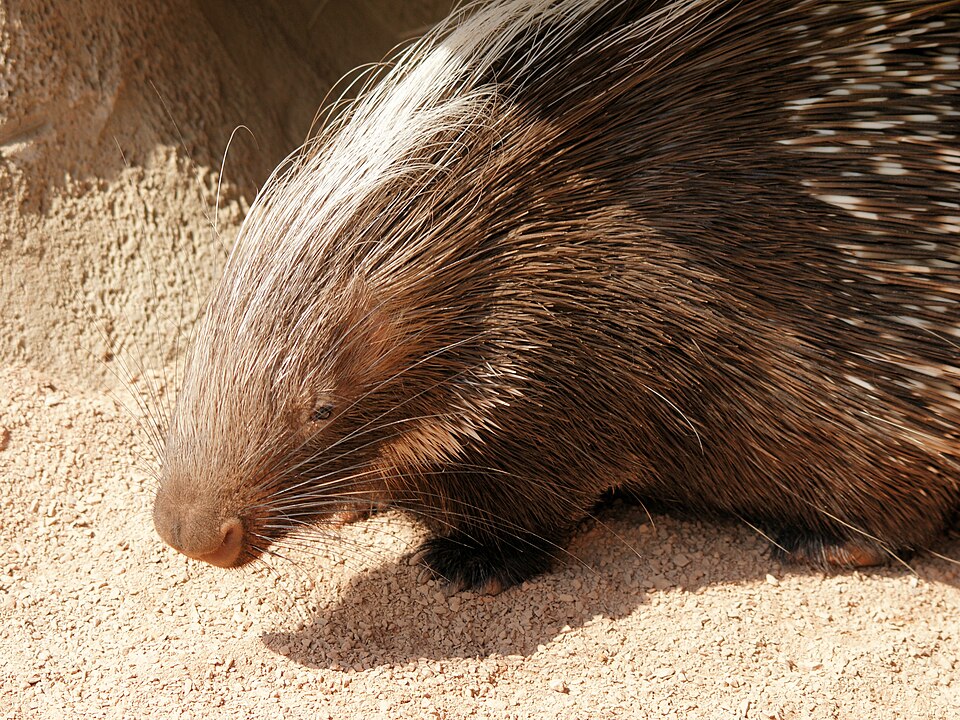 PorcupineHystrix africaeaustralis
Mostly nocturnal
Large quills; look for signs rather than expecting a daylight encounter.
Which birds should you watch for at Hlane?
The combination of waterhole edges, savanna woodland, and open grass supports a varied lowveld birding experience. This 14-species birding identification guide prioritises useful search images; some entries are wider-region possibilities rather than guaranteed Hlane sightings.
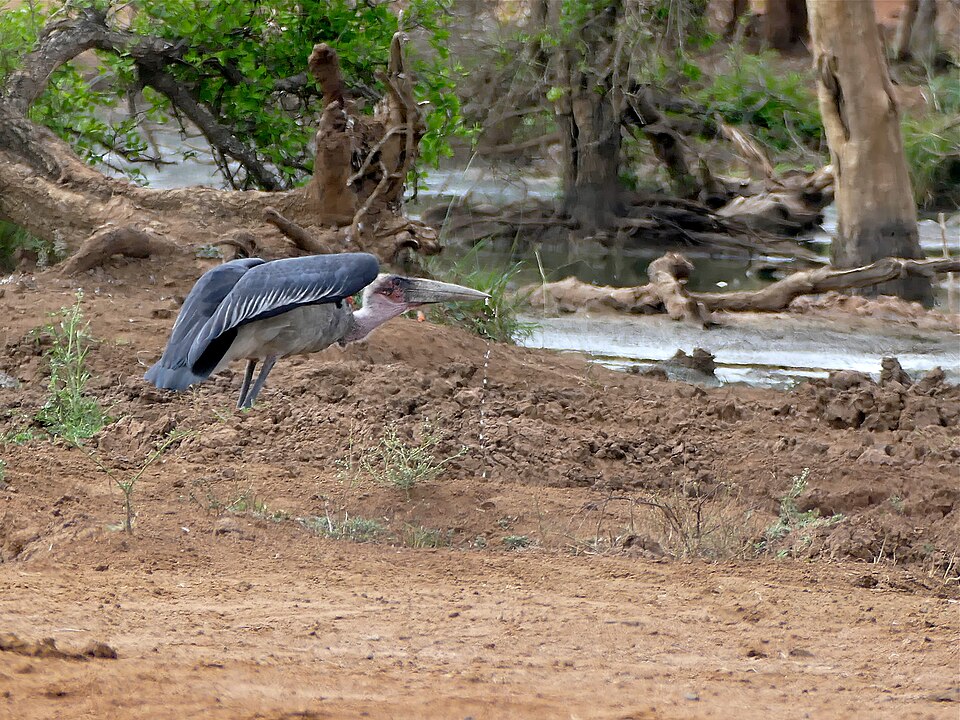 Marabou storkLeptoptilos crumenifer
Waterhole and open flats; enormous bare-headed stork.
hlane-royal-national-park-marabou-stork.jpg
 African fish eagleIcthyophaga vocifer
Near large water; listen for its striking call.
undefined
 White-backed vultureGyps africanus
Scan above thermal currents; critically endangered scavenger.
undefined
 Southern ground hornbillBucorvus leadbeateri
A very large red-faced ground-foraging bird; conservation-sensitive.
undefined
 Lilac-breasted rollerCoracias caudatus
Bright blue and lilac on conspicuous woodland-edge perches.
undefined
 Southern yellow-billed hornbillTockus leucomelas
Yellow curved bill, speckled body and busy tree-to-ground foraging.
undefined
 Red-billed oxpeckerBuphagus erythrorhynchus
Often feeds on ticks and other material on large mammals.
undefined
 Pied kingfisherCeryle rudis
Black-and-white bird that may hover over water.
undefined
 Brown-hooded kingfisherHalcyon albiventris
Woodland perches, often feeding away from water.
undefined
 Hadada ibisBostrychia hagedash
Loud nasal flight calls; open wet ground and fields.
undefined
 African jacanaActophilornis africanus
Exceptionally long toes support movement on floating leaves.
undefined
 Cattle egretBubulcus ibis
White bird regularly foraging near grazers.
undefined
 Fork-tailed drongoDicrurus adsimilis
Black glossy bird with forked tail; conspicuous alarm calls.
undefined
 African hoopoeUpupa africana
Distinct crested bird searching bare soil for insects.
undefined
What flora grows in and around Hlane?
Hlane’s savanna supports woodland trees, thornveld shrubs, perennial grasses and local patches of wetter ground. The following plants represent plausible lowveld habitat identification references, not a botanically surveyed inventory for the park.
Trees & shrubs
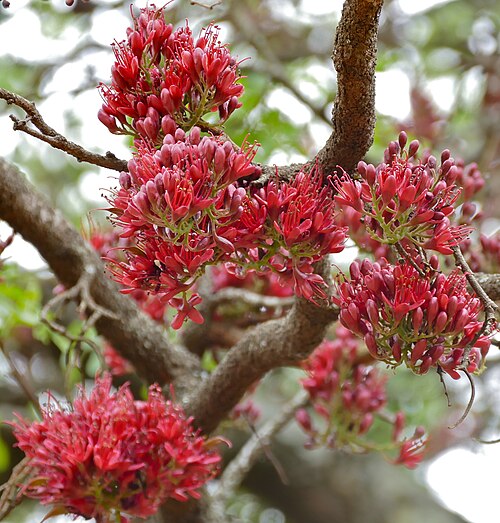 Weeping boer-beanSchotia brachypetala
Red flowers in season; indigenous savanna tree.
hlane-royal-national-park-schotia-flowers.jpg
Distinctive fruiting savanna tree used by wildlife.
undefined
Large fig tree near drainage areas; important wildlife fruit.
undefined
Hardwood tree with deeply fissured bark.
undefined
Knobbly bark and umbrella-shaped mature canopy.
undefined
Pale yellow-green bark in wetter lowveld areas.
undefined
Deciduous lowveld tree; sap is poisonous; avoid handling.
undefined
Zig-zag paired thorns; useful thicket tree identifier.
undefined
Two-toned bottlebrush flowers and hooked seedpods.
undefined
Tough evergreen shrub or small tree near moist patches.
undefined
Flowers, reeds & ground-layer plants
Typical warm-climate grassland component; flowering heads are distinctive.
undefined
Tall forage grass in woodland and shaded edges.
undefined
Mat-forming grass in disturbed and open areas.
undefined
Tall reeds at wetlands and drainage lines.
undefined
Broad-leaved emergent wetland plants; identification varies by species.
undefined
Aromatic small shrub; check identity with a ranger.
undefined
Aromatic lowveld herb group; exact species require flowers and leaves.
undefined
Drought-adapted flowering succulents; flowering season varies.
undefined
Triangular-stemmed wetland plants; group ID usually more reliable.
undefined
Flowering herbs and shrubs in suitable lowveld habitat.
undefined
Where should you stay near Hlane?
Ndlovu Camp
The classic choice for a rhino-waterhole-focused stay. Confirm meal arrangements, availability of electricity and current accommodation types when booking.
Check official optionsBhubesi Camp
An alternative in the Hlane area, suited to travellers who want a quieter bush setting. Check how your chosen activities are accessed.
Check official optionsFor a longer trip, combine Hlane with other reserve experiences or Eswatini’s own hiking destinations. Accommodation searches should distinguish staying inside the park from outside properties requiring extra driving.
How should you plan a Hlane self-drive or guided safari day?
1. Early start / entry
Arrive within the permitted daylight window. Obtain the current operator map, check track conditions and any animal-related closures.
2. Ndlovu waterhole
Spend a patient period watching rhino, elephant and birds from designated safe camp areas. Never approach waterhole animals.
3. Midday decision
Use a quiet break for food and photos. Choose a guided drive or approved short self-drive loop according to the available time.
4. Guided big-game experience
Reserve a ranger-led game drive in advance if lions or access to otherwise restricted sections are important.
5. Birding and evening
Scan mature woodland and water margins; overnight guests can enjoy the camp environment. Bring a torch for unlit paths at night.
6. Exit on time
Day visitors must leave by sunset and within published gate hours. No driving between camps after dark. Save offline directions.
What can you do at Hlane Royal National Park?
Rhino-viewing drive
A specialist guided drive concentrates on rhino and associated habitats, without entering the lion area.
Guided game drive
Sunrise, midday and sunset trips depart according to the official activity schedule. Ask whether your chosen drive accesses the lion sector.
Ndlovu waterhole photography
Unhurried observation from authorised camp viewpoints can be a highlight even without an organised vehicle safari.
Guided birding walk
Walks with authorised rangers offer close habitat interpretation. Check age and minimum-group requirements.
Mahlindza Bush Walk
Big Game Parks lists a specialist Mahlindza walk; seek current availability, route and safety instructions.
Umphakatsi cultural experience
An operator-listed cultural experience; enquire about authentic availability and respectful visiting arrangements.
Prices and minimum group sizes are shown in the official-rate comparison above. Book through the operator rather than assuming same-day space.
What safety rules matter in Hlane?
Wildlife
Stay in vehicles in wildlife zones except at designated areas or with an authorised guide. Do not crowd rhino or elephant, feed wildlife, or leave food out.
Lions and access
The lion section is restricted and cannot be driven independently. Follow signs, gate instructions and your ranger’s instructions.
Driving and light
Keep to designated roads and respect sunset exit requirements. Transfers between camps after dark are prohibited by the operator.
Health and water
Eswatini lowveld travel may warrant malaria precautions. Ask a travel clinician; carry insect repellent, sun protection and safe drinking water.
All printed and online planning guidance is secondary to park signage, Big Game Parks and the instructions of staff on the day.
Hlane Royal National Park FAQs
Can you self-drive in Hlane?
Yes, on permitted public self-drive routes. Lion areas are restricted and require ranger-guided access; confirm the current road and zone rules at reception.
Where is the best place to see rhinos?
Ndlovu Camp’s waterhole is a popular viewing spot, although sightings are never guaranteed.
Can you see lions on a self-drive?
Do not assume so. The lion sector is restricted; a guided lion drive is the appropriate option.
How many nights should you stay?
One night works for a waterhole experience and guided drive; two nights give more room for wildlife sightings and birding.
Do you need a 4×4?
A high-clearance vehicle can help on park tracks, especially after rain. Check exact road conditions with Big Game Parks.
Is Hlane malaria-free?
No malaria-free claim should be made. Eswatini malaria risk varies by region and season. Ask a travel-health professional about the latest guidance for lowveld travel.
Are walk-in day visits allowed?
Day visits are generally an option, but verify opening hours, conservation fees and any activity bookings with Big Game Parks before arriving.
Primary sources, updates & methodology
Photographs: Hlane wildlife images by Bernard DUPONT, CC BY-SA 2.0 via Wikimedia Commons. Botanical image from Wikimedia Commons (see the media attachment attribution). Illustrative images are not proof of guaranteed sightings. Map positions are for regional orientation. Updated 12 October 2026; operational details must be reconfirmed.