
Madikwe Game Reserve Guide
Malaria-free Big Five safari, wild dogs and lodge-based guiding near the Botswana border. This 2026 guide covers reserve access, gates, airstrips, conservation charges, a detailed lodge map, wildlife, best time and how Madikwe differs from Pilanesberg.
Information checked 6 September 2026Madikwe Game Reserve at a glance
Madikwe is a lodge-based Big Five reserve rather than a public self-drive park. It sits on South Africa’s Botswana border, is widely positioned as malaria-free, has strong elephant and wild-dog viewing, and deliberately limits tourism density.
Quick Answers
Madikwe is a cornerstone of See.Africa’s malaria-free safari destinations cluster. Compare it with the Pilanesberg guide or browse all National Park Guides.
What is the best time to visit Madikwe?
May to September is the easiest recommendation for classic wildlife viewing. Dry winter conditions thin the bush and increase activity around water. Summer is greener, hotter and excellent for birds and young animals. Shoulder months can be ideal if you value moderate temperatures.
How much are Madikwe reserve fees in 2026?
Madikwe fees are layered: your accommodation rate is separate from compulsory reserve conservation charges and, depending on how you arrive, gate or landing fees. Published 2026 lodge information commonly shows a conservation contribution around R520 per international adult per night and R260 per child, but lodge documents and the reserve tariff can differ by booking date and category.
Which Madikwe gate should you use?
Use the gate stated by your lodge, not whichever gate looks closest on Google Maps. Five main reserve gates are commonly listed: Abjaterskop, Wonderboom, Tau, Derdepoort and Molatedi.
| Gate | Typical use | Planning note |
|---|---|---|
| Abjaterskop | Southwestern/central access from Zeerust side | Common arrival gate for several central/eastern lodges. |
| Wonderboom | Western lodge access | Used by several western properties; lodge directions take priority. |
| Tau Gate | Northwestern lodge access | Useful around Tau and nearby western properties. |
| Derdepoort | Northeastern/Botswana-border side | Remote; only use when specifically directed. |
| Molatedi | Southeastern/eastern access | Common for eastern lodge approaches. |
How do you get to Madikwe from Johannesburg?
Allow roughly four to four-and-a-half hours by road in normal conditions. The reserve lies north of Zeerust on the Botswana border. Fly-in guests use reserve airstrips and transfer by safari vehicle to their lodge.
Drive to the gate specified on your lodge voucher, enter the reserve and continue only to your booked property.
Scheduled or charter flights can use Madikwe airstrips; landing fees and lodge transfers may be additional.
Phone navigation can choose unsuitable border or gravel approaches. Follow current lodge directions.
Madikwe Game Reserve map
This map is built for arrival planning rather than public self-drive routing. It highlights the five gates, airstrips, representative lodge areas and broad habitat zones. Approximate points are labelled.
What does a day in Madikwe look like?
Departure is usually around dawn, with timing shifted seasonally. Predators and wild dogs are prime morning targets.
Return to the lodge for breakfast and a long midday break during the hottest hours.
Many lodges overlook water or have hides, so midday can still produce excellent elephant and bird encounters.
Head out before sunset with a guide who can respond to fresh tracks and reserve-wide sightings.
When conditions allow, guides may stop at a safe scenic point before continuing after dark.
The last part of the drive can reveal nocturnal species such as hyena, genet and sometimes leopard.
22 mammals to know in Madikwe
African bush elephant
Common
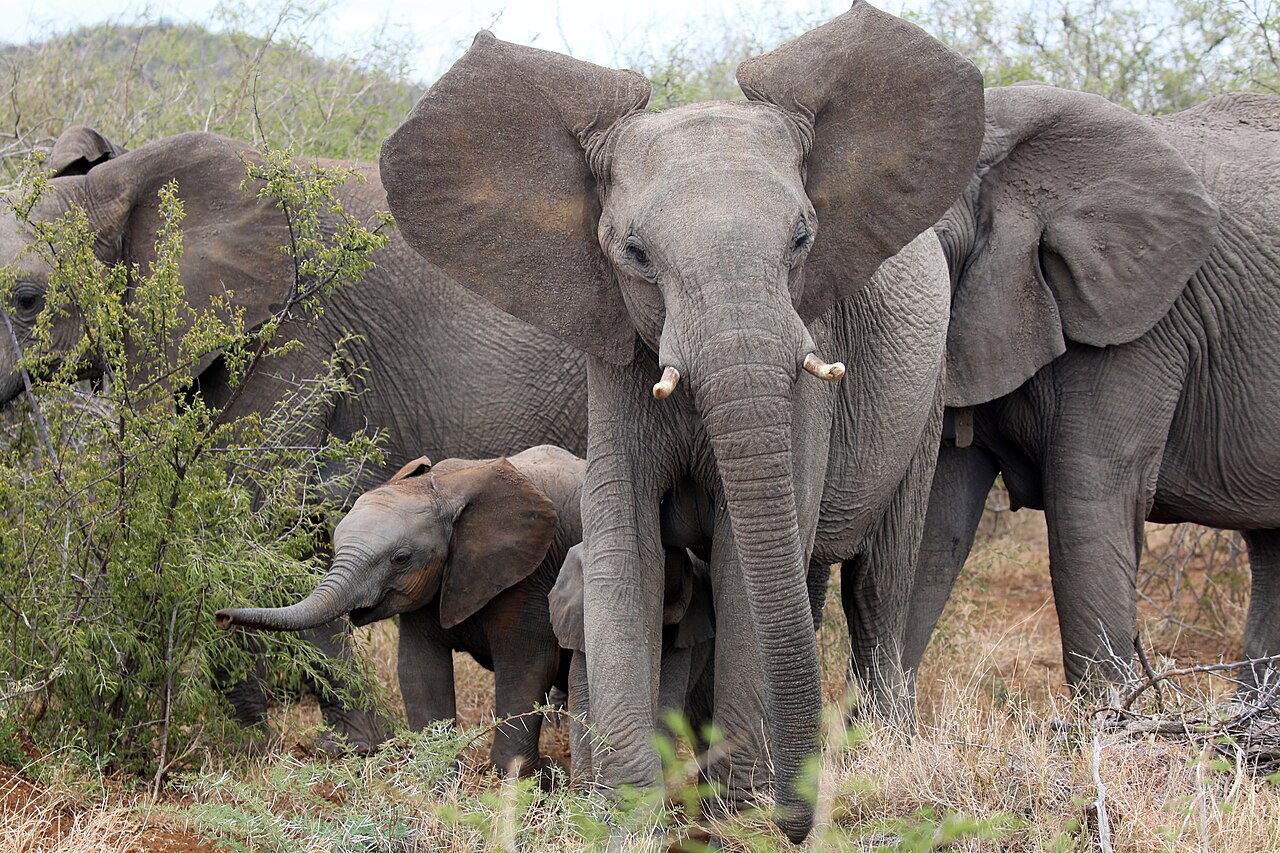
Large family herds and bulls are a defining Madikwe sight; waterholes are especially productive.
African wild dog
Flagship
One of Madikwe’s signature species. Packs range widely, making guide communication especially valuable.
Lion
Big Five
Best searched for around dawn, dusk and open areas holding zebra, wildebeest and antelope.
White rhinoceros
Big Five
Broad-lipped grazer of open habitat; sightings are managed sensitively because of poaching risk.
Black rhinoceros
Scarcer
More secretive browser associated with thicker bush.
African buffalo
Big Five
Herds and old bulls use grassland, woodland and water; mature bulls show a heavy horn boss.
Leopard
Elusive
Search drainage lines, rocky areas and dense cover, especially early and late.
Cheetah
Possible
Open areas offer the best chance; guides track their movements between plains.
Spotted hyena
Good chance
Frequently active around predator kills and on roads at dawn or after dark.
Brown hyena
Special sighting
A Kalahari-edge specialist and one of the reserve’s more unusual carnivore targets.
Giraffe
Common
Woodland browser often visible above the acacia canopy.
Plains zebra
Common
Open plains and waterhole regular, often mixed with wildebeest.
Blue wildebeest
Common
Herding grazer of open areas.
Greater kudu
Common
Woodland browser; males carry long spiral horns.
Impala
Very common
Key prey species across woodland edges and grassland.
Waterbuck
Water-associated
Often near permanent water; look for the white rump ring.
Sable antelope
Special sighting
Large dark antelope with swept-back horns.
Gemsbok
Dry-country species
Long straight horns and bold facial markings suit Madikwe’s semi-arid habitats.
Warthog
Common
Short-grass and waterhole regular.
Black-backed jackal
Good chance
Often seen trotting roads or scavenging near predators.
Hippopotamus
Localized
Restricted to suitable permanent dams and pools.
Chacma baboon
Common
Large social troops use rocky slopes and woodland.
12 birds worth learning in Madikwe
African fish eagle
Dams and larger waterholes; unmistakable ringing call.
Secretarybird
Open grassland; tall terrestrial raptor.
Kori bustard
Open plains; one of Africa’s heaviest flying birds.
Southern ground hornbill
Large black terrestrial hornbill, usually in family groups.
Martial eagle
Scan high perches and thermals over open country.
White-backed vulture
Critically endangered scavenger often associated with predator activity.
Lilac-breasted roller
Colorful roadside perch-hunter.
Crimson-breasted shrike
Black-and-red thornveld specialist.
Southern yellow-billed hornbill
Common dry-woodland bird with long yellow bill.
Red-billed oxpecker
Often rides buffalo, giraffe and rhino.
African grey hornbill
Woodland canopy and open bush.
Pied kingfisher
Dams and pools; often hovers before diving.
Flora: Kalahari thornveld, woodland and seasonal grassland
Trees & shrubs
Flat-topped acacia form common in dry savanna.
Dense thornveld browse and cover.
Distinctive thorn bosses and valuable browse.
Large deciduous savanna tree with wildlife-attracting fruit.
Long-lived mature woodland tree.
Common bushveld tree with winged fruit.
Spiny tree with hooked and straight thorns.
Dry-country tree with pale bark.
Fine-leaved woodland tree.
Characteristic dry woodland tree on sandy soils.
Grasses, flowers & understory
Important nutritious savanna grass.
Palatable tall grass under woodland.
Fine grasses common across open habitats.
High-value grazing grasses.
Dam margins and wetter ground.
Localized around permanent water.
Seasonally conspicuous on rocky ground.
Orange flowers attract sunbirds.
Respond quickly after summer rains.
Crucial cover for browsers and small birds.
Best things to do in Madikwe
The core Madikwe experience and the best way to use reserve-wide tracking knowledge.
Ask guides about current pack movements; sightings can change dramatically by day.
Several lodges have productive waterholes or hides.
Over 300 species are recorded across thornveld, woodland and dams.
Many lodges specialize in children, but age rules for drives vary by property.
Selected lodges provide low-level hides for close waterhole photography.
What rules matter most in Madikwe?
Madikwe is not open for independent tourist driving. If you arrive in your own vehicle, drive only to your booked lodge using its directions. Game viewing is conducted in authorized safari vehicles with professional guides.
Madikwe Game Reserve FAQ
Is Madikwe Game Reserve worth visiting?
Yes, especially if you want a malaria-free, lodge-based Big Five safari with strong guiding, wild dogs and lower tourism density.
Can you self-drive in Madikwe?
You may drive to your booked lodge, but independent game driving around the reserve is not permitted.
Can you visit Madikwe for the day?
No. Madikwe is not open to ordinary day visitors; accommodation is in private lodges inside the reserve.
Is Madikwe malaria-free?
Madikwe is widely positioned by South African tourism and reserve operators as a malaria-free safari destination. Normal mosquito-bite precautions are still sensible.
How far is Madikwe from Johannesburg?
Plan roughly four to four-and-a-half hours by road in normal conditions, depending on your lodge and gate.
What is the best time to visit Madikwe?
May to September is best for classic dry-season wildlife viewing; shoulder months are excellent for milder temperatures and summer is greener with strong birding.
Madikwe or Pilanesberg?
Choose Madikwe for a guided lodge safari with premium accommodation and lower visitor density. Choose Pilanesberg for public self-drive flexibility and day trips.
Are Madikwe conservation fees included in lodge rates?
Not always. Ask for a written breakdown because conservation, gate and landing fees may be charged separately.
How this Madikwe guide was checked
Reserve structure, no-day-visitor policy, guided-drive model, main gates and wildlife were checked against North West Parks and BirdLife South Africa. Current fee guidance was cross-checked against 2026 lodge documents because reserve charges are commonly billed by lodges and vary by booking category/date.