
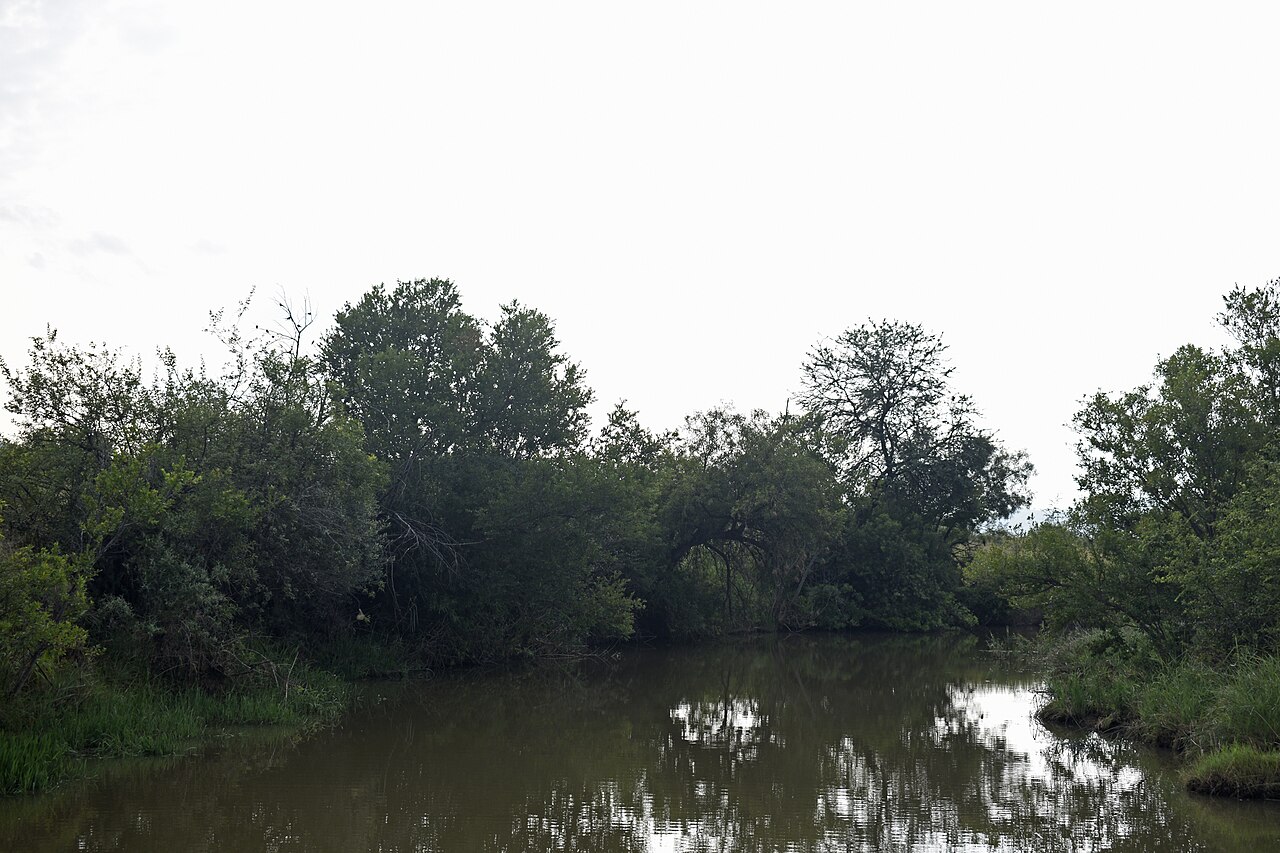
Pilanesberg National Park Guide
Malaria-free Big Five safari, volcanic landscapes and one of South Africa’s easiest self-drive parks. This 2026 guide covers current fees, gate times, the best entrances, Mankwe Dam, hides, a detailed map, wildlife and a practical one-day route.
Information checked 6 September 2026Pilanesberg National Park at a glance
Pilanesberg is one of the easiest places to combine a malaria-free Big Five safari with an independent self-drive from Johannesburg. The park sits inside an ancient volcanic complex in South Africa’s North West Province and has a dense network of roads, dams, hides and picnic stops.
Quick Answers
Pilanesberg is also a natural fit for See.Africa’s malaria-free safari destinations guide. Compare it with the Addo Elephant National Park guide, Kruger guide or browse all National Park Guides.
What is the best time to visit Pilanesberg?
May to September is the easiest period for first-time wildlife viewing. Dry conditions thin vegetation and concentrate animals around reliable water. October to April is warmer, greener and often excellent for birds, newborn herbivores and dramatic skies, but vegetation can make cats and rhinos harder to spot.
Dry winter: easier visibility and stronger waterhole concentration.
Green summer: lush volcanic slopes, thunderstorms and richer colors.
Summer brings migrants and more breeding activity alongside resident species.
How much does Pilanesberg cost in 2026?
The current published tariff is charged per person and per vehicle per day. As of 1 December 2025: SA adult R168; SA child 5–12 R84; SA pensioner R84; SADC adult R385; SADC child R275; foreign adult R748; foreign child R748; sedan/LDV/SUV R168.
| Period | Published gate hours | Planning note |
|---|---|---|
| November–February | 05:30–19:00 | Longest summer day; afternoon thunderstorms can slow driving. |
| March–April | 06:00–18:30 | Allow a generous margin for the exit drive. |
| May–September | 06:30–18:00 | Winter opening; dawn can be cold. |
| September–October | 06:00–18:30 | The published page overlaps September—confirm the exact date’s official time. |
Which Pilanesberg gate should you use?
| Gate | Best for | Approach | Inside access |
|---|---|---|---|
| Manyane Gate | Mogwase / eastern arrivals | R510 via Mogwase | Fast access to eastern plains and central roads. |
| Bakgatla Gate | Northeast / Ivory Tree / Bakgatla | Continue north past Manyane | Good northern and central access. |
| Bakubung Gate | Sun City / Bakubung side | R556 west of Sun City | Western loops and central crater approach. |
| Kwa Maritane Gate | Sun City + airport side | Near Pilanesberg airport | Southwestern access and lodge arrival. |
| Private Black Rhino entrance | Black Rhino Reserve lodges | R565 | For guests with lodge/access arrangements, not a normal day-visitor gate. |
How do you get to Pilanesberg from Johannesburg?
For most travelers the simplest route is N4 west, then R556 toward Sun City and onward to the appropriate park gate. Allow more than two hours from Johannesburg/Pretoria before adding city traffic, fuel, food stops and the drive inside the park.
N4 west, then R556/R510 depending on your gate. Fill up before entering the park.
Bakubung and Kwa Maritane are generally the most natural entrances; Manyane/Bakgatla require continuing around the park.
A normal sedan is enough for most routes. Drive slowly on gravel and skip roads that look unsuitable after heavy rain.
Pilanesberg National Park map
The map prioritizes gates, Mankwe Dam, hides, picnic stops and the main self-drive decision points. Verified public coordinates are used where available; less-documented hides and dams are explicitly marked approximate rather than pretending to be navigation-grade.
How should you plan one day in Pilanesberg?
Enter as early as possible. Predators, rhino and elephants are often easier to find before heat and traffic build.
Work slowly toward Mankwe Dam rather than racing there. Scan side roads, open grass and drainage lines en route.
Use a waterhole hide to stop moving, listen and let wildlife come to you.
Use Pilanesberg Centre or a designated picnic area. This is the right time for food, toilets and a route rethink.
Return via a different habitat: rocky slopes, open plains and woodland each favor different species.
Turn toward your gate early. The official rules require you to be out before the gate closing time on your permit.
Where should you stay in Pilanesberg? Our top 3 lodges
Choose accommodation by the part of Pilanesberg you intend to explore. These three established lodges suit different entry points and safari styles. For private-reserve lodges, family villas and other options, see our Top 10 Pilanesberg safari lodges and hotels.
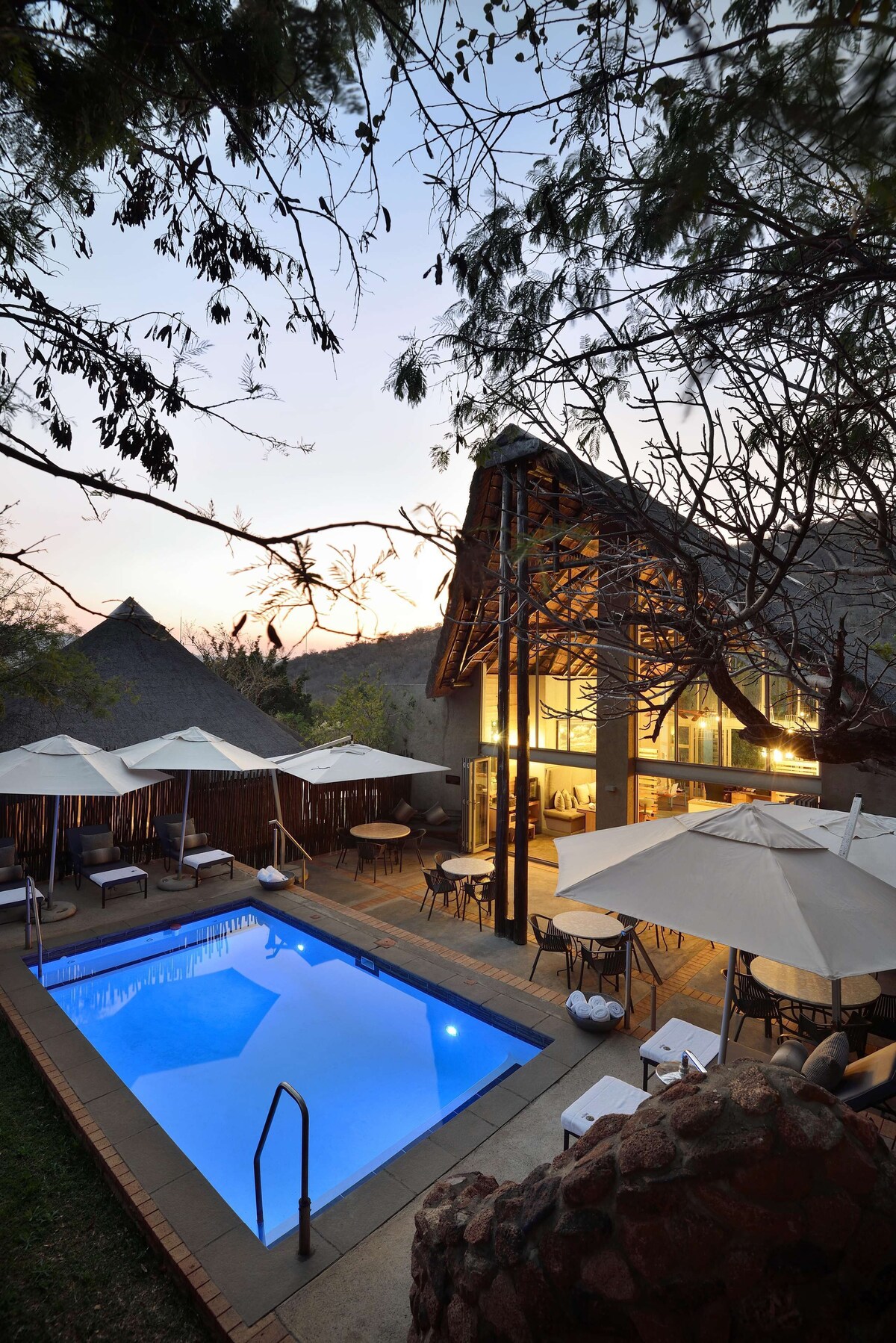
Bakubung Bush Lodge
Family-friendly southwest Pilanesberg lodge with a pool and guided game-drive options.
Check availability on Expedia ↗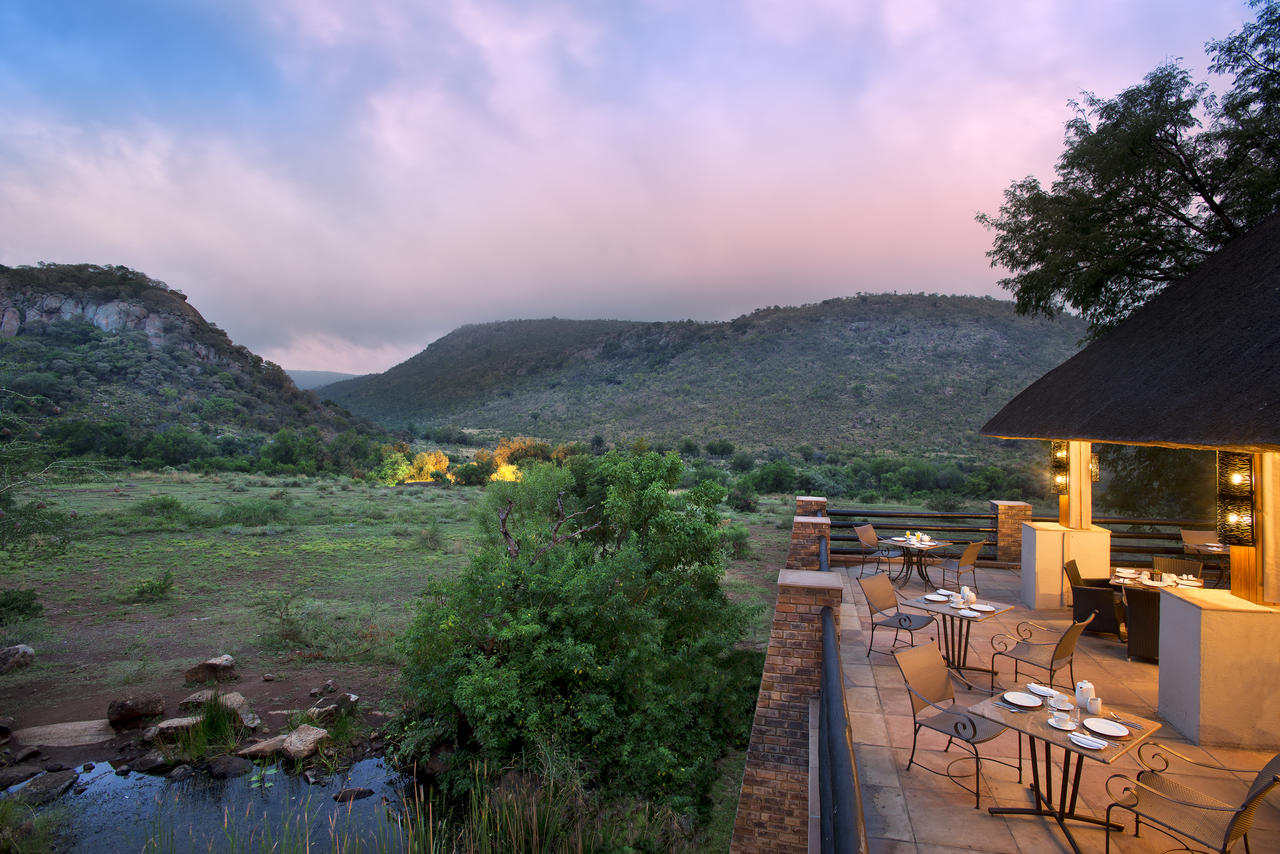
Kwa Maritane Bush Lodge
Classic southern lodge with nearby waterhole viewing, hide and hotel-style amenities.
Check availability on Expedia ↗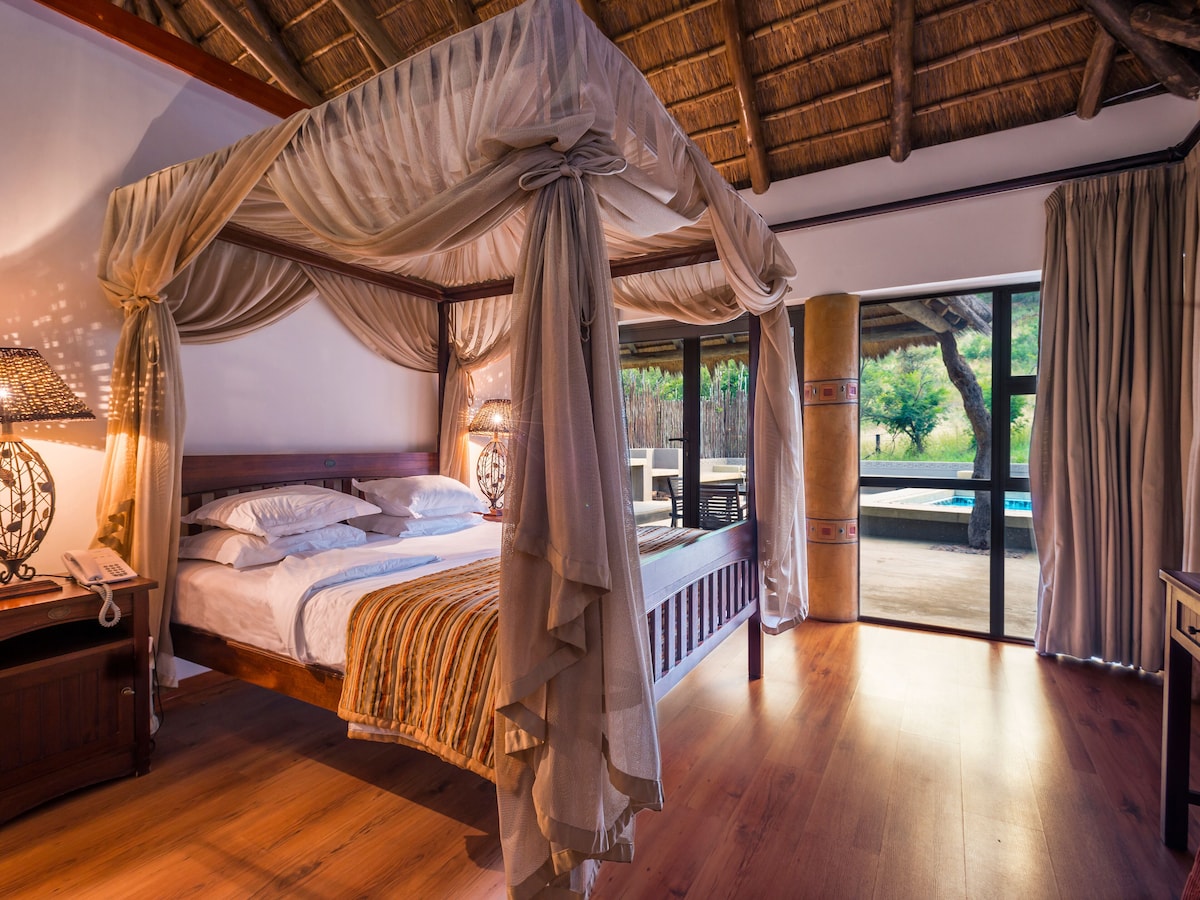
Ivory Tree Game Lodge
Luxury lodge by Bakgatla Gate, suited to a northeast Pilanesberg safari and spa stay.
Check availability on Expedia ↗Compare all 10 Pilanesberg lodges and hotels →
Before booking: Confirm game-drive and meal inclusions, park fees, child age requirements and your lodge’s specific entrance gate. The Black Rhino private reserve has distinct arrival arrangements.
Affiliate disclosure: see.africa may earn a commission from Expedia bookings at no additional cost to you.
22 mammals to know in Pilanesberg
Pilanesberg is a genuine Big Five reserve, but a good self-drive day is about habitat reading rather than chasing a checklist.
African bush elephant
Common
Where: Mankwe, woodland and dam approaches. ID: huge ears and long tusks. Behavior: family herds often move between water and feeding areas.
Lion
Big Five
Where: open plains, road verges and shade near prey concentrations. ID: tawny coat; males often maned. Behavior: most active around dawn and dusk.
White rhinoceros
Strong Pilanesberg target
Where: grassland and open woodland. ID: broad square lip and low head carriage. Behavior: grazes steadily, often in small groups.
Black rhinoceros
Scarcer
Where: thicker bush and browsing habitat. ID: hooked upper lip. Behavior: more solitary and secretive than white rhino.
African buffalo
Big Five
Where: water, grassland and shade. ID: heavy dark body and fused horn boss in mature bulls.
Leopard
Elusive
Where: rocky slopes, drainage lines and dense cover. ID: rosette coat. Behavior: often easiest very early or late.
Cheetah
Possible
Where: open grassland with visibility. ID: slim build and black tear marks. Behavior: daytime hunter that avoids heavy cover.
African wild dog
Special sighting
Where: wide-ranging across roads and open habitat. ID: patchy coat and large rounded ears. Behavior: highly social packs.
Giraffe
Common
Where: acacia and mixed woodland. ID: unmistakably tall browser. Behavior: often visible above bush before the road reaches them.
Plains zebra
Common
Where: open grasslands and around water. Behavior: often mixed with wildebeest.
Blue wildebeest
Common
Where: open plains. ID: sloping back, dark mane and curved horns. Behavior: herds often graze with zebra.
Kudu
Common
Where: wooded slopes and thickets. ID: vertical body stripes; males have spiral horns.
Impala
Very common
Where: woodland edges and grass. ID: sleek tan antelope with black rump marks.
Waterbuck
Water-associated
Where: dams and wetter valleys. ID: shaggy grey-brown coat and white rump ring.
Tsessebe
Possible
Where: open grassland. ID: reddish-brown body with dark face and shoulders.
Sable antelope
Special sighting
Where: suitable grass-woodland mosaics. ID: long swept-back horns; adult males darken strongly.
Hippopotamus
Dam specialist
Where: larger permanent water including Mankwe. Behavior: spends daytime in water and emerges to graze after dark.
Spotted hyena
Possible
Where: roads and open areas around dawn/dusk. ID: sloping back and rounded ears.
Black-backed jackal
Good chance
Where: open plains and roadsides. ID: rusty legs with a black saddle.
Warthog
Common
Where: short grass and water. Behavior: often kneels while grazing.
Chacma baboon
Common
Where: rocky slopes, woodland and roads. Behavior: large terrestrial troops.
Vervet monkey
Common
Where: wooded visitor areas and riparian trees. ID: grey coat, black face with pale fringe.
12 birds worth learning in Pilanesberg
Pilanesberg is a strong birding park because water, open grassland, woodland and rocky ridges sit close together.
African fish eagle
Where: Mankwe and larger dams. White head, chestnut body and ringing call.
Secretarybird
Where: open grassland. Very tall terrestrial raptor with long black crest.
Kori bustard
Where: open plains. Massive, slow-walking bustard and a prized grassland sighting.
Cape vulture
Where: thermals above ridges. Large pale-backed vulture; conservation-sensitive regional species.
African hawk-eagle
Where: woodland and rocky hills. Watch exposed perches and soaring raptors.
Giant kingfisher
Where: dam edges and hides. Huge black-and-white kingfisher with heavy bill.
Crimson-breasted shrike
Where: thornveld. Striking black-and-red bushshrike; yellow morph is rare.
Southern pied babbler
Where: dry woodland. Noisy social groups, black-and-white plumage.
Coqui francolin
Where: grassland edges. Small cryptic francolin often heard before seen.
White-backed vulture
Where: thermals and carcass areas. Critically endangered scavenger.
Lilac-breasted roller
Where: open woodland. Colorful roadside perch-hunter.
Southern yellow-billed hornbill
Where: dry woodland. Long curved yellow bill and undulating flight.
Flora: volcanic ridges, thornveld and grassland
Pilanesberg’s concentric volcanic hills create a mosaic of rocky slopes, open grassland, thorn woodland and wetter dam margins.
Trees & shrubs
Common thorn tree of lower slopes and drainage lines; flowers attract insects.
Classic flat-crowned savanna tree in drier open areas.
Distinctive dark bark and thorn knobs; important browse tree.
Large deciduous savanna tree with fruit used by wildlife and people.
Hard, long-lived tree associated with mature woodland.
Common bushveld tree with four-winged fruit.
Woodland tree with fine foliage and characteristic flaky bark.
Spiny shrub/tree, often with one straight and one hooked thorn.
Yellow-flowering woodland tree common in bushveld regions.
Multi-stemmed thorn tree on rocky slopes and woodland edges.
Grasses, flowers & wetland plants
Important nutritious grass in well-managed savanna.
Tall palatable grass often growing under tree cover.
Diverse fine grasses across open plains and disturbed edges.
Palatable grazing grasses in open habitat.
Common around dam margins and seasonally wet ground.
Localized around permanent water and inflow zones.
Rocky slopes support drought-tolerant succulents that flower conspicuously in season.
Orange-flowered plants attractive to sunbirds and insects.
Seasonal flowers emerge quickly after summer rain.
Small drought-adapted plants occupy exposed volcanic substrate.
Best things to do in Pilanesberg
For a different South African park experience, compare the Waterberg scenery and safari areas of Marakele National Park. On a longer journey with a separate Free State stay, Golden Gate Highlands National Park adds sandstone walks, grassland antelope and dinosaur interpretation. Plan these as separate destinations with their own transfers and accommodation.
The park’s biggest advantage: independent wildlife viewing without requiring a 4×4.
Useful for first-time visitors or to add dawn/evening ranger knowledge to a self-drive stay.
Slow down at hides near dams and let elephants, antelope and birds come into view naturally.
The key central water body and one of the best places to build a day’s route around.
Use ridge roads and signed viewpoints to understand the unusual concentric crater landscape.
Work dams, grassland and woodland separately rather than treating birding as incidental to mammals.
What rules matter most in Pilanesberg?
Remain in the vehicle except at designated places, keep all body parts inside, obey the 40 km/h limit, stay on open roads and exit before your permit’s gate time. Feeding or disturbing wildlife and driving off-road are prohibited.
Pilanesberg National Park FAQ
Is Pilanesberg National Park worth visiting?
Yes. It is one of South Africa’s easiest malaria-free Big Five parks for a self-drive or short safari from Johannesburg and Pretoria.
Can you self-drive in Pilanesberg?
Yes. Most visitor roads are suitable for a standard 2WD sedan, although rough gravel roads can be more comfortable in a higher-clearance vehicle.
How much is Pilanesberg entry in 2026?
The current tariff effective from 1 December 2025 lists R748 per foreign adult or child and R168 per sedan/LDV/SUV per day. Separate lower SA and SADC rates apply.
Is Pilanesberg malaria-free?
Yes, Pilanesberg is considered malaria-free for normal travel planning. See.Africa checked this on 6 September 2026 against South Africa’s National Department of Health malaria geography: local transmission is concentrated mainly in low-altitude parts of Limpopo, Mpumalanga and KwaZulu-Natal, while Pilanesberg is in North West Province. The Pilanesberg Wildlife Trust also explicitly describes the park as malaria-free. This does not mean mosquito-free, and another stop on your itinerary may change your malaria advice.
How far is Pilanesberg from Johannesburg?
Allow a little over two hours to reach the park area in normal conditions, then add time for traffic, stops and the drive from your chosen gate to the first wildlife loop or lodge.
Do you need a 4×4 in Pilanesberg?
No. A normal 2WD vehicle is suitable for most public roads. Avoid rough gravel roads that look unsuitable after heavy rain.
Which is the best gate for Pilanesberg?
There is no single best gate. Manyane works well from Mogwase/east, Bakgatla for the northeast, and Bakubung or Kwa Maritane for Sun City-side arrivals.
What is the speed limit in Pilanesberg?
The official park rules set a maximum speed of 40 km/h. Driving more slowly is usually much better for spotting wildlife.
How this Pilanesberg guide was checked
Time-sensitive information was checked against North West Parks Board material and the current Pilanesberg visitor tariff, gate, access and FAQ pages. BirdLife South Africa material was used for specialist bird context. Public mapping sources were used for exact gate and central-landmark coordinates; approximate map points are labelled and should not replace the official park map.