
Mokala National Park Guide
Plan Mokala with a detailed map, antelope and wildlife profiles, conservation fees, Mosu and Lilydale advice, camping and practical Kimberley access.
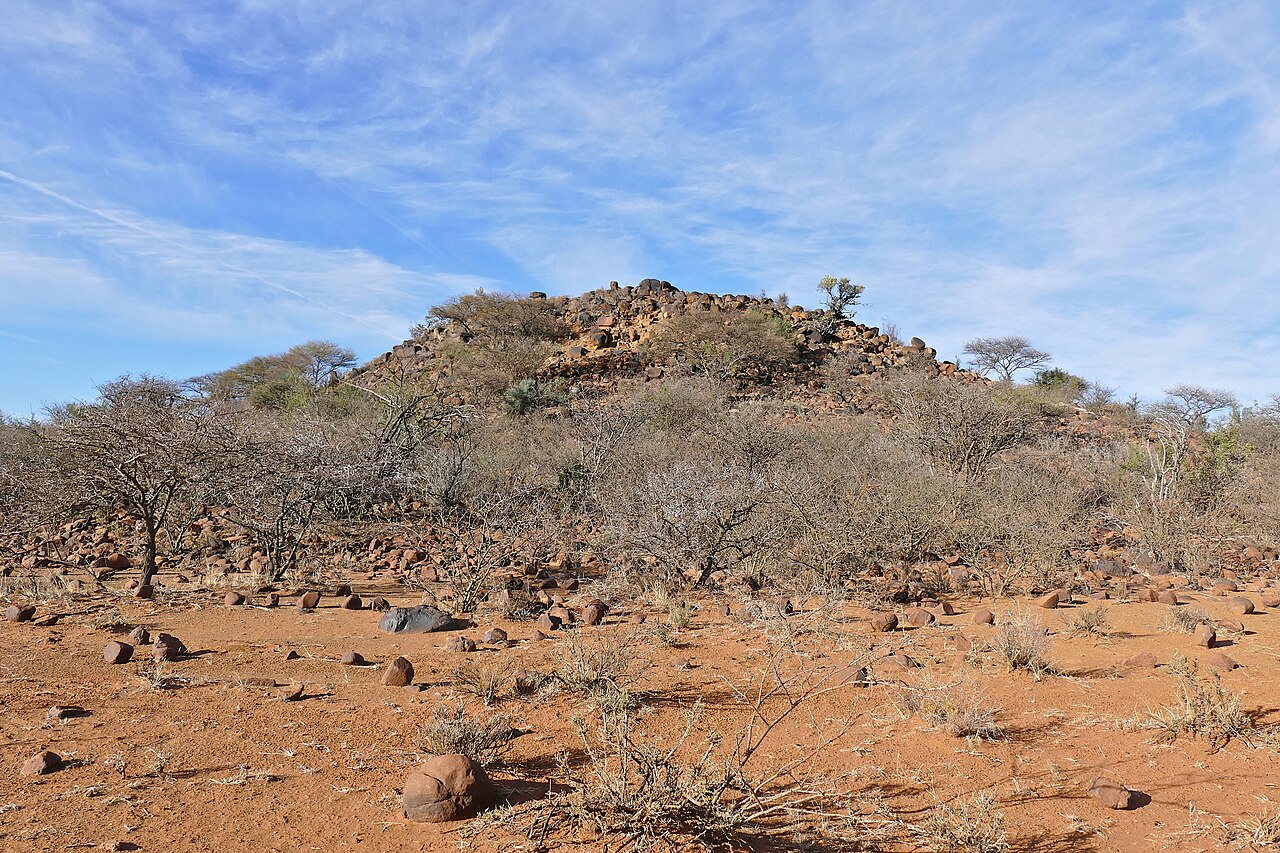
Boulder Hill and dry woodland in Mokala National Park. Photo: Bernard DUPONT from FRANCE · CC BY-SA 2.0. Resized and cropped for this layout.
.jpg)
Mokala National Park at a glance
Mokala is a rewarding choice for travellers who enjoy learning antelope, watching dry-country birds and spending time in a quieter landscape. South of Kimberley, its rocky hills, camel-thorn woodland and open plains offer a different safari from the better-known predator parks. The name refers to the camel-thorn tree, an important part of the setting and its shelter. Choose your accommodation before choosing your approach road: Mosu and Lilydale serve different parts of the park, and rain can interrupt the internal connection between them. Two or three nights allows the visit to become more than a drive between water points.
Official sources · checked 9 September 2026: SANParks: Mokala National Park overview · SANParks: current visitor notices. Confirm arrangements for your travel date.
When is the best time to visit Mokala?
The drier, cooler months are often practical for an initial self-drive visit, with cold mornings and evenings to plan for. Summer can bring heat, thunderstorms and greener feeding conditions. The most important seasonal question is whether the route to your chosen camp is open and suitable for the vehicle. Rain can affect the link between Mosu and Lilydale, turning a seemingly short internal move into a substantial outside detour. Keep arrival plans flexible, refuel before entering and obtain a recent report from the accommodation. During hot weather, use the early hours for exposed loops and spend the middle of the day resting or watching from a permitted shaded position. Birding and antelope behaviour can remain rewarding without covering every road.
Typical seasonal pattern, not a forecast or a guarantee of road access. Current local conditions take priority.
Which Mokala area suits your trip?
| Area | Best for | What to expect | Planning point |
|---|---|---|---|
| Mosu and southern hills | A first base and mixed woodland drives | Rocky outcrops and woodland provide a different setting from the more open plains. | Choose the southern approach if instructed by your booking. |
| Lilydale and the Riet River | A river-side base and northern approach | River scenery adds contrast to an otherwise dry-country visit. | Fishing and river access require the appropriate arrangements; a water pin is not a public launch. |
| Motswedi and surrounding loops | A camping-focused stay | A quieter base allows repeat drives at different times of day. | Confirm the pitch’s facilities, check-in point and arrival deadline. |
| Haak-en-Steek | A separately booked cottage or camp stay | A different accommodation setting suits visitors who prepare their own provisions. | Follow booking-specific directions and do not assume another camp’s facilities are nearby. |
| Stofdam and permitted viewing areas | Patient watching and photography | Water and nearby cover can reveal animals moving naturally through the landscape. | Water levels and wildlife attendance vary; keep viewing areas quiet. |
Mokala entry fees, permits and opening hours
These are daily conservation fees per person for 1 November 2025–31 October 2026, as displayed by SANParks when reviewed. Adult rates apply from age 12; child rates apply at ages 2–11. Bring the identity or residency documents needed for your category and a payment card. Accommodation, guided activities and any equipment or transport are separate. A 1% community fund is added to accommodation and activity reservations. If you hold a Wild Card, check that its membership category covers the park and all travellers; bring the current membership confirmation and identification. For visits from 1 November 2026, use the next tariff rather than extending these prices.
| Visitor category / section | Adult | Child (2–11) |
|---|---|---|
| South African citizens and residents | R63 | R31 |
| SADC nationals | R128 | R64 |
| Other international visitors | R279 | R142 |
Official sources · checked 9 September 2026: SANParks: current conservation fees · SANParks: current visitor notices. Confirm arrangements for your travel date.
Opening hours
Confirm the seasonal main-gate and internal camp times directly with the park before travelling. The main gates are not staffed around the clock, and SANParks prohibits driving outside the permitted opening period. Guests booked at the Tree House, Motswedi or Haak-en-Steek must reach reception at least one hour before main-gate closure, leaving time for the final drive to camp.
Official sources · checked 9 September 2026: SANParks: current visitor notices · SANParks: entrance hours · SANParks: access and directions. Confirm arrangements for your travel date.
How do you get to Mokala?
Kimberley is the main regional arrival point, with an airport and car-rental options. Continue using SANParks’ directions for the gate serving your camp. A navigation app may choose a convenient-looking internal road that is closed after rain, so confirm whether to approach Mosu or Lilydale from the N12. Fill the fuel tank and carry food, water and a serviceable spare tyre before leaving town. The park also lists a private landing strip, but use it only with explicit permission and a booked transfer. On an arrival day, avoid scheduling a drive across the whole park before checking in. Ask where to collect keys, what the last acceptable arrival time is and how the staff will contact you if the route changes.
Official sources · checked 9 September 2026: SANParks: current visitor notices · SANParks: access and directions. Confirm arrangements for your travel date.
Mokala map: 16 useful places
Use this map to compare bases and understand the landscape. Search by place or filter by type. All locations are approximate orientation points; current park, guide and lodge directions override the map.
Loading map near this section. All places are also listed below.
All 16 map places and access notes
- Mosu / main gate · Gates & visitor centresVisitor access point. Confirm the correct entrance, current hours and onward directions before arrival. Published facility coordinate; approximate orientation only. Map source. Approximate.
- Mosu Lodge and reception area · Camps & lodgesAccommodation reference. Book ahead and obtain the correct reception, arrival route and current facilities from the operator. Published facility coordinate; approximate orientation only. Map source. Approximate.
- Mofele Lodge area · Camps & lodgesBooked facility reference. Confirm current availability, permitted use and check-in arrangements with SANParks. Map source. Approximate.
- Haak-en-Steek Cottage · Camps & lodgesAccommodation reference. Book ahead and obtain the correct reception, arrival route and current facilities from the operator. Map source. Approximate.
- Matopi Loop Picnic Site · Areas & trail referencesLandscape or trail reference. This pin is not a trailhead or a verified route; obtain the current authorised map and advice. Map source. Approximate.
- Motswedi Campsite · Camps & lodgesAccommodation reference. Book ahead and obtain the correct reception, arrival route and current facilities from the operator. Map source. Approximate.
- Lilydale Gate · Gates & visitor centresVisitor access point. Confirm the correct entrance, current hours and onward directions before arrival. Map source. Approximate.
- Kameeldoring Picnic Area · Areas & trail referencesLandscape or trail reference. This pin is not a trailhead or a verified route; obtain the current authorised map and advice. Map source. Approximate.
- Kameeldoring Treehouse · Camps & lodgesAccommodation reference. Book ahead and obtain the correct reception, arrival route and current facilities from the operator. Map source. Approximate.
- Mokala National Park Airstrip · AirstripsAirfield reference only. Landing permission, service availability and ground transfers must be arranged separately. Map source. Approximate.
- Haak-en-Steek Camp Waterhole · Water featuresGeographic water-feature reference, not a launch, swimming or direct driving destination. Use only authorised visitor access. Map source. Approximate.
- Rooikol Waterhole · Water featuresGeographic water-feature reference, not a launch, swimming or direct driving destination. Use only authorised visitor access. Map source. Approximate.
- Lilydale Rest Camp Mokala · Camps & lodgesAccommodation reference. Book ahead and obtain the correct reception, arrival route and current facilities from the operator. Map source. Approximate.
- Stofdam · Water featuresGeographic water-feature reference, not a launch, swimming or direct driving destination. Use only authorised visitor access. Map source. Approximate.
- Lilydale Hide / Lookout point · Areas & trail referencesLandscape or trail reference. This pin is not a trailhead or a verified route; obtain the current authorised map and advice. Map source. Approximate.
- Grootbek fishing access reference · Areas & trail referencesFishing is a separately regulated activity. Confirm permission, permits, booking and the approved access with the park. Map source. Approximate.
Map references include official park material where specified below, plus OpenStreetMap contributors, checked 9 September 2026. Selected and labelled by See.Africa. Waterbody-centre pins and summits are geographic references, not destinations for direct navigation. Accommodation and airstrip operation must be confirmed. No live animal locations or verified driving route is shown.
A practical Mokala itinerary
One day: one side of the park
Choose a gate and a modest loop suited to current conditions. Watch woodland edges and grazing groups carefully, then stop only at a designated picnic or viewing place. Leave enough time to return through the same confirmed exit.
Two nights: learn your local circuit
Settle into one camp and spend the full day comparing a morning and afternoon drive. Learn horn shapes and body profiles rather than measuring success only by rare sightings. A quiet hide session may reveal more than constantly moving.
Three nights: add a different habitat
Include a northern or southern area if the connection is open, or book a guided activity through Mosu. Keep a transfer separate from a full game-viewing schedule, especially when wet-weather diversions are possible.
Camping with children
Plan short drives, reliable meal arrangements and a midday rest. Confirm water, ablutions, power and swimming access for the exact booking. Keep food contained and supervise children according to camp rules; a peaceful campsite remains wildlife habitat.
Where should you stay in Mokala?
Mosu and Lilydale are the main starting points for accommodation choices, but they support different arrival routes and daily circuits. Compare unit facilities and current meal arrangements directly rather than assuming a restaurant serves every camp. Motswedi, Haak-en-Steek and the Tree House suit more specific stays with their own check-in instructions. The final hour before gate closure should be a margin for arrival, not the moment to begin a long drive between camps. For a first visit, staying in one place for two nights often works better than changing accommodation each day. Ask which roads you can realistically use from that base and what happens to the itinerary if the Mosu–Lilydale link closes.
Mokala mammals to look for
Mokala rewards careful attention to herbivores. Compare sable and roan, then watch how grazers use open plains and browsers work woodland edges. Conservation management and animal movements mean that no particular species should be promised beside a particular camp. Rhino locations are deliberately excluded from the map. Observe from permitted routes and let the park’s current guidance determine where visitors may go.

Roan antelope
Large ears with dark tips, a pale reddish coat and a boldly marked face distinguish this substantial antelope. It can be local and elusive. Watch grassy woodland quietly and avoid turning the presence of suitable habitat into a promise that a herd will appear.
_Mlilwane.jpg)

Sable antelope
Backward-curving horns, strong facial markings and a dark adult male coat are striking field clues. Females and young animals are browner. Search woodland openings rather than expecting every herd on the riverbank; a slow drive through suitable habitat is worthwhile.
_adult_male.jpg)

African buffalo
A heavy, dark bovid with a sweeping horn boss in mature bulls. Herds graze and rest together, while solitary bulls may stay close to cover. Buffalo can be difficult to read at close range: observe from the vehicle or follow your walking guide’s exact instructions.
_male_with_cattle_egret.jpg)

White rhinoceros
The broad, square muzzle is adapted to grazing; a long head carried low also helps identification. Keep your distance even when an animal appears relaxed. Do not publish live locations or ask a guide to pressure a rhino into a clearer position.


Black rhinoceros
A hooked upper lip helps this browser select twigs and leaves. It is often harder to spot than a grazing white rhino because it uses thicker cover. Sightings deserve patience and a quiet approach, with current ranger guidance taking priority over photography.


Southern giraffe
Southern African giraffes browse woodland edges and taller trees. Patch shape varies, so interpret markings with location and current taxonomy in mind. Watch an animal feed before it steps onto the road, and leave enough room for the whole group to cross.
,_Giraffe_--_2024_--_0431.jpg)

Common eland
Africa’s largest antelope has a deep body, a dewlap and gently spiralling horns. Its size does not prevent it from moving gracefully through open woodland. Watch mixed-age groups at a respectful distance and distinguish it from buffalo by its lighter build and horn shape.


Gemsbok
Long straight horns and bold black-and-white facial markings distinguish this dry-country antelope. Both sexes have horns. Observe how animals use shade and open ground through the day; an impressive pair of horns is a reason to give plenty of space.
_male.jpg)

Red hartebeest
An elongated face, high shoulders and angular horns give this reddish antelope a distinctive silhouette. Compare its body shape with nearby wildebeest or blesbok. A standing lookout may reveal a group concealed in a fold of the grassland.


Black wildebeest
A white tail, dark coat and forward-curving horns distinguish this open-grassland grazer from blue wildebeest. Watch herd spacing and display behaviour from the road. The contrast between pale tail and dark body often remains visible at quite a distance.
_(31746882054).jpg)

Springbok
The dark flank stripe, pale face and white rump stand out against dry grassland. Groups can rest almost invisibly during the hottest hours. Watch their heads and ears for alert behaviour and allow animals to cross the road without splitting the herd.


Greater kudu
Large ears, narrow pale body stripes and the male’s long spiral horns help identify this woodland browser. Kudu can freeze and blend into scrub remarkably well. Scan the shady side of thickets; a pair of ears is often the first thing you notice.


Common warthog
Facial pads, curved tusks and a tail held upright when running make identification straightforward. Warthogs often kneel on their front legs to feed. Give burrow entrances space, and do not approach a family because the piglets appear small or playful.
,_parque_nacional_del_Lago_Mburo,_Uganda,_2024-02-01,_DD_26.jpg)

Steenbok
A small reddish antelope with large ears and a pale underside. Individuals often stand still near low cover and can disappear after only a few steps. Stop gently and observe from the road instead of driving toward the spot where one hid.
.jpg)
Mokala birds and habitat clues
The meeting of dry-country habitats gives Mokala an interesting birding character. Scan open ground for larger terrestrial birds, thorn trees for perching species and rocky outcrops for a change of habitat. Camp vegetation adds another useful stop. A field guide and binoculars help separate similar birds; the point of the profiles is to encourage identification rather than guarantee a complete list.

Common ostrich
The immense size, long bare neck and powerful legs are unmistakable. Males are predominantly black and white, while females are browner. Give adults and chicks a wide margin, particularly on foot; apparent familiarity with visitors does not make an ostrich tame.
.jpg)

Secretarybird
A very long-legged raptor that hunts on foot through open grass. Its crest and long tail are useful at distance. Watch a walking bird with binoculars and leave its path clear; following closely can disrupt the search for prey.


Kori bustard
A heavy, long-necked bird that walks slowly across open ground. Its muted plumage blends into dry grass surprisingly well. Scan beyond obvious mammals and give displaying or feeding birds room; a bustard taking flight may have been disturbed.
_male.jpg)

Martial eagle
A very large eagle with broad wings; adults have a dark upper chest and spotted pale belly. Search high perches and scan soaring raptors carefully. Size alone is unreliable, so use shape and plumage rather than a distant silhouette as proof.
.jpg)

Pale chanting goshawk
A pale grey raptor with long orange-red legs, often seen on an exposed perch in dry country. Watch how it surveys the ground, then follows prey on foot or with a short flight. A stationary vehicle makes a better observation platform than a close approach.


Acacia pied barbet
A compact black-and-white barbet with a red forehead and sturdy bill. Search wooded camp margins and listen before looking into the canopy. Natural fruiting trees and quiet observation provide better views than feeding birds at a picnic table.


Helmeted guineafowl
A spotted dark body and bony helmet identify this noisy ground bird. Parties scratch through grass and woodland litter. Give crossing birds time to move together rather than separating a group with the vehicle.
_Serengeti.jpg)

Cape robin-chat
An orange breast, dark face and pale eyebrow make this familiar southern African bird a useful one to learn. Listen around shaded shrubs and camp gardens. Watch natural foraging at the vegetation edge, keeping food away even when a bird seems unusually confident.
2.jpg)
Mokala plants and habitats
Camel-thorn woodland
Mokala’s namesake tree provides shade, browse and structure in an exposed landscape. Notice how birds and mammals use the canopy and its edge, while leaving seed pods and branches undisturbed.
Rocky hills
Shallow soil, aspect and shelter create contrasts over short distances. The hills can hold animals and birds that are less obvious on the open flats.
Open plains
Grasses and low vegetation change after rain. Compare fresh grazing with taller cover and look for groups resting beyond a low rise.
Riet River corridor
The river supports a different vegetation pattern from the dry interior. Use only the authorised access points and confirm any fishing or other water activity separately.
Plant identification may require leaves, flowers, fruit and a knowledgeable guide. Do not collect plants or leave authorised routes to inspect them.
What can you do in Mokala?
Make antelope identification the safari
Learn a few distinguishing features before the drive, then compare live animals without rushing. Herd composition, feeding and alert behaviour add interest even when the species is familiar.
Spend time at a viewing place
Settle quietly at an open, authorised hide or viewpoint. Leave the approach clear and give animals space to decide whether to use the area.
Arrange a guided drive or rock-art outing
Mosu’s activity programme includes guided drives and rock-art engraving visits. Confirm operation, reporting times and suitability before arrival. Cultural sites require respectful, authorised access.
Add the river only with a plan
A Lilydale stay can offer a different landscape from the southern hills. Check the fishing rules, permits, seasonal conditions and exact permitted access before bringing equipment.
Rules and practical precautions
Use the correct entrance for your booking and respect all seasonal closures. Do not bypass a closed internal road or arrive expecting an unattended gate to open. Keep at least the required one-hour check-in margin for more remote accommodation. Follow designated viewing and picnic rules, avoid disturbing animals at water, and leave rock engravings and other heritage untouched.
Give wildlife space
Never feed, surround or block an animal. Keep food secure, voices low and movements predictable. Your guide or ranger’s instructions take priority over a desired photograph.
Prepare for your actual activity
Bring water, sun or rain protection as appropriate, suitable footwear and charged equipment. Tell the operator about relevant mobility needs before booking so the route and vehicle can be matched to you.
Official sources · checked 9 September 2026: SANParks: Mokala National Park overview · SANParks: current visitor notices. Confirm arrangements for your travel date.
Mokala travel FAQ
How many nights should I stay in Mokala?
Two or three nights is a useful first visit, allowing repeated wildlife drives and time for a guided activity or a second habitat.
Can rain change the route between camps?
Yes. SANParks warns that the internal Mosu–Lilydale road may close after rain, with the alternative route using the N12.
What are Mokala’s international conservation fees?
For 1 November 2025–31 October 2026, SANParks lists R279 per adult and R142 per child aged 2–11 per day.
Can I arrive late at the gate?
Do not assume late access. Main gates are not staffed 24 hours a day, and some accommodation requires check-in at least one hour before closure.
Is Mokala suitable for a first self-drive safari?
It can be, with a suitable vehicle, confirmed road conditions and realistic expectations focused on antelope, birds and the landscape.
Can visitors fish at Lilydale?
Fishing is listed among park activities, but permission, equipment, access and current conditions must be confirmed with the park before participating.
Sources, method and review date
This guide combines official park and operator information with editorial planning advice. Operational details were checked on 9 September 2026. Season descriptions are typical patterns, and suggested stays are planning recommendations. Wildlife profiles explain identification and habitat; they do not promise sightings.
Wildlife and image references
Species names and identification photographs were checked against the linked reference and image records. Photographs are identification examples and may have been taken elsewhere. Each image carries its own creator and licence credit.
Species reference links
Roan antelope · Sable antelope · African buffalo · White rhinoceros · Black rhinoceros · Southern giraffe · Common eland · Gemsbok · Red hartebeest · Black wildebeest · Springbok · Greater kudu · Common warthog · Steenbok · Common ostrich · Secretarybird · Kori bustard · Martial eagle · Pale chanting goshawk · Acacia pied barbet · Helmeted guineafowl · Cape robin-chat