
Mountain Zebra National Park Guide
Plan Mountain Zebra National Park with a detailed map, conservation fees, scenic drives, cheetah tracking, wildlife profiles and practical Cradock travel advice.
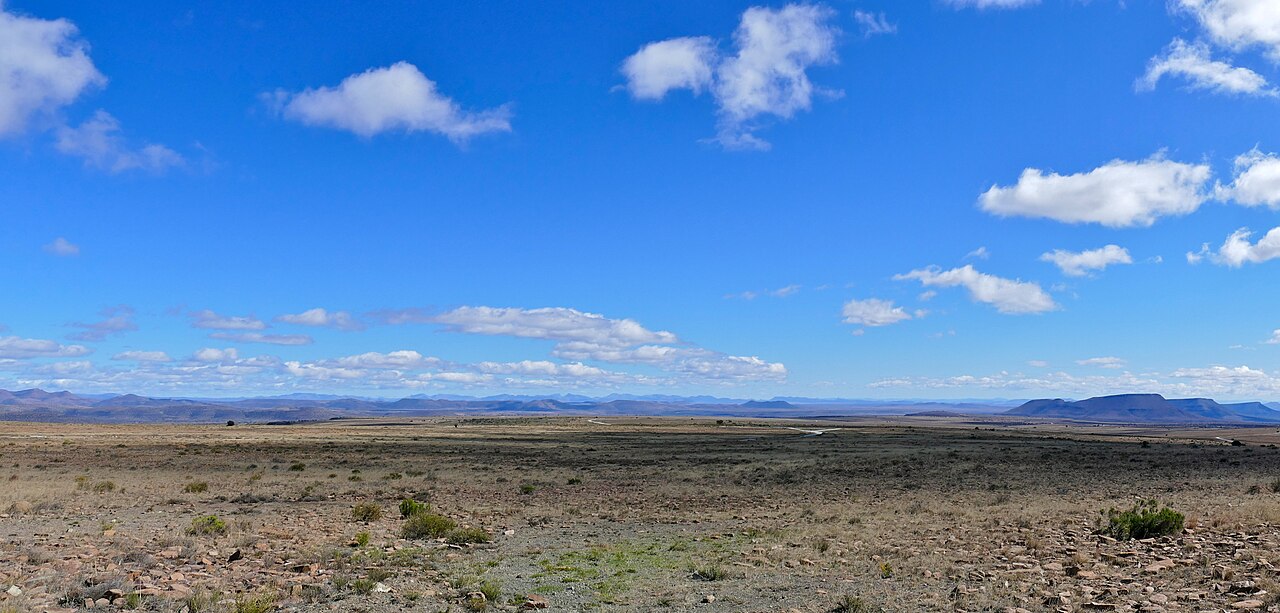
Rooiplaat landscape in Mountain Zebra National Park. Photo: Bernard DUPONT from FRANCE · CC BY-SA 2.0. Resized and cropped for this layout.
.jpg)
Mountain Zebra National Park at a glance
Mountain Zebra is a compact mountain-and-grassland safari near Cradock, now also known as Nxuba, in South Africa’s Eastern Cape. Open slopes make grazing animals easier to study than in dense bush, while the Bankberg landscape gives every drive a sense of height and space. Cape mountain zebra are the defining attraction, but black wildebeest, antelope, birds and the park’s conservation story justify staying beyond a quick photograph. Choose two or three nights if you want both unhurried drives and a booked guided activity. This is a wildlife park with large predators: the open views do not make the game area a place for independent walking.
Official sources · checked 9 September 2026: SANParks: Mountain Zebra National Park overview · SANParks: current visitor notices. Confirm arrangements for your travel date.
When is the best time to visit Mountain Zebra?
Spring and autumn often provide a comfortable balance for a first visit, while winter can offer clear light and cold mornings. Summer brings heat and the possibility of rain and thunderstorms. The mountain setting makes temperature changes more noticeable than a warm afternoon in town suggests. Pack a windproof layer for a morning drive and water for the whole circuit. After rain, ask which gravel and 4×4 roads are open; a green landscape does not establish that a particular pass is suitable for your vehicle. In a dry spell, scan shade and drainage lines as well as the open plains. Spend your first clear morning on the higher scenic country if low cloud is forecast later, keeping a shorter circuit available as an alternative.
Typical seasonal pattern, not a forecast or a guarantee of road access. Current local conditions take priority.
Which Mountain Zebra area suits your trip?
| Area | Best for | What to expect | Planning point |
|---|---|---|---|
| Rooiplaat plateau | Open-country wildlife and broad views | Grazers and conspicuous grassland birds can be watched against a spacious mountain backdrop. | Drive slowly enough to scan dips and ridgelines; do not expect every animal to stand beside the road. |
| Kranskop and higher slopes | Mountain scenery and slope specialists | Broken ground gives a different perspective from the plateau. | Confirm the full circuit and conditions before committing to a longer drive. |
| Rest camp and wooded valley | A practical base and quieter birding | Accommodation and nearby trees provide a different habitat from exposed grassland. | Independent walks belong only on the designated permitted routes. |
| Sonnenrust-side country | An additional scenic drive | Open views and changing light reward an unhurried outing. | Use the current visitor map and leave a return margin. |
| Designated 4×4 trails | A separate driving activity | Rougher routes suit properly equipped drivers seeking more than the normal circuit. | Obtain current trail instructions; map proximity does not make a track a public shortcut. |
Mountain Zebra entry fees, permits and opening hours
These are daily conservation fees per person for 1 November 2025–31 October 2026, as displayed by SANParks when reviewed. Adult rates apply from age 12; child rates apply at ages 2–11. Bring the identity or residency documents needed for your category and a payment card. Accommodation, guided activities and any equipment or transport are separate. A 1% community fund is added to accommodation and activity reservations. If you hold a Wild Card, check that its membership category covers the park and all travellers; bring the current membership confirmation and identification. For visits from 1 November 2026, use the next tariff rather than extending these prices.
| Visitor category / section | Adult | Child (2–11) |
|---|---|---|
| South African citizens and residents | R73 | R37 |
| SADC nationals | R149 | R74 |
| Other international visitors | R325 | R163 |
Official sources · checked 9 September 2026: SANParks: current conservation fees · SANParks: current visitor notices. Confirm arrangements for your travel date.
Opening hours
The official visitor map lists main-gate and reception hours of 07:00–18:00 from April through September and 07:00–19:00 from October through March. Game-viewing and rest-camp gate hours are 07:00–18:00 in April–September and 06:00–19:00 in October–March. Confirm these distinctions at arrival, particularly if you are staying overnight. SANParks asks that activity bookings be confirmed at reception before 18:00 on the previous day and that guests report 15 minutes before departure.
Official sources · checked 9 September 2026: SANParks: current visitor notices · SANParks: entrance hours · SANParks: access and directions. Confirm arrangements for your travel date.
How do you get to Mountain Zebra?
Approach from Cradock/Nxuba using SANParks’ directions to the signed park entrance. Put the gate, rather than a mountain summit or a rest-camp photograph, into your travel plan. The drive inside the park is part of the visit and needs time before reception or gate closure. Refuel and buy supplies in town, then travel with drinking water, a spare tyre and a way to contact your accommodation. A local airfield pin is regional orientation only; it does not establish a scheduled passenger service or an included transfer. On a longer Eastern Cape journey, avoid combining a late arrival with a full scenic loop. Check in, learn the current road and wildlife advice, and save the higher circuit for the next morning.
Official sources · checked 9 September 2026: SANParks: current visitor notices · SANParks: access and directions. Confirm arrangements for your travel date.
Mountain Zebra map: 16 useful places
Use this map to compare bases and understand the landscape. Search by place or filter by type. All locations are approximate orientation points; current park, guide and lodge directions override the map.
Loading map near this section. All places are also listed below.
All 16 map places and access notes
- Main entrance gate · Gates & visitor centresVisitor access point. Confirm the correct entrance, current hours and onward directions before arrival. Published facility coordinate; approximate orientation only. Map source. Approximate.
- Rest-camp reception · Gates & visitor centresVisitor access point. Confirm the correct entrance, current hours and onward directions before arrival. Published facility coordinate; approximate orientation only. Map source. Approximate.
- Doornhoek Guesthouse · Camps & lodgesAccommodation reference. Book ahead and obtain the correct reception, arrival route and current facilities from the operator. Published facility coordinate; approximate orientation only. Map source. Approximate.
- Valley picnic site · Areas & trail referencesDesignated picnic-area reference from SANParks waypoints. Confirm current access and wildlife precautions at reception. Map source. Approximate.
- Weltevredekloof Picnic Site · Areas & trail referencesLandscape or trail reference. This pin is not a trailhead or a verified route; obtain the current authorised map and advice. Map source. Approximate.
- Sonnenrust Loop Viewpoint · ViewpointsUse the designated viewpoint or hide only when open. Follow the current visitor route and keep clear of edges and wildlife. Map source. Approximate.
- Rooiplaat Loop Viewpoint · ViewpointsUse the designated viewpoint or hide only when open. Follow the current visitor route and keep clear of edges and wildlife. Map source. Approximate.
- Mountain Zebra National Park · Camps & lodgesAccommodation reference. Book ahead and obtain the correct reception, arrival route and current facilities from the operator. Map source. Approximate.
- Dam lookout · ViewpointsUse the designated viewpoint or hide only when open. Follow the current visitor route and keep clear of edges and wildlife. Map source. Approximate.
- Mountain Zebra Rest Camp Pool · Areas & trail referencesLandscape or trail reference. This pin is not a trailhead or a verified route; obtain the current authorised map and advice. Map source. Approximate.
- Doornhoek Dam · Water featuresGeographic water-feature reference, not a launch, swimming or direct driving destination. Use only authorised visitor access. Map source. Approximate.
- Rondekop · Areas & trail referencesLandscape or trail reference. This pin is not a trailhead or a verified route; obtain the current authorised map and advice. Map source. Approximate.
- Salpeterkop · Areas & trail referencesLandscape or trail reference. This pin is not a trailhead or a verified route; obtain the current authorised map and advice. Map source. Approximate.
- Soetkop · Areas & trail referencesLandscape or trail reference. This pin is not a trailhead or a verified route; obtain the current authorised map and advice. Map source. Approximate.
- Bakenkop · Areas & trail referencesLandscape or trail reference. This pin is not a trailhead or a verified route; obtain the current authorised map and advice. Map source. Approximate.
- Nxuba / Cradock airfield — outside park · AirstripsAirfield reference only. Landing permission, service availability and ground transfers must be arranged separately. Map source. Approximate.
Map references include official park material where specified below, plus OpenStreetMap contributors, checked 9 September 2026. Selected and labelled by See.Africa. Waterbody-centre pins and summits are geographic references, not destinations for direct navigation. Accommodation and airstrip operation must be confirmed. No live animal locations or verified driving route is shown.
A practical Mountain Zebra itinerary
One day: plateau and valley
Start early, complete entry and obtain the current map. Choose one open-country circuit, stop for lunch only at an authorised picnic place, then use the return for a contrasting valley section. A slow second look at a herd is usually more rewarding than trying every loop before closing.
Two nights: a balanced introduction
Use arrival afternoon close to camp. Spend the next morning on the plateau and reserve the afternoon for a shorter circuit or a booked drive. On departure day, leave enough time for one local stop without gambling on a distant predator report.
Three nights: add interpretation
Book a guided activity for a full day without a transfer. Cheetah tracking, a guided walk or a rock-art visit has its own conditions and reporting arrangements. Use the remaining day to revisit an area in different light, concentrating on behaviour and birds.
When the weather changes
Ask reception about exposed roads and choose an alternative before leaving camp. A quiet, sheltered birding session within permitted camp areas can use a windy hour well. Do not treat an early start as a commitment to complete a circuit in deteriorating conditions.
Where should you stay in Mountain Zebra?
The main rest camp offers the simplest first visit, with camping and self-catering accommodation close to reception and the main visitor network. Compare the unit’s kitchen, sleeping arrangement and meal inclusions on the actual booking; do not assume every accommodation type includes the same service. Doornhoek Guesthouse offers a different setting for a group, while more secluded mountain accommodation requires closer attention to access and facilities. Confirm whether a specific booking needs a high-clearance vehicle, how keys are collected and what supplies to bring. Two nights in one base usually gives more useful safari time than moving accommodation within this small park. Keep food secured against primates and follow camp instructions about walking after dark.
Mountain Zebra mammals to look for
Begin with the herbivores that define the landscape. Compare zebra families with wildebeest herds, then examine the slopes for smaller antelope. Buffalo tend to be associated with suitable thicket and wooded valleys. Cheetahs and lions range more widely; brown hyena and caracal are elusive bonuses. The species cards help with identification rather than implying that a single drive should produce every animal.

Cape mountain zebra
Look for a small throat dewlap, narrow body stripes and a pale belly. These clues help distinguish mountain zebra from plains zebra. Watch a family group negotiate slopes, and compare animals from a stopped vehicle rather than following a herd uphill.
_(31707282834).jpg)

Black wildebeest
A white tail, dark coat and forward-curving horns distinguish this open-grassland grazer from blue wildebeest. Watch herd spacing and display behaviour from the road. The contrast between pale tail and dark body often remains visible at quite a distance.
_(31746882054).jpg)

Red hartebeest
An elongated face, high shoulders and angular horns give this reddish antelope a distinctive silhouette. Compare its body shape with nearby wildebeest or blesbok. A standing lookout may reveal a group concealed in a fold of the grassland.


Common eland
Africa’s largest antelope has a deep body, a dewlap and gently spiralling horns. Its size does not prevent it from moving gracefully through open woodland. Watch mixed-age groups at a respectful distance and distinguish it from buffalo by its lighter build and horn shape.


Greater kudu
Large ears, narrow pale body stripes and the male’s long spiral horns help identify this woodland browser. Kudu can freeze and blend into scrub remarkably well. Scan the shady side of thickets; a pair of ears is often the first thing you notice.


Springbok
The dark flank stripe, pale face and white rump stand out against dry grassland. Groups can rest almost invisibly during the hottest hours. Watch their heads and ears for alert behaviour and allow animals to cross the road without splitting the herd.


Mountain reedbuck
This small reedbuck favours suitable grassy slopes and broken ground. The pale belly, grey-brown back and curved horns of males are useful clues. Look for a quiet group above the road rather than expecting it beside a river like every other reedbuck.
_(33043612376).jpg)

Grey rhebok
A woolly grey coat, long ears and a fine, upright posture suit a highland antelope that can blend into muted slopes. Males carry slender straight horns. Scan rocky grassland slowly; movement often reveals an animal before its outline becomes clear.
_male_at_Karoo_NP,_Western_Cape,_South_Africa.jpg)

African buffalo
A heavy, dark bovid with a sweeping horn boss in mature bulls. Herds graze and rest together, while solitary bulls may stay close to cover. Buffalo can be difficult to read at close range: observe from the vehicle or follow your walking guide’s exact instructions.
_male_with_cattle_egret.jpg)

Cheetah
A lightly built cat with solid spots and black tear marks below the eyes. It often uses low rises to scan for prey. Give hunting animals room and never move ahead to create a photograph: a vehicle can interrupt an energetically costly hunt.


Lion
Lions spend much of the day resting, so search shade as carefully as open ground. Dawn and late afternoon improve the chance of movement, but a sleeping pride is a normal encounter. Listen to your guide and avoid surrounding animals with vehicles.


Brown hyena
A shaggy brown coat, sloping back and relatively pale legs separate this elusive carnivore from spotted hyena. Most visitors will not see one. Tracks and a guide’s interpretation may provide the better introduction; do not approach dens or use food to attract animals.
_leaving_waterhole_..._(50915531592),_crop.jpg)

Caracal
Long dark ear tufts and a plain tawny coat are the best clues to this secretive cat. It can remain hidden in low vegetation close to a road. An encounter is a bonus, not a routine expectation; give it space to continue moving naturally.
_(cropped).jpg)

Chacma baboon
A long muzzle and substantial build identify this southern African baboon. Troops forage widely and readily investigate unsecured food. Keep doors, windows and picnic bags closed; never feed an animal or display food to attract it for a photograph.
_(16824823063).jpg)
Mountain Zebra birds and habitat clues
The plateau rewards scanning both the ground and sky. Large grassland birds can be surprisingly well concealed behind low vegetation, while raptors use the mountain air. Wooded valleys offer a different birding session and are worth visiting even after an apparently successful open-country drive. Use binoculars and leave cliffs and possible nesting places undisturbed.

Verreaux’s eagle
A large dark eagle associated with rocky landscapes. Adults show a pale back marking and contrasting wing panels, although distance and strong backlight can hide them. Watch the shape and soaring pattern with binoculars. Cliff nesting birds should be observed from public routes without approaching ledges.
,_Aquila_verreauxii,_at_Walter_Sisulu_National_Botanical_Garden,_Gauteng,_South_Africa_(28825027073).jpg)

Martial eagle
A very large eagle with broad wings; adults have a dark upper chest and spotted pale belly. Search high perches and scan soaring raptors carefully. Size alone is unreliable, so use shape and plumage rather than a distant silhouette as proof.
.jpg)

Jackal buzzard
This broad-winged southern African raptor often uses slopes and uplift. Adults can show rich chestnut on the chest and tail, though distance and light complicate identification. Study several features together and compare with other buzzards before naming a silhouette.


Pale-winged starling
Dark glossy plumage can look plain until flight reveals pale wing patches. Rocky landscapes, cliffs and suitable buildings provide perches. Observe from approved stopping places and resist feeding a confident bird that approaches a visitor area.


Common ostrich
The immense size, long bare neck and powerful legs are unmistakable. Males are predominantly black and white, while females are browner. Give adults and chicks a wide margin, particularly on foot; apparent familiarity with visitors does not make an ostrich tame.
.jpg)

Secretarybird
A very long-legged raptor that hunts on foot through open grass. Its crest and long tail are useful at distance. Watch a walking bird with binoculars and leave its path clear; following closely can disrupt the search for prey.


Blue crane
Pale blue-grey plumage and long trailing wing feathers distinguish South Africa’s national bird. Watch pairs or groups feeding in open country with binoculars. Stay away from nests and young, and never drive off the road for a closer view.


Ludwig’s bustard
A large, well-camouflaged bustard of dry open country. Its long neck and deliberate walk may reveal it among low shrubs. Use binoculars before assuming that an apparently empty plain holds no birds, and give feeding or displaying individuals an undisturbed route.

Mountain Zebra plants and habitats
Mountain grassland
The open sward supports grazing animals, but grass height and quality vary with rain, grazing and exposure. Compare short feeding patches with taller refuge rather than treating the whole plateau as one uniform habitat.
Wooded valleys
Thorn trees and denser vegetation provide browse, shade and bird habitat. A patient pause at a woodland edge can reveal animals that were invisible from the preceding open road.
Rocky slopes
Shallow soils and exposure shape the vegetation among rocks. Mountain antelope use this terrain differently from the larger plains herds, making distant slopes worth a binocular scan.
Drainage lines
Small changes in moisture can support greener strips and extra cover. View these transitions from the road; a promising patch of vegetation is not a reason to leave your vehicle.
Plant identification may require leaves, flowers, fruit and a knowledgeable guide. Do not collect plants or leave authorised routes to inspect them.
What can you do in Mountain Zebra?
Learn the zebra’s conservation story
Use the park’s interpretation alongside a patient view of a living herd. Distinguishing mountain zebra from plains zebra adds meaning to the landscape rather than turning the visit into a simple animal checklist.
Book cheetah tracking
Arrange the activity through SANParks and follow the ranger’s instructions. Availability, wildlife movements and the group’s suitability govern the outing; an advertised activity is not a guaranteed close encounter.
Use the authorised camp walks
Ask about the Imbila and Black Eagle trails and their current condition. A short permitted walk can add plants, rocks and smaller birds to a vehicle-based visit.
Explore with a guide
A guided drive, walk or rock-art outing can explain details missed on your own. Reserve it early enough to avoid a clash with gate times or the onward journey.
Rules and practical precautions
Stay on designated tourist roads and obey the posted 40 km/h limit. Remain inside your vehicle in the game area except at authorised stopping places. Do not walk from a viewpoint toward animals, climb to a nest or enter a closed 4×4 track. Guided activities have separate permission and reporting requirements. Keep primates away from food and leave fossils, stones, plants and cultural material where you find them.
Give wildlife space
Never feed, surround or block an animal. Keep food secure, voices low and movements predictable. Your guide or ranger’s instructions take priority over a desired photograph.
Prepare for your actual activity
Bring water, sun or rain protection as appropriate, suitable footwear and charged equipment. Tell the operator about relevant mobility needs before booking so the route and vehicle can be matched to you.
Official sources · checked 9 September 2026: SANParks: Mountain Zebra National Park overview · SANParks: current visitor notices. Confirm arrangements for your travel date.
Mountain Zebra travel FAQ
How many nights do you need at Mountain Zebra?
Two nights provides a useful introduction. Three nights gives more room for a guided activity, changing weather and repeated wildlife observation.
Are mountain zebra the same as plains zebra?
No. Cape mountain zebra are a distinct mountain-zebra subspecies with features including a throat dewlap and pale belly.
Can you walk freely in the park?
No. Use designated permitted camp trails or a specifically authorised guided activity. Large predators occur in the wildlife area.
What are the international entry fees?
For 1 November 2025–31 October 2026, SANParks lists R325 per adult and R163 per child aged 2–11 per day. Accommodation and activities are separate.
Is cheetah tracking guaranteed?
No wildlife encounter is guaranteed. Book the SANParks activity and confirm its current availability, requirements and reporting time.
Can Mountain Zebra be a Cradock day trip?
Yes. Start early and allow time for the drive between the gate and the main visitor area, plus a return before the applicable closing time.
Sources, method and review date
This guide combines official park and operator information with editorial planning advice. Operational details were checked on 9 September 2026. Season descriptions are typical patterns, and suggested stays are planning recommendations. Wildlife profiles explain identification and habitat; they do not promise sightings.
Wildlife and image references
Species names and identification photographs were checked against the linked reference and image records. Photographs are identification examples and may have been taken elsewhere. Each image carries its own creator and licence credit.
Species reference links
Cape mountain zebra · Black wildebeest · Red hartebeest · Common eland · Greater kudu · Springbok · Mountain reedbuck · Grey rhebok · African buffalo · Cheetah · Lion · Brown hyena · Caracal · Chacma baboon · Verreaux’s eagle · Martial eagle · Jackal buzzard · Pale-winged starling · Common ostrich · Secretarybird · Blue crane · Ludwig’s bustard