
Murchison Falls National Park Guide
The practical 2026 field guide to Uganda’s largest national park: Murchison Falls, Nile boat safaris, game-drive areas, current fees, access, map, wildlife and trip planning.
Murchison Falls National Park at a glance
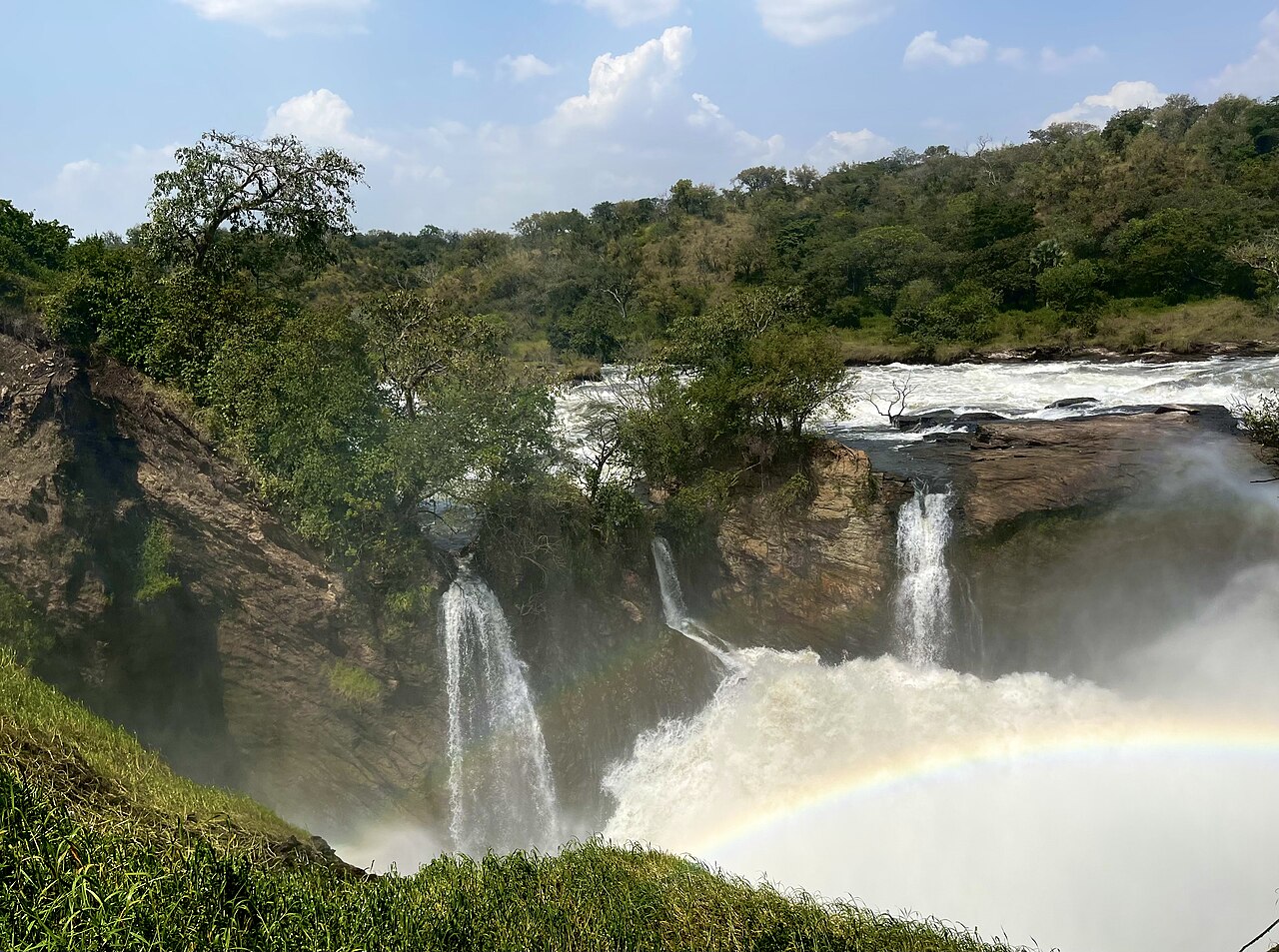
Murchison Falls National Park is Uganda’s largest national park and one of its strongest all-round safari destinations. UWA lists the park at 3,840 km². Its defining feature is the Victoria Nile, which cuts through savanna and woodland before squeezing through an approximately 8-metre gorge at Murchison Falls and dropping about 45 metres. North of the river, open grassland supports much of the classic game viewing; the Nile itself adds hippos, crocodiles and some of Uganda’s best boat-based wildlife watching.
Best time to visit Murchison Falls National Park
The best default months for a conventional wildlife safari are usually December to February and June to September. Drier roads make game drives simpler, vegetation can be more open and animals often concentrate nearer dependable water. March–May and October–November are greener, often quieter and excellent for birding, but heavy rain can make some dirt roads slower or temporarily difficult.
Source context: season planning checked against Uganda Wildlife Authority park information and regional rainfall patterns on 2 Sep 2026; road conditions should always be confirmed locally.Best for game drives
June–September is the safest default for dry tracks and classic north-bank viewing.
Best for the river
The Nile is central year-round. Boat safaris remain one of the park’s signature experiences even outside peak dry-season months.
Best for birders
Green seasons bring lush habitat and migrant activity; the Nile, delta, woodland and Rabongo forest create unusually varied birding.
Which Murchison Falls safari area should you choose?
Paraa and the north-bank savanna are best for a first safari, the Nile Delta is best for wetland wildlife and shoebill searches, the Falls area is best for scenery, and Rabongo is best for forest contrast.
| Area | Best for | Main experience | Planning note |
|---|---|---|---|
| Paraa / Pakuba / Buligi | First-time game drives | Lion, giraffe, elephant, buffalo, kob and open savanna | Strong dawn and late-afternoon driving; lodge cluster and Pakuba Airfield are convenient. |
| Nile Delta | Wetlands + birds | Shoebill searches, hippos, waterbirds and delta scenery | Usually requires a dedicated boat or vehicle plan; do not squeeze into a rushed Falls day. |
| Murchison Falls | Scenery + geology | Top-of-Falls viewpoint and boat approach from below | Keep distance from cliff edges and follow current UWA access instructions. |
| Rabongo Forest | Forest contrast | Primates, forest birds and closed-canopy habitat | Southern park; guided access and current conditions should be checked before travel. |
Murchison Falls National Park fees and opening hours in 2026
UWA’s live Murchison Falls National Park page currently displays USD 45 for foreign non-residents, USD 35 for foreign residents and UGX 25,000 for East African citizens. These are the most current entry figures visible on the park authority’s own page when this guide was checked.
Source: Uganda Wildlife Authority — Murchison Falls National Park; checked 2 Sep 2026.How to get to Murchison Falls National Park
UWA places Murchison Falls about 305 km north of Kampala and gives a driving time of roughly 4–5 hours to the southern entrance gate. Allow another one to two hours from the gate to many lodges. From Fort Portal, UWA gives about 280 km and at least six hours. Fly-in visitors can use Pakuba for the Paraa cluster; UWA also lists Chobe and Bugungu as alternatives.
Source: Uganda Wildlife Authority — Murchison Falls access information; checked 2 Sep 2026.From Kampala / Entebbe
Drive north via the Masindi corridor and confirm the current gate and road approach before departure. The last part of the journey inside the park can be substantial.
Fly to Pakuba
Pakuba Airfield is UWA’s preferred fly-in point for the main Paraa accommodation cluster and north-bank game-drive network.
Combine with Uganda’s west
Murchison pairs naturally with Queen Elizabeth National Park, Lake Mburo and Bwindi on longer circuits.
Murchison Falls National Park map: Paraa, Falls, delta and airstrips
This map is for trip orientation, not turn-by-turn navigation. Several park points are approximate because public map data and on-ground road alignments can change. Follow UWA signage, ranger instructions and your lodge/operator directions.
Map note: the optional line is a planning sequence only. It does not represent verified road geometry or live road conditions.
How to plan a Murchison Falls safari day
Dawn: north-bank game drive
Start around Paraa, Pakuba or Buligi while temperatures are lower. Prioritize open plains and track edges for lions, giraffes, kob, buffalo and elephants before the day becomes hot.
Late morning: slow wildlife loop
Do not race toward the river. Use drainage lines, palms and woodland edges for smaller mammals, raptors and giraffes moving between feeding areas.
Afternoon: Nile launch cruise
The boat safari changes the perspective: hippos, crocodiles, elephant, buffalo and waterbirds often dominate while the Falls build in the distance.
Separate block: top of the Falls
Keep the Falls viewpoint separate from a rushed game drive. Heat, transfer time and road conditions can make an overfilled itinerary frustrating.
22 mammals to know in Murchison Falls National Park
UWA project material records more than 109 mammal species in the park. These 22 are especially useful for visitors because they are characteristic, conspicuous or ecologically important.
African lion
Regularly sought on the northern savanna. Look early and late around open plains, kob concentrations and shade trees; sightings remain unpredictable.
African bush elephant
Common in savanna and woodland, with excellent river-edge viewing possible from boat cruises.
Rothschild’s / Nubian giraffe
Murchison is one of Uganda’s signature giraffe landscapes. Scan acacia woodland and palm-dotted plains, especially north of the Nile.
African buffalo
Often seen in herds on grassland and at the Nile. Old bulls may appear alone near water or dense cover.
Hippopotamus
A defining Nile mammal. Boat cruises are usually the best way to appreciate pod size and river habitat without approaching too closely.
Uganda kob
Abundant on suitable grassland and a major prey species for lions. Males often hold small display territories.
Jackson’s hartebeest
Tall-faced grazer of open savanna. Watch for the sloping back and elongated head among kob and oribi.
Oribi
Small, elegant grassland antelope often seen singly or in pairs, especially in shorter grass.
Defassa waterbuck
Common near wetter grasslands, drainage lines and riverine habitat.
Leopard
Present but much less predictable than lion. Focus on woodland edges, riverine cover and quiet tracks in low light.
Spotted hyena
Important predator and scavenger of the savanna. Most active after dark and near dawn.
Warthog
Very visible on short grass and roadsides. Family groups often kneel on their front legs while feeding.
Olive baboon
Common around roads and woodland. Never feed habituated troops or leave food accessible at picnic/lodge areas.
Patas monkey
Fast, long-limbed monkey of open savanna and woodland; more terrestrial than vervets and strongly associated with northern Uganda’s open habitats.
Vervet monkey
Common in woodland and around visitor areas. Black face, pale-fringed fur and long tail are useful field marks.
Black-and-white colobus
More associated with riverine and closed-canopy forest than open savanna; listen for loud dawn choruses in wooded areas.
Common chimpanzee
Occurs in the wider Murchison landscape’s forest habitats, including Rabongo/Budongo context; guided primate activities depend on current official access arrangements.
Bushbuck
Secretive antelope of thickets, riverine woodland and forest edge. Usually seen briefly when stepping out from cover.
Bohor reedbuck
Grassland antelope associated with taller cover and seasonally wet areas. Often freezes before bounding away.
Side-striped jackal
Smaller canid of savanna and woodland, most active at dawn, dusk and night.
Banded mongoose
Highly social, often moving in tight groups through short grass, lodge grounds and termite-rich areas.
African civet
Mostly nocturnal. More likely on a legitimate night activity or by tracks and signs than on ordinary daytime drives.
10 birds worth learning before you visit
UWA material records more than 451 bird species in Murchison Falls National Park. River, delta, savanna, woodland and forest habitats create very different birding opportunities in one trip.
Shoebill
The headline delta target. Look in quiet papyrus and shallow wetland habitat, usually with a dedicated boat plan; never treat a sighting as guaranteed.
African fish eagle
Classic Nile raptor. Listen for the carrying call and watch exposed riverbank trees.
Goliath heron
Huge heron of river margins and shallows, often conspicuous from a boat.
Abyssinian ground hornbill
Massive terrestrial bird of northern savanna. Usually seen walking slowly through open grassland in pairs or small groups.
Grey crowned crane
Uganda’s national bird; watch damp grasslands and open wet areas.
Secretarybird
Long-legged terrestrial raptor of open country. A prized sighting; scan broad plains rather than dense woodland.
Martial eagle
Powerful savanna eagle. Check tall trees and thermals over open plains.
Red-throated bee-eater
Colourful river-associated species that nests colonially in sandy banks; excellent boat-cruise bird.
Piapiac
Dark, long-tailed crow relative often associated with large mammals and open savanna.
Black-headed lapwing
Dry-country lapwing of bare or short-grass ground; useful beginner target in the northern savanna.
Savanna, riverine woodland and forest vegetation
Murchison’s vegetation changes from palm-dotted grassland and wooded savanna to riverine strips, wetlands and closed-canopy forest. UWA project material specifically notes rolling savanna, tall grassland, thicker bush/woodland in wetter southern and eastern areas, and ironwood-dominated closed forest in Rabongo.
Trees & shrubs
Borassus palm
One of the visual signatures of the northern plains: tall fan palms rising above open grassland.
Whistling-thorn acacias
Thorny savanna trees providing browse, shade and raptor perches; exact species varies by site.
Combretum
Important woodland shrubs and trees in drier savanna; often form dense patches in fire-influenced landscapes.
Terminalia
Broad-crowned woodland trees common in many East African savanna mosaics.
African mahogany
Large forest and riverine tree associated with wetter, more closed habitats in the wider landscape.
Ironwood
UWA project material describes ironwood as a dominant tree in Rabongo’s closed-canopy forest.
Sycamore fig
Large fig of riverine and drainage habitats; fruit feeds birds, primates and other wildlife.
Tamarind
Long-lived savanna tree with dense shade, often noticeable around old tracks and settlement-history areas.
Sausage tree
Riverine and woodland tree with large hanging fruits and red flowers visited by bats and birds.
Grewia shrubs
Multi-stemmed shrubs of woodland and thicket that provide browse and fruit for wildlife.
Flowers, grasses, reeds & understory
Elephant grass
Tall grass of wetter ground and disturbed areas, forming dense cover for mammals and birds.
Hyparrhenia grasses
Tall savanna grasses contributing to the park’s extensive grassland matrix.
Star grasses
Shorter grazing lawns can develop where herbivore pressure is high, attracting kob and warthog.
Papyrus
Key wetland sedge in protected backwaters and delta habitat, especially important for specialist birds.
Phragmites reeds
River and wetland-edge reeds used by nesting and feeding birds.
Water lilies
Floating-leaved wetland plants in quiet waters and backchannels; local occurrence varies with depth and flow.
Forest ferns
Shade-loving ferns become more relevant in Rabongo and other humid forest patches than on the open plains.
Lianas
Woody climbers are characteristic of closed forest and riverine vegetation, linking canopy layers.
Forest herbs
Low herbs occupy humid shade and gaps in closed-canopy habitat; exact identification normally needs close botanical work.
Seasonal wildflowers
Short-lived flowers can be conspicuous after rains in grassland and woodland openings, but composition changes sharply with soil and rainfall.
Best experiences in Murchison Falls National Park
1. North-bank game drive
The core big-game experience: lion, giraffe, elephant, buffalo, kob, hartebeest and open savanna.
2. Nile launch to the Falls
Boat upstream toward the base of Murchison Falls for hippos, crocodiles, elephants, buffalo and river birds.
3. Top of Murchison Falls
See the Nile compress through its narrow gorge and drop into the churning cauldron below.
4. Nile Delta boat trip
Specialist wetland excursion for shoebill searches, papyrus, hippos and quieter river scenery.
5. Birding
Use the river, delta, savanna, woodland and forest as separate birding habitats rather than trying to build one long checklist.
6. Rabongo forest experience
Add closed-canopy habitat, primates and forest birds to an otherwise savanna-heavy itinerary when official access is available.
7. Photography at golden hour
Northern plains, palms and giraffes can be particularly strong at low-angle morning and evening light.
8. Multi-park Uganda circuit
Continue south toward Queen Elizabeth, Lake Mburo or Bwindi, or northeast toward Kidepo Valley National Park.
Rules and safety points that matter
Respect the 07:00–19:00 operating window
Use the current gate schedule confirmed by UWA. Do not plan a transit or self-drive that depends on late entry or exit.
Stay on permitted roads
Do not create new tracks or leave designated safari roads. Seasonal closures and ranger instructions override any route shown online.
Give elephants and buffalo space
Never block an animal’s path to the river. If an elephant changes posture or direction because of your vehicle, you are too close.
Boat safety comes first
Follow crew instructions around hippos, crocodiles, currents and the Falls. Do not stand or shift weight when the guide asks passengers to remain seated.
No feeding wildlife
Baboons, monkeys and other animals quickly become dangerous when habituated to human food.
Use current road advice
Rain, works and river-crossing arrangements can change. Confirm conditions with UWA, your lodge or licensed operator before setting off.
Murchison Falls National Park FAQ
What is Murchison Falls National Park famous for?
It is famous for Murchison Falls, where the Victoria Nile squeezes through a narrow gorge, plus strong big-game safaris and Nile boat cruises.
What is the best time to visit Murchison Falls National Park?
June to September and December to February are the easiest default periods for game drives and road access. Green seasons can be excellent for birding but rain may slow dirt roads.
How many days do you need in Murchison Falls National Park?
Two nights is workable, but three nights is better. Three nights gives enough time for north-bank game drives, a Falls boat cruise, the top of the Falls and either the Nile Delta or a second game drive.
How much is Murchison Falls National Park entry in 2026?
UWA’s live park page displays USD 45 for foreign non-residents, USD 35 for foreign residents and UGX 25,000 for East African citizens. Recheck live UWA rates before payment.
What are Murchison Falls National Park opening hours?
UWA’s published Murchison transit guidance states 07:00 to 19:00. Confirm the current gate schedule before an independent drive because operations can change.
Can you fly to Murchison Falls National Park?
Yes. UWA identifies Pakuba Airfield as the most convenient arrival point for the Paraa lodge cluster and also lists Chobe and Bugungu as alternatives.
Can you see shoebill in Murchison Falls National Park?
Yes, the Nile Delta is one of the park’s best areas to search for shoebill. It is a specialist wetland sighting and never guaranteed.
How this guide was checked
See.Africa reviewed time-sensitive information on 2 September 2026 against Uganda Wildlife Authority’s live Murchison Falls National Park page, UWA rates material, UWA’s published transit guidance and current UWA project/publication material. Approximate map points are for orientation only; current UWA, ranger and operator instructions override this guide.