
Nata Bird Sanctuary Guide
The practical 2026 guide to Nata Bird Sanctuary and Sua Pan: flamingos, pelicans, best time, seasonal water, map, birding, camping and road-trip planning.
Nata Bird Sanctuary at a glance
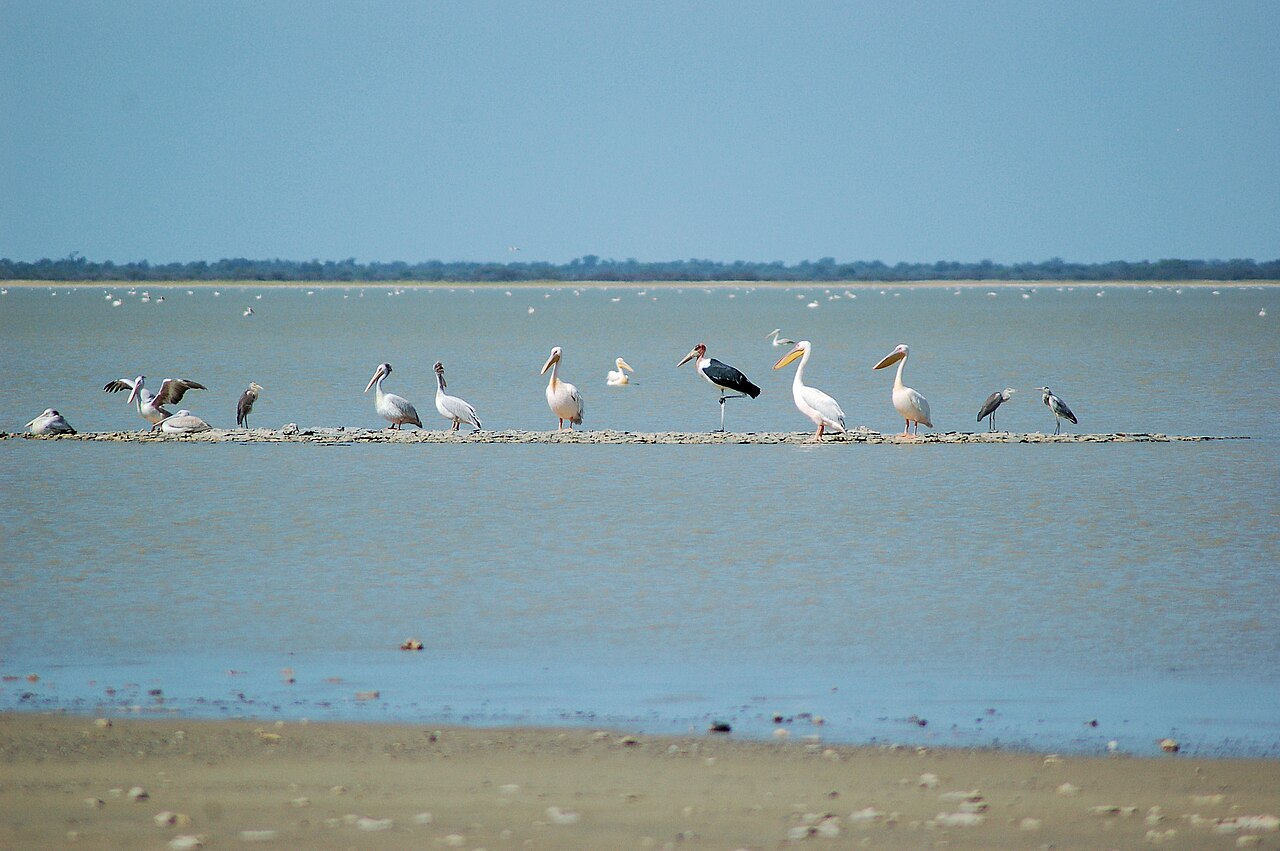
Nata Bird Sanctuary is a community-managed wetland and grassland conservation area on the northeastern edge of Sua Pan in Botswana’s Makgadikgadi system. Botswana Tourism describes it as the country’s first community-based conservation project. It opened to visitors in 1993 and covers about 250 km² of pans and grassland.
When is the best time for flamingos at Nata?
The best flamingo conditions usually follow good summer rainfall, not a fixed calendar date. When the Nata River and local rains recharge Sua Pan, shallow saline water can attract large concentrations of greater and lesser flamingos, pelicans, ducks and geese.
January–April
Best default window if the rains have been good. Waterbird numbers can rise dramatically as the pan fills.
May–June
Conditions depend on how much water remains. Birding may still be excellent after a strong wet season.
July–October
Usually much drier. The vast pan landscape is still impressive, but waterbird concentrations may be low or absent.
November–December
Early storms can begin changing conditions, but the major response depends on the strength and distribution of rain.
How much does Nata Bird Sanctuary cost?
A current 2026 official tariff is not published in accessible text by Botswana Tourism. Because this is a community-run sanctuary and rates can change, confirm the current entrance, camping and vehicle charges locally before arrival rather than relying on old third-party prices.
How do you get to Nata Bird Sanctuary?
Nata village is the practical base. The sanctuary is roughly 10–15 km from Nata depending on the route and point used, on the northeastern edge of Sua Pan. It is a natural stop on the A3/A33 road network for travellers moving between Francistown, Kasane/Chobe and Maun.
From Nata village
Follow current local sanctuary signage and ask locally about track condition before setting out, especially after heavy rain.
Road condition
Pan-edge tracks can become muddy or waterlogged after storms. Do not invent a “dry-season route” from an old map—follow current staff guidance.
From Kasane / Chobe
Nata is a useful overnight stop on the southbound road toward Francistown or west toward Maun.
From Maun
The sanctuary can be combined with Nxai Pan or Makgadikgadi on an eastbound road trip, depending on your route and season.
Nata Bird Sanctuary map
The map shows Nata village, the sanctuary orientation point and the Sua Pan viewing zone. Points are for trip planning, not navigation-grade driving. Follow current sanctuary signage and local instructions.
How should you plan a visit?
1. Check water first
Before driving out, ask locally whether the pan is holding water and where the best current birding is.
2. Prioritise late afternoon
Sunset light over Sua Pan can be excellent even when bird numbers are modest.
3. Use the hide patiently
Spend time scanning rather than constantly moving. Distant birds can take time to resolve through binoculars.
4. Bring optics
Binoculars are essential; a spotting scope is useful because many birds may be far out on the pan.
5. Protect equipment
Dust, salt and wind can be hard on cameras and lenses. Bring a simple cover and cleaning cloth.
6. Save details offline
Screenshot your accommodation, sanctuary contact and map before leaving the main road network.
Which mammals can you see at Nata?
Nata is primarily a bird sanctuary, not a big-game destination. Mammals are most likely on the grassland, scrub and woodland edges rather than on the open saline pan.
Blue wildebeest
Open grassland around the sanctuary can support grazing herds, especially when seasonal conditions are favourable.
Plains zebra
Often associated with open grassland and may appear around the drier sanctuary margins.
Springbok
Well adapted to dry open country and saline-pan fringes.
Gemsbok
A classic Kalahari antelope with long straight horns and strong drought tolerance.
Greater kudu
More likely in bushier woodland around the sanctuary rather than on exposed pan surfaces.
Steenbok
A small solitary antelope of dry scrub and grassland edges.
Black-backed jackal
One of the more likely small predators in open dry country around the pans.
Bat-eared fox
Often active around dusk and dawn in open grassland, feeding largely on insects.
Brown hyena
A secretive nocturnal scavenger of the wider Makgadikgadi ecosystem; sightings are uncommon.
Aardwolf
A termite specialist of open dry grassland, usually seen around dusk or at night.
Common warthog
May occur in grassier areas near water and woodland.
African elephant
Occasional in the broader Nata/Makgadikgadi region, but not a species to expect on every sanctuary visit.
Which birds should you look for at Nata?
Flamingos and pelicans are the headline birds after flooding, but the sanctuary also rewards careful scanning for ducks, shorebirds, storks and dry-country species around the grassland margins.
Lesser flamingo
The sanctuary’s signature bird after good rains. Large flocks can gather on shallow saline water, but numbers vary enormously with pan conditions.
Greater flamingo
Often mixed with lesser flamingos. Larger, paler and with a heavier pink-and-black bill.
Great white pelican
A conspicuous large waterbird when the pan holds enough water and fish or other aquatic prey.
Pink-backed pelican
Smaller than the great white pelican; may occur around deeper pools and wetland margins.
Kori bustard
One of Africa’s heaviest flying birds. Look on dry grassland and open country around the sanctuary.
Secretarybird
A tall terrestrial raptor of open grassland, walking methodically while hunting snakes and other prey.
Blacksmith lapwing
Common around wet margins and open ground; the ringing metallic call makes it easy to detect.
Kittlitz’s plover
A small shorebird of open mud and saline margins; easiest to find by scanning exposed pan edges.
Chestnut-banded plover
A salt-pan specialist and one of the more interesting birds to look for on exposed saline shorelines.
Cape teal
A pale duck of saline and alkaline wetlands, well suited to the Makgadikgadi pan environment.
Red-billed teal
A common southern African duck that can gather in numbers when temporary wetlands hold water.
White-faced whistling duck
Often social and vocal; likely where the flooded pan provides shallow feeding water.
African spoonbill
A long-legged wetland bird that sweeps its flattened bill through shallow water for prey.
African sacred ibis
A familiar wetland scavenger and feeder around flooded margins and pools.
Yellow-billed stork
Most likely when water levels support productive shallow feeding areas.
Martial eagle
A large raptor of the surrounding open country; scan thermals and isolated trees well beyond the pan edge.
What grows around Nata Bird Sanctuary?
The sanctuary transitions from bare saline pan to halophytic grassland, seasonal wet margins, thorn scrub and drier Makgadikgadi woodland. Botswana/Makgadikgadi vegetation studies describe salt-tolerant grasses on the pan fringe, with palms, acacia-type woodland, mopane and Terminalia on higher ground.
Trees & shrubs
Camel thorn
A classic Kalahari tree occurring on higher ground around the pans; pods and shade support many animals.
Mokolwane palm
Scattered palms are characteristic of parts of the Makgadikgadi fringe and stand out strongly against open grassland.
African baobab
Iconic Makgadikgadi trees occur on some raised fringe areas and islands, though not uniformly around Nata.
Mopane
Common in parts of the broader Makgadikgadi landscape, especially on suitable clay and calcareous soils.
Silver cluster-leaf
A pale-leaved tree of sandy ground, more typical away from the most saline pan edge.
Purple-pod cluster-leaf
A dryland shrub/tree reported from raised Makgadikgadi ground and mixed savanna associations.
Leadwood
A dense, long-lived savanna tree occurring in parts of the wider pan system on better-drained ground.
Black thorn
A thorny shrub/tree of semi-arid savanna, useful as browse and cover away from the bare saline surface.
Sickle bush
A dense thorny shrub recorded in Makgadikgadi scrub communities on less saline ground.
Shepherd’s tree
A drought-tolerant evergreen of southern African drylands, most likely on the drier outer fringe rather than the pan floor.
Grasses, reeds & understory
Salt grass
A salt-tolerant grass associated with Makgadikgadi pan margins and alkaline soils.
Pan grass
One of the halophytic grasses documented on vegetated Makgadikgadi pan surfaces and islands.
Buffel grass
A robust grass of slightly higher, less saline ground around the pan system.
Blue panic grass
Reported from halophytic grassland around Makgadikgadi, particularly where soils retain more moisture.
Maasai lovegrass
A distinctive grass of open savanna and grassland, among species recorded in the Makgadikgadi range-ecology literature.
Lovegrass
A dry grassland species recorded around the pan system; fine seed heads are easiest to recognise when mature.
Silky bushman grass
Formerly classified in Aristida; a drought-adapted grass of sandy and open dryland habitats.
Couch grass
A low mat-forming grass common around disturbed or relatively moist ground, including settlement and water-point edges.
Common reed
Can occur where fresher water persists in channels or river-delta margins, rather than on the exposed saline pan.
Devil thorn
A low summer herb of disturbed dry ground with yellow flowers and hard spiny fruits.
Best Nata Bird Sanctuary experiences
1. Flamingo birding
The signature experience in wet years; use binoculars and manage expectations around rainfall.
2. Elevated hide / viewpoint
Botswana Tourism specifically highlights the elevated hide for broad views over the pans.
3. Sua Pan sunset
The open horizon and salt-pan reflections can be spectacular even in quieter birding periods.
4. Photography
Long lenses help with distant birds, while wide-angle images capture the scale of the salt-pan landscape.
5. Community-conservation visit
Your entrance/camping spend supports the four participating local communities.
6. Combine with Makgadikgadi
Nata fits naturally with Nxai Pan and Makgadikgadi Pans on a longer Botswana self-drive itinerary.
Top 3 places to stay near Nata Bird Sanctuary
These three accommodation options are in the Nata area rather than inside the bird sanctuary. For more choices including Elephant Sands and the wider Gweta region, see our Top 10 places to stay near Nata Bird Sanctuary.
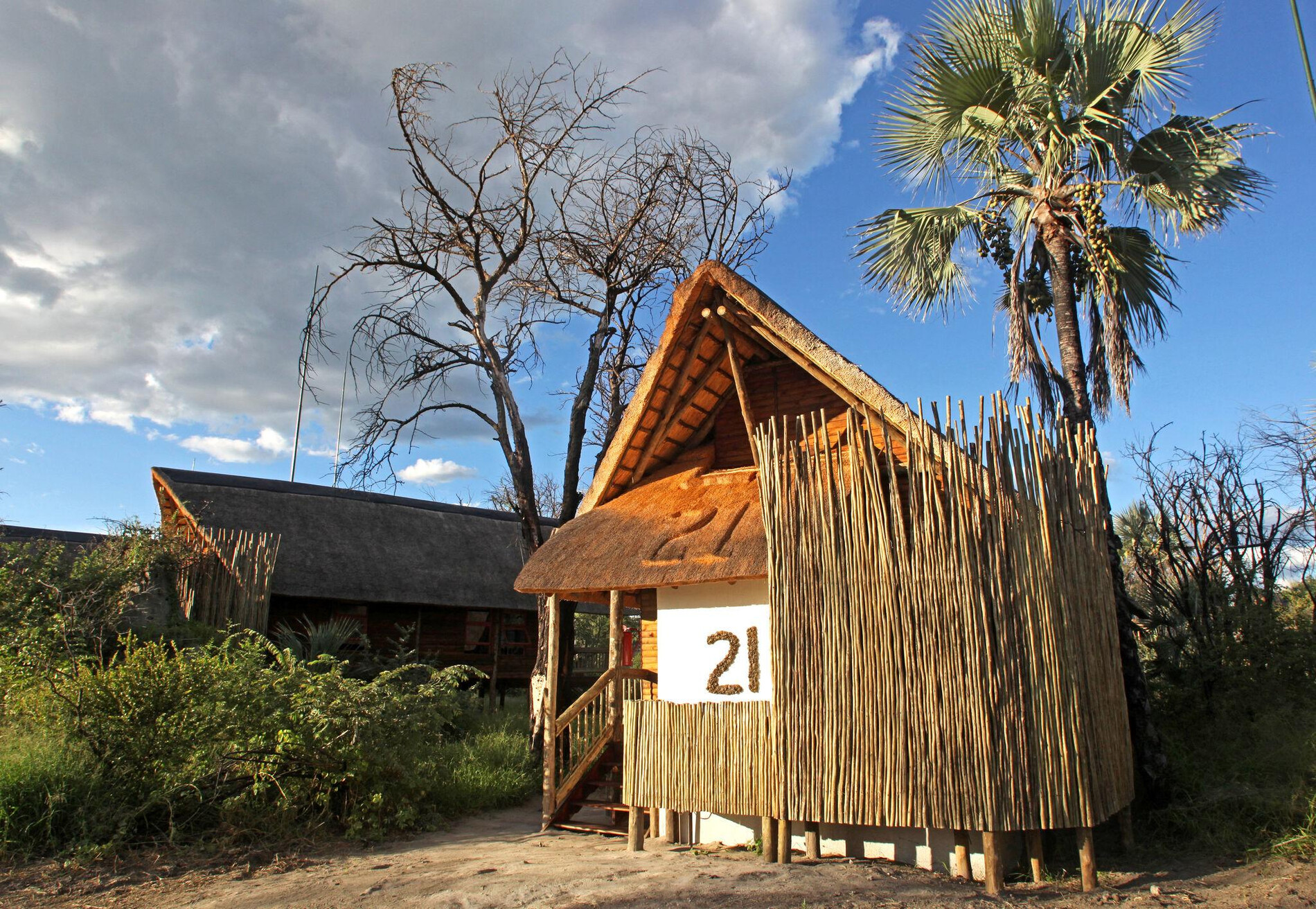
Nata Lodge
Nata-area lodge with chalets, safari tents, camping and salt-pan excursions.
Check availability on Expedia ↗
Makgadikgadi Riverview Inn
A village guesthouse with rooms and a pool; arrange the sanctuary visit separately.
Check availability on Expedia ↗
Pelican Lodge and Camping
An alternative near Nata offering chalets, rooms and camping facilities.
Check availability on Expedia ↗Compare all 10 accommodation options →
Sanctuary camping: Botswana Tourism describes camping inside the community-managed sanctuary, but you should confirm current operation and access conditions before setting out. A village lodge stay does not include sanctuary admission.
Affiliate disclosure: see.africa may earn a commission on Expedia bookings at no extra cost to you. Verify price, room and activity inclusions on the booking page.
Which rules matter most at Nata?
Do not drive onto unsafe pan surfaces
Salt pans can look firm while remaining soft below. Follow current local guidance and designated tracks.
Do not approach breeding birds
Keep distance from flamingo, pelican and shorebird concentrations, especially if birds are nesting or repeatedly flushing.
Stay on current tracks
Rain can make routes muddy or impassable; sanctuary staff guidance overrides old maps and online route traces.
Carry water and sun protection
The pan is exposed, reflective and hot. Shade can be limited away from the campsite and woodland edges.
Nata Bird Sanctuary FAQ
How big is Nata Bird Sanctuary?
About 250 km² according to Botswana Tourism Organisation.
When is the best time to see flamingos?
After good summer rains, often from January into April. Water levels matter more than the exact month.
Are flamingos guaranteed?
No. Flamingo numbers can range from very low to spectacular depending on rainfall and flooding.
Can you camp at Nata Bird Sanctuary?
Yes. Botswana Tourism confirms camping facilities inside the sanctuary.
Why is Nata Bird Sanctuary important?
It protects sensitive pan and grassland habitat while channeling tourism income directly to four local communities.
How far is the sanctuary from Nata?
Roughly 10–15 km, depending on the route and reference point. Follow current local signage and confirm track conditions after rain.
Is Nata a good day trip?
Yes. Two to four hours works for the pan and hide, although an overnight stay gives better sunset and morning light.
Can you combine Nata with Makgadikgadi?
Yes. Nata fits naturally with Nxai Pan and Makgadikgadi Pans on a northern Botswana road trip.
How this guide was checked
See.Africa reviewed time-sensitive information on 23 September 2026. Sanctuary size, community management, camping, pan habitat and birding context were checked against Botswana Tourism Organisation. Exact current entrance/camping fees were not published in accessible first-party text, so this guide deliberately does not invent a numeric fee.