
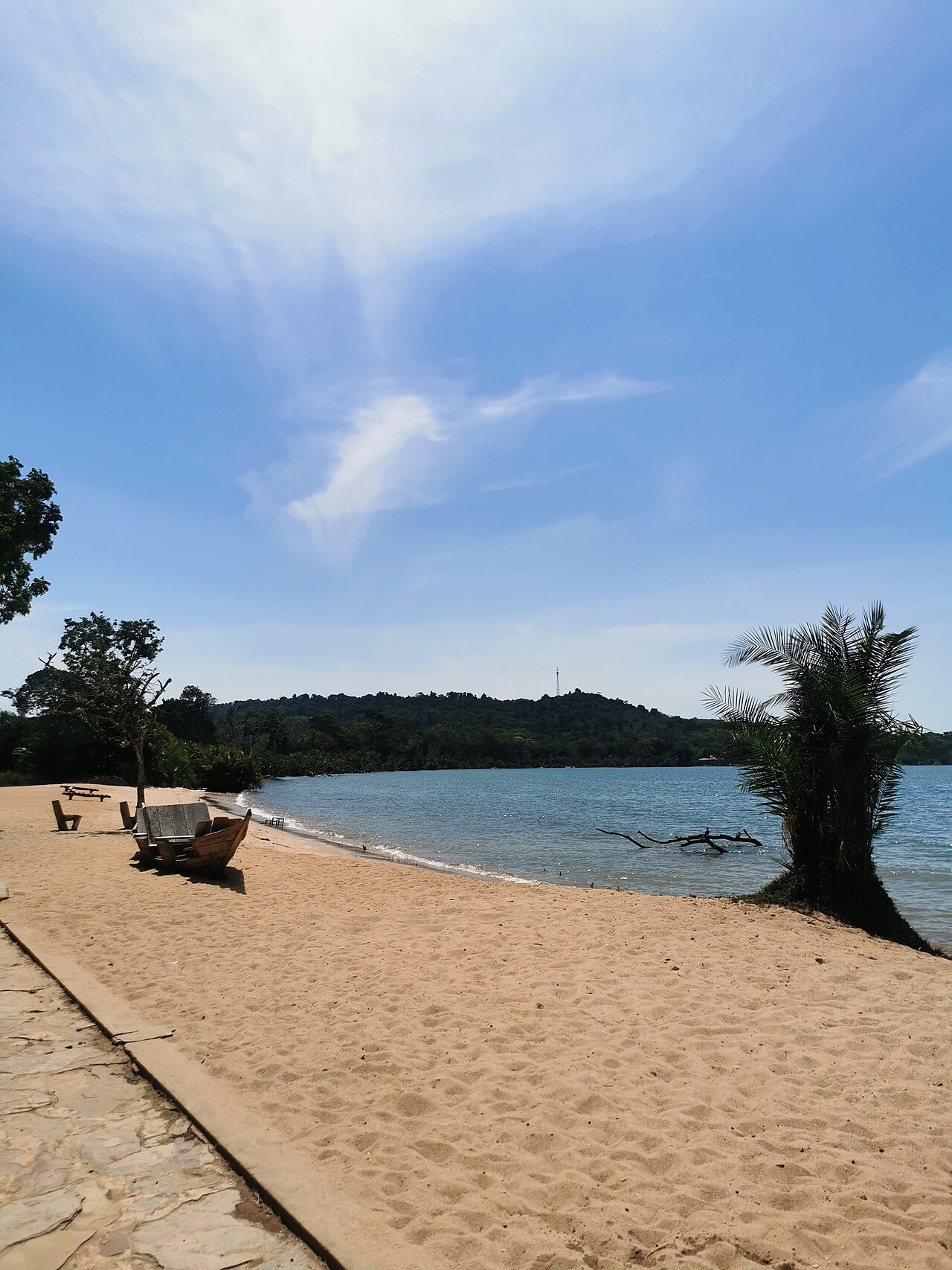
Rubondo Island National Park Guide
Rubondo is a forested Lake Victoria wilderness where chimpanzee habituation, guided forest walks, boat safaris, sitatunga wetlands and bird-rich shorelines replace the classic savanna circuit. This 2026 guide focuses on access, current TANAPA guidance, practical island logistics and a detailed orientation map.
Information checked 6 September 2026Rubondo Island National Park at a glance
Rubondo lies in southwestern Lake Victoria in Tanzania’s Geita Region and combines evergreen forest, papyrus wetlands, sandy coves and offshore islets. TANAPA says it became a national park in 1977 and highlights an ongoing chimpanzee habituation programme, sitatunga, boat excursions and guided forest walking.
Sources: TANAPA Rubondo overview · TANAPA About RubondoQuick Answers
Browse all National Park Guides, or compare Rubondo’s island-and-forest logistics with our Gombe National Park guide and Mahale Mountains guide.
What is the best time to visit Rubondo Island?
June to October is the easiest general window for boat transfers and trail logistics. TANAPA’s current visitor guide explicitly says the dry season offers more predictable lake conditions, while still advising visitors to reconfirm boat schedules because Lake Victoria weather can change quickly.
Source: TANAPA Rubondo Visitor GuideBest default for transfers, walking and drier trails.
Greener island scenery and strong birding potential, with more weather variability.
Wettest planning period: reconfirm lake transfers, trails and accommodation before travel.
How much does Rubondo Island cost in 2026?
TANAPA’s current Rubondo park page displays US$70 for international adults, US$20 for international children and TZS 20,000 for East African residents. TANAPA’s separate visitor guide cautions that boating, guiding, camping, fishing and other activities can carry separate charges.
Sources: TANAPA Rubondo entry-fee panel · TANAPA visitor fee guidance · TANAPA tariff interfaceWhich parts of Rubondo matter most?
| Area | Best for | Planning note |
|---|---|---|
| Kageye / HQ area | Arrival orientation, airstrip, bandas/camping and ranger logistics. | Useful first anchor after air arrival. |
| Eastern shoreline | Sandy/rocky coast, birding, lake views and otter potential. | Water conditions and wildlife safety matter. |
| Western papyrus shore | Sitatunga habitat, aquatic birds and wetland ecology. | Think habitat zone, not guaranteed sightings. |
| Interior forest | Chimp habituation, forest birds, bushbuck and primate signs. | Guided access only where designated. |
| Southern forest / hills | Longer walking, quiet forest and broad habitat diversity. | Trail availability is ranger-controlled. |
| Offshore islets | Waterbird colonies and boat-safari scenery. | Landing is only at designated points. |
How do you get to Rubondo Island National Park?
Rubondo is not a normal drive-in park. TANAPA’s current visitor guide says access is typically by arranged boat transfer from mainland landing points such as Nkome or Kasenda, or by charter flight to Rubondo Airstrip. For scheduled commercial access, Mwanza (MWZ) and Bukoba (BKZ) are the relevant mainland airports named by TANAPA.
Source: TANAPA Rubondo Visitor Guide — Getting ThereUseful western approach. Transfer timing depends on operator, weather and lake conditions.
Another TANAPA-named embarkation option; pre-arrange pickup rather than arriving speculatively.
Charter flights may use the island airstrip by prior arrangement; confirm current operations with the park/operator.
Rubondo Island National Park map
This map separates public mapped points from broad planning zones. Exact public coordinates are used for Rubondo Airstrip, Kageye, the park HQ area, Pongo View Point, campsites, Kasenda, Nkome, Irumu Point and several nearby islands. Chimp, sitatunga, birding and forest zones are intentionally broad and are not live sighting locations.
Map references: TANAPA access guidance · TANAPA habitat guidance · public OSM/GeoNames points used for orientation.How should you use one full day on Rubondo?
If CHEX or a guided forest walk is booked, prioritize the coolest morning hours.
Shift to boat or lake-edge habitats for hippos, crocodiles, otters and waterbirds.
Return to camp/HQ for lunch, hydration and ranger updates rather than forcing activity through heat or rain.
Scan papyrus edges quietly for sitatunga and bird movement; patience matters more than distance covered.
Use a safe designated shoreline/viewpoint for fish-eagle calls and Lake Victoria light.
Do not compress boat or flight timing around sunset; lake weather and island logistics can shift quickly.
14 mammals to know on Rubondo Island
Rubondo is a specialist forest/island park, so a shorter high-confidence list is more useful than padding it to savanna-park numbers. TANAPA currently highlights chimpanzees, sitatunga, bushbuck, vervet monkeys, elephants, giraffes, hippos, otters, suni, bushpigs, mongoose and genets.
Sources: TANAPA Wildlife & Habitats · TANAPA Rubondo overview · TANAPA About RubondoChimpanzee
Habituation programme
Do not expect a Serengeti-style guaranteed encounter; CHEX is about observing the habituation process under ranger control.
Sitatunga
Wetland specialty
Look for movement in papyrus-lined inlets rather than open grassland.
African bush elephant
Introduced to the island historically; woodland glades and forest edges are the right habitat context.
Giraffe
Another historically introduced large mammal; best sought in more open woodland/glades.
Bushbuck
Secretive forest-edge antelope, often easier to detect along quiet trails and clearings.
Suni
Tiny forest antelope listed by TANAPA among animals encountered on guided walks.
Bushpig
Mostly secretive and often nocturnal; tracks and rooting can be more realistic than a clear daytime view.
Vervet monkey
One of the island’s more conspicuous primates around woodland and camp-edge habitat.
Black-and-white colobus
Historically introduced; listen for loud calls in mature forest and scan the canopy slowly.
Hippopotamus
Lake-edge resident; observe from a safe distance by boat or from authorized shore areas.
Spotted-necked otter
Rubondo has a documented research history for this fish-eating otter; quiet shorelines are the right context.
Large-spotted genet
Mostly nocturnal and elusive; TANAPA lists genet cats among forest-walk fauna.
African civet
Nocturnal forest/edge mammal; tracks and scat may be more likely than a daylight sighting.
Mongoose
TANAPA lists mongoose among walking-safari fauna; species-level identification should be made cautiously in the field.
12 birds worth learning before Rubondo
Rubondo’s birding spans lake edge, papyrus, forest canopy and open woodland. TANAPA emphasizes fish eagles, herons and kingfishers; the current Avibase Rubondo checklist provides species-level confirmation for the profiles below.
Sources: TANAPA Wildlife & Habitats · Avibase Rubondo checklistAfrican fish eagle
Signature Lake Victoria raptor; often detected first by its carrying call.
Gray parrot
Endangered
Distinctive loud parrot; Avibase lists the species for Rubondo.
Malachite kingfisher
Small bright-blue/orange kingfisher of calm shoreline vegetation.
Pied kingfisher
Frequently hovers over open water before plunge-diving.
Giant kingfisher
Large, powerful kingfisher best sought along quieter rocky or wooded shore.
Goliath heron
Huge waterside heron, especially striking on open bays.
African openbill
Wetland stork with a characteristic gap between the bill mandibles.
African darter
Long-necked fish hunter often seen drying its wings near water.
Blue-headed coucal
Dense vegetation bird often detected by its deep call.
African emerald cuckoo
Brilliant but canopy-shy forest cuckoo; knowing the call helps.
Black-and-white-casqued hornbill
Large forest hornbill with heavy wingbeats and far-carrying calls.
Palm-nut vulture
Strong fit for palm-lined shoreline habitat; scan tall palms and lake-edge trees.
Flora: evergreen forest, papyrus and lake-edge plants
Rubondo’s vegetation is one of its defining features. TANAPA describes evergreen forest, palm-lined inlets and papyrus swamps; published Rubondo vegetation work records mixed evergreen/semi-deciduous forest with Croton sylvaticus, Drypetes gerrardii and Lecaniodiscus fraxinifolius among common trees.
Sources: TANAPA About Rubondo · International Journal of Biodiversity & Conservation — Rubondo vegetationTrees & shrubs
A common Rubondo evergreen/semi-deciduous forest tree recorded in vegetation studies.
Forest tree associated with the island’s mature closed-canopy habitat.
Another characteristic Rubondo forest tree recorded in published work.
African wild date palm of shore and riparian habitat.
Riparian/forest tree associated with wetter lake-edge vegetation.
Figs support birds and mammals with fruit and provide useful canopy structure.
Evergreen tree typical of moister African woodland and forest contexts.
Sausage tree; large hanging fruits make identification easier where present.
Woodland-edge trees/shrubs in more open island habitat.
Shrub/small tree of open woodland and grassland edges.
Papyrus, grasses, vines & understory
Iconic wetland sedge forming dense western-shore habitat used by sitatunga and waterbirds.
Smaller sedge recorded in wet shoreline habitat.
Grass associated with open island grassland patches.
Tall tropical grass recorded in Rubondo’s open habitats.
A defining structural feature of the dense forest understory.
Forest walks may reveal orchids; exact identification often requires flowers and close inspection.
Wetland-edge woody legume associated with marsh habitat around Lake Victoria.
Woody climber/liana recorded in Rubondo plant-use research.
Woody forest-edge species recorded in Rubondo vegetation studies.
Low herbs and seedlings become much more conspicuous after rain.
Best things to do on Rubondo Island
Join the conservation/habituation framework rather than expecting a conventional fully habituated chimp trek.
Explore beaches, bird-rich shorelines, hippos, crocodiles and Lake Victoria scenery.
TANAPA lists short and long guided walks, with forest mammals, birds and lake views.
Use papyrus-lined inlets and wetland margins patiently and quietly.
Combine shoreline, papyrus and forest canopy rather than birding from one habitat only.
Where offered, fishing is permit-controlled and may be catch-and-release.
What rules matter most on Rubondo?
Rubondo is an island wilderness, so boat and walking rules matter as much as wildlife distance. TANAPA says to wear life jackets and follow skipper instructions, land only at designated points, walk only with authorized rangers/guides, keep distance from chimpanzees and other wildlife, never feed animals, respect no-wake zones near papyrus/nesting sites and obtain prior written permission for drones.
Source: TANAPA Rubondo Visitor Guide — Regulations & SafetyRubondo Island National Park FAQ
Is Rubondo Island National Park worth visiting?
Yes for travelers who value low-traffic forest, Lake Victoria, chimp habituation, boat safaris, sitatunga and birding. It is not the best choice if your priority is dense classic savanna game.
Are Rubondo’s chimpanzees habituated?
Not fully. TANAPA describes an ongoing habituation programme and a CHEX experience in which visitors can join the habituation process under guidance.
How do you get to Rubondo Island?
TANAPA currently recommends arranged boat transfers from Nkome/Kasenda or charter flights to Rubondo Airstrip. Mwanza and Bukoba are the key mainland airports named in the dedicated visitor guide.
What is the best time to visit Rubondo?
June to October is the simplest general window because TANAPA says dry-season lake conditions are more predictable. Always reconfirm transfer schedules.
How much is Rubondo entry?
TANAPA’s current park page displays US$70 for international adults and US$20 for international children. Boat, guiding, camping and activity charges may be separate.
Can you self-drive Rubondo Island?
No in the normal national-park sense: you first need boat or air access to the island, and walking activities are ranger-guided. Internal movement depends on the activity and operator/park arrangements.
Can you fish in Rubondo?
Where offered, fishing is controlled and may be catch-and-release with permits. Confirm the current rules and charges before travel.
Can you walk alone in Rubondo?
No. TANAPA’s visitor guide says walking must be with authorized rangers or guides.
How this Rubondo guide was checked
This guide deliberately places source links beside the facts they support. Current access, rules, activity and fee headlines were checked against TANAPA’s current Rubondo pages. Species-level bird profiles were checked against the Rubondo Avibase checklist, while additional flora and otter details use published research pages. Approximate habitat zones on the map are never presented as live sightings or navigation-grade coordinates.