
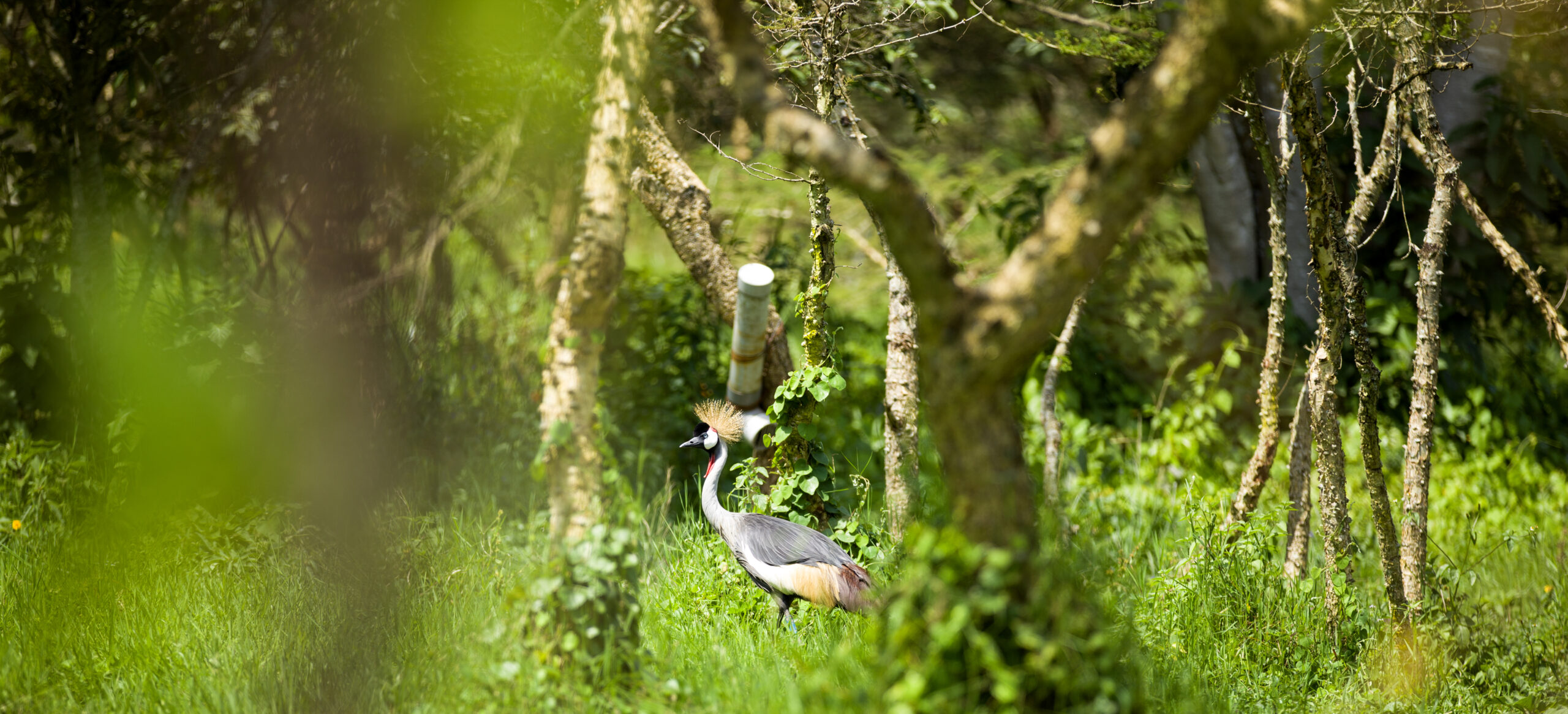
Umusambi Village Guide
A practical guide to Kigali’s Grey Crowned Crane sanctuary: current entry prices, opening hours, birding, restored wetland trails, map and how to fit Umusambi Village into a Rwanda trip.
Umusambi Village at a glance
Umusambi Village is Kigali’s first wildlife sanctuary and a 21-hectare restored wetland nature reserve. It provides a permanent semi-wild home for more than 50 endangered Grey Crowned Cranes rescued from the illegal pet trade that cannot safely return to the wild. The site is run by Rwanda Wildlife Conservation Association and is also a public walking, birding and conservation-education destination.
Umusambi Village entry fees
The following rates are the sanctuary’s published prices effective from 1 January 2026. Recheck the official visitor page before travel because admission and activity pricing can change.
USD 25
USD 10
RWF 10,000
RWF 5,000
RWF 3,000
Free
How to get to Umusambi Village
From Kigali centre
The sanctuary says to allow roughly 20 minutes by car, depending on traffic.
From the airport
Umusambi advertises itself as only about eight minutes from Kigali International Airport, making it an excellent first or last stop.
Road landmark
Drive east on KK 3 Road, pass the Inyange factory and enter through the large red Bambino Supercity arch before Kabuga.
Umusambi Village map
The sanctuary lies in Kicukiro District on Kigali’s eastern side. The map uses the public mapped location of the reserve and should be used for orientation rather than as a substitute for the sanctuary’s final road directions.
How to plan a visit to Umusambi Village
1. Go early for birds
Morning gives you cooler walking and better bird activity. Serious birders can request an exclusive early-morning visit.
2. Spend time with the cranes
Do not rush past the sanctuary’s central conservation story. Read the interpretation signs and watch how rescued cranes use the restored habitat.
3. Walk the wetland trails slowly
Move between open water, marsh edge, native planting and drier paths. The value of the site is the change in habitat over a small area.
4. Add a guided hour if conservation interests you
A guided visit can make the crane rescue story, wetland restoration and smaller wildlife much easier to understand.
What wildlife lives at Umusambi Village?
Birds are the headline, but the restored wetland supports a broader urban ecosystem. The sanctuary describes small mammals, amphibians, insects and bats living on the site, while its conservation programme actively monitors bats and pollinators.
Small wetland mammals
The official site confirms small mammals are present but does not publish a definitive visitor checklist. Treat sightings as bonuses rather than expected targets.
Bats
Umusambi’s conservation programme includes monitoring bat species and developing bat-pollinated habitat. Dusk visits can therefore reveal a completely different side of the sanctuary.
Amphibians
Restored wetlands provide breeding and feeding habitat for frogs and other amphibians, particularly in wetter periods.
Butterflies and pollinators
The site maintains butterfly-friendly planting and a butterfly house, making insects part of the visitor experience rather than background wildlife.
10 birds to look for at Umusambi Village
Umusambi reports more than 100 bird species. These ten are specifically featured by the sanctuary as birds visitors may encounter.
Grey Crowned Crane
The conservation reason Umusambi exists. Many resident cranes were rescued from illegal captivity and cannot safely return to the wild.
Palm-nut vulture
A striking black-and-white raptor associated with palms and wetlands.
Fan-tailed widowbird
Look in marshy grassland and tall wetland vegetation.
Speckled mousebird
Often moves in small groups through shrubs and fruiting vegetation.
Malachite kingfisher
A tiny jewel-like kingfisher of ponds and wetland channels.
Black-headed gonolek
Brightly coloured but often hidden in dense vegetation; calls may reveal it first.
Scarlet-chested sunbird
Search flowering native plants and sunny edges.
Woodland kingfisher
A vivid blue-backed kingfisher that often uses exposed branches away from open water.
Grosbeak weaver
A chunky wetland weaver with a heavy bill; look around reedbeds and dense marsh vegetation.
Swamp flycatcher
A wetland-associated flycatcher featured on Umusambi’s own species page.
Plants and habitat at Umusambi Village
The vegetation is part of the conservation project, not simply landscaping. Umusambi says the site was restored by removing invasive and non-native species and replanting a broad variety of native trees and plants under botanical supervision.
Restored wetland vegetation
Marsh and pond-edge plants provide feeding, nesting and refuge habitat for cranes, kingfishers, widowbirds, amphibians and insects.
Native trees and shrubs
Plantings create shade, bird perches, nectar and fruit sources while rebuilding native habitat structure.
Medicinal plant garden
The sanctuary has a dedicated garden demonstrating native plants used locally for traditional remedies.
Butterfly-friendly planting
Nectar-rich vegetation is intentionally used to encourage butterflies and other pollinators.
Best things to do at Umusambi Village
1. Watch the Grey Crowned Cranes
Spend enough time to understand why the sanctuary exists and how rescued birds live in semi-wild conditions.
2. Bird the wetland
More than 100 species make Umusambi one of Kigali’s easiest serious birding stops.
3. Walk the trail network
The restored 21-hectare wetland is designed to be explored slowly on foot.
4. Take a guided tour
Guides add context on crane conservation, native plants and wetland restoration.
5. Visit the butterfly house
The current visitor page lists access to the butterfly house as an optional paid extra.
6. Bring children
Scavenger hunts, activity sheets and hands-on learning make the sanctuary unusually family-friendly.
Umusambi Village FAQ
What is Umusambi Village?
Umusambi Village is a 21-hectare restored wetland sanctuary in Kigali run by Rwanda Wildlife Conservation Association. It provides a permanent natural home for rescued Grey Crowned Cranes that cannot return to the wild.
How much does Umusambi Village cost?
From 1 January 2026, international adults pay USD 25, African adult visitors USD 10 and Rwandan/EAC adults RWF 5,000. Other resident, student and child categories have separate prices.
What are Umusambi Village opening hours?
The current visitor page lists 08:00–17:30 daily with last entry at 16:30. On the last Saturday of each month, Umuganda Day, opening is from 12:00.
How far is Umusambi Village from Kigali airport?
The sanctuary says it is about eight minutes from Kigali International Airport.
Is Umusambi Village good for birding?
Yes. The sanctuary reports more than 100 native and migratory bird species and offers early or evening visits for birders by request.
Can you visit Umusambi Village without a guide?
Yes. Both guided and self-guided visits are available.
How long should you spend at Umusambi Village?
Two to four hours works well for most visitors. Birders can comfortably spend longer, and the sanctuary itself suggests a half-day or more.
How this guide was checked
See.Africa reviewed current visitor information on 16 August 2026 against Umusambi Village’s official visitor, activities, conservation and species pages. Current sanctuary staff guidance overrides this guide where details change.