
Volcanoes National Park Rwanda Guide
The practical 2026 guide to Volcanoes National Park, Rwanda: gorilla trekking permits, best time to visit, Kinigi briefing, golden monkeys, Virunga volcano hikes, interactive map, wildlife and how to plan your trip.
Volcanoes National Park at a glance
Volcanoes National Park protects Rwanda’s section of the Virunga Mountains in the country’s northwest. The park is globally known for mountain-gorilla trekking, but it also protects golden monkeys, bamboo and montane forest, high-altitude wetlands and five major Virunga volcanoes on the Rwanda side: Karisimbi, Bisoke, Sabyinyo, Gahinga and Muhabura.
Best time to visit Volcanoes National Park
Volcanoes National Park can be visited year-round, but June to September and December to February are generally the easiest periods for trekking. Drier conditions usually mean less mud and somewhat simpler footing. The wetter months make the forest exceptionally lush and can be excellent for photography and birding, but trails may become steep, slick and tiring.
For easier footing
June–September is the most straightforward first choice. Rain is still possible in mountain forest, so waterproof layers remain essential.
For greener forest
March–May and October–November can be beautiful and atmospheric. Expect more mud and slower trekking.
For permit planning
High-demand dates can sell out well ahead. The best month is useless if the permit you need is unavailable—secure the permit before non-refundable arrangements.
Which Volcanoes National Park activity should you choose?
Choose gorilla trekking if this is your once-in-a-lifetime primate trip; choose golden monkeys for a lower-cost, more active primate experience; choose Mount Bisoke for a demanding volcano hike; choose the Dian Fossey/Karisoke hike for conservation history.
| Experience | Best for | Typical planning commitment | Key constraint |
|---|---|---|---|
| Mountain gorillas | Iconic wildlife encounter | Allow most of a day | Permit availability, age 15+, health rules |
| Golden monkeys | Second primate trek, photography | Usually a shorter morning activity | Separate permit, age 12+ |
| Mount Bisoke | Volcano hiking, crater scenery | Full hiking day | Fitness, mud, altitude, 4×4 trailhead access |
| Dian Fossey / Karisoke | Conservation history + forest hike | Half to full day depending on pace | Steep forest terrain and weather |
Gorilla trekking in Volcanoes National Park
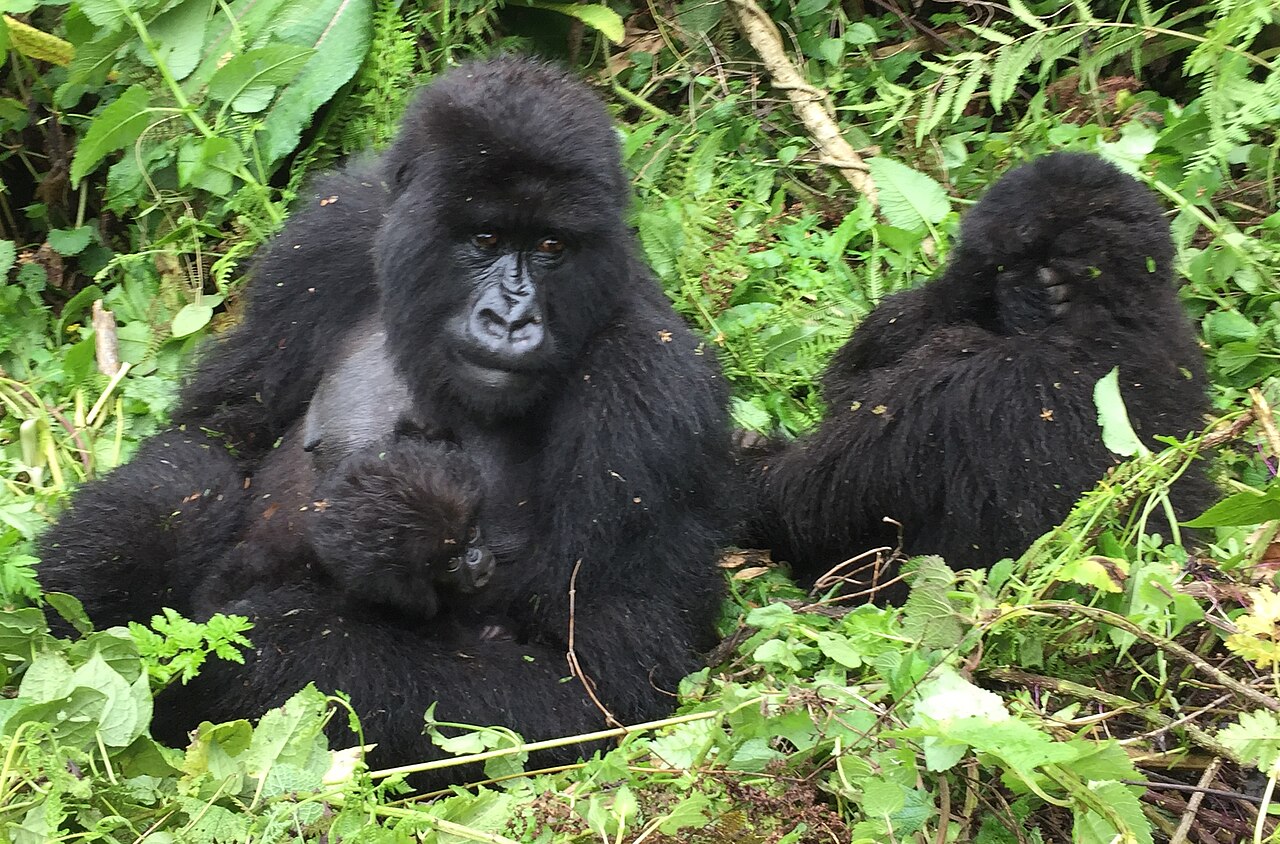
All gorilla treks begin with a briefing and group allocation in the Kinigi area. RDB’s current system sets a minimum age of 15. Once your trekking party reaches its assigned habituated gorilla family, the standard encounter is limited to about one hour. Actual hiking time varies enormously because gorillas move naturally through steep forest.
| Stage | What happens | Planning reality |
|---|---|---|
| Before the trek | Permit/document verification and briefing at Kinigi. | Sleep near Musanze/Kinigi if possible; do not gamble on a delayed long transfer from Kigali. |
| Group allocation | Visitors are assigned a habituated gorilla group and guide team. | Difficulty varies. Tell the team honestly about mobility and fitness limitations. |
| Forest trek | Guided hiking through farmland edge, bamboo and montane forest. | Could be relatively short or several hours; mud, nettles and steep slopes are normal possibilities. |
| Gorilla encounter | Up to one hour observing and photographing the group. | Keep required distance, follow guide instructions immediately and do not use flash. |
| Return | Hike back to the trailhead and transfer out. | Do not schedule a tight same-day flight; trek duration is not predictable enough. |
Rwanda gorilla permit price and rules
At this guide’s review on 16 August 2026, Rwanda Development Board’s official booking system lists the mountain-gorilla permit at US$1,500 for a foreign visitor. It currently lists US$500 for a foreign resident in Rwanda and US$200 for Rwandan and East African citizens, subject to supporting documentation and current eligibility conditions.
US$1,500
Per permitted gorilla trek. Booked on a first-come, first-served basis through the RDB system.
US$500*
RDB requires valid supporting documentation. Check current eligibility before relying on a discounted category.
US$200*
Valid identification and category rules apply.
How to get to Volcanoes National Park
From Kigali
The usual route is by road from Kigali to Musanze/Kinigi in northwestern Rwanda. Allow roughly 2–3 hours, depending on traffic, weather and your exact lodge.
Musanze / Kinigi
Stay close to the park the night before your permit date. This removes early-morning transfer risk and makes the briefing much easier.
Use a capable vehicle
The road from briefing to individual trailheads can be rough. RDB’s Bisoke guidance specifically advises arranging a 4×4 for the drive to the hiking base.
Volcanoes National Park Rwanda map
This map is an access-planning map, not a trekking-route map. It shows Kinigi, Musanze and the major Rwanda-side Virunga volcanoes. The optional access guide only illustrates the planning sequence from a Musanze base to Kinigi briefing; your actual trailhead and forest route are assigned by the ranger team and are intentionally not mapped as fixed lines.
Volcano coordinates and visitor points are for broad orientation. Assigned trailheads and gorilla routes vary and must never be treated as independent-access routes.
How to plan your gorilla-trekking day
Night before: stay locally
Pack rain shell, water, gloves, long trousers and sturdy waterproof footwear. Keep passport/permit details ready.
Morning: Kinigi briefing
Arrive early, complete checks and listen carefully during allocation. Tell staff about injuries or fitness limitations before the group is finalized.
On trail: hire a porter
A porter can carry your pack and help on steep, muddy sections. It is practical support and also provides local income.
With gorillas: slow down
Follow the guide’s exact positioning instructions, speak quietly, avoid sudden movements and spend your hour observing behaviour rather than constantly changing camera settings.
12 mammals to know in Volcanoes National Park
This is a forest-and-mountain wildlife destination, not a classic savanna game-drive park. Mountain gorillas and golden monkeys dominate visitor interest, while many other mammals are shy, nocturnal or rarely seen.
Mountain gorilla
The defining wildlife experience of Volcanoes National Park. Visitors see habituated groups only through controlled RDB trekking.
Golden monkey
A colourful Albertine Rift primate and the park’s most popular second primate trek. Often active and fast-moving in bamboo habitat.
African buffalo
Buffalo occur in the ecosystem but are not a casual hiking attraction; ranger guidance is essential around large mammals.
Bushbuck
A secretive forest-edge antelope that may use dense vegetation and clearings.
Black-fronted duiker
A small forest antelope associated with highland and montane habitats in the region.
Giant forest hog
A large forest pig that can occur in the wider Virunga highlands but is far less predictable than primates.
Show 6 more Volcanoes mammals
Side-striped jackal
A shy canid more likely around edges and more open highland habitat than deep forest. It is present in the Volcanoes landscape but should not be expected on a standard gorilla trek.
African civet
Mainly nocturnal, so daytime trekkers are unlikely to see one. Tracks or other signs are more realistic than a direct sighting.
Serval
A long-legged spotted cat associated with grassier and wetter openings in suitable highland habitat. A sighting would be exceptional.
Tree hyrax
Forest-dwelling hyraxes are frequently easier to detect by their loud calls than by sight in dense vegetation.
African elephant
Elephants occur in the wider Volcanoes National Park landscape, but they are not a normal target of a gorilla trek. Any encounter is managed by guides and rangers.
Egyptian mongoose
A medium-sized mongoose recorded in the Volcanoes landscape. It is much less predictable for visitors than the park’s habituated primates.
10 birds worth learning before Volcanoes National Park
Ruwenzori turaco
One of the most charismatic Albertine Rift forest birds, with vivid green, blue and red plumage.
Handsome francolin
A sought-after highland species associated with dense montane vegetation.
Ruwenzori batis
Small black-and-white forest bird of the Albertine Rift highlands.
Ruwenzori double-collared sunbird
A jewel-like high-altitude sunbird seen around flowering montane vegetation.
Regal sunbird
Another colourful Albertine Rift specialty rewarding slower forest-edge birding.
Dusky crimsonwing
A secretive forest finch associated with dense undergrowth.
Mountain masked apalis
Small canopy and mid-storey bird of montane forest.
Red-throated alethe
Ground-oriented forest bird often easier to hear than see.
White-tailed blue flycatcher
Active blue-grey forest bird with conspicuous white in the tail.
Mountain buzzard
Highland raptor worth watching for above forest ridges and open clearings.
Plants and vegetation zones in Volcanoes National Park
Volcanoes National Park changes dramatically with altitude, from bamboo and montane forest to Hagenia-Hypericum woodland, heath and afro-alpine vegetation. These plant zones influence where golden monkeys feed, how wet and difficult trails feel, and which birds and mammals visitors are likely to encounter.
Trees & shrubs
Hagenia
Where to look: upper montane forest. A characteristic East African highland tree that helps form the atmospheric Hagenia woodland above lower forest zones.
Hypericum
Where to look: cool upper montane slopes. This woody St John’s-wort relative is associated with the Hagenia-Hypericum vegetation belt.
Tree heath
Where to look: higher, cooler elevations. Dense woody heath becomes increasingly important as forest gives way to subalpine vegetation.
African cherry
Where to look: Afromontane forest. A large evergreen highland tree; exact local occurrence varies by slope and forest condition.
African schefflera
Where to look: moist montane forest. Broad compound leaves and a tree-like form make this a useful Afromontane recognition species.
Dombeya trees
Where to look: montane forest and recovering forest edges. Several East African highland species occur in this broader vegetation type.
Bamboo, ferns, flowers & understory
Mountain bamboo
Where to look: the bamboo belt. It is one of the park’s most important habitats and a major food resource for golden monkeys.
Giant lobelias
Where to look: afro-alpine and high subalpine zones. Their large rosettes and flower spikes are adaptations to cold tropical mountain nights.
Giant groundsels
Where to look: high-altitude moorland. These tree-like daisies are among East Africa’s most distinctive afro-alpine plants.
Montane ferns
Where to look: shaded humid forest, stream edges and wet trail banks. Ferns become especially conspicuous after rain.
Mosses and liverworts
Where to look: trunks, rocks and damp forest floor. Persistent moisture creates thick epiphytic growth on many shaded surfaces.
Forest orchids
Where to look: humid forest and mossy branches. Many are small or seasonal, so a guide is far more useful than casual identification from the trail.
Forest begonias
Where to look: damp shaded understory and banks. Leaf shape and seasonal flowers can be striking, but exact species identification is difficult.
Stinging nettles
Where to look: dense disturbed or trail-edge vegetation. They are one practical reason long trousers and gloves are recommended for trekking.
Highland sedges
Where to look: wet depressions, marshy ground and high-altitude seepage areas. Sedges help define the park’s wetter microhabitats.
Seasonal montane herbs
Where to look: forest gaps, trail edges and open highland ground after favourable rain. Flowering changes strongly with season and elevation.
Best things to do in Volcanoes National Park
1. Mountain-gorilla trekking
The flagship experience and the reason most international visitors travel to the park.
2. Golden-monkey tracking
RDB currently lists foreign visitor permits at US$100. Minimum age is 12. The trek is usually less strenuous than a gorilla day.
3. Mount Bisoke hike
A demanding crater-lake volcano hike. RDB says inexperienced hikers may take roughly 6–7 hours including descent.
4. Dian Fossey / Karisoke hike
A history-and-conservation focused forest hike linking the landscape to Dian Fossey’s gorilla research legacy.
5. Karisimbi expedition
A much more serious high-altitude mountain objective than Bisoke. Plan as a dedicated hiking experience rather than a casual add-on.
6. Birding
Volcanoes sits in the Albertine Rift, making specialist birding a strong complement to primate trekking.
Volcanoes National Park gorilla-trekking rules that matter
Minimum age: 15
RDB’s current booking system sets 15 as the minimum age for mountain-gorilla tracking.
Stay about 7 metres away
RDB asks visitors to maintain roughly 7 metres of distance from gorillas to reduce disease transmission and disturbance.
Do not trek when sick
A cold, flu or other contagious illness can result in denied access. Great apes are vulnerable to human respiratory disease.
Follow ranger instructions immediately
Gorillas can move closer than the target distance. Do not independently reposition; your guide manages the encounter.
No flash photography
Disable flash before reaching the gorillas so you do not accidentally fire it during the encounter.
Keep voices low
Calm behaviour reduces disturbance and makes the encounter better for both visitors and gorillas.
Volcanoes National Park Rwanda FAQ
How much is a gorilla permit in Rwanda in 2026?
Rwanda Development Board currently lists the foreign visitor mountain-gorilla permit at US$1,500. Other resident/citizen categories differ and require valid documentation. Always check RDB’s live booking system before paying.
What is the minimum age for gorilla trekking in Rwanda?
The minimum age is 15 years. RDB’s official booking system applies this rule to mountain-gorilla tracking.
How long do you spend with the gorillas?
The standard encounter is up to one hour once your trekking group finds its assigned habituated gorilla family. The hike before and after can take several hours and varies with gorilla location.
When is the best time to visit Volcanoes National Park?
June to September is the easiest overall period for most first-time trekkers, with December to February another popular drier window. Gorilla trekking operates throughout the year and rain is possible in any month.
How far is Volcanoes National Park from Kigali?
Allow roughly 2–3 hours by road to the Musanze/Kinigi area. For a gorilla trek, staying near the park the previous night is safer than depending on a very early same-day transfer.
Is Volcanoes National Park only for gorillas?
No. The park also offers golden-monkey tracking, Mount Bisoke hiking, Dian Fossey/Karisoke experiences, birding and other Virunga mountain hikes.
How much is golden-monkey trekking in Rwanda?
At this guide’s review, RDB lists US$100 for a foreign adult. The current minimum age is 12. Check the live RDB system because permit categories and prices can change.
Volcanoes National Park or Bwindi: which is better?
Rwanda is usually easier logistically from Kigali and offers a very polished, high-end gorilla experience; Bwindi offers multiple trekking sectors and a different forest landscape in Uganda. The better choice depends on permit budget, wider itinerary and preferred travel style.
How this Volcanoes National Park guide was checked
Time-sensitive gorilla and golden-monkey information was reviewed on 16 August 2026 against Rwanda Development Board’s live visitor-booking system. Hiking and park-context information was cross-checked against current Rwanda tourism material. Permit prices, rules and eligibility can change; the live RDB system overrides this guide.