
West Coast National Park Guide
Plan West Coast National Park with a detailed map, Langebaan Lagoon bird hides, Postberg flowers, seasonal fees, beaches, wildlife and practical itineraries.
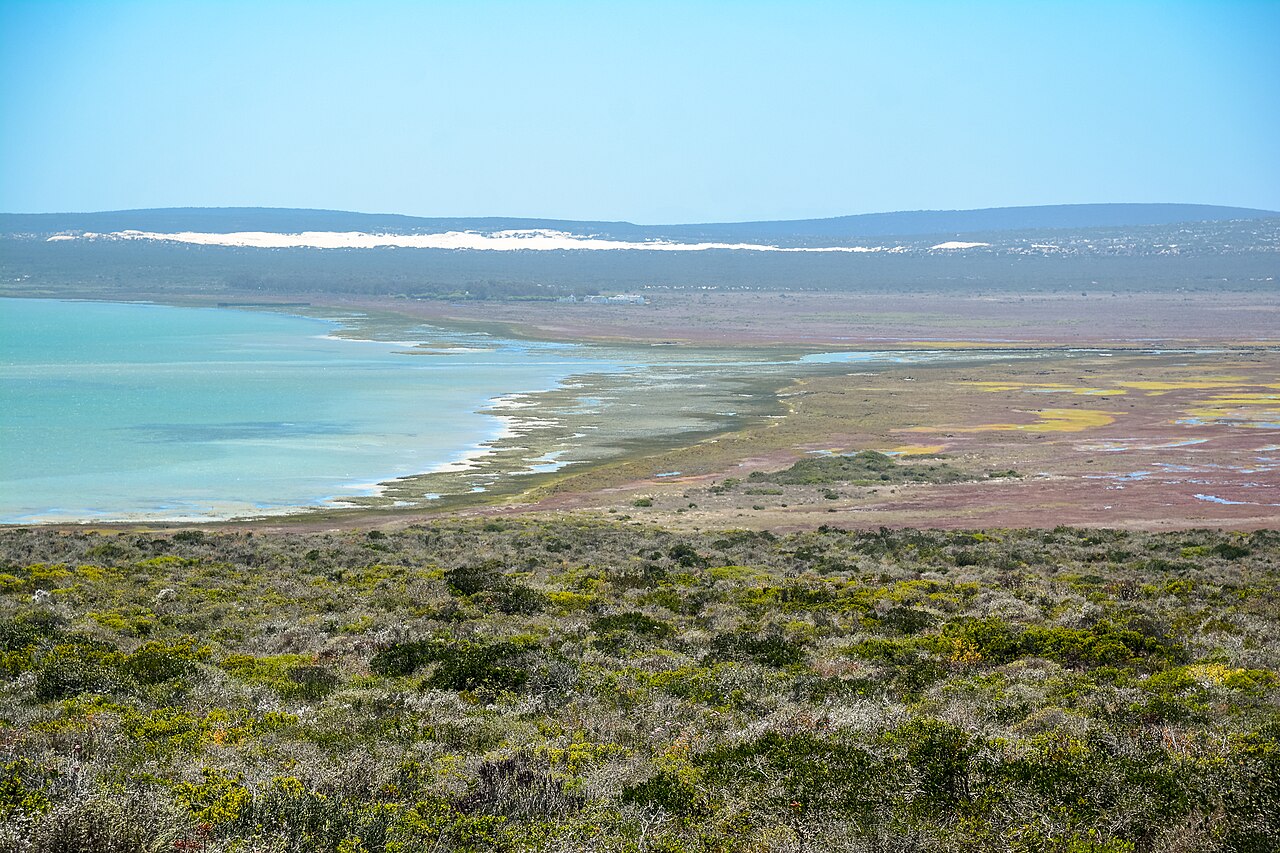
Turquoise Langebaan Lagoon in West Coast National Park. Photo: dconvertini · CC BY-SA 2.0. Resized and cropped for this layout.

West Coast National Park at a glance
West Coast National Park brings a turquoise lagoon, tidal birding, coastal vegetation and seasonal flowers within reach of Cape Town. Its best days are planned around conditions: the tide for waders, sunshine for flowers and wind for an enjoyable picnic. Postberg is a seasonal part of the experience, while the lagoon and the main park reward visits beyond flower season. Allow a full day for a first visit or stay locally for two different tides and quieter morning light. This is a coastal nature trip with antelope and small predators, rather than a conventional Big Five safari.
Official sources · checked 9 September 2026: SANParks: West Coast National Park overview · SANParks: current visitor notices. Confirm arrangements for your travel date.
When is the best time to visit West Coast?
August and September usually attract the greatest interest for flowers, but a calendar date cannot guarantee a carpet of colour. Winter rain, subsequent weather and individual plants’ flowering cycles all matter. Many flowers show best in sunny conditions; a grey windy day produces a different experience. Summer is valuable for migrant shorebirds, and quiet periods outside the peak can make patient birding easier. The coastal wind can change the comfort of a picnic or beach stop even on a warm day. Bring layers and a birding plan that can move between sheltered hides and open viewpoints. Choose the order of stops around the tide rather than treating the same driving loop as ideal every day.
Typical seasonal pattern, not a forecast or a guarantee of road access. Current local conditions take priority.
Which West Coast area suits your trip?
| Area | Best for | What to expect | Planning point |
|---|---|---|---|
| Geelbek and lagoon hides | Patient shorebird observation | Tidal mudflats and sheltered viewing make this a natural anchor for a birding day. | Check the tide; distant birds at one stage may become easier to observe later. |
| Postberg | A seasonal flower and landscape outing | Flowering vegetation and grazing mammals add a distinct area when it opens. | Seasonal access, hours and fees apply. Do not assume year-round entry. |
| Kraalbaai and designated recreation areas | A lagoon-focused visit | Sheltered-looking water and broad views suit an unhurried stop. | Follow the lagoon zoning, current swimming guidance and activity permissions. |
| Atlantic-facing viewpoints | Coastal scenery and seabirds | The open ocean gives a different perspective from the lagoon. | Wind, waves and exposed edges require care; a viewpoint is not a swimming access point. |
| Main park roads and strandveld | Wildlife and habitat comparison | Antelope and smaller animals use the vegetation between headline attractions. | Use designated roads and stopping places; do not drive onto flowers for a photograph. |
West Coast entry fees, permits and opening hours
Daily conservation fees shown by SANParks for 1 November 2025–31 October 2026 vary between August–September and the rest of the year. Adults are aged 12 and over; children are aged 2–11. Bring the documents needed for your visitor category and a payment card. Accommodation, activities and permits may cost extra. Check Wild Card eligibility for your membership and visit; it does not establish admission to every separately operated activity. Recheck the next tariff for travel from 1 November 2026.
| Visitor category / section | Adult | Child (2–11) |
|---|---|---|
| SA citizens/residents · August–September | R121 | R61 |
| SADC nationals · August–September | R192 | R95 |
| Other international visitors · August–September | R306 | R153 |
| SA citizens/residents · other months | R82 | R41 |
| SADC nationals · other months | R132 | R65 |
| Other international visitors · other months | R144 | R72 |
Official sources · checked 9 September 2026: SANParks: current conservation fees · SANParks: current visitor notices. Confirm arrangements for your travel date.
Opening hours
SANParks lists main park hours of 07:00–18:00 in April–August, with last entry at 17:30, and 07:00–19:00 in September–March, with last entry at 18:30. These are not permission to enter Postberg at any hour the main park is open. Confirm Postberg’s seasonal dates and separate access arrangements before travelling. Leave enough time for the drive back to the correct exit, particularly after a late bird-hide session.
Official sources · checked 9 September 2026: SANParks: current visitor notices · SANParks: entrance hours · SANParks: access and directions · SANParks: flower-season access and advice. Confirm arrangements for your travel date.
How do you get to West Coast?
The R27 approach and the Langebaan side serve different arrival plans. Use the entrance that suits your accommodation and first visitor area, then follow the current park map rather than a shortcut across a restricted lagoon zone. Cape Town is the main large-city and air gateway; a rental vehicle or a booked excursion makes it easier to combine dispersed stops. Refuel and buy supplies before entry. During flower-season peaks, start early and leave flexibility for queues. An outside stay in Langebaan can simplify an early hide visit on the next day, but calculate the applicable daily entry charges rather than assuming yesterday’s payment covers a new visit.
Official sources · checked 9 September 2026: SANParks: current visitor notices · SANParks: access and directions · SANParks: flower-season access and advice. Confirm arrangements for your travel date.
West Coast map: 23 useful places
Use this map to compare bases and understand the landscape. Search by place or filter by type. All locations are approximate orientation points; current park, guide and lodge directions override the map.
Loading map near this section. All places are also listed below.
All 23 map places and access notes
- West Coast gate — R27 approach · Gates & visitor centresVisitor access point. Confirm the correct entrance, current hours and onward directions before arrival. Published facility coordinate; approximate orientation only. Map source. Approximate.
- Langebaan gate — northern approach · Gates & visitor centresVisitor access point. Confirm the correct entrance, current hours and onward directions before arrival. Published facility coordinate; approximate orientation only. Map source. Approximate.
- Kraalbaai visitor area · Areas & trail referencesLagoon visitor-area reference. Obey current zoning and use only designated permitted recreation access. Map source. Approximate.
- Duinepos accommodation area · Camps & lodgesAccommodation reference. Book ahead and obtain the correct reception, arrival route and current facilities from the operator. Published facility coordinate; approximate orientation only. Map source. Approximate.
- Tsaarsbank · ViewpointsUse the designated viewpoint or hide only when open. Follow the current visitor route and keep clear of edges and wildlife. Map source. Approximate.
- Atlantic Viewpoint · ViewpointsUse the designated viewpoint or hide only when open. Follow the current visitor route and keep clear of edges and wildlife. Map source. Approximate.
- Seeberg View Point · ViewpointsUse the designated viewpoint or hide only when open. Follow the current visitor route and keep clear of edges and wildlife. Map source. Approximate.
- Geelbek bird hide — southern approach · Gates & visitor centresVisitor access point. Confirm the correct entrance, current hours and onward directions before arrival. Map source. Approximate.
- Geelbek bird hide — northern approach · ViewpointsUse the designated viewpoint or hide only when open. Follow the current visitor route and keep clear of edges and wildlife. Map source. Approximate.
- Uitkyk · ViewpointsPostberg seasonal visitor-area reference. Confirm current opening dates, separate access hours and the permitted route; do not assume year-round public access. Map source. Approximate.
- Plankiesbaai · ViewpointsPostberg seasonal visitor-area reference. Confirm current opening dates, separate access hours and the permitted route; do not assume year-round public access. Map source. Approximate.
- Postberg Entrance Gate · Gates & visitor centresPostberg seasonal visitor-area reference. Confirm current opening dates, separate access hours and the permitted route; do not assume year-round public access. Map source. Approximate.
- Geelbek Information Center · Gates & visitor centresVisitor access point. Confirm the correct entrance, current hours and onward directions before arrival. Map source. Approximate.
- Seeberg Trail Start · Gates & visitor centresVisitor access point. Confirm the correct entrance, current hours and onward directions before arrival. Map source. Approximate.
- Preekstoel · Areas & trail referencesLandscape or trail reference. This pin is not a trailhead or a verified route; obtain the current authorised map and advice. Map source. Approximate.
- Abrahamskraal Bird Hide · Areas & trail referencesLandscape or trail reference. This pin is not a trailhead or a verified route; obtain the current authorised map and advice. Map source. Approximate.
- Abrahamskraal Cottage · Camps & lodgesAccommodation reference. Book ahead and obtain the correct reception, arrival route and current facilities from the operator. Map source. Approximate.
- Seeberg Bird Hide · ViewpointsUse the designated viewpoint or hide only when open. Follow the current visitor route and keep clear of edges and wildlife. Map source. Approximate.
- Langebaan Lagoon · Water featuresGeographic water-feature reference, not a launch, swimming or direct driving destination. Use only authorised visitor access. Map source. Approximate.
- Abrahamskraal Waterhole · Water featuresGeographic water-feature reference, not a launch, swimming or direct driving destination. Use only authorised visitor access. Map source. Approximate.
- van Brenda Cottage · Camps & lodgesAccommodation reference. Book ahead and obtain the correct reception, arrival route and current facilities from the operator. Map source. Approximate.
- Steytler Cottage · Camps & lodgesAccommodation reference. Book ahead and obtain the correct reception, arrival route and current facilities from the operator. Map source. Approximate.
- Farmhouse Hotel, Langebaan — outside park · Camps & lodgesOutside-park accommodation reference. Check its own availability and allow the drive to the park entrance. Map source. Approximate.
Map references include official park material where specified below, plus OpenStreetMap contributors, checked 9 September 2026. Selected and labelled by See.Africa. Waterbody-centre pins and summits are geographic references, not destinations for direct navigation. Accommodation and airstrip operation must be confirmed. No live animal locations or verified driving route is shown.
A practical West Coast itinerary
One day: lagoon and a contrasting coast
Enter early and ask about current restrictions. Time Geelbek for a useful tide, add a permitted picnic stop and visit an ocean-facing viewpoint. Leave the final part of the day flexible for a second birding session.
Flower-season day
Confirm Postberg access first and allow time for queues. Choose a sunny viewing period when possible, follow the designated route and add the lagoon without trying to visit every hide. Stay on roads and paths even when flowers appear denser beyond them.
Two nights: tides and quiet time
Base locally or in suitable park accommodation. Give one morning to shorebirds and another to scenery and mammals. Different water levels can transform the same hide, so repeating a place is useful rather than redundant.
Windy or overcast conditions
Use sheltered observation points and shorten exposed coastal stops. Flowers may look different without sunshine; replace a rigid photography target with birding and vegetation study. Keep outdoor plans within the current weather and access advice.
Where should you stay in West Coast?
Choose accommodation by the experience you want the next morning. A Langebaan base provides town services and a practical approach to the lagoon side. Park accommodation can provide a different setting, but check the exact unit’s access, kitchen, electricity and arrival requirements on the reservation. Houseboat or lagoon accommodation is a distinct booking with its own transfer and water-activity arrangements; ordinary entry does not include it. For a flower-season visit, book early and confirm how the accommodation location relates to Postberg’s visitor access. Two nights in one base usually gives more flexibility for tides and weather than changing rooms for a short stay.
West Coast mammals to look for
The official mammal checklist includes grazing antelope, Cape mountain zebra and elusive small predators. Distribution differs between visitor areas, and seasonal access can affect which habitats you reach. Watch open ground slowly, then scan vegetation edges for smaller animals. A checklist records occurrence, not the likelihood of every species on a day visit.

Common eland
Africa’s largest antelope has a deep body, a dewlap and gently spiralling horns. Its size does not prevent it from moving gracefully through open woodland. Watch mixed-age groups at a respectful distance and distinguish it from buffalo by its lighter build and horn shape.


Bontebok
The white face, pale rump and rich brown body help identify this Cape antelope. Compare the pattern carefully with blesbok rather than relying on colour alone. Quiet grazing groups make rewarding subjects from permitted roads and paths.
_(30573334994).jpg)

Red hartebeest
An elongated face, high shoulders and angular horns give this reddish antelope a distinctive silhouette. Compare its body shape with nearby wildebeest or blesbok. A standing lookout may reveal a group concealed in a fold of the grassland.


Springbok
The dark flank stripe, pale face and white rump stand out against dry grassland. Groups can rest almost invisibly during the hottest hours. Watch their heads and ears for alert behaviour and allow animals to cross the road without splitting the herd.


Cape mountain zebra
Look for a small throat dewlap, narrow body stripes and a pale belly. These clues help distinguish mountain zebra from plains zebra. Watch a family group negotiate slopes, and compare animals from a stopped vehicle rather than following a herd uphill.
_(31707282834).jpg)

Grey rhebok
A woolly grey coat, long ears and a fine, upright posture suit a highland antelope that can blend into muted slopes. Males carry slender straight horns. Scan rocky grassland slowly; movement often reveals an animal before its outline becomes clear.
_male_at_Karoo_NP,_Western_Cape,_South_Africa.jpg)

Steenbok
A small reddish antelope with large ears and a pale underside. Individuals often stand still near low cover and can disappear after only a few steps. Stop gently and observe from the road instead of driving toward the spot where one hid.
.jpg)

Caracal
Long dark ear tufts and a plain tawny coat are the best clues to this secretive cat. It can remain hidden in low vegetation close to a road. An encounter is a bonus, not a routine expectation; give it space to continue moving naturally.
_(cropped).jpg)

Bat-eared fox
Oversized ears, dark legs and a lightly built body distinguish this insect-eating fox. Watch for a pair listening and searching close to the ground in suitable open habitat. Avoid following animals with a vehicle or directing bright light at them independently.

West Coast birds and habitat clues
The lagoon is a major reason to bring binoculars and, if available, a telescope. Compare waders on mudflats with birds on open water and the Atlantic coast. Many migrant shorebirds are seasonal, and the tide determines where they can feed. Stay quiet in hides, avoid blocking other visitors’ views and give birds space on beaches and paths.

Greater flamingo
Larger and often paler than the lesser flamingo, with a pink bill ending in a dark tip. Mixed flocks allow useful comparisons. Keep away from resting groups and use a telescope or long lens to study birds across shallow water.


Great white pelican
A very large white waterbird with a long bill and throat pouch. Groups may fish cooperatively or rest together on shore. Use binoculars to inspect distant gatherings and compare the wings and face with other pelicans before settling on identification.
.jpg)

Whimbrel
A long downcurved bill and striped crown help distinguish this visiting shorebird. Look along tidal feeding areas at a suitable stage of the tide. Use a hide or distant viewpoint rather than walking into a flock to examine bill shape.


African oystercatcher
An all-dark body, bright red bill and pinkish legs make this coastal bird distinctive. Search rocky shores and suitable beaches from established paths. Nesting pairs and young are easily disturbed; give resting birds a generous berth and obey seasonal beach restrictions.
.JPG)

Cape cormorant
A dark coastal cormorant often seen commuting in groups or resting on rocks. An orange-yellow throat patch helps at closer viewing distances. Several cormorant species share the coast, so use binoculars and compare structure as well as colour.


African spoonbill
A white wading bird with a distinctive spoon-shaped bill. Adults show red bare facial skin and legs. Watch the sideways sweeping feeding action in shallow water and give birds room to use their preferred feeding edge as water levels change.
.jpg)

Common ostrich
The immense size, long bare neck and powerful legs are unmistakable. Males are predominantly black and white, while females are browner. Give adults and chicks a wide margin, particularly on foot; apparent familiarity with visitors does not make an ostrich tame.
.jpg)

Cape bunting
A striped face, warm wing tones and seed-eating bill identify this bunting of suitable rocky and open habitats. Watch the ground around a natural perch. Small birds often reveal themselves through repeated short movements rather than an obvious long flight.

West Coast plants and habitats
Strandveld
Coastal shrubs create cover and food for animals between the open lagoon and ocean. Look for changes in height and density rather than expecting every area to be flower-filled grassland.
Seasonal annual flowers
Winter rainfall helps shape the spring display, while sunshine influences how some blooms open during the day. View and photograph from existing paths and roads.
Fynbos and other coastal vegetation
The park contains distinct plant communities. A local botanical guide can help separate superficially similar shrubs and explain why soils and exposure produce different combinations.
Saltmarsh and tidal margins
Plants around the lagoon tolerate conditions very different from the dry inland slopes. These edges are part of the feeding and shelter system for wildlife, so keep to designated visitor access.
Plant identification may require leaves, flowers, fruit and a knowledgeable guide. Do not collect plants or leave authorised routes to inspect them.
What can you do in West Coast?
Build a tide-led birding session
Use a hide for long enough to see feeding behaviour change. Bring a field guide and compare bill shape, leg length and movement rather than relying only on colour.
Explore flowers responsibly
Check the current season report and Postberg opening. Walk only where permitted and leave every flower in place. A wider landscape photograph often conveys the display better than trampling towards one bloom.
Choose a permitted lagoon activity
Ask about zones, permits and current operator arrangements before kayaking, boating or swimming. A calm-looking patch of water does not establish that the activity is allowed there.
Compare lagoon and ocean
Plan one sheltered lagoon stop and one authorised Atlantic viewpoint. The contrast in water, wind, birds and vegetation is central to understanding this park.
Rules and practical precautions
Respect lagoon zoning and seasonal closures. Remain on authorised roads and paths, never pick flowers and keep clear of birds feeding or resting on the shore. Use only permitted recreation areas and obey current water-safety guidance. Keep food secured, remove litter and allow enough time to exit before closing.
Give wildlife space
Never feed, surround or block an animal. Keep food secure, voices low and movements predictable. Your guide or ranger’s instructions take priority over a desired photograph.
Prepare for your actual activity
Bring water, sun or rain protection as appropriate, suitable footwear and charged equipment. Tell the operator about relevant mobility needs before booking so the route and vehicle can be matched to you.
Official sources · checked 9 September 2026: SANParks: West Coast National Park overview · SANParks: current visitor notices. Confirm arrangements for your travel date.
West Coast travel FAQ
When should I visit West Coast National Park for flowers?
August and September are the usual focus, but rainfall, sunshine and the current Postberg opening determine the experience. Confirm conditions before travel.
Is Postberg open all year?
No. Treat Postberg as a seasonal visitor area and confirm its current dates and hours with SANParks.
What is the international entry fee in flower season?
For August–September within the 1 November 2025–31 October 2026 tariff, SANParks lists R306 per adult and R153 per child aged 2–11 per day.
Can I visit without seeing flowers?
Yes. Lagoon birding, coastal scenery, antelope and vegetation make the park worthwhile beyond the flower season.
Can I swim anywhere in Langebaan Lagoon?
No. Different zones have different rules. Use only currently designated permitted areas and follow local conditions and instructions.
How long should I allow?
Allow a full day for a first visit. One or two nights locally provides more flexibility for tides, weather and a quieter second outing.
Sources, method and review date
This guide combines official park and operator information with editorial planning advice. Operational details were checked on 9 September 2026. Season descriptions are typical patterns, and suggested stays are planning recommendations. Wildlife profiles explain identification and habitat; they do not promise sightings.
Wildlife and image references
Species names and identification photographs were checked against the linked reference and image records. Photographs are identification examples and may have been taken elsewhere. Each image carries its own creator and licence credit.
Species reference links
Common eland · Bontebok · Red hartebeest · Springbok · Cape mountain zebra · Grey rhebok · Steenbok · Caracal · Bat-eared fox · Greater flamingo · Great white pelican · Whimbrel · African oystercatcher · Cape cormorant · African spoonbill · Common ostrich · Cape bunting