
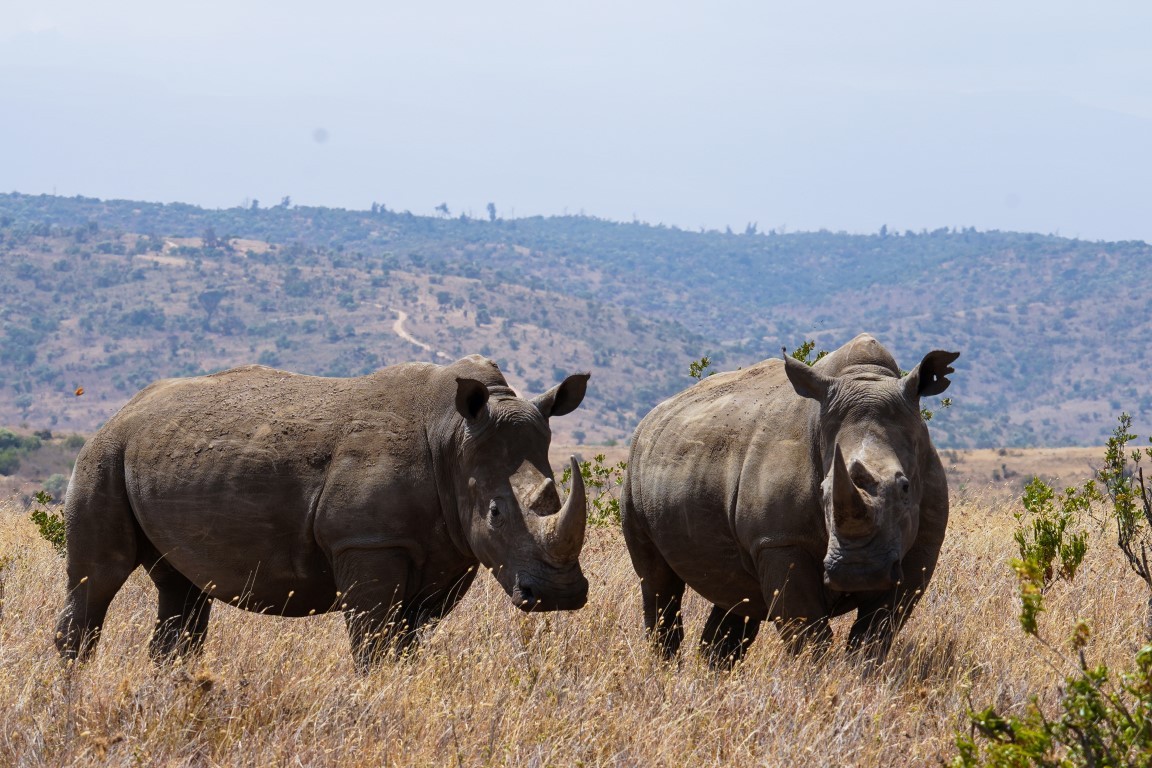
Sera Wildlife Conservancy: Rhino Tracking, Fees & Lodges
Track endangered rhinos with Samburu rangers in northern Kenya’s pioneering community-managed sanctuary. Plan accurate 2026 visitor costs, camping, arrival logistics and accommodation.
Hero: Two black rhinos in Sera, photograph via Magical Kenya / Kenya Tourism Board. Editorial image; original source linked in the guide.
Sera Wildlife Conservancy in Samburu County puts community-owned conservation at the centre of a rare safari: guided on-foot black rhino tracking, desert wildlife, rock art, camping and Samburu cultural experiences. Unlike a KWS national park, sanctuary access and experiences are booked with Sera’s community team or its sole on-site lodge.
Sera Conservancy: the essentials
Community conservation since 2001
Established in 2001, Sera protects a broad semi-arid Samburu landscape through local governance, community scouts, anti-poaching patrols and revenue from tourism. The conservancy’s official area is approximately 840,000 acres. Village livelihoods, livestock, wildlife corridors and customary Samburu knowledge are central to its conservation model.
How the rhino comeback began
Sera’s Samburu communities organise the protection and stewardship of a large northern rangeland landscape.
The sanctuary begins with 10 relocated black rhinos through partnerships involving Kenya Wildlife Service, Lewa and the Northern Rangelands Trust.
Four southern white rhinos are brought from Lewa; a white rhino calf is subsequently born. The programme expands to protect both rhino species.
Sera’s site has described 26 and 27 black rhinos on different official pages. Populations change with births, deaths and transfers, so we report the historical starting figures but do not treat one snapshot as a verified live census. The conservancy reports no rhino poaching in the sanctuary since founding.
Official history · Rhino conservation programme · Northern Rangelands Trust context.
Best time to visit Sera Conservancy
Sera lies in hot, semi-arid northern Kenya. The main consideration is not an annual migration but heat, rainy-season track access, and availability of experienced guides and rangers. Ask the Sera team for conditions in your specific week.
Open scenery, dusty tracks and strong midday temperatures. Sunrise tracking can be more comfortable than later hours.
Rain can be localised and roads may soften. Confirm access, river crossings and any camping restrictions.
Popular for northern Kenya itineraries; cooler mornings may help with longer walks, although daytime heat remains possible.
Fresh vegetation, changing animal distribution and occasional heavy showers. Plan flexible transfers.
Pack wide-brim sun protection, refillable water, muted clothing, closed walking shoes and a light outer layer. For the on-foot experience, expect a safety briefing and variable walking distances rather than a promised fixed duration.
Sera Rhino Sanctuary fees, camping prices & visitor rules (2026)
Published charges — rhino sanctuary
| Activity / visitor | Non-resident | Kenyan resident | Charge period |
|---|---|---|---|
| Adult sanctuary access | KES 3,125 | KES 1,250 | Per person / day |
| Child sanctuary access | KES 1,250 | KES 625 | Per person / day |
| Adult on-foot rhino tracking | KES 10,000 | KES 3,750 | Per person / walk |
| Private camping — adult | KES 2,500 | Per person / night | |
| Private camping — child | KES 1,250 | Per person / night | |
| Commercial camping — adult | KES 6,250 | KES 2,500 | Per person / night |
| Commercial camping — child | KES 3,125 | KES 1,250 | Per person / night |
Example, not a final quote: For two non-resident adults taking one tracking walk on a single day, the listed sanctuary access and tracking charges add up to KES 26,250 before VAT if both are applicable. Guide, vehicle, transfer and booking charges may also apply. Request a written invoice from Sera; do not use older third-party KES 5,000 tracking claims as if current.
Important age policy: conservancy vs lodge
Sera’s own booking page
Sera states tracking is for people above the age of 16. Parents should not infer that a 16-year-old is automatically eligible or that this policy covers every operator.
Saruni Rhino’s current policy
Saruni Basecamp now specifies a minimum age of 18 years for on-foot rhino tracking. If booking the experience through Saruni, follow this stricter policy. Under-18 guests can still enjoy other age-appropriate activities.
Book directly: Sera official rates and booking · email [email protected] · phone +254 720 201 433. Saruni’s age and tracking requirements.
Sera Conservancy map: Saruni Rhino, airstrips & regional stops
Explore publicly mapped visitor facilities and operator-published airstrip positions. We do not publish the sanctuary’s internal rhino-monitoring locations, walking routes or specific animal GPS coordinates. Public map pins do not authorise entry, vehicle access or independent hikes. Use the operator’s written directions.
All 9 public mapped locations & coordinate sources
- Saruni Rhino — 1.057266° N, 37.717158° E · inside Sera
- Sera Conservancy HQ — 1.058170° N, 37.721360° E · public office location, not a gate
- Kauro private airstrip — 1.064167° N, 37.719170° E · charter only with permission
- Kalama airstrip — 0.694167° N, 37.612500° E · scheduled-light-aircraft arrival
- Saruni Samburu — 0.705992° N, 37.530570° E · separate Kalama Conservancy
- Sarova Shaba Game Lodge — 0.664800° N, 37.708750° E · separate Shaba National Reserve
- Reteti Elephant Sanctuary — 1.114694° N, 37.460222° E · separate Namunyak Conservancy
- Sereolipi village — 1.126850° N, 37.599720° E · regional approach
- Kauro area — 1.053810° N, 37.721740° E · broad mapped region, not an entry gate
How to arrive without wrong turns
Scheduled air connection
Saruni’s partner travel information identifies Kalama airstrip for scheduled flights from Nairobi Wilson Airport, followed by an approximately 1 hour 45 minute operator-arranged road transfer to Saruni Rhino. This is not a direct landing at the Sera lodge; flight frequency and exact transfer conditions must be verified.
Charter or 4×4 road transfer
Privately chartered aircraft can use Kauro airstrip subject to prior authorisation. Self-driving lodge guests are normally met at the Kalama Conservancy headquarters, where they leave their vehicle and transfer with a guide. Do not set off from Archer’s Post using an unsourced shortcut.
Detailed published pickup and airstrip instructions · Official Sera booking team.
A thoughtful three-day Sera rhino safari
Meet your designated driver at Kalama or your charter at Kauro, then settle into Saruni Rhino or your reserved ranger-escorted campsite. Explore the dry riverbed environment, watch evening birdlife or elephants near the lodge waterhole, and discuss the next morning’s activity and safety conditions.
Start early with an operator briefing and a fully authorised Samburu guide/ranger team. Tracking can involve variable walking distances on uneven ground and may be cancelled for weather, safety or animal welfare. After a rest, enjoy a guided game drive and a quiet evening near camp.
Ask for a guided excursion to a Samburu singing well or the rock-painting site near Kisima Hamsini; visits depend on community consent, seasonal circumstances and operational arrangements. If travelling onward, pre-book a separate visit to Reteti Elephant Sanctuary in Namunyak or connect to Kalama Community Conservancy and Samburu Reserve.
Explore more northern Kenya: Samburu National Reserve · Lewa Wildlife Conservancy · Loisaba Conservancy.
25 mammal field profiles: Sera and northern Kenya
Sera officially describes elephants, giraffes, zebras, lions and leopards, and operates a sanctuary for both black and southern white rhinos. Saruni’s guides describe the northern Special Five as well. Below are 25 illustrated mammal references, with species reported by the conservancy/host differentiated from wider regional examples. Some are scarce or unconfirmed at Sera, and photographs may have been taken in other reserves; use this as an identification guide, not a certified Sera sightings checklist.
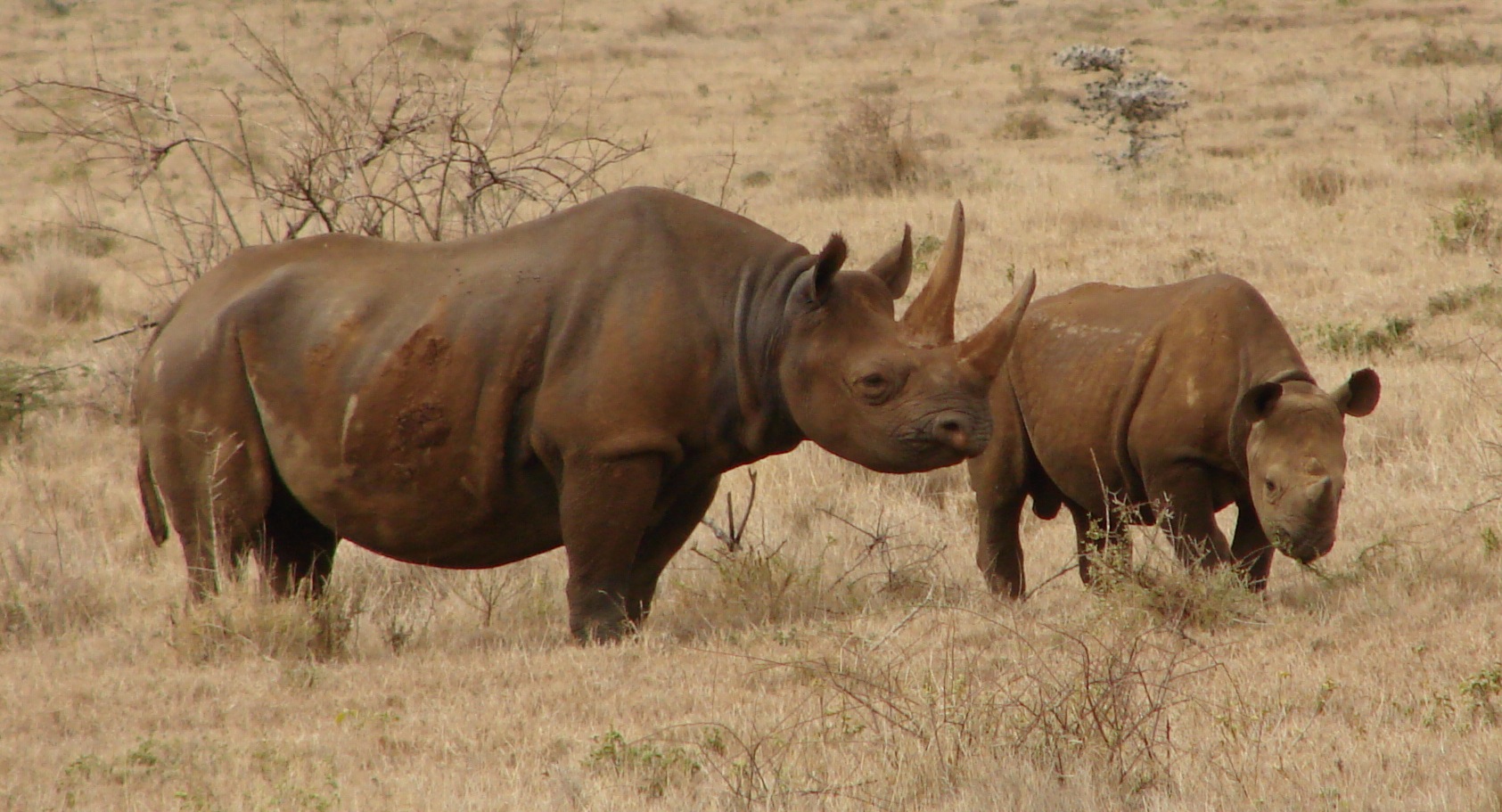
Black rhinoceros
Diceros bicornis
The species behind Sera’s 2015 sanctuary. It browses with a hooked upper lip; sightings are approached only with certified Samburu trackers and rangers.
Sera / operator-documented
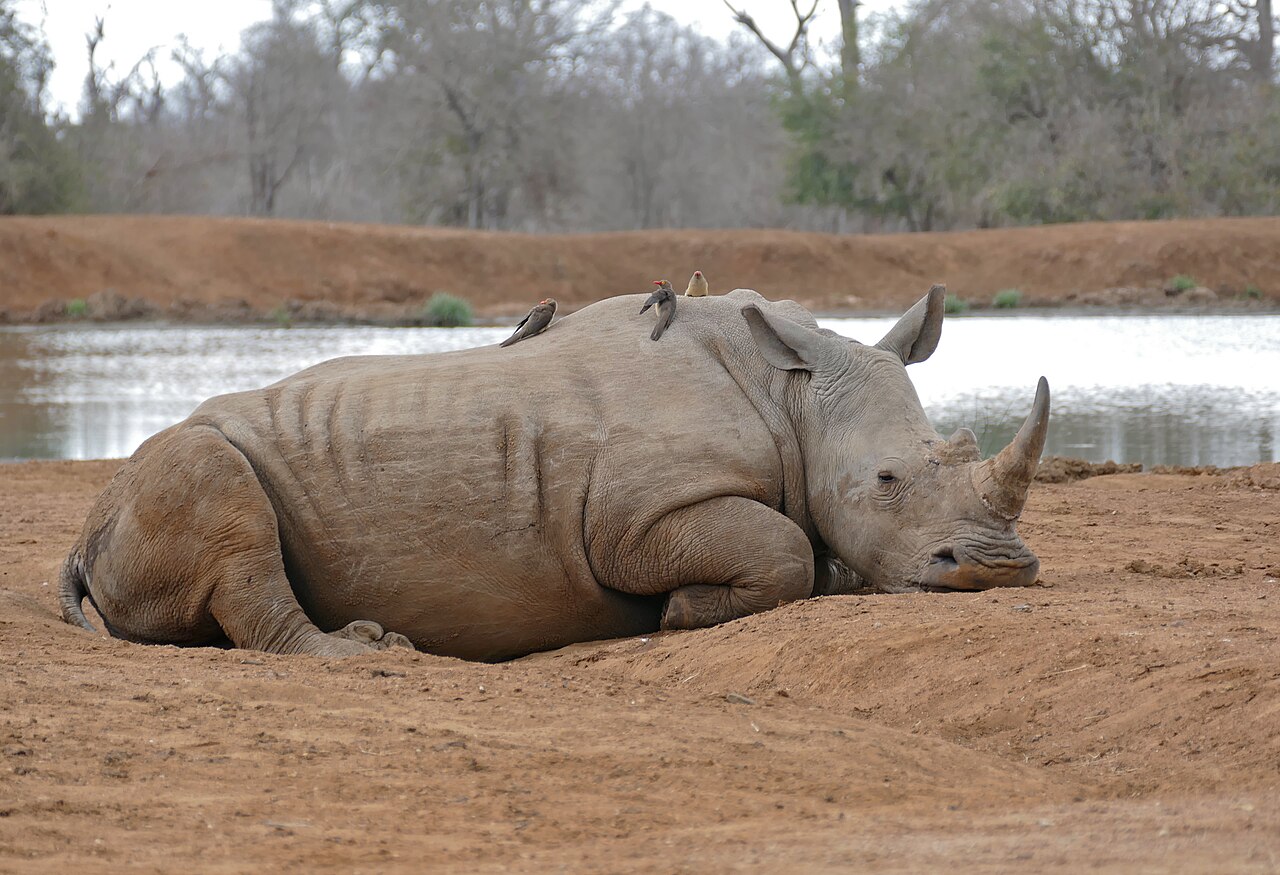
Southern white rhinoceros
Ceratotherium simum simum
Four arrived in 2024, followed by a calf. Broad square muzzle and grazing habits help distinguish this subspecies from black rhino.
Sera / operator-documented
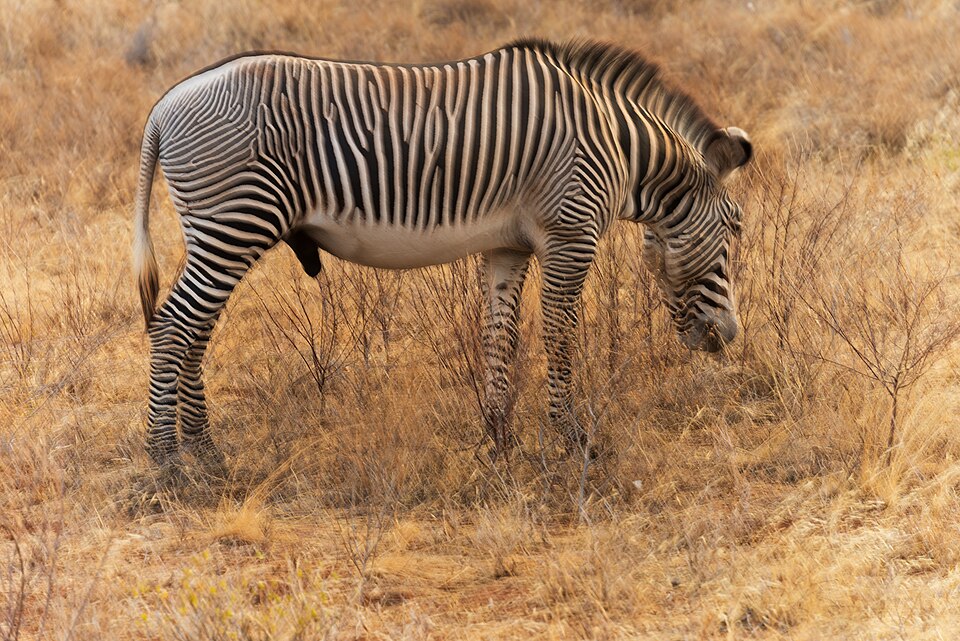
Grevy’s zebra
Equus grevyi
An endangered northern Kenyan zebra with fine stripes, a white belly and oversized rounded ears; reported in Sera’s wider landscape.
Sera / operator-documented

Plains zebra
Equus quagga
Smaller-eared zebra with broader stripes; compare carefully with Grevy’s, and ask your guide for local occurrence.
Regional identification reference
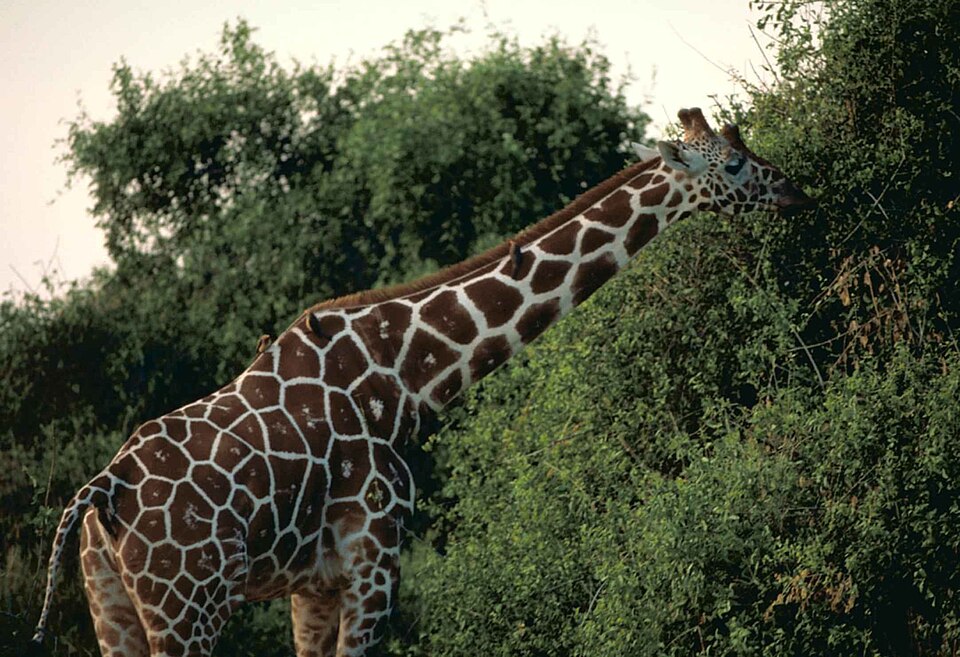
Reticulated giraffe
Giraffa reticulata
Northern Kenya giraffe, instantly recognisable by its richly patterned polygonal coat.
Sera / operator-documented
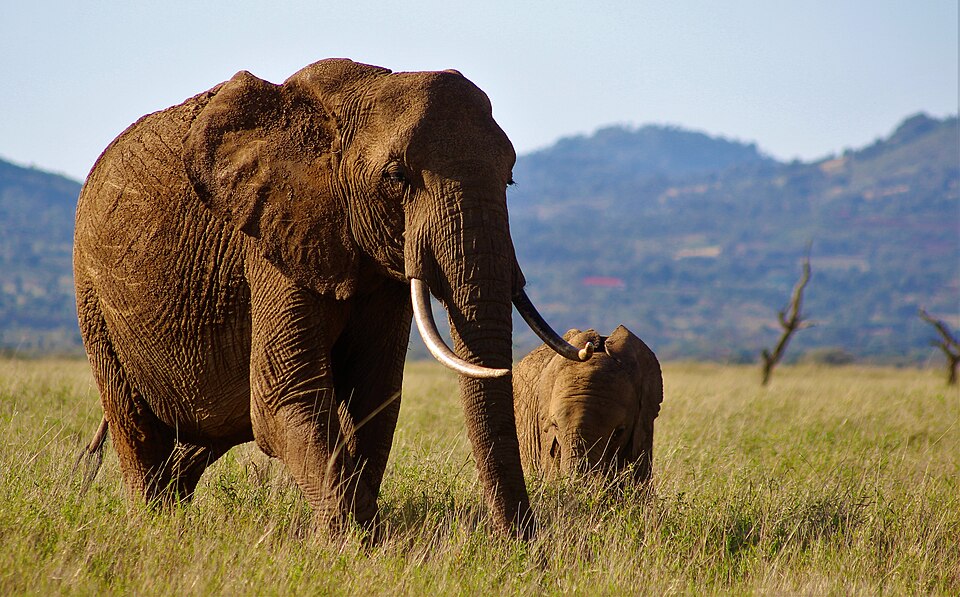
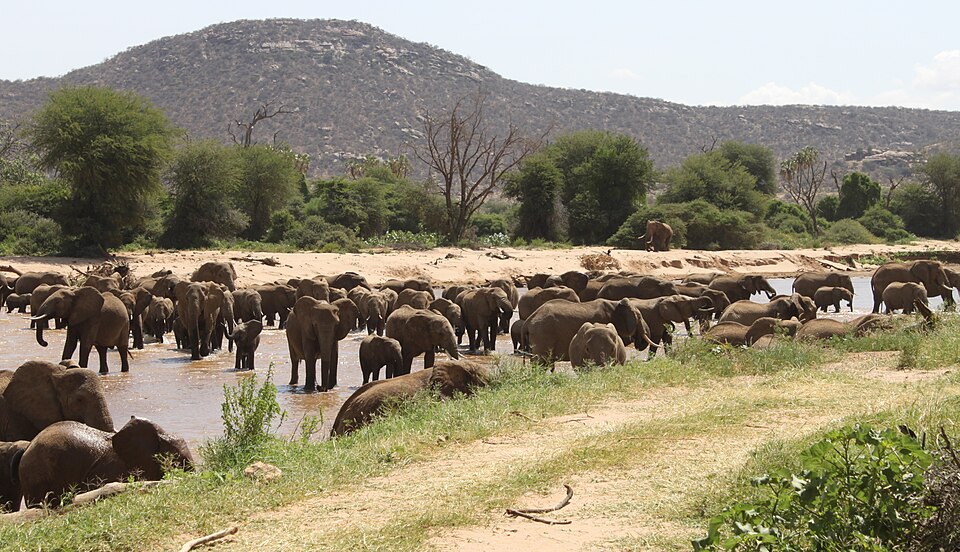
African savanna elephant
Loxodonta africana
Moves across Sera’s wide communal landscape; keep clear of groups with young calves and never block the passage to a water source.
Sera / operator-documented
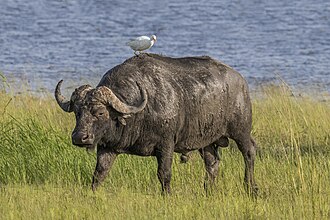
African buffalo
Syncerus caffer
Formidable grazing bovid; a wider Kenyan species reference rather than a guaranteed Sera sighting.
Regional identification reference
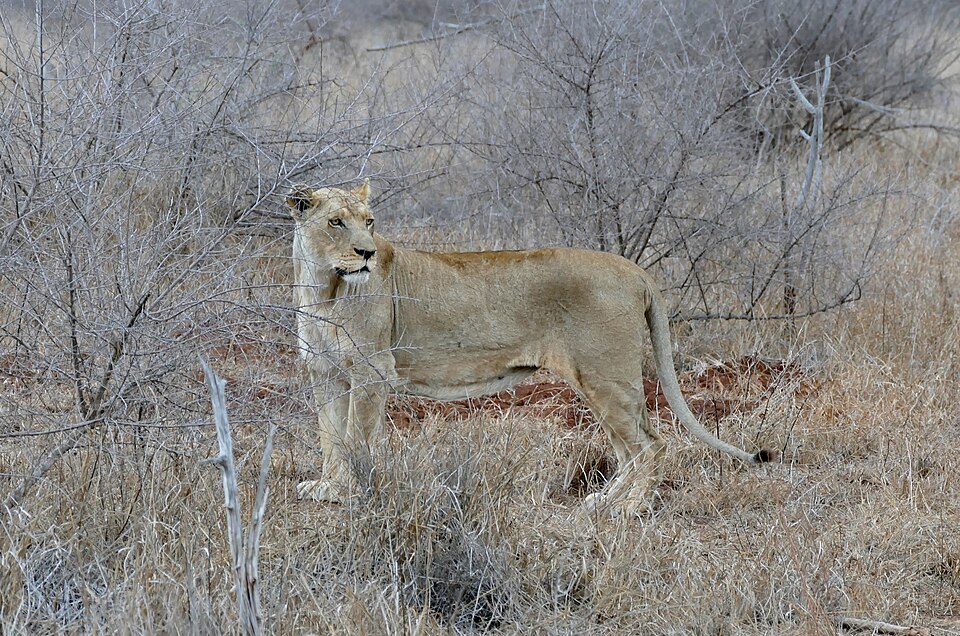
Lion
Panthera leo
A predator identified by the conservancy’s public game-drive description. Listen for calls at dawn and avoid crowding hunting animals.
Sera / operator-documented
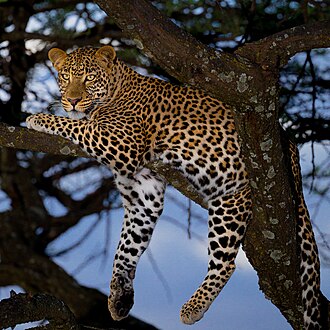
Leopard
Panthera pardus
Secretive spotted cat of rocks and thorn woodland, mentioned in Sera’s game-drive guide.
Sera / operator-documented
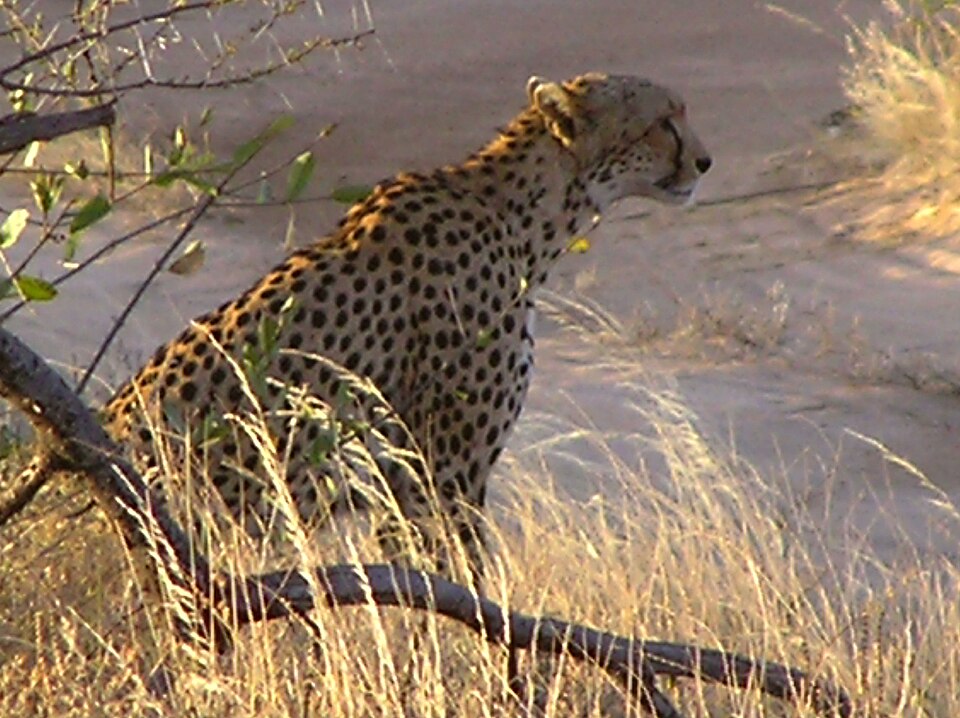
Cheetah
Acinonyx jubatus
Lean, open-country hunter; a regional northern Kenya identification comparison rather than an assured Sera resident.
Regional identification reference
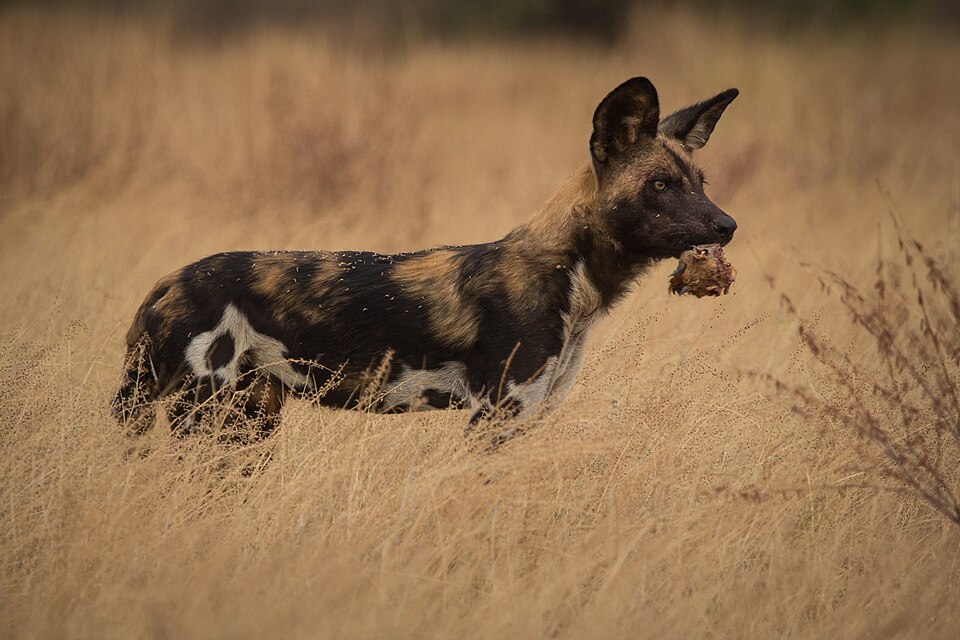
African wild dog
Lycaon pictus
Endangered pack hunter known across northern rangelands; sightings in the Sera landscape should be confirmed by local monitoring.
Regional identification reference
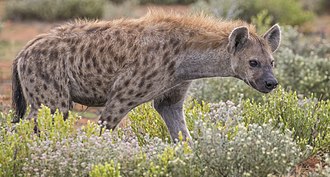
Spotted hyena
Crocuta crocuta
Powerful predator and scavenger with sloping back; regional nocturnal wildlife identification.
Regional identification reference
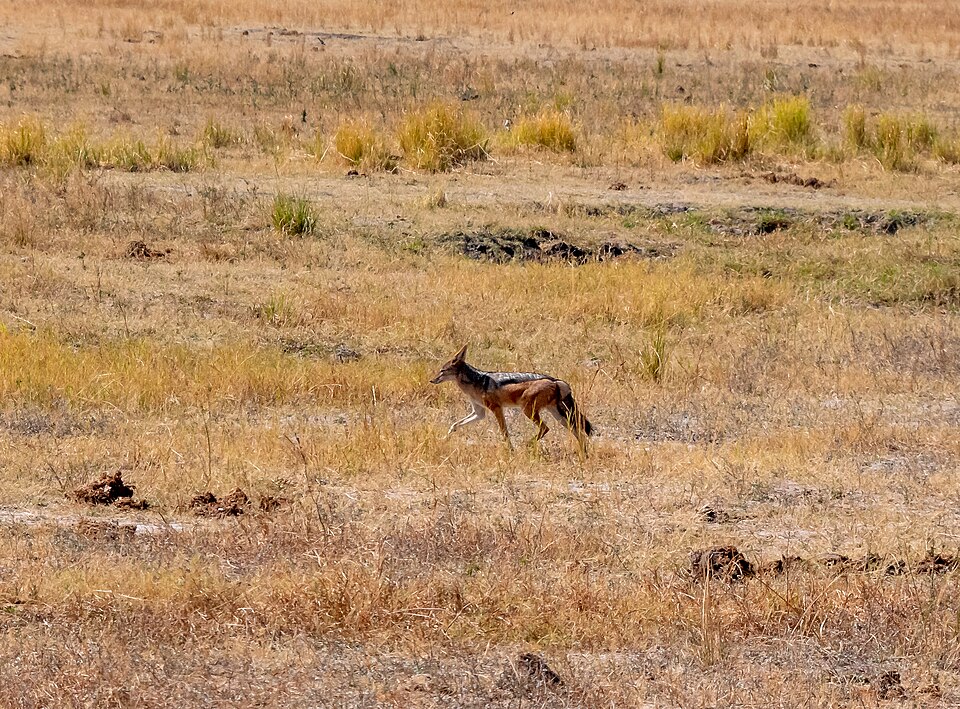
Black-backed jackal
Lupulella mesomelas
Narrow-faced small canid, frequently associated with open dry savanna and thorn scrub.
Regional identification reference
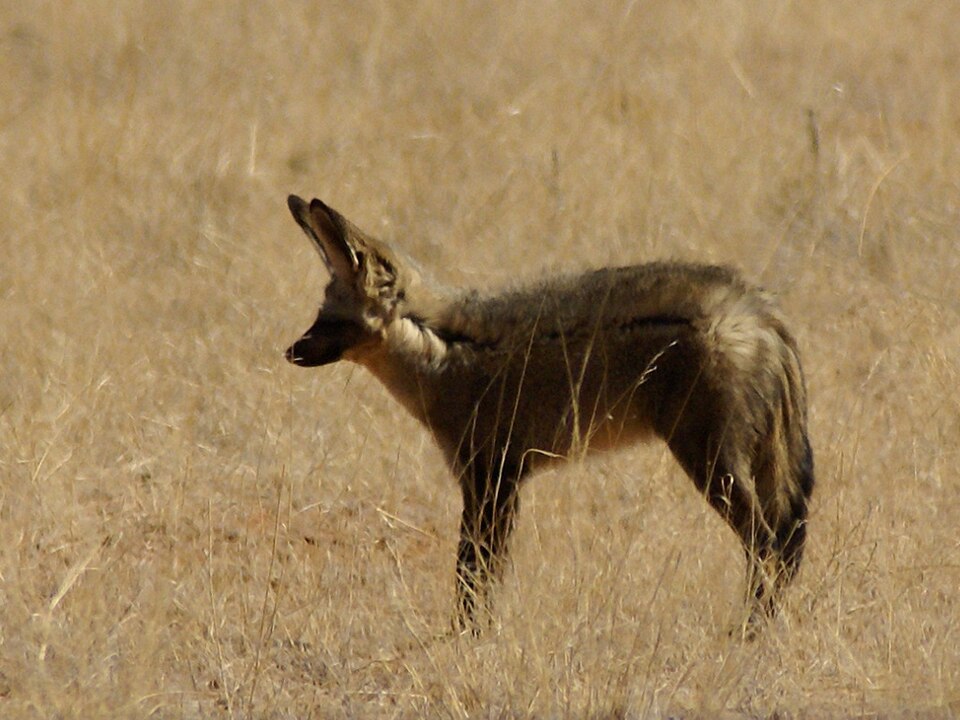
Bat-eared fox
Otocyon megalotis
Insect specialist with huge ears; an elusive dry-country species of the broader region.
Regional identification reference
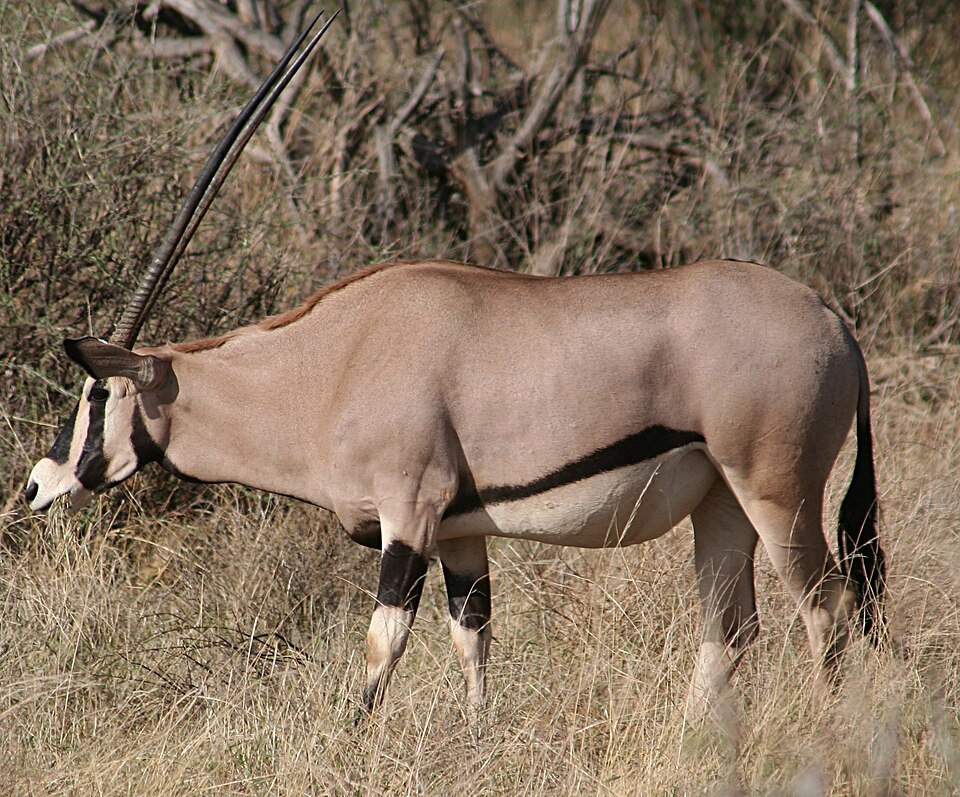
Beisa oryx
Oryx beisa
Long, straight-horned antelope and member of the northern Kenya Special Five; seen in suitable open dryland.
Sera / operator-documented
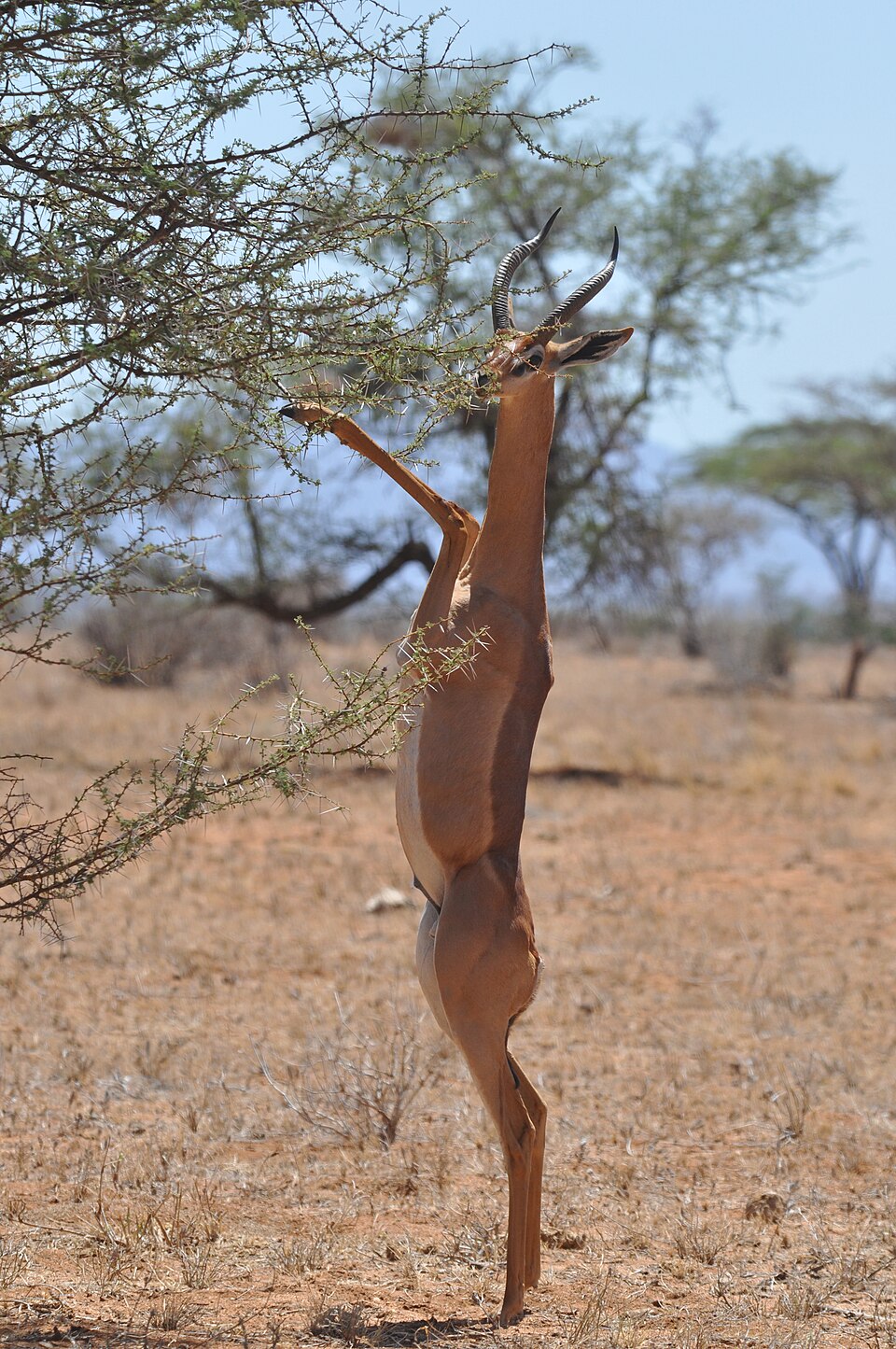
Gerenuk
Litocranius walleri
Long-necked antelope that can stand upright on hind legs to browse leaves beyond other small antelope.
Sera / operator-documented
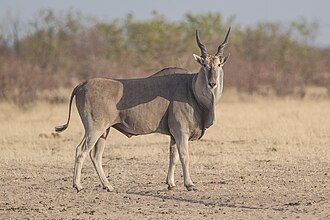
Common eland
Taurotragus oryx
Africa’s largest antelope, which may look heavy but can leap and run surprisingly fast.
Regional identification reference
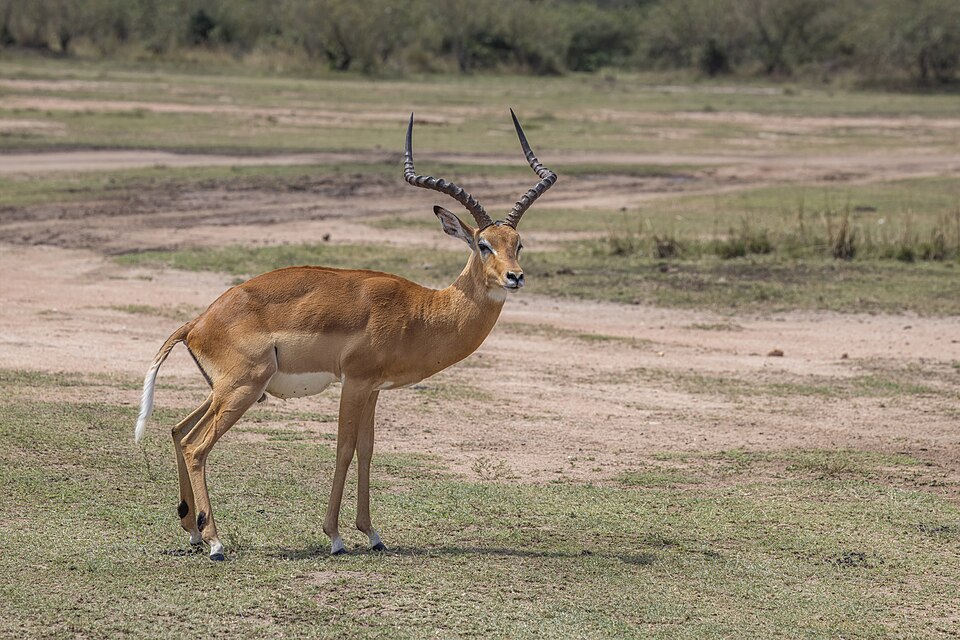
Impala
Aepyceros melampus
Graceful antelope that favours savanna edges and cover; also seen around the Saruni camp waterhole.
Regional identification reference
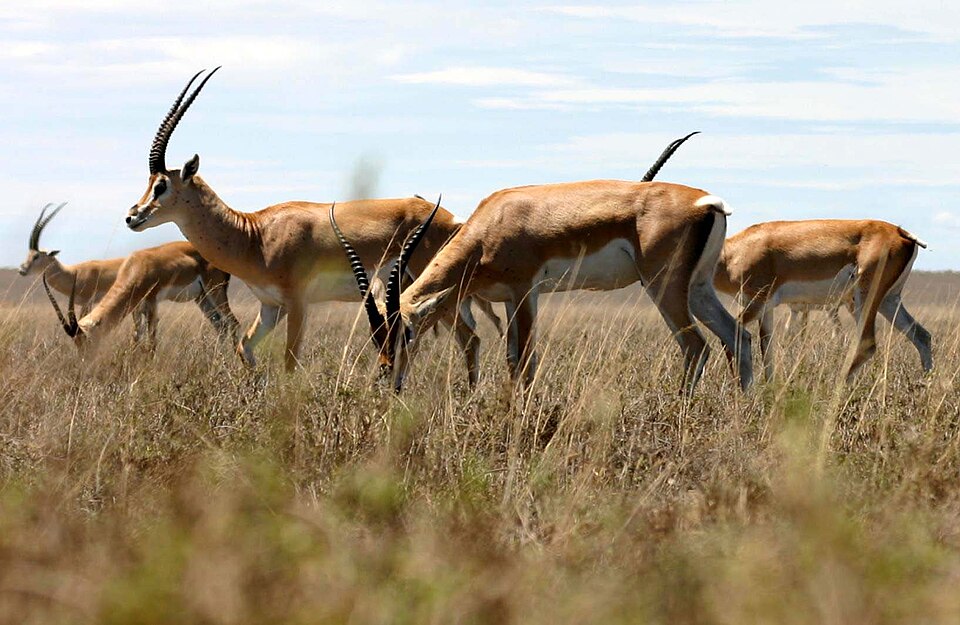
Grant’s gazelle
Nanger granti
Tall grassland gazelle of dry savanna, with distinctive rump markings and a graceful stance.
Regional identification reference
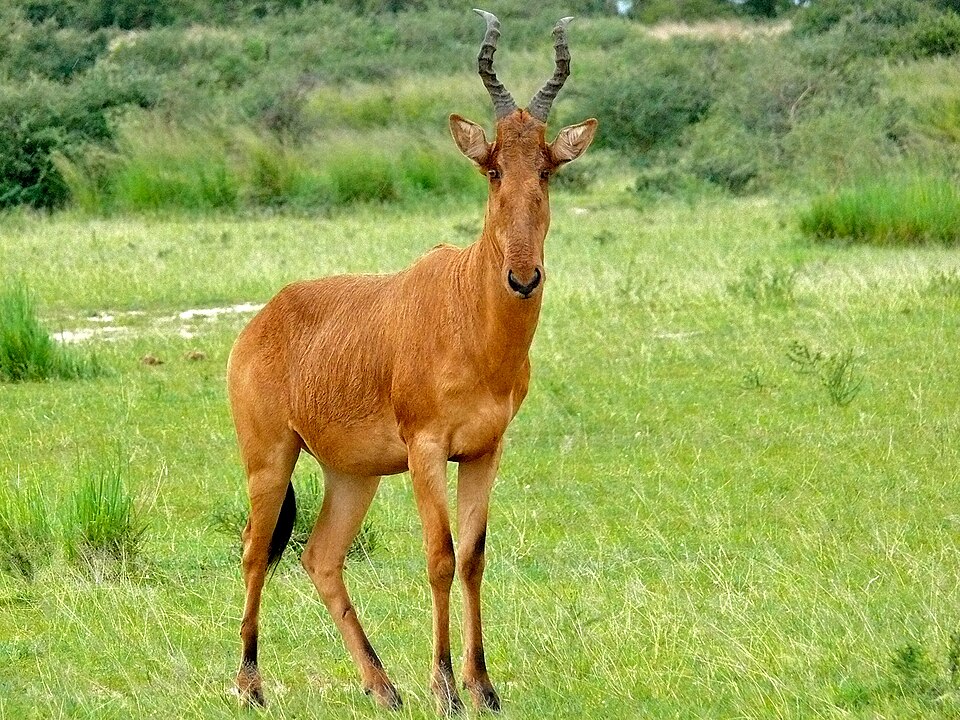
Lelwel hartebeest
Alcelaphus buselaphus lelwel
High-shouldered antelope with a long face; wider-region reference until local subspecies records are checked.
Regional identification reference
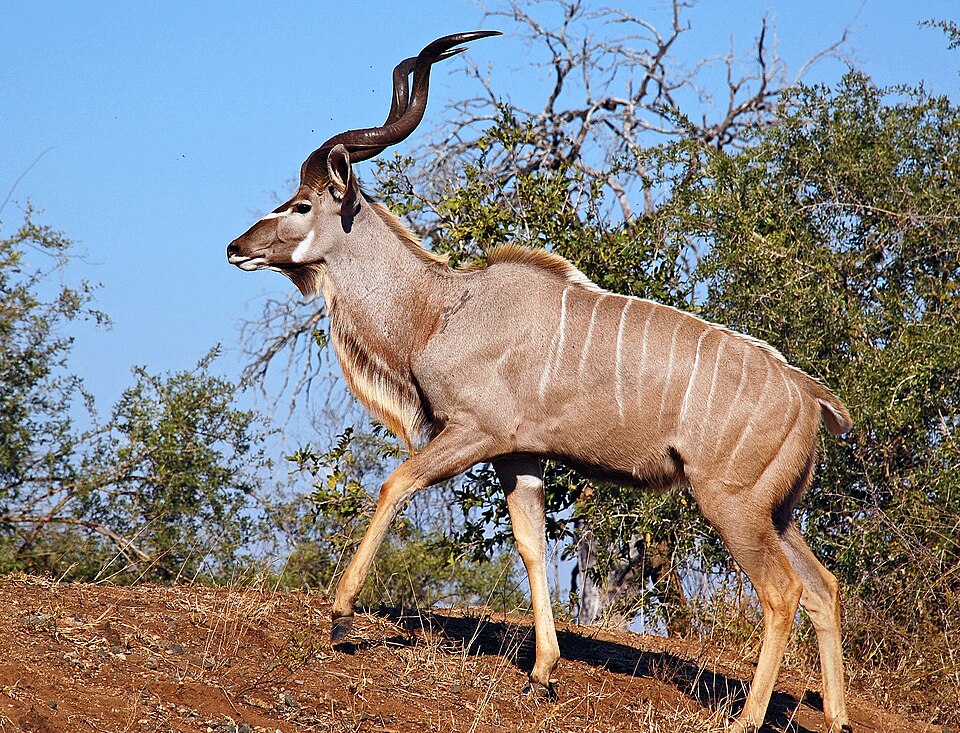
Greater kudu
Tragelaphus strepsiceros
Large woodland browser; males carry prominent spiral horns that help with identification.
Regional identification reference
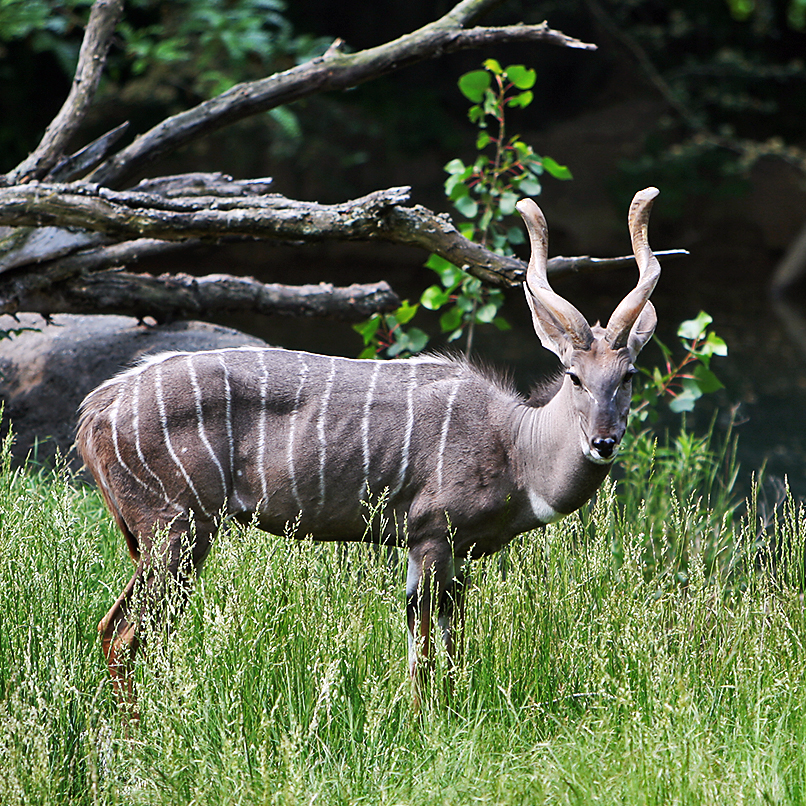
Lesser kudu
Tragelaphus imberbis
Striped dry-bush antelope; regional rather than an operator-confirmed Sera checklist entry.
Regional identification reference
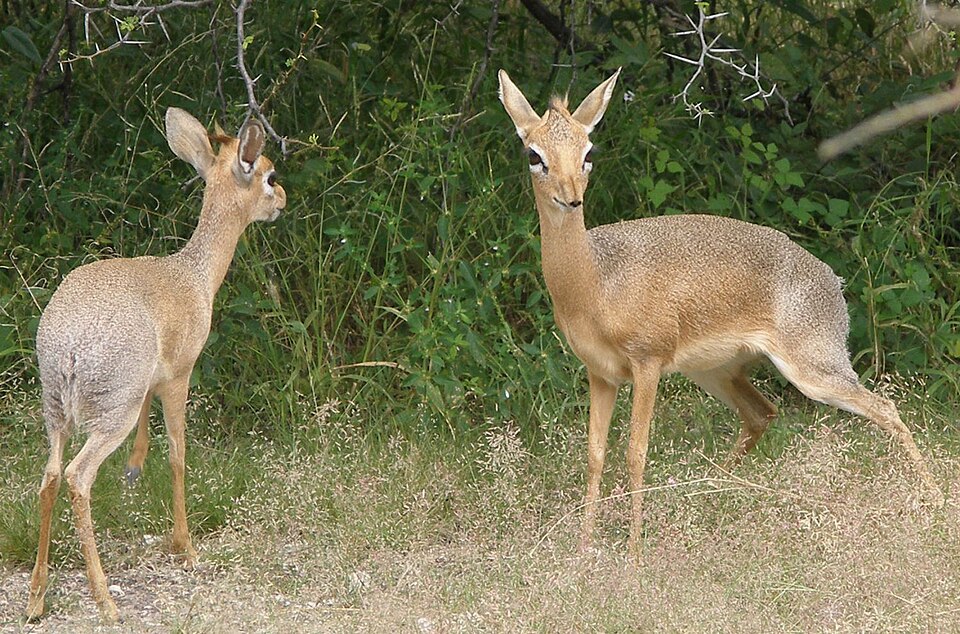
Kirk’s dik-dik
Madoqua kirkii
Tiny territorial antelope that often lives in pairs among thorn thickets.
Regional identification reference
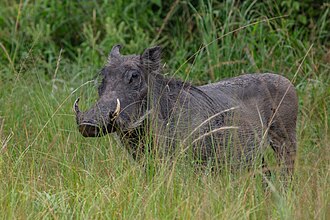
Common warthog
Phacochoerus africanus
Trotting pig with upright tail, feeding on grass roots and grazing in more open patches.
Regional identification reference
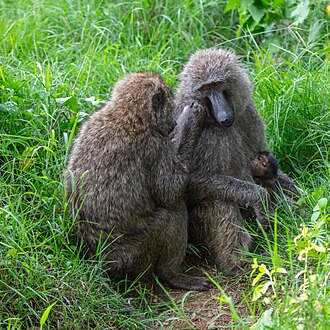
Olive baboon
Papio anubis
Intelligent troop-living primate. Do not feed wild animals or leave food unguarded.
Regional identification reference
10 northern Kenya birds to recognise at or around Sera
Sera’s official visitor page describes more than 300 bird species, from hornbills to eagles and vultures. Birders should look for ground birds among open plains, hornbills in tree cover and raptors riding thermals. The profiles below are regional species-reference photographs; each bird’s current seasonal presence must be checked with local guides.
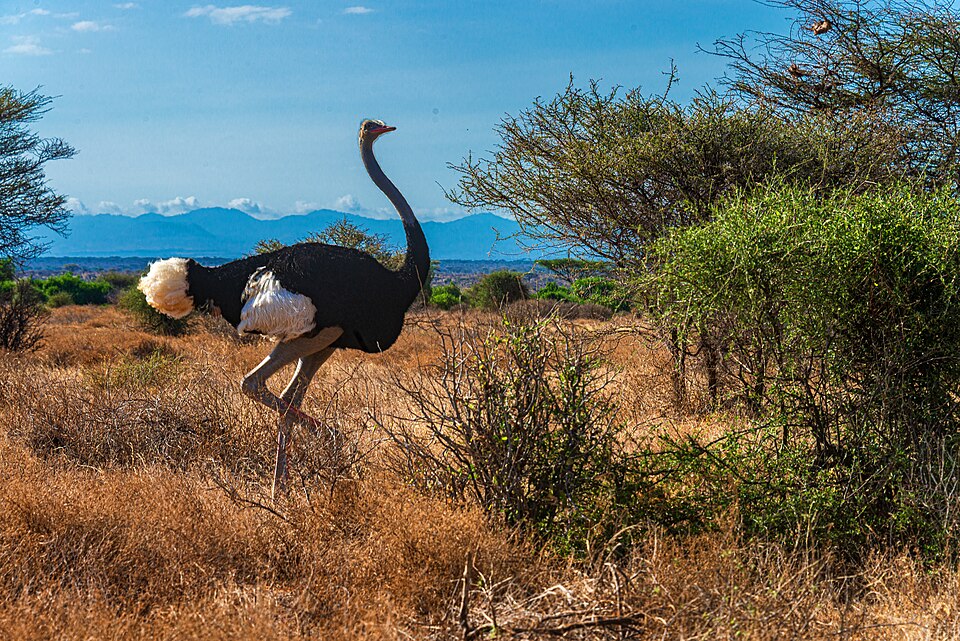
Somali ostrich
Struthio molybdophanes
A flagship northern Kenya species and part of the Samburu Special Five; adult males show distinct blue-grey neck skin.
Regional field reference
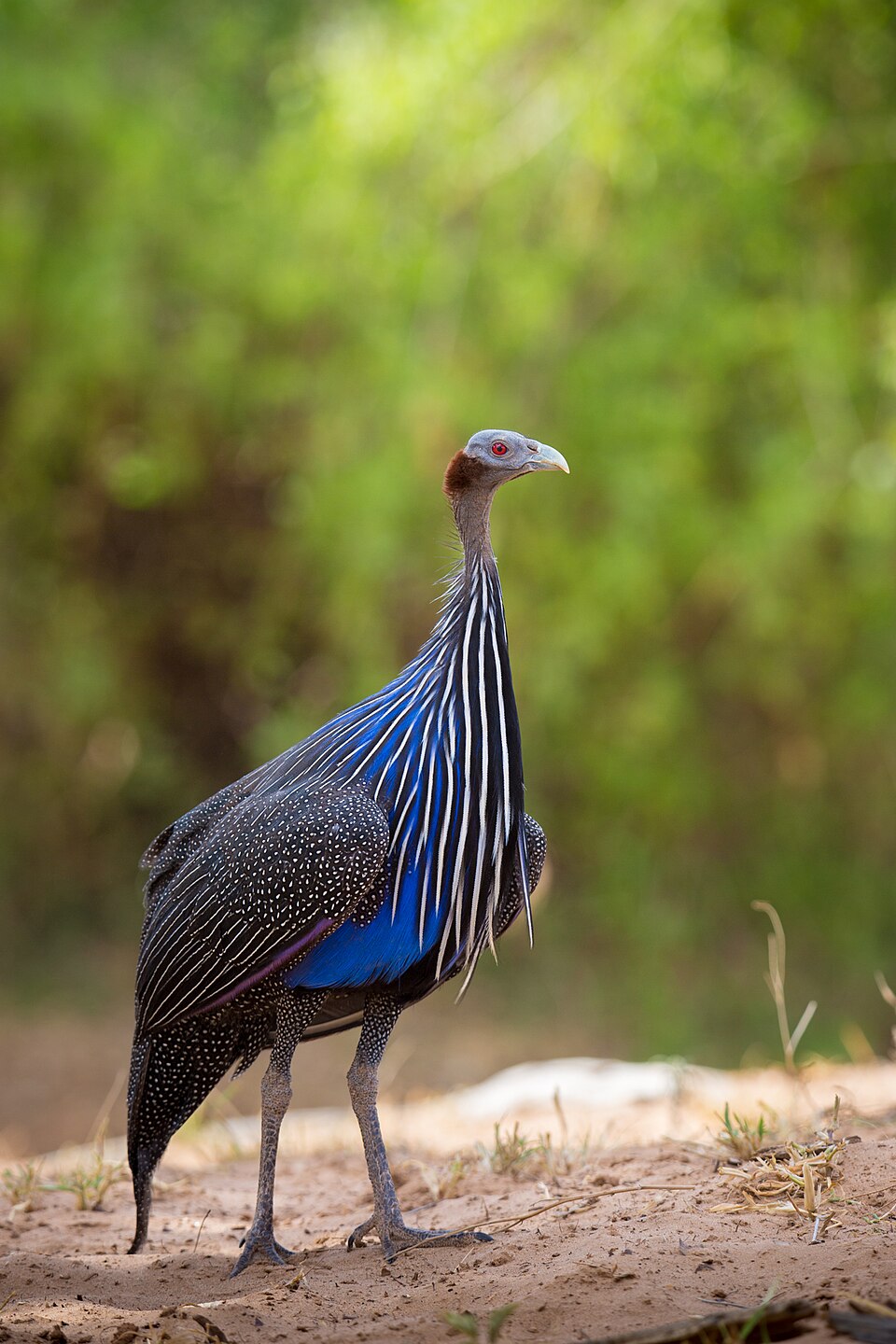
Vulturine guineafowl
Acryllium vulturinum
Bright blue breast and boldly patterned feathering; often travels in dry-country flocks.
Regional field reference
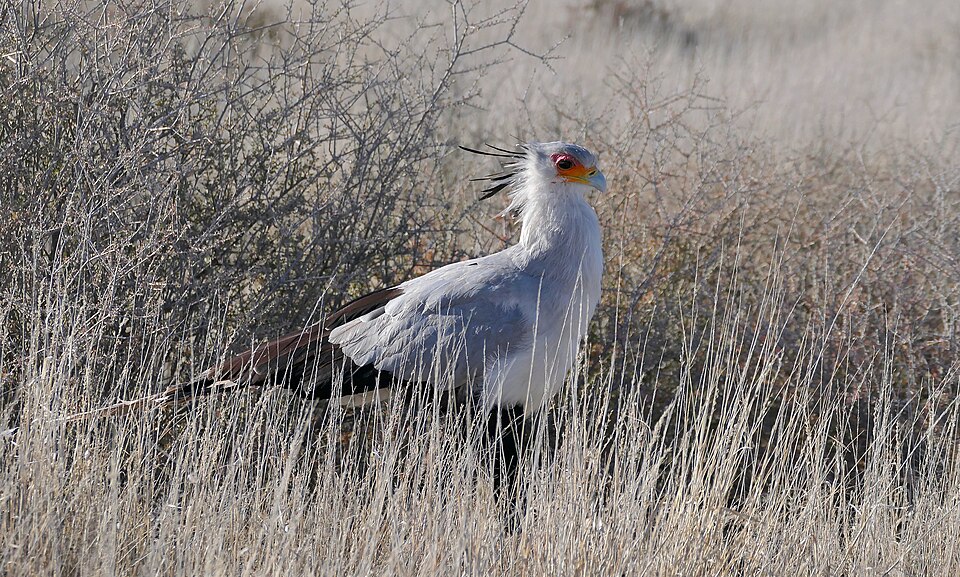
Secretarybird
Sagittarius serpentarius
Tall, long-legged grassland raptor that hunts on foot.
Regional field reference

Martial eagle
Polemaetus bellicosus
Powerful eagle; one of several large raptors worth scanning for above open country.
Regional field reference
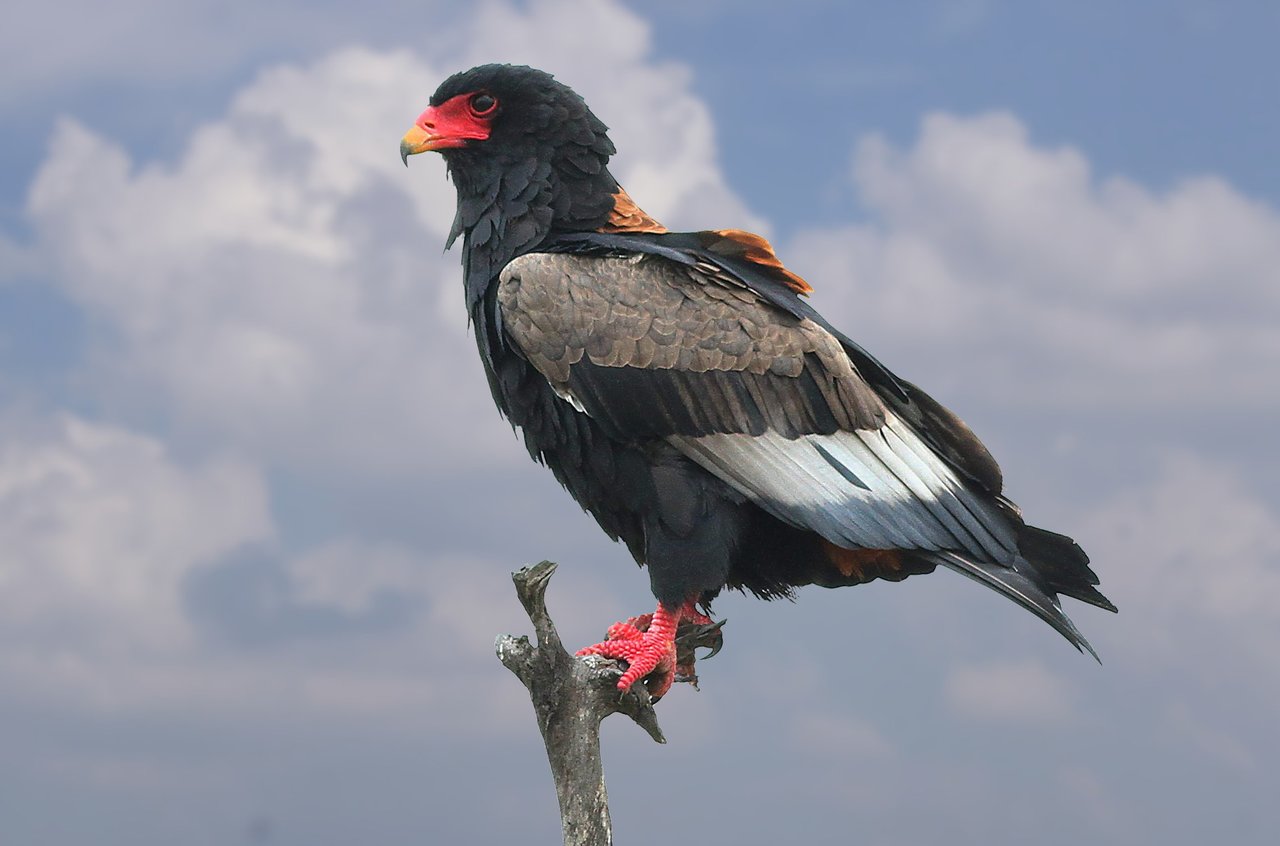
Bateleur
Terathopius ecaudatus
Short-tailed eagle with a rocking flight, often seen high in the skies.
Regional field reference
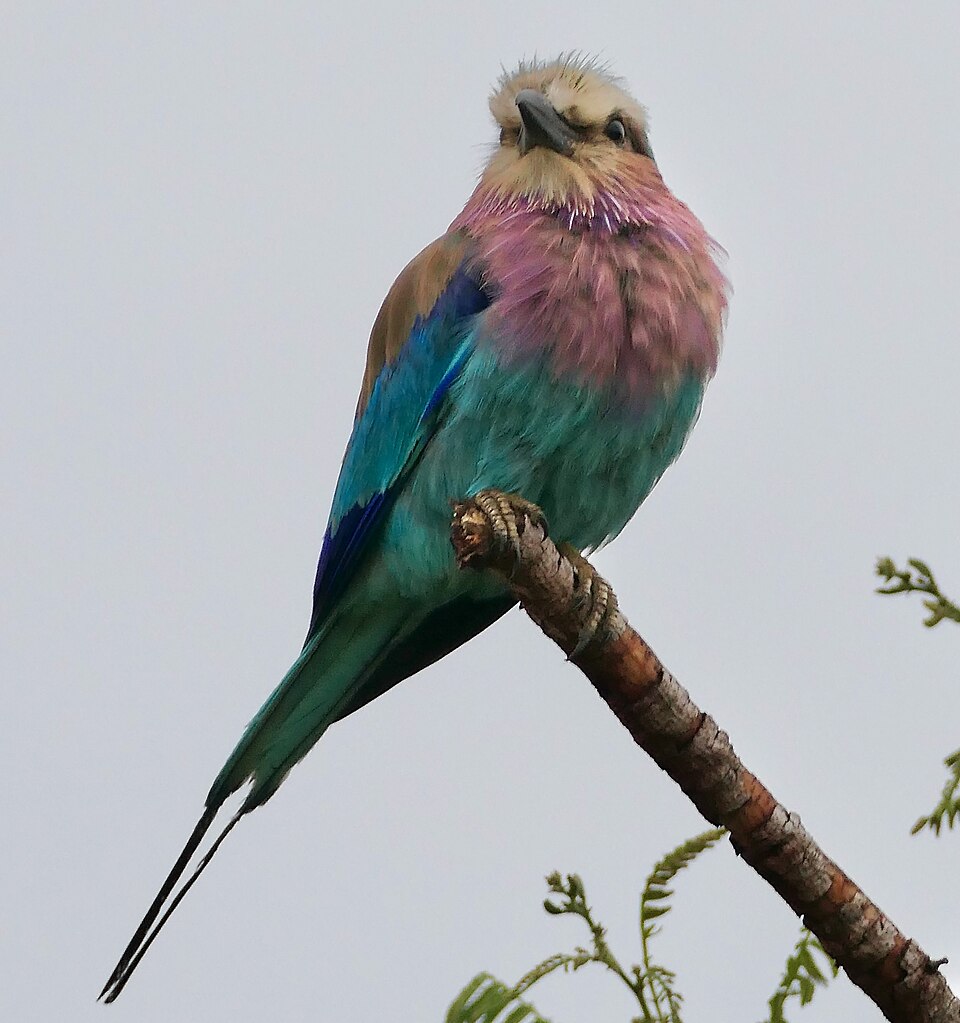
Lilac-breasted roller
Coracias caudatus
Brightly coloured perch-hunting bird, often seen near tracks and open branches.
Regional field reference
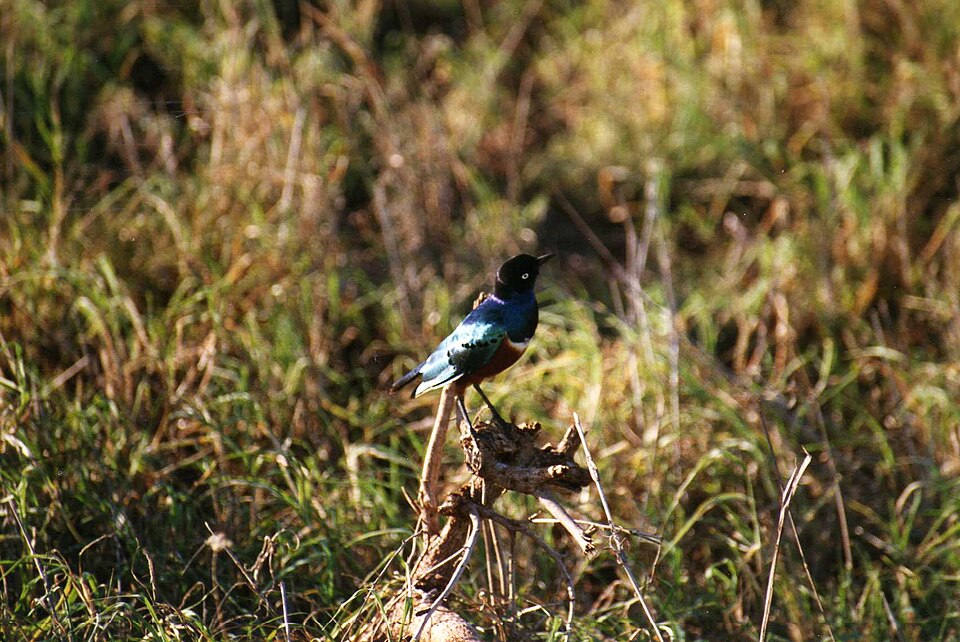
Superb starling
Lamprotornis superbus
Brilliant iridescent blue with chestnut underparts; common in many northern Kenyan camps.
Regional field reference
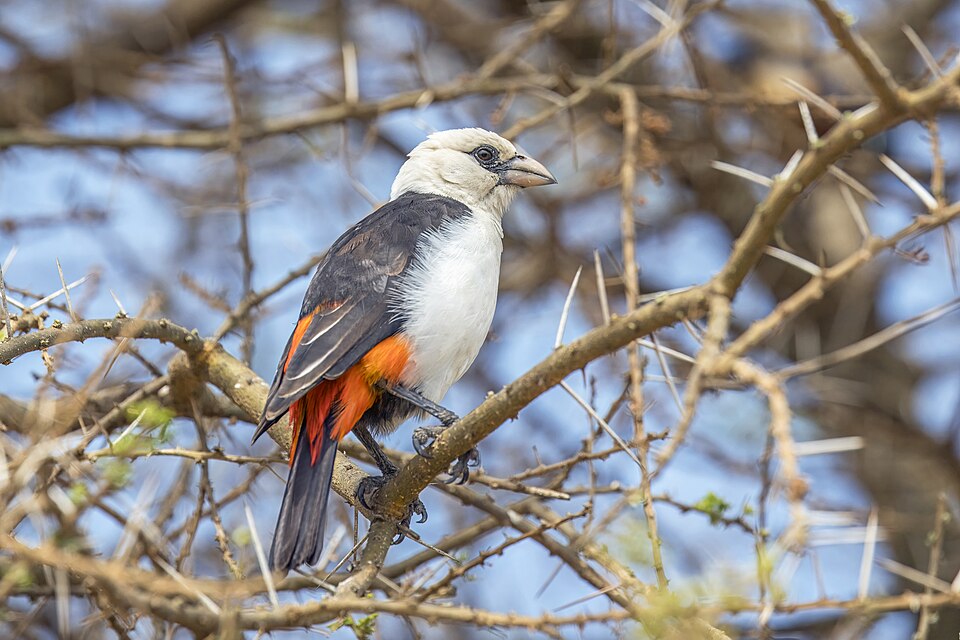
White-headed buffalo weaver
Dinemellia dinemelli
Large pale-headed black-and-white weaver that frequents thorn trees.
Regional field reference
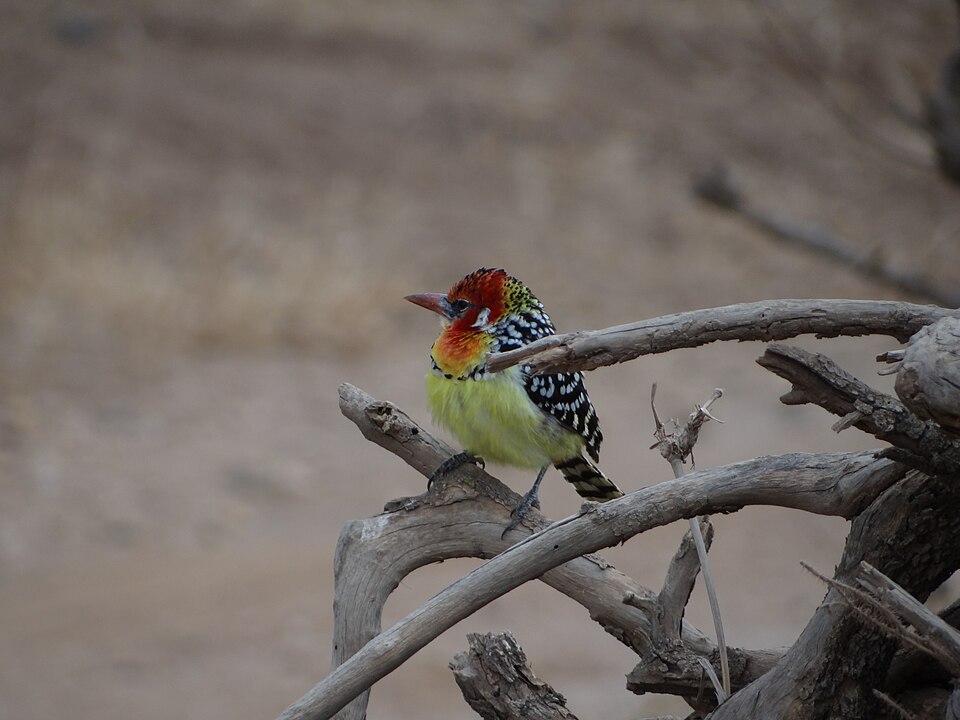
Red-and-yellow barbet
Trachyphonus erythrocephalus
Dry scrubland bird with bright patchwork plumage and loud calls.
Regional field reference
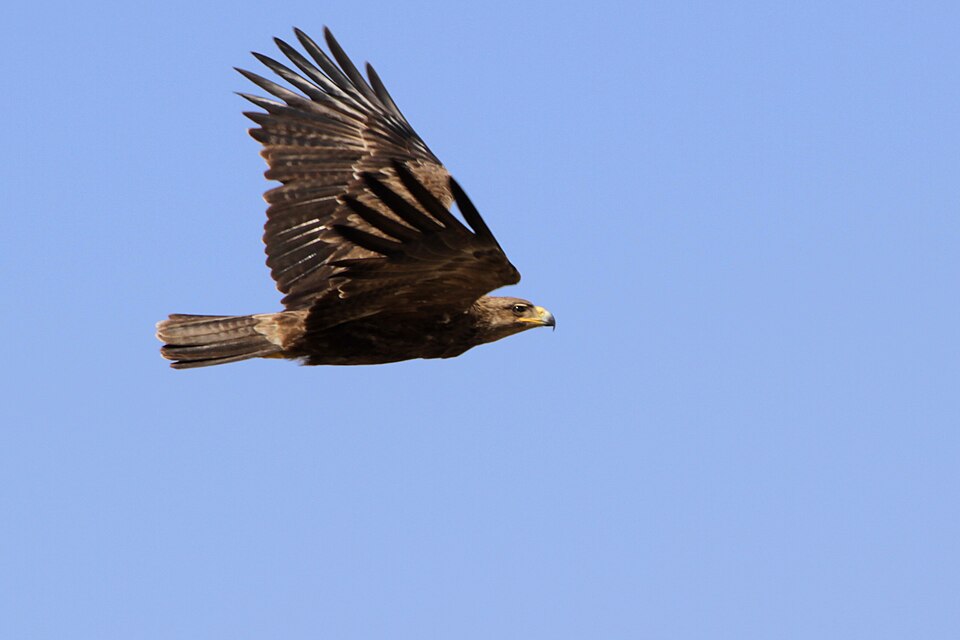
Tawny eagle
Aquila rapax
Brown raptor of open savanna; identification requires caution because several eagle species look similar.
Regional field reference
10 trees, shrubs and grasses of the dry northern rangelands
Sera’s open thorn scrub, sparse woodland, seasonal watercourses and dramatic dry riverbeds shape its wildlife. Around Saruni Rhino, doum palms frame the waterhole and dry lugga, while acacia and other thorn trees provide food and shade. The following plant cards are wider northern Kenya habitat identification examples rather than a parcel-by-parcel botanical inventory of Sera.
Dryland vegetation & seasonal water
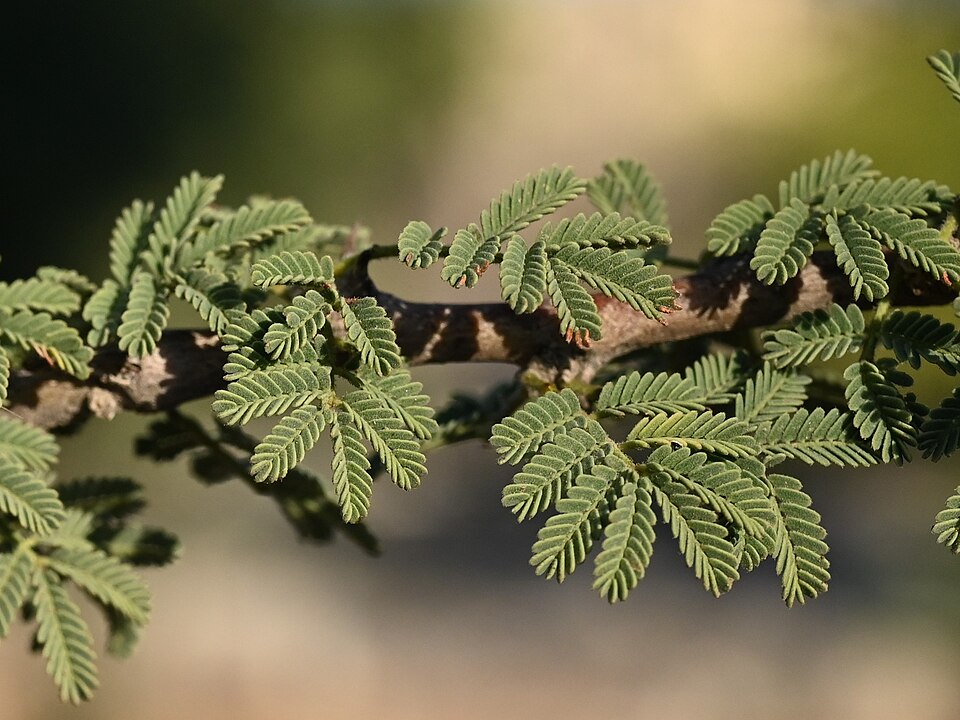
Umbrella thorn
Vachellia tortilis
Characteristic broad-crowned thorn tree, important for shade, birds and browse.
Regional plant reference
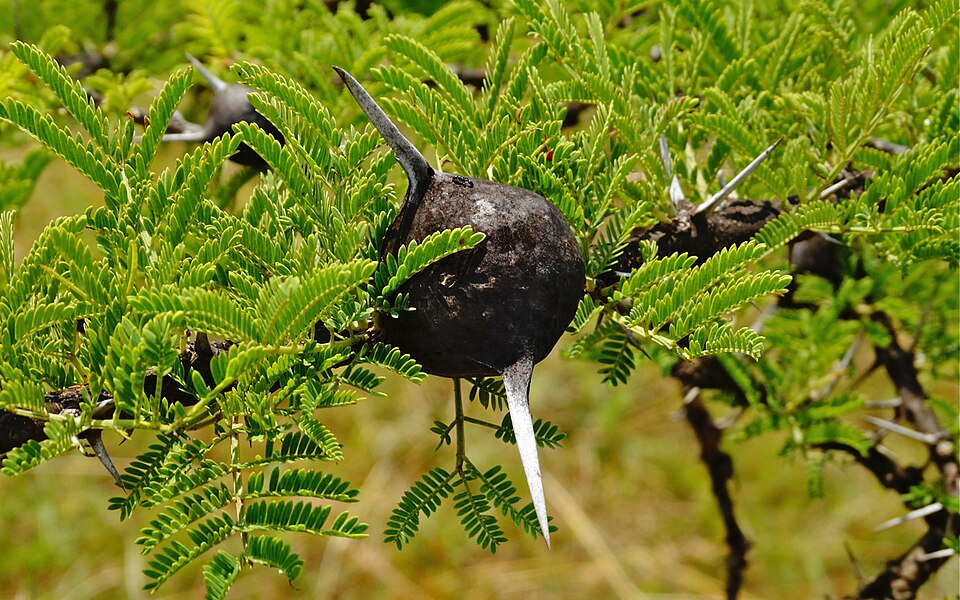
Whistling thorn
Vachellia drepanolobium
Ant-associated acacia of higher savanna; inclusion here is a regional reference, not confirmed Sera vegetation.
Regional plant reference
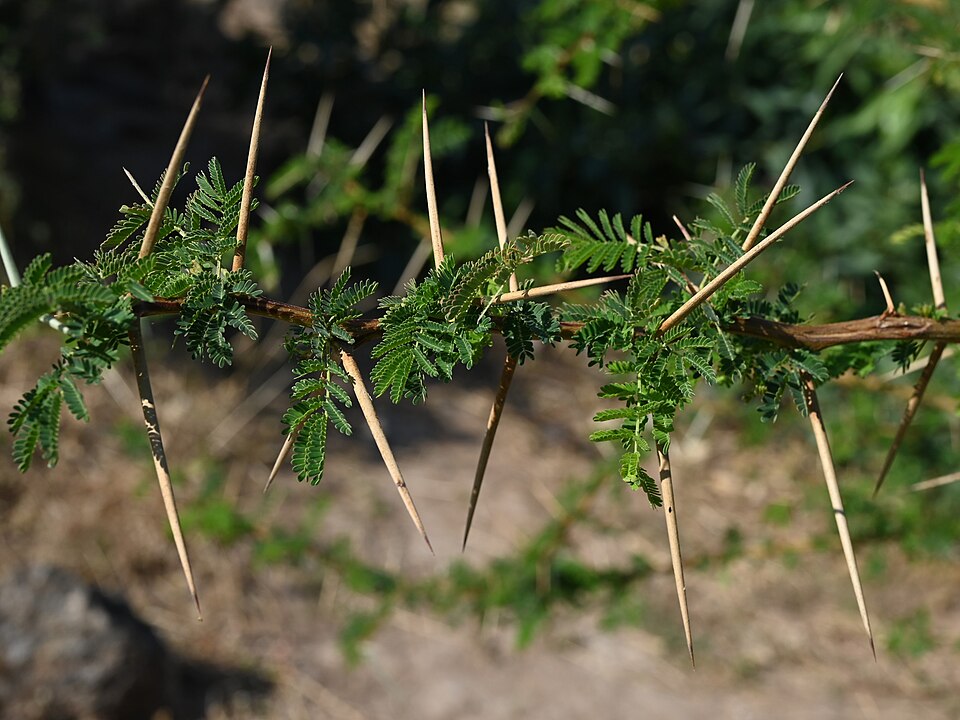
Gum arabic acacia
Senegalia senegal
Dryland thorn tree in appropriate northern woodland niches.
Regional plant reference
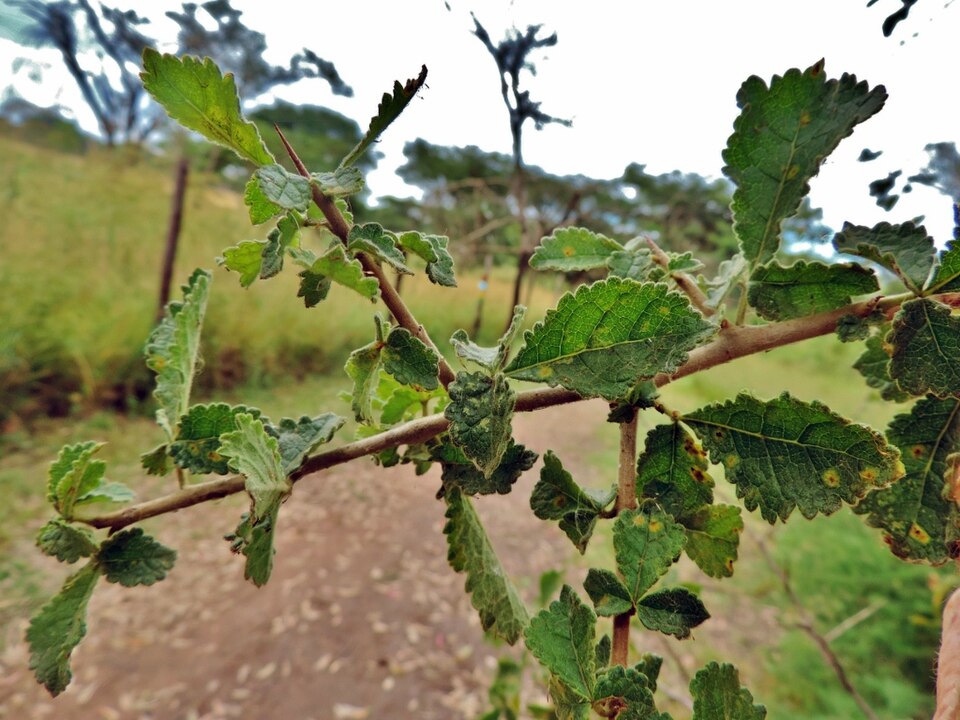
Commiphora shrubs
Commiphora spp.
Fragrant, resinous trees and bushes among drier scrub communities.
Regional plant reference
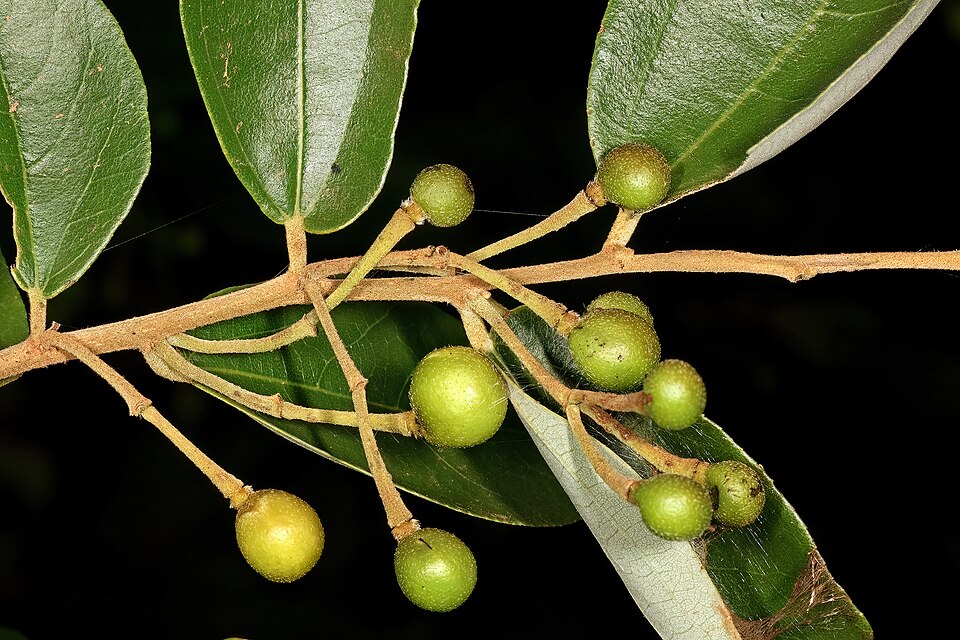
Grewia shrubs
Grewia spp.
Small-leaved woody browse plants that also bear seasonal fruit.
Regional plant reference
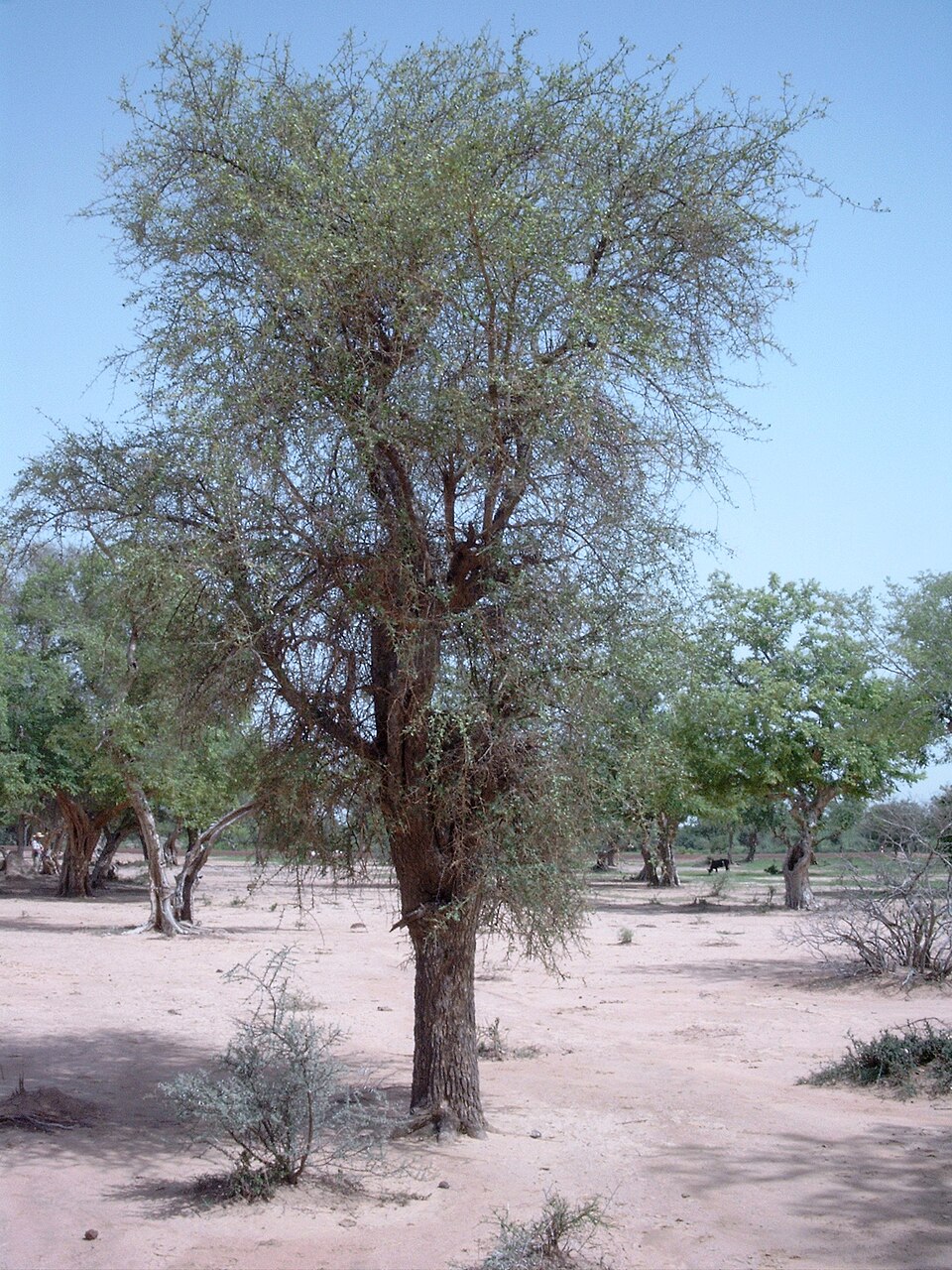
Balanites / desert date
Balanites aegyptiaca
Dryland tree with spiny branches and fleshy fruits.
Regional plant reference
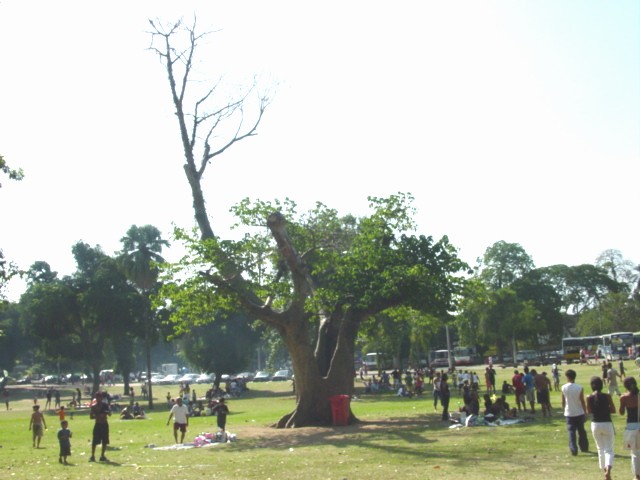
Riverine figs
Ficus spp.
Trees close to wetter riparian stretches, providing shade and fruit for wildlife.
Regional plant reference
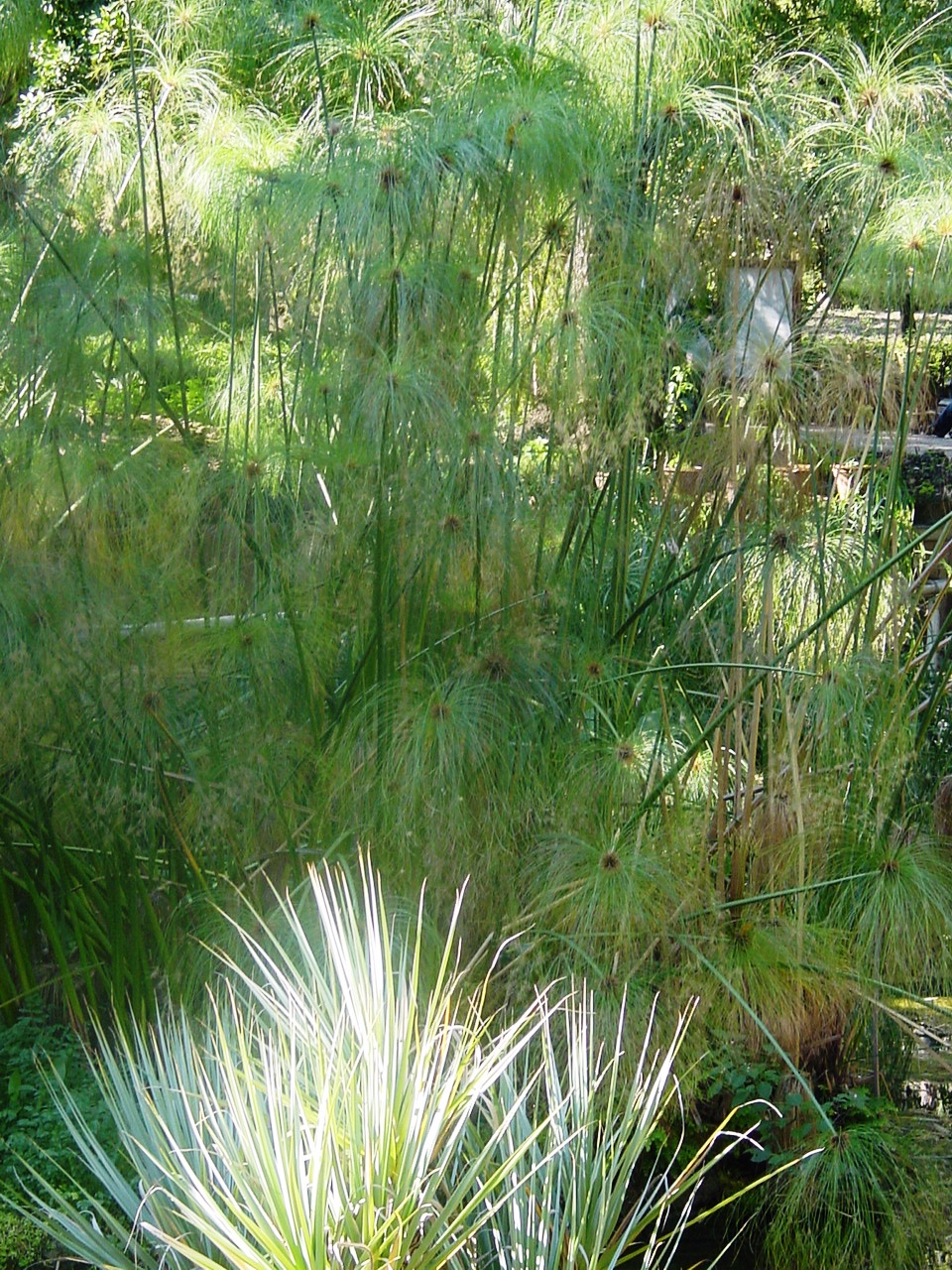
Sedge and rush margins
Cyperaceae and related families
Wet margins of seasonal streams and waterholes may shelter birds and amphibians.
Regional plant reference
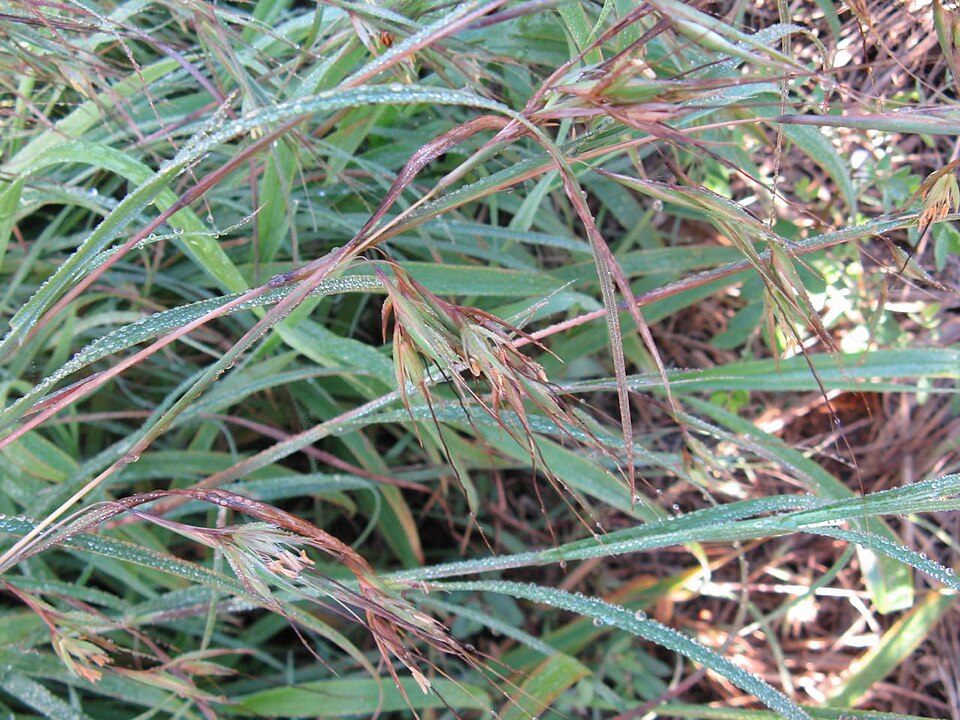
Red oat grass
Themeda triandra
Grazing-associated savanna grass; often colours golden or reddish late in the season.
Regional plant reference
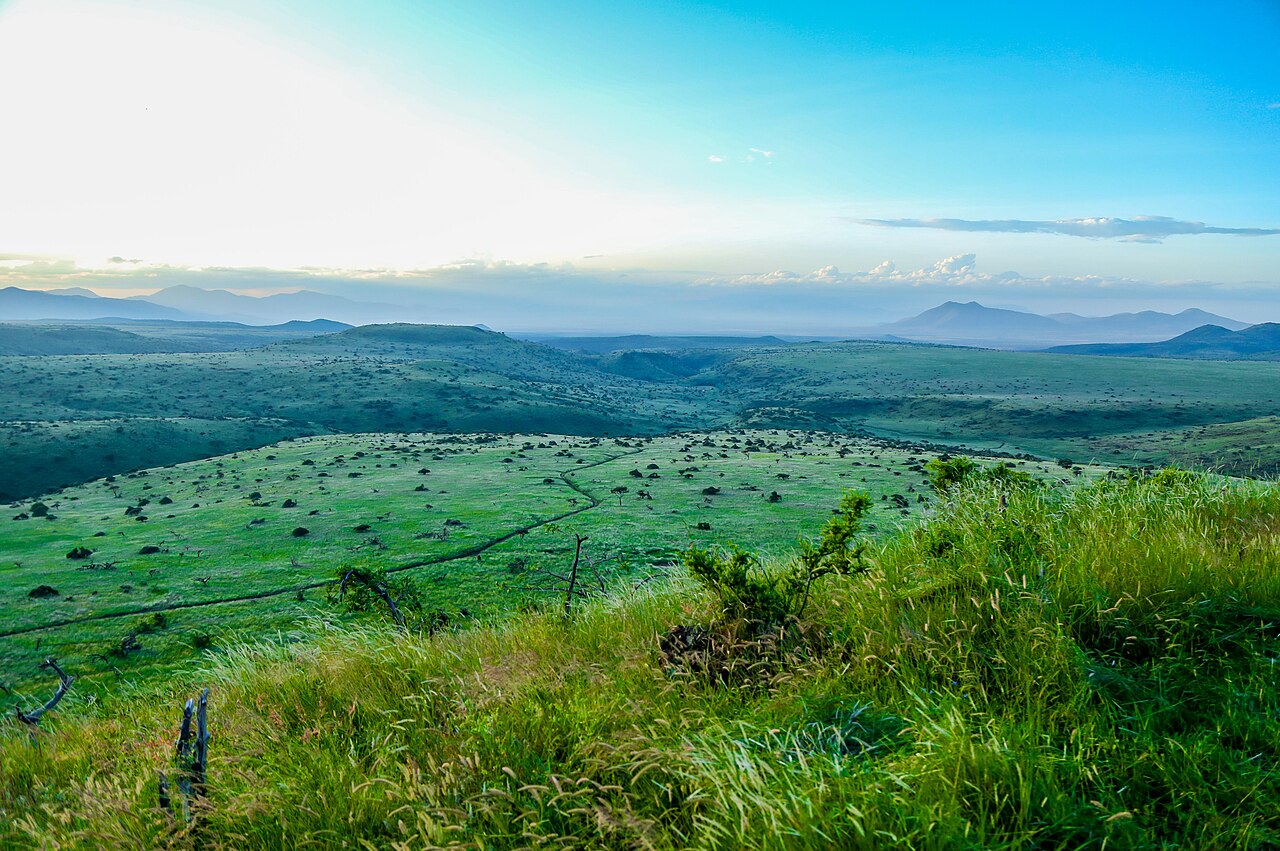
Mixed native grasses
Poaceae
Vital cover and forage; recovery of perennial grasslands is a key rangeland management theme.
Regional plant reference
Wildlife experiences and Samburu culture at Sera
Black rhino tracking on foot
The headline conservation experience. With a trained Samburu guide and Sera armed ranger, learn to read signs in the bush while searching for an endangered rhino under strict safety rules. Activity length, walking distances and approach permissions depend on conditions; the Saruni lodge policy requires participants to be 18 or older.
Guided game drives
Sera advertises drives through habitats used by elephants, reticulated giraffes, Grevy’s zebras, lions and leopards. For visitors in their own vehicles, coordinate the route and accompanying guide in advance. Do not drive independently inside the rhino sanctuary.
Birdwatching
The conservancy reports more than 300 species. Scan doum palm groves, thorn woodland and water points for hornbills, guineafowl, rollers, eagles and vultures. Ask for season-specific checklists.
Samburu singing wells
Some communities sing while drawing water for livestock; these are living pastoral traditions, not scheduled performances. Visits require local consent and guidance, and may not be possible every day.
Ancient rock art
Sera’s visitor site describes red-ochre rock markings near the Kisima Hamsini waterhole. Visit only with an approved community guide. The exact point is intentionally not pinned on the public map.
Community cultural visits
Learn about Samburu pastoral traditions and conservation efforts through arranged encounters in a manyatta. Ask about community fees and appropriate photography consent.
Ranger-escorted camping
Bring your own tent, food and adequate water. Sera allows designated campsites within and outside the sanctuary but requires a ranger escort. Basic facilities vary; confirm before setting off.
Reference: Sera’s official experiences and rates · Saruni’s safety and age-policy update.
Where to stay for Sera Rhino Sanctuary & Expedia links
Where you sleep determines how you visit. Sera’s official website identifies Saruni Rhino as the only lodge inside the conservancy, with small stone bandas by a dry riverbed. Self-sufficient, ranger-escorted camping is the alternative. Other named lodges below are in different protected areas, suitable for wider Samburu itineraries rather than instant access to Sera.
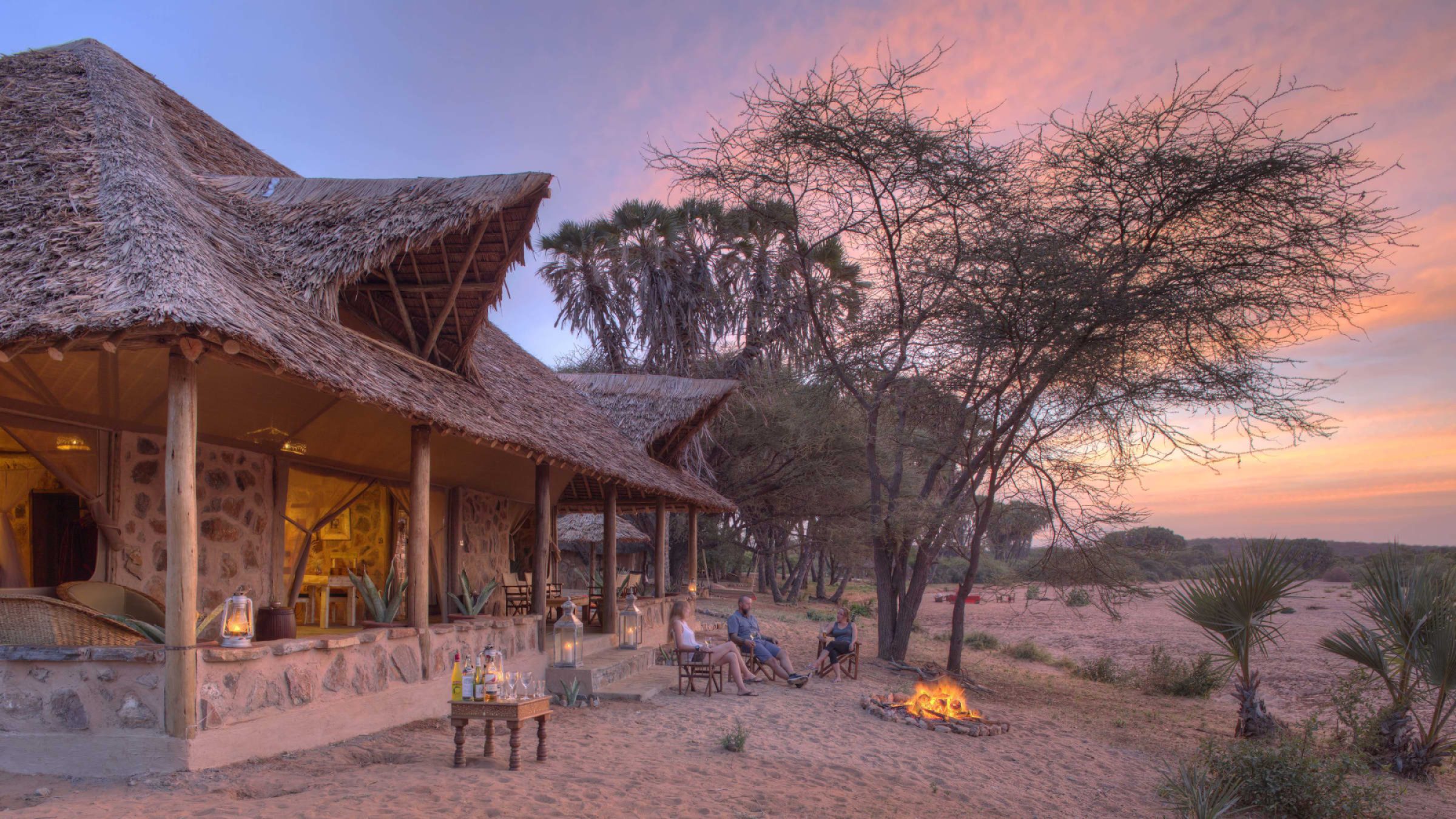
Saruni Rhino
Sera’s only permanent safari lodge, offering small-group rhino tracking, four private stone-and-thatch bandas, a natural waterhole and Samburu guiding. The operator advertises rates from USD 500; confirm rate basis, minimum stay, conservancy contributions and all inclusions. On-foot tracking via Saruni is for ages 18+.
Actual Saruni Rhino property photo via Mahlatini Luxury Travel.
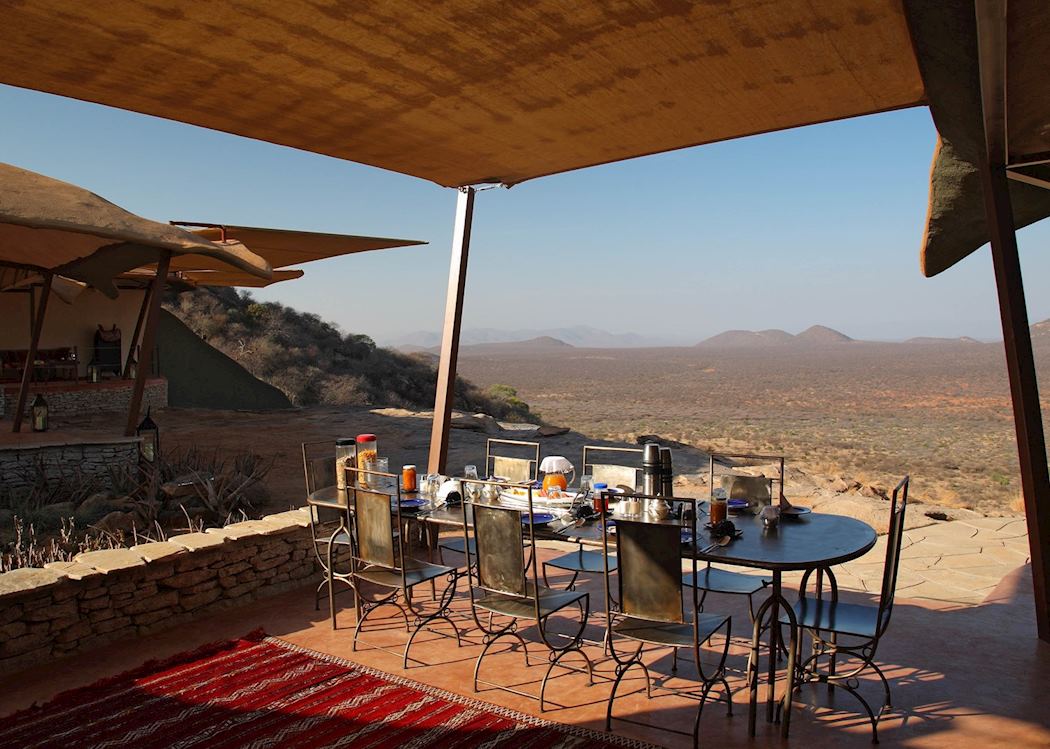
Saruni Samburu
Another Saruni Basecamp property in neighbouring Kalama, often paired with Saruni Rhino as a two-conservancy itinerary. The Sera lodge describes a roughly 90-minute transfer between properties. A Kalama booking does not include permission to track rhinos in Sera.
Explore Saruni Samburu directly
Actual Saruni Samburu terrace photo via Audley Travel.
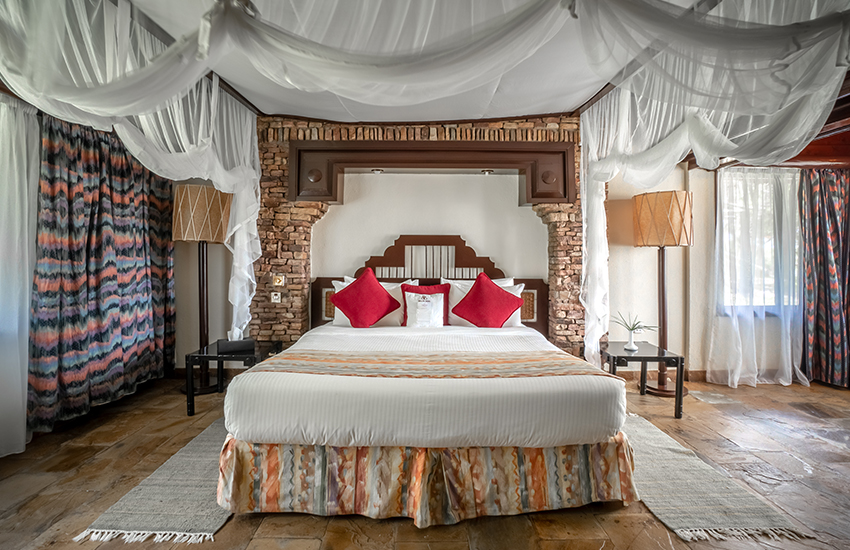
Sarova Shaba Game Lodge
A riverfront lodge in separate Shaba National Reserve for travellers adding a more conventional wildlife-reserve stay. Shaba and Sera have different fees, access and driving routes. Not a same-park substitute for Saruni Rhino and not an automatic Sera day-trip base.
Actual Sarova Shaba guest-room photo from the hotel’s official gallery.
Lower-cost alternative: camping with Sera
For travellers equipped for the remoteness, Sera’s own designated sites can be much less expensive than a safari lodge. Its published private camping rates start at KES 2,500 per adult per night and KES 1,250 per child, excluding VAT and any other access or guiding charges. A ranger escort is compulsory. Food, potable water, gear and fuel must be self-supplied; booking is essential.
Ask the conservancy about campsite availability · [email protected].
| Choose | Location | Best fit |
|---|---|---|
| Saruni Rhino | Inside Sera | Full-service rhino tracking and four-banda luxury lodge stay |
| Sera ranger-escorted campsite | Designated Sera sites | Experienced campers, with prearranged guide/ranger support |
| Saruni Samburu | Kalama, outside Sera | Two-conservancy guided luxury itinerary |
| Sarova Shaba Game Lodge | Shaba, outside Sera | Separate Shaba reserve extension, not the same entrance or fee |
Sera Conservancy frequently asked questions
Can you visit Sera Wildlife Conservancy without staying at Saruni Rhino?
Yes. Sera’s official site allows advance-booked day visits, guided rhino tracking and ranger-escorted private or commercial camping. Contact the conservancy first; there is no unconditional public walk-in sanctuary gate.
What are Sera Rhino Sanctuary entry fees in 2026?
Sera’s published prices are KES 3,125 per day for non-resident adults, KES 1,250 for non-resident children, KES 1,250 for resident adults and KES 625 for resident children. VAT is extra. Always confirm the latest quote.
How much does on-foot rhino tracking cost?
Sera’s visitor page lists KES 10,000 per walk for non-resident adults and KES 3,750 for resident adults, excluding VAT. Sanctuary access, transport and other charges may be additional.
What is the minimum age for rhino tracking?
The conservancy’s general page says above 16, but Saruni Rhino revised its own on-foot tracking minimum to 18 years. If booking through Saruni, use 18+; ask Sera directly about other operators and exact age eligibility.
Is Sera Community Conservancy a national park?
No. It is a community-owned and managed conservancy in Samburu County, Kenya. The Rhino Sanctuary is a managed protected area inside the wider 840,000-acre conservancy.
How do you book Sera?
Contact [email protected] or call +254 720 201 433 to arrange access, conservation fees, ranger escorts and camping. Saruni Rhino guests can book through the lodge or its verified Expedia listing.
Can you camp inside Sera?
Yes, at a few designated sites. Sera requires a ranger escort for every camping booking and expects self-sufficient guests to carry their food, water, fuel and equipment. Camping and access charges are separate.
Is rhino tracking safe for non-experts?
The experience is organised with expert Samburu guides and qualified armed rangers, following a safety briefing and changing wildlife conditions. It remains a genuine wilderness walk; follow all ranger instructions and disclose any mobility concerns.
Are both black and white rhinos found at Sera?
Yes. Ten black rhinos founded the sanctuary in 2015, and four southern white rhinos arrived in 2024. Calves have been born; official population snapshots vary and sightings are not guaranteed.
Does Saruni Rhino have an airstrip?
Kauro is a nearby private charter airstrip requiring permission. Scheduled air arrivals typically use Kalama airstrip, followed by an operator-organised roughly 1 hour 45 minute road transfer.
Are Saruni Samburu and Sarova Shaba inside Sera?
No. Saruni Samburu is in Kalama Conservancy and Sarova Shaba is in Shaba National Reserve, each with its own entry rules. Saruni Rhino is the only permanent safari lodge inside Sera according to Sera’s official visitor page.
What is the difference between Sera and Reteti Elephant Sanctuary?
Reteti is a separately managed elephant rehabilitation facility in Namunyak Community Conservancy. Visits require advance booking and separate charges; it should be treated as a regional itinerary extension, not an attraction inside Sera.
Official sources, visitor contacts & image credits
Information checked 10 November 2026. This guide uses Sera Conservancy as the first-party authority for day access, the sanctuary, prices and community camping. Where its figures or minimum ages differ from partner operator pages, the difference is explained. Travel costs are subject to VAT, booking terms and changes after publication.
How See.Africa checked this guide
We checked the conservancy’s visitor and rhino pages, the lodge operator’s safety and accommodation details, and public OpenStreetMap or operator-published location records. We do not publish precise sanctuary rhino positions or unverified gate routes. Species photographs are field-identification references, sometimes taken outside Sera; source photographs of Sera and actual lodges are identified separately.
- Sera official visitor rates, ranger-guided camping and activities
- Sera Rhino Sanctuary conservation, history and black/white rhinos
- Sera community ownership and 840,000-acre conservancy
- Northern Rangelands Trust, conservation and historical monitoring
- Saruni Rhino official lodge, four bandas and 2026 rates
- Saruni Basecamp current on-foot rhino-tracking minimum age of 18
- Saruni Rhino and Kalama/Kauro airstrip coordinates and transfers
- Saruni Rhino verified Expedia listing
- Sarova Shaba verified Expedia listing
- Reteti Elephant Sanctuary, separate Namunyak visit and official GPS
- Sera Conservancy headquarters public map record
- Saruni Rhino map record
- Hero wildlife photograph: Magical Kenya / Kenya Tourism Board; Sera rhino-tracking image
- Saruni Rhino lodge photograph source: Mahlatini Luxury Travel
- Saruni Samburu terrace photo source: Audley Travel
- Sarova Shaba guest-room photo: official operator gallery