
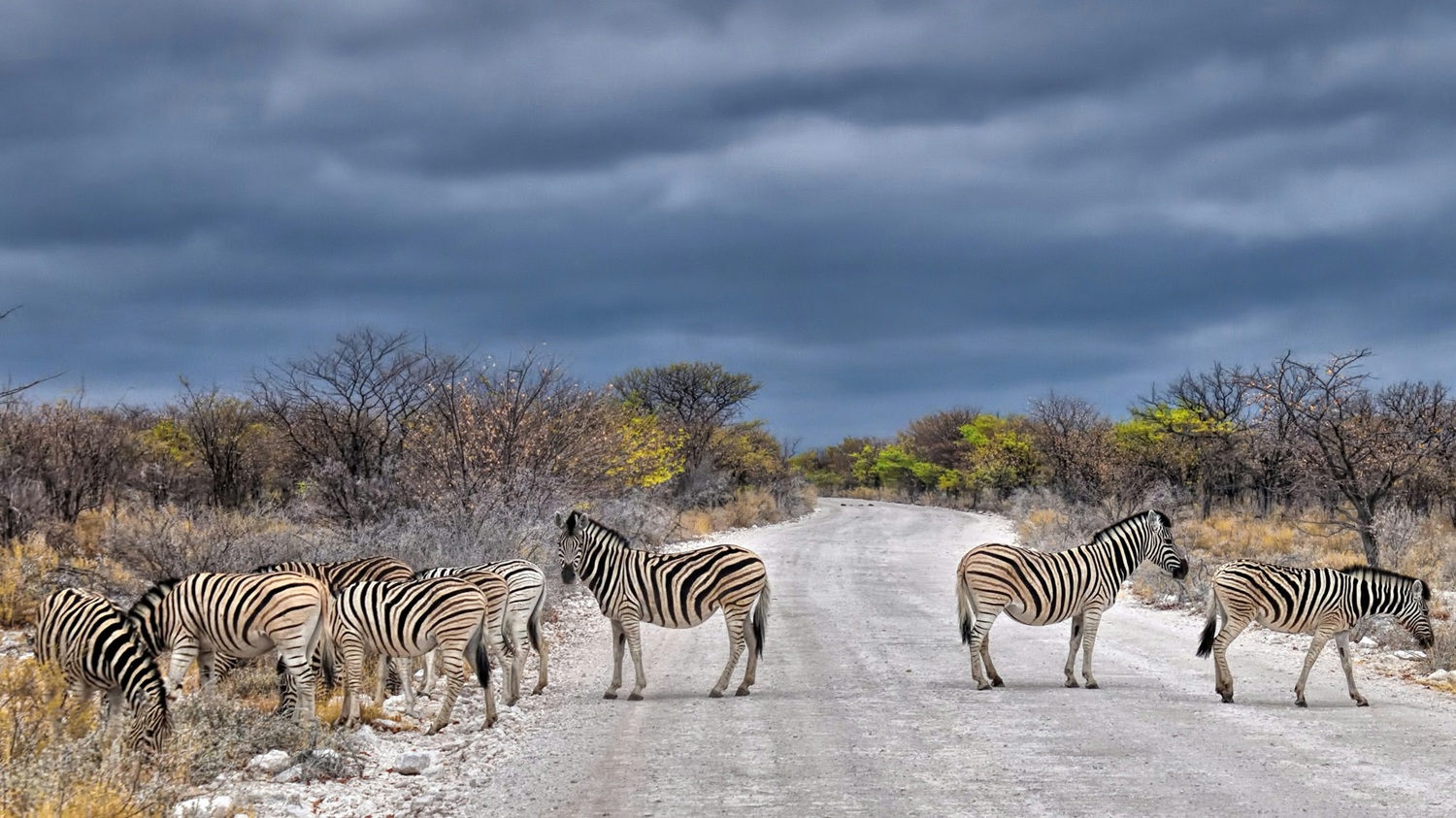
Etosha National Park Guide
The practical 2026 guide to Etosha National Park: best time to visit, waterholes, camps, gates, self-drive strategy, interactive map, wildlife and how to plan your safari days.
Etosha National Park at a glance
Etosha National Park is Namibia’s classic waterhole safari. The huge salt pan dominates the landscape, while permanent and artificial water points concentrate wildlife during the dry season. That makes Etosha unusually rewarding for independent travellers: instead of covering endless kilometres, you can work a chain of waterholes and let elephants, antelope and predators come to you.
Best time to visit Etosha National Park
The best time to visit Etosha National Park for most first-time safari travellers is May to October. As the landscape dries, animals depend more heavily on waterholes and become easier to locate. November to April is greener, quieter and stronger for birding, but wildlife is more dispersed and summer heat or rain can affect the rhythm of game drives.
For easiest wildlife viewing
June–October is the clearest dry-season choice. Waterholes become focal points, vegetation is thinner and roads are usually easier.
For green scenery + fewer crowds
November–April trades concentrated waterhole action for dramatic skies, greener landscapes, young animals and a quieter feel.
For birding + flamingo possibility
After good summer rains, birding improves and parts of the pan can attract flamingos. Water levels vary greatly, so never plan around a guaranteed flamingo spectacle.
What is the best Etosha National Park safari?
For a first visit, the best Etosha National Park safari is usually 3–4 nights split across at least two parts of the park. Etosha stretches far east to west, so changing camps reduces backtracking and gives you different waterhole networks, vegetation and wildlife patterns.
| Area | Best for | Main advantage | Planning note |
|---|---|---|---|
| Okaukuejo | First visit, rhino chances, west/south loops | Famous floodlit waterhole and easy access from Andersson Gate | Strong first or last night when approaching from the south. |
| Halali | Central Etosha, balanced routing | Breaks the long park into manageable sections and has a floodlit camp waterhole | Excellent middle stop between Okaukuejo and Namutoni. |
| Namutoni | Eastern plains, pan-edge birding | Different habitat plus access to eastern waterholes and Fischer’s Pan area | Useful when entering or leaving from the east. |
| Western Etosha | Remote scenery, quieter safari | Less-used western landscapes and specialist camps | Access rules are more restrictive; verify current eligibility and routing before planning. |
Where to go after Etosha
Skeleton Coast
Pair Etosha’s wildlife with Namibia’s foggy Atlantic desert and remote coast.
Skeleton Coast guide →Sossusvlei
Continue south for red dunes, Sesriem and Namibia’s desert lodge circuit.
Sossusvlei lodges →Namibia coast hotels
Add Swakopmund, Walvis Bay or Henties Bay to the same road trip.
See coast hotels →Etosha National Park entrance fees and permits
Etosha National Park charges park-use fees separately from NWR accommodation. Official NWR terms state that park entrance and usage fees are paid per person and per vehicle per day and are not included in accommodation costs. MEFT guidance says the relevant park permit can be issued on arrival at the gate.
Visitor + vehicle fees
Budget for both the applicable visitor category and the vehicle. Rates can change, so use the current MEFT/NWR schedule rather than an old blog price.
Independent travellers
Carry the documents and payment method required for your visitor category and vehicle, and confirm current gate procedures before driving in.
How to get to Etosha National Park
Andersson Gate
The classic southern entry for Okaukuejo and travellers approaching via Outjo. Okaukuejo is about 17 km inside the southern entrance.
Von Lindequist Gate
The main eastern entry beside the Namutoni side of the park, convenient for itineraries coming from Tsumeb or continuing east.
Galton Gate
Gateway to western Etosha. Current western access rules can be more restrictive than the main central/eastern tourist corridor, so verify eligibility first.
King Nehale Gate
A northern access point that can connect Etosha with north-central Namibia and the King Nehale area.
Etosha National Park map: gates, camps, pan and waterholes
Use this map to understand Etosha’s east–west scale. Waterhole and route points are approximate planning locations, not turn-by-turn navigation. The older Okondeka and Olifantsbad estimates have been aligned to the dedicated waterholes guide; the three featured lodge positions are individually sourced.
The optional route is a planning sequence around the Okaukuejo side, not a navigation line. Follow official roads, signs and current park instructions on the ground.
How to plan an Etosha National Park safari day
Dawn: leave when gates open
Use the cool first hours for predators and moving herbivores. Work the nearest waterhole loop rather than racing across the park.
Morning: link waterholes slowly
Scan the approach before driving right up to water. Dust clouds, alarmed antelope and circling vultures can reveal activity before you see the animal itself.
Midday: camp + waterhole
Heat often slows game drives. Return for lunch, rest and a look at the camp waterhole; elephants and other animals do not follow your lunch schedule.
Late afternoon: choose one strong spot
Instead of squeezing in five more stops, pick a productive waterhole and wait. Leave enough time to return before the daily gate or camp deadline.
Where should you stay in Etosha? Our top 3 lodges
For a first visit, choose a lodge near the park gate you’ll use most often. Etosha Village is near the southern Andersson Gate, Mushara Lodge serves the eastern Von Lindequist Gate, and Etosha King Nehale works for northern itineraries. All three are outside the park boundary. For in-park accommodation such as Okaukuejo, Halali and Namutoni, book via Namibia Wildlife Resorts. Compare the 10 best Etosha lodges and hotels for more accommodation styles and direct links.

Etosha Village
A practical south-gate base near Andersson Gate, with chalets, pools and a relaxed safari atmosphere.
Check availability on Expedia ↗
Mushara Lodge
Boutique comfort by Von Lindequist Gate, well suited as a second base for the eastern waterholes.
Check on official lodge website ↗
Etosha King Nehale
A distinctive northern lodge near King Nehale Gate with private plunge pools and access to a dedicated wildlife hide.
Check availability on Expedia ↗Compare all 10 Etosha lodges and hotels →
In-park alternative: Namibia Wildlife Resorts manages rest camps within the park. Staying inside can make early mornings and floodlit camp-waterhole viewing easier, but availability and permitted driving hours still apply.
Affiliate disclosure: see.africa may earn a commission on Expedia bookings at no additional cost to you. Confirm hotel location, transfer arrangements, park fees and game-drive inclusions on your selected booking page.
20 mammals to know in Etosha National Park
Etosha is especially strong for dry-country herbivores, elephants and black rhino, with lions, cheetahs, leopards and hyenas adding predator interest. Sightings vary by season and water availability.
Show 10 more Etosha mammals
10 Etosha National Park birds worth learning
Dry-season drives are excellent for raptors and open-country birds. After good rains, wet areas around the pan can become dramatically more important for waterbirds and flamingos.
Trees, shrubs and plants of Etosha National Park
Etosha is more than a salt pan. Official park descriptions identify Mopane Shrubland, Etosha Grass and Dwarf Shrubland, Karstveld Pans, Kalahari woodland and other vegetation types that change noticeably across the park.
Trees & shrubs
Grasses & ground layer
Etosha grass & dwarf shrubland
Open grass-and-low-shrub country around the pan is a major part of Etosha’s visual character and helps create the wide sightlines safari travellers associate with the park.
Karstveld pan vegetation
Salt and alkaline conditions strongly limit plant growth on and around pans. Vegetation is patchy rather than continuous, especially on the harshest pan surfaces.
Kalahari woodland ground layer
In woodland sectors, grasses and low plants form the understory beneath trees and shrubs, with density changing sharply after rain.
Seasonal green flush
Summer rain can transform otherwise dry ground with fresh grasses and short-lived growth. Exact species and abundance vary by soil, sector and rainfall.
Best Etosha National Park safari experiences
1. Dawn self-drive
Start at opening time and work a compact loop while temperatures are low and predators may still be active.
2. Waterhole stakeout
Choose an active waterhole, switch off the engine where permitted and let behaviour unfold instead of treating the stop like a checklist.
3. Okaukuejo floodlit waterhole
Stay after dinner and watch quietly. Black rhino, elephant and lion are among the species associated with this iconic night-viewing site.
4. Pan-edge viewpoints
Make time for the stark scale of the salt pan, mirages and big-sky photography even when wildlife is elsewhere.
5. Green-season birding
Summer rain changes the park. Slow down for raptors, bustards, migrant birds and—when water conditions cooperate—flamingos.
6. Guided drive
Even self-drivers can benefit from one guided morning, afternoon or night drive to add local tracking knowledge and different timing.
Etosha National Park rules that matter
Stay on indicated roads
Do not create your own tracks or drive off-road. Etosha’s open landscape can look permissive, but park-road rules still apply.
Stay in the vehicle
Leave the vehicle only where park rules explicitly allow it. Wildlife can be difficult to see in low vegetation even when it is very close.
No pets or motorcycles
MEFT lists pets, motorcycles and open vehicles/loading areas among prohibited park-entry conditions.
Respect sunrise–sunset gates
Late sightings are not a reason to miss the park’s closing time. Turn back with a realistic buffer.
No plastic bags
NWR’s current park terms prohibit plastic bags in Namibia’s national parks. Use reusable bags and follow any additional gate instructions on waste and restricted items.
Etosha National Park FAQ
What is the best time to visit Etosha National Park?
May to October is the best overall period for most first-time visitors. Dry conditions concentrate wildlife around waterholes and make game viewing more predictable. November to April is greener and better for many birds.
How many days do you need in Etosha National Park?
Three to four nights is ideal for a first visit. That gives enough time to split the safari between two or three areas without spending the entire trip changing camps.
Is Etosha National Park good for self-drive?
Yes. Etosha is one of Africa’s easiest major safari parks to explore independently. Its established road network, clear camps and waterhole-based game viewing suit self-drive itineraries well, although current road conditions should always be checked.
Which camp is best in Etosha National Park?
Okaukuejo is the best all-round first base. Halali is excellent for central access, while Namutoni works well for eastern Etosha. The best trip usually combines at least two camps.
Where is the best place to see rhinos in Etosha?
Okaukuejo’s floodlit waterhole is one of Etosha’s best-known rhino-viewing locations. Black rhino also move elsewhere in the park, so no specific sighting can be guaranteed.
What animals can you see in Etosha National Park?
Etosha supports elephant, black and white rhino, lion, leopard, cheetah, giraffe, zebra, springbok, wildebeest, gemsbok, eland and many other species. It is especially famous for dry-season concentrations around waterholes.
Do I need a permit for Etosha National Park?
Yes, park entry is permit- and fee-controlled. MEFT guidance states that the relevant permit can be issued on arrival at the park gate; check the current process and payment requirements before travel.
What time do Etosha National Park gates open?
NWR guidance states that park gates open at sunrise and close at sunset. Exact clock times therefore vary through the year, so confirm them locally for the day of your visit.
How this Etosha National Park guide was checked
See.Africa reviewed time-sensitive information on 14 August 2026 against Namibia Wildlife Resorts, Namibia’s Ministry of Environment, Forestry and Tourism, and the official Visit Namibia tourism portal. Fees, road access and operating rules can change; current authority and ranger instructions override this web guide.