
Hwange National Park Safari Guide
The practical 2026 guide to Hwange National Park: best time to visit, elephant waterholes, Main Camp, Sinamatella and Robins, self-drive planning, interactive map, wildlife and Victoria Falls access.
Hwange National Park at a glance
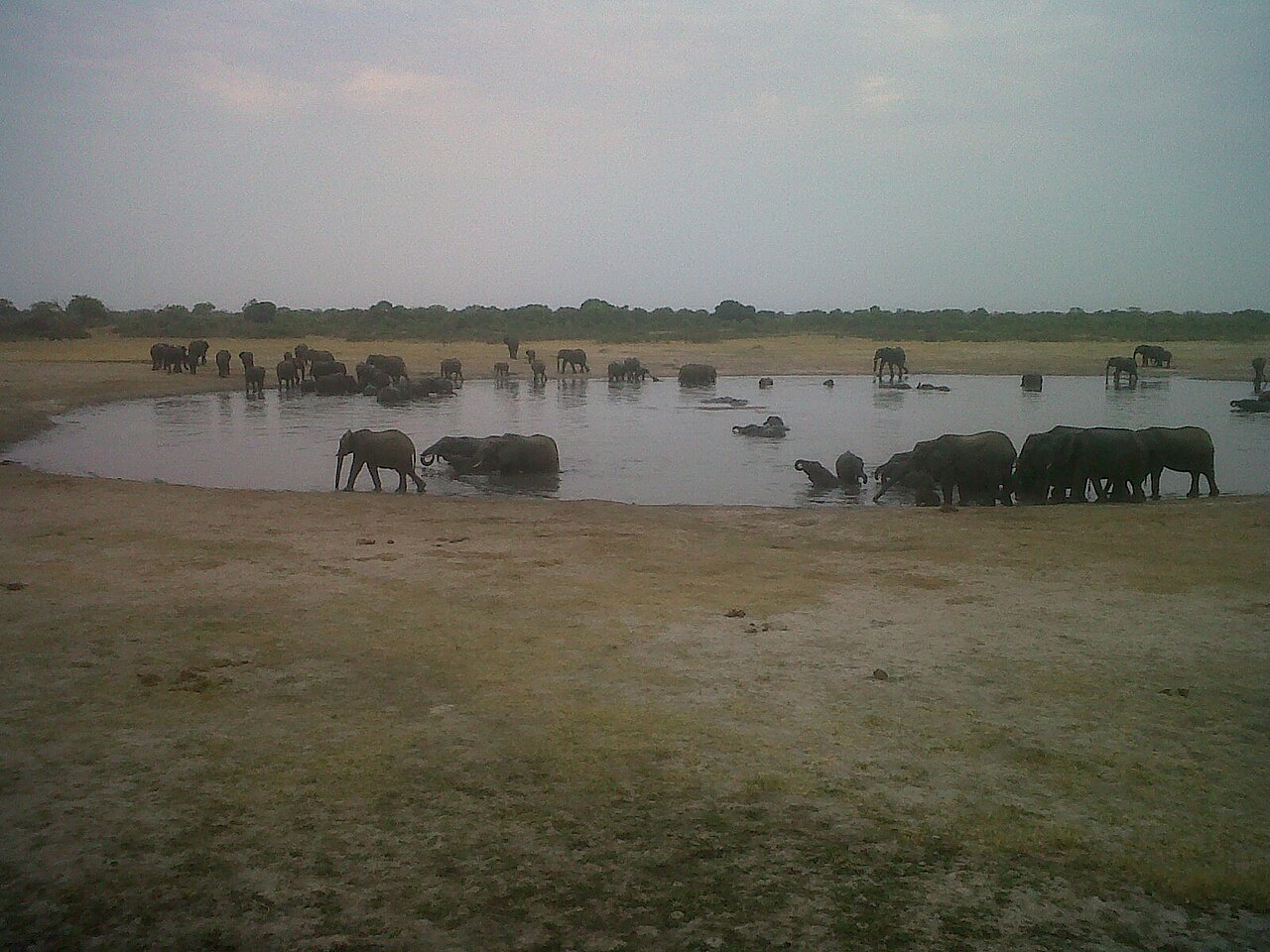
Hwange National Park is Zimbabwe’s largest national park, covering about 14,650 km² in the northwest of the country. ZimParks highlights its enormous elephant population, African wild dogs, sable and roan antelope, around 100 mammal species and nearly 400 bird species. Hwange is especially distinctive because many dry-season safaris revolve around a network of natural and pumped pans where wildlife concentrates around water.
Quick answers for planning Hwange National Park
Best time to visit Hwange National Park
For most first-time visitors, June to October is the best time to visit Hwange National Park. As the dry season intensifies, water becomes increasingly important and elephants, buffalo and antelope concentrate around pans. October can be extremely hot, while the green season from roughly November to April brings lush vegetation, migrant birds and newborn animals but more dispersed wildlife.
For elephants + waterholes
August–October is especially strong as natural water becomes scarce and pans become major wildlife anchors.
For comfortable temperatures
June–August offers cool mornings and dry conditions, though nights and early drives can feel surprisingly cold.
For birding + green scenery
November–April brings greener woodland, migrant birds and dramatic skies. Wildlife is less concentrated around artificial water.
Best safari areas in Hwange National Park
There is no single best Hwange sector: Main Camp is easiest for first-time self-drivers, Sinamatella gives dramatic elevated country and productive dams, and Robins feels more remote in the north.
| Area | Best for | Main strength | Planning note |
|---|---|---|---|
| Main Camp | First visit, self-drive, easy orientation | Strong road network and access to famous pans including Nyamandhlovu | Best simple starting point from Bulawayo or the Victoria Falls highway. |
| Nyamandhlovu / Main Camp pans | Elephants, patient waterhole viewing | Classic Hwange dry-season scene | Spend time waiting rather than doing constant loops. |
| Ngweshla area | Open-country wildlife, predators, large herds | Productive pan country away from Main Camp | Better suited to a full-day game drive than a short arrival drive. |
| Sinamatella / Mandavu | Scenery, elephants, buffalo, birding | Elevated camp area and large water body | Useful as a separate base rather than a rushed out-and-back from Main Camp. |
| Robins | Remote safari, northern Hwange | Lower traffic and distinct northern landscapes | Can be approached from the Victoria Falls side via the Matetsi/Robins route. |
Hwange National Park entry fees and booking
Hwange fees vary by nationality, accommodation type and activity, and ZimParks states that park and accommodation fees can change. These fee and booking details were checked on 16 August 2026. The official online booking system separates local, regional/SADC and international pricing and adds conservation fees to accommodation bookings. Vehicle entry is payable in addition to accommodation or camping charges.
Check live ZimParks total
Select nationality first in the booking portal because international rates are shown in USD and conservation fees are added to the order.
Separate tariff
Regional categories can differ from both Zimbabwean and international visitor rates. Bring the documentation required for your category.
Additional entry charge
ZimParks terms state that vehicle entry fees are payable in addition to accommodation, camping and conservation fees.
How to get to Hwange National Park
Main Camp
ZimParks lists a road approach south toward Bulawayo, turning at Cross Mabale and then continuing on tar to Main Camp. This makes Hwange easy to combine with Victoria Falls.
Main Camp
ZimParks lists roughly 283 km toward Victoria Falls to Cross Mabale, followed by the final approach to the park.
Robins Camp
Robins has a separate northern approach from the Victoria Falls side and can work well if your itinerary is focused on northern Hwange.
Main Camp airstrip
ZimParks confirms an airstrip at Main Camp; prior permission is required for private or charter aircraft.
Robins airstrip
Robins also has a serviced airstrip. Confirm clearance and ground arrangements before flying.
Prepare for distance
Hwange is huge. Carry water, offline navigation, tyre-repair equipment and enough fuel margin for long internal drives.
Hwange National Park map: camps, pans and safari areas
Use this Hwange National Park map to understand the park’s scale, public camps, major pans and safari anchors. The map is for orientation rather than turn-by-turn navigation. Several wildlife-area points are approximate, and the soft shaded circles show broad typical waterhole-viewing habitat—not live animal locations.
The optional route is a planning sequence near Main Camp, not a verified road line. Follow ZimParks signage and current ranger/camp directions.
How to plan a Hwange safari day
Dawn: leave early
Predators and wild dogs are most rewarding before the day heats up. Use open areas and tracks between pans before settling into waterhole strategy.
Morning: work a pan circuit
Choose two or three nearby pans rather than trying to cross half the park. Nyamandhlovu is a natural Main Camp anchor for a first visit.
Midday: wait at water
Hwange can be excellent when other parks feel quiet at midday because elephants and other animals still need water. Shade and patience can beat another 50 km of driving.
Late afternoon: predator country
Return to open pan edges and connecting tracks as temperatures drop. Build in a generous margin for the drive back to camp.
Before leaving camp: prepare offline
Download offline maps, screenshot your planned pan circuit, carry drinking water and keep tyre-repair/recovery equipment accessible. Mobile coverage should never be your navigation plan inside a park this large.
20 mammals to know in Hwange National Park
Hwange supports around 100 mammal species. The following are particularly useful for a first safari because they represent the park’s best-known wildlife, specialist antelope and predator community.
African bush elephant
Hwange’s defining animal. Dry-season families can gather in extraordinary numbers around pans; always leave escape space around herds.
Lion
Look around open pans, prey-rich plains and shade near water, especially early and late in the day.
African wild dog
ZimParks highlights Hwange as a major stronghold for this endangered predator. Packs can travel fast, so sightings are often brief and dynamic.
Leopard
Secretive and easy to miss in Hwange’s woodland; scan large trees, drainage lines and quiet tracks at cooler times.
African buffalo
Dry-season herds can be impressive around reliable pans and dams, often attracting lions.
Sable antelope
One of Hwange’s signature antelope. Adults carry long scimitar-shaped horns and favour woodland-grassland mosaics.
Roan antelope
Large pale antelope with a dark facial mask. Hwange is one of the better-known Zimbabwe parks for seeing them.
Southern giraffe
Often seen moving between teak, acacia and mixed woodland, particularly near pan systems.
Plains zebra
Frequent around open grazing near pans and often mixed with wildebeest or other herbivores.
Spotted hyena
Listen at night and look along open tracks at dawn. Hyenas are active hunters as well as scavengers.
Show 10 more Hwange mammals
Blue wildebeest
Frequently uses open grazing around pans. Scan mixed zebra-and-wildebeest herds for lion or wild-dog activity.
Greater kudu
Best searched for in mixed woodland and bush rather than the most open pans. Mature bulls have unmistakable spiral horns.
Common eland
Africa’s largest antelope. Small groups may move quietly through woodland edges and open grassland despite their enormous size.
Impala
A major prey species and a useful indicator of predator country. Look around mixed woodland close to water.
Waterbuck
Most likely around larger dams, greener drainage areas and dependable water rather than deep dry woodland.
Common warthog
Often kneels on its front legs while grazing. Watch for animals sprinting tail-up toward burrows when alarmed.
Black-backed jackal
Look around open pan margins and predator activity. This alert canid hunts small prey as well as scavenging.
Side-striped jackal
More closely associated with woodland and thicker vegetation than black-backed jackals, so sightings can be brief.
Honey badger
Unpredictable and often active after dark. Daytime sightings are memorable rather than something to plan an itinerary around.
Bat-eared fox
Look in suitable open areas where termites and other insects are abundant. The enormous ears are the easiest identification feature.
10 Hwange birds worth learning before your safari
Hwange is a strong birding park because open pans, dry woodland and larger dams create very different habitats. Even non-birders can identify several of the park’s signature species from a vehicle.
Southern ground hornbill
Large black-and-red hornbill usually seen walking rather than flying. Look for family groups crossing grassland and open woodland.
Kori bustard
One of Africa’s heaviest flying birds. Scan broad open pan margins and short grass for this tall, slow-moving species.
Secretarybird
Long-legged raptor that hunts on foot. Open plains and lightly wooded grassland give the best chance of seeing it.
Bateleur
Watch the sky for a rocking, short-tailed eagle with long wings. It may cover huge distances while searching for carrion and prey.
Martial eagle
One of Africa’s largest eagles. Scan dead trees, prominent perches and high thermals rather than only looking at ground-level wildlife.
Lilac-breasted roller
A beginner-friendly identification: brilliant lilac and turquoise colours, often perched conspicuously beside tracks before dropping onto insects.
Crimson-breasted shrike
Bright crimson-and-black plumage makes this one of Hwange’s easiest woodland birds to remember. Listen and look in thicker bush.
Southern yellow-billed hornbill
Often feeds on the ground or low in trees near safari tracks. The long yellow bill and spotted wings are distinctive.
African fish eagle
Most likely around larger water bodies such as Mandavu. Its carrying call often reveals the bird before you see it.
Ostrich
Search broad open pan systems and grassland. Adults are visible at long range, making them ideal birds to scan for while waiting at water.
Hwange vegetation: teak woodland, mopane and pan-edge plants
Hwange National Park is a mosaic of Kalahari-sand woodland, teak forest, mopane, mixed savanna and seasonally wet pan margins. That habitat variety helps explain why elephants, specialist antelope, predators and nearly 400 bird species can use very different parts of the same park.
Trees & shrubs
Zambezi teak
Where to look: extensive sandy woodland. A major Hwange habitat-forming tree and one of the clearest visual cues that you are in Kalahari-sand country.
Mopane
Where to look: broad dry woodland zones. The butterfly-shaped leaves are distinctive and often turn coppery in dry conditions.
Silver cluster-leaf
Where to look: Kalahari-sand woodland and disturbed edges. Pale leaves and silvery young growth make it easier to recognise than many surrounding trees.
Leadwood
Where to look: heavier soils and drainage-linked woodland. Dense dead trunks can remain standing for years.
Knob thorn
Where to look: mixed savanna. Knob-like swellings on the bark and thorny branches are useful field marks; giraffes browse the foliage.
Shepherd’s tree
Where to look: dry woodland and open savanna. The pale trunk stands out and the species survives severe seasonal dryness.
African teak / mukwa
Where to look: suitable sandy woodland. Mature trees develop a broad crown and reddish-brown timber beneath the bark.
False mopane
Where to look: deep sandy soils. An important southern African woodland tree associated with the same broad Kalahari-sand system as Zambezi teak.
Rain tree
Where to look: mixed savanna and drainage areas where conditions suit. Purple flowers can become conspicuous in season.
Wild seringa
Where to look: nutrient-poor sandy woodland. A useful companion species when recognising broad Kalahari woodland communities.
Grasses, sedges, herbs & pan-edge plants
Red oat grass
Where to look: open grassland and productive pan margins. Mature seed heads can develop a reddish tone.
Buffel grass
Where to look: dry open ground. A hardy perennial grass valuable to grazing animals.
Panic grasses
Where to look: seasonally moist depressions and better-watered grazing zones where fresh growth can attract herbivores.
Lovegrasses
Where to look: disturbed ground, short-grass patches and pan margins. Species-level identification is often difficult from a vehicle.
Finger grasses
Where to look: productive open grasslands after rain. Their seed heads radiate in finger-like spikes.
Pan-edge sedges
Where to look: shallow wet margins and seasonally flooded depressions. They help create feeding and birding habitat around water.
Devil’s claw
Where to look: sandy open ground. The creeping plant is easier to notice when flowering or when its hooked fruit is present.
Wild hibiscus relatives
Where to look: woodland edges and open ground after rain, when short-lived herbs can briefly transform the understorey.
Wild cucurbits
Where to look: sandy soils and disturbed open ground during the growing season; vines and fruits can be inconspicuous among grasses.
Seasonal pan herbs
Where to look: drying pan margins after rainfall. Short-lived herbs exploit moist soils before the dry season intensifies.
Best Hwange safari experiences
For a contrasting Zimbabwe safari, add Matusadona on Lake Kariba, where boat outings, shoreline wildlife and escarpment scenery complement Hwange’s waterhole-focused drives. Plan the road, air or boat connection around your chosen camp.
1. Dawn game drive
Best chance for active predators and wild dogs before the heat builds.
2. Wait at a pan
Hwange’s most distinctive experience: settle at a waterhole and let elephant, buffalo and antelope activity come to you.
3. Main Camp self-drive loop
A strong first independent safari day, especially around Nyamandhlovu and nearby pans.
4. Sinamatella / Mandavu day
Combine dramatic northern-central scenery with water-focused wildlife and birding.
5. Northern Hwange / Robins
Useful for travellers who want a quieter, more remote feeling and a different approach from Victoria Falls.
6. Birding
Nearly 400 species make Hwange much richer than an elephant-only safari.
Hwange National Park rules and safety
Elephants with calves
ZimParks specifically flags elephants with calves as a caution. Give herds space and never block their route to water.
Malaria precautions
ZimParks advises malaria precautions. Discuss appropriate prevention with a qualified health professional before travel.
Unfenced accommodation
ZimParks notes that many self-catering lodges and camps are unfenced. Wildlife can move through camp, so never walk casually after dark.
Carry self-drive essentials
For camping and self-drive, ZimParks recommends food, drinking water, lighting, insect repellent, sun protection and recovery gear.
Hwange National Park FAQ
What is Hwange National Park famous for?
Hwange is most famous for elephants, waterhole-based dry-season wildlife viewing, African wild dogs and specialist antelope such as sable and roan. It is also Zimbabwe’s largest national park.
What is the best time to visit Hwange National Park?
June to October is the best overall period for classic dry-season wildlife viewing. August and September are especially strong for concentrated wildlife around pans, while October can be extremely hot.
How many days do you need in Hwange?
Three nights is a useful minimum; four or five nights is better if you want to experience more than one sector. Hwange is much larger than many first-time visitors expect.
Can you self-drive in Hwange National Park?
Yes. Hwange is suitable for experienced independent safari travellers. Carry water, offline navigation, tyre-repair and recovery equipment, and plan fuel and distances conservatively.
How far is Hwange from Victoria Falls?
Hwange is easy to combine by road with Victoria Falls, but the distance depends on which camp you use. Main Camp and Robins have different approaches, so choose your base before planning the transfer.
Which is better: Hwange or Chobe?
Hwange offers a larger, more dispersed wilderness and strong self-drive/waterhole safari; Chobe is famous for dense elephant viewing along the Chobe River and easy access from Kasane. They combine very well in one southern Africa itinerary.
Does Hwange have the Big Five?
Do not plan Hwange as a Big Five checklist. ZimParks’ current park overview specifically lists elephant, lion, leopard and buffalo among the classic big-game species and does not position rhino as a normal visitor sighting.
Where should a first-time visitor stay in Hwange?
Main Camp is the simplest public-park base for a first self-drive visit. It gives convenient access to nearby pans and a straightforward road approach; Sinamatella and Robins are excellent additions for a longer trip.
How this Hwange National Park guide was checked
See.Africa reviewed current visitor information on 16 August 2026 against Zimbabwe Parks & Wildlife Management Authority pages and the official ZimParks booking platform. Fees, roads, accommodation availability and activity rules can change; current ZimParks, ranger and camp instructions override this guide.