
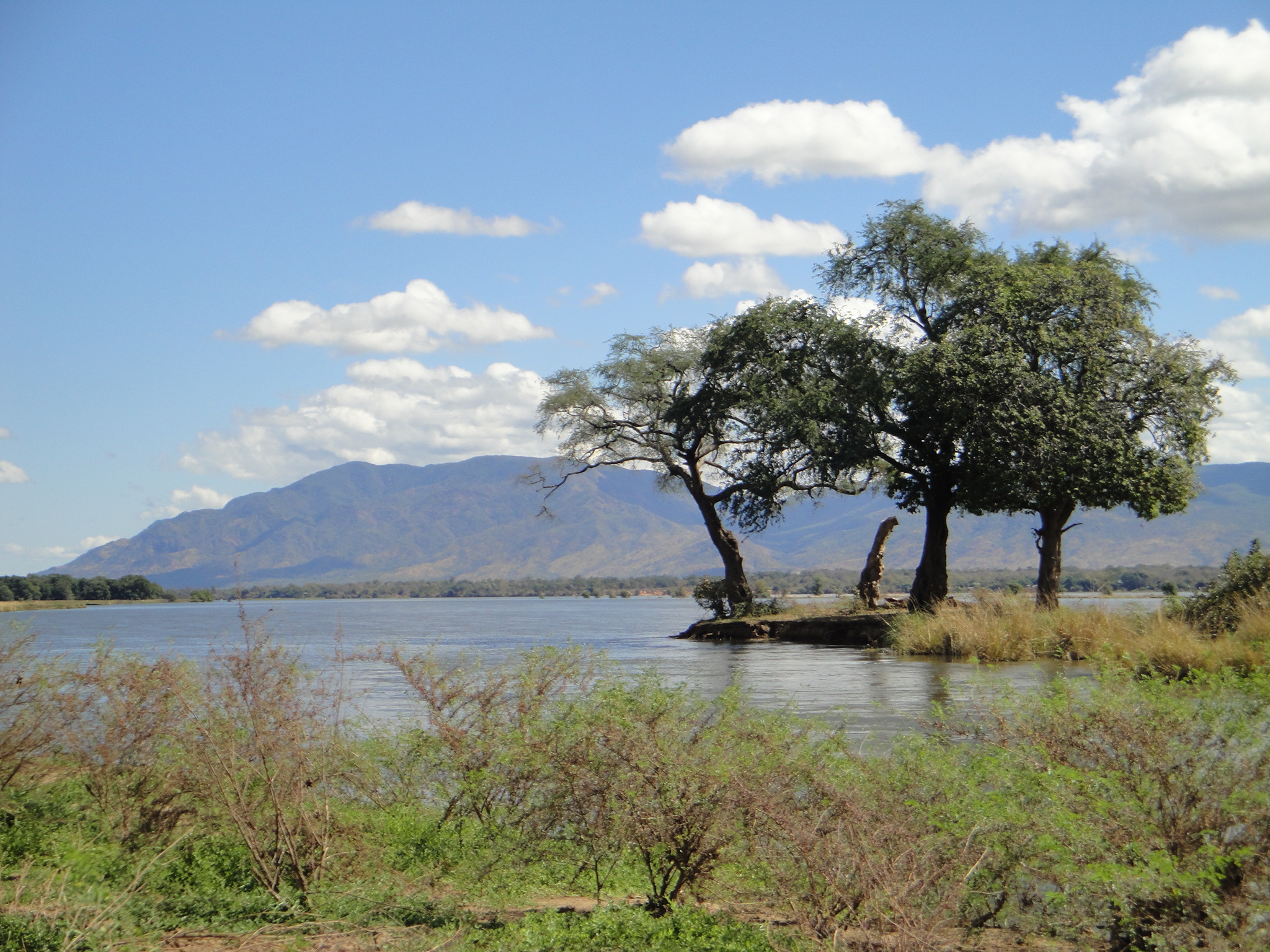
Mana Pools National Park Guide
A practical 2026 field guide to one of Africa’s great wilderness parks: Zambezi floodplain elephants, the four Mana pools, Nyamepi camping, Chitake Springs, walking permits, canoe safaris, seasonal roads and a detailed trip-planning map.
Mana Pools National Park at a glance
Mana Pools is a 2,196 km² national park on Zimbabwe’s southern bank of the Zambezi, famous for wildlife encounters that happen at ground level rather than only from a vehicle. Its name refers to four major pools—Green Pool, Chisasiko, Chine and Long Pool—left on the floodplain as the river shifts. Long Pool stretches for more than six kilometres and remains a major dry-season focus for hippos, crocodiles, elephants and waterbirds.
The park forms the 676,600-hectare Mana Pools–Sapi–Chewore World Heritage property together with neighbouring protected areas. The Zambian bank opposite is Lower Zambezi National Park, creating one of the continent’s most impressive cross-river conservation landscapes.
Which Mana Pools area should you stay in?
The biggest planning mistake is treating Mana Pools as one compact riverfront. Nyamepi and the central floodplain are ideal for a first trip; the exclusive camps west/east along the Zambezi create quieter riverfront stays; Chitake Springs is a separate interior experience with very different risk and logistics.
| Area | Best for | Typical base | Planning reality |
|---|---|---|---|
| Nyamepi + central floodplain | First visit, pools, walking, self-drive, river | Nyamepi Riverfront / Standard campsite | Best orientation base because park HQ, public camping and boat launch are clustered here. |
| Western riverfront | Privacy, sunrise/sunset, quieter camps | Mucheni, Gwaya, Old/New Ndungu areas | Exclusive sites are simple: take full camp equipment, drinking water and food. |
| Eastern floodplain / Mana Mouth | Open floodplain, pools, river scenery | Nkupe / operator camps | Road availability and floodplain conditions decide what is reachable each day. |
| Chitake Springs | Buffalo/predator wilderness, serious camping | Chitake booked sites / Baobab | Remote, dry, wildlife-intense and not suitable as a casual first African self-drive objective. |
| Fly-in/private camps | Guided walking, canoeing, logistics handled | Seasonal concession camps/lodges | Best for travellers who want the Mana experience without carrying fuel, recovery and camp systems. |
Best time to visit Mana Pools
June to October is the core self-drive season. Most internal roads become impassable in the rains, according to the current ZimParks management plan. Exact opening dates are condition-dependent, so never assume that an April or November itinerary will have full road access without confirmation.
May–June
Cooler and less harsh. Vegetation retains more colour and nights can be cold. Confirm which secondary tracks and camps have reopened after the rains.
July–September
Best all-round window. Dry roads, cool dawns and steadily increasing wildlife concentration make this the easiest period for a first self-drive.
October–November
Hot and intense. Wildlife around remaining water can be exceptional, but midday heat is severe and the first storms can quickly change roads.
Mana Pools entry and camping fees in 2026
The February 2026 ZimParks schedule sets the daily conservation fee at US$8 local / US$18 SADC / US$24 international. Camping is charged separately. Rates below are the 2026 tariff figures current at this review; always confirm the booking invoice because VAT treatment, vehicle charges and activity permits can change.
| 2026 charge | Local | International | What it covers |
|---|---|---|---|
| Conservation fee | US$8 pp/day | US$24 pp/day | Park conservation entry; SADC rate is US$18. |
| Nyamepi Riverfront site | US$110 | US$155 | Per site, up to 6 people; tariff includes specified SB sites. |
| Nyamepi Standard / Walk-In | US$70 | US$120 | Per site, up to 6 people. |
| Exclusive river camps | US$165 | US$235 | Mucheni, Old Ndungu, Gwaya, BBC, Nkupe, New BBC; per site, 6 people. |
| Chitake 1 / 3B overflow | US$215 | US$355 | Per site, maximum 6 people. |
| Chitake 2 / Baobab | US$176 | US$235 | Per site, maximum 6 people. |
| New Ndungu 1 / 2 | US$60 | US$90 | Small site, maximum 3 people. |
“International” is used because that is how the 2026 accommodation schedule groups non-local prices. Conservation fees separately distinguish Local / SADC / International visitors.
How to get to Mana Pools from Harare
Allow a full travel day. The road distance to Nyamepi is roughly 380–385 km, but the final park section is slow enough that a seven-to-eight-hour planning day is realistic. Harare to Karoi/Makuti is paved; after the Mana turn-off the route becomes remote gravel and dirt.
| Stage | Approx. cumulative distance | What to do |
|---|---|---|
| Harare → Chinhoyi | ~115 km | Easy paved A1 progress; do not use this as your estimate for the final average speed. |
| Karoi | ~207 km | Major fuel/food resupply opportunity. Do not enter the valley assuming Nyamepi has normal town supplies. |
| Makuti / Marongora | ~290–300 km | Obtain the required Zambezi Valley permit at Marongora before descending the escarpment. |
| Mana turn-off / Chimutsi | ~310 km | Leave the main highway for the park access road. |
| Nyakasikana Gate | ~341 km | Decision point: Nyamepi/floodplain west-north; Chitake interior route east/south-east. |
| Nyamepi HQ | ~384 km | Check in, confirm roads, obtain walking/fishing permits if needed and ask about current wildlife/river cautions. |
High clearance required
ZimParks’ current booking FAQ explicitly says a high-clearance vehicle is required. For independent travel, a proper 4×4, two serviceable spares, compressor, tyre repair kit and recovery points are a much better risk profile.
Arrive self-contained
Carry drinking water, fuel margin, food, ice/cold storage, first aid, lighting and offline navigation. ZimParks specifically advises extra lighting and ice during hot months.
Marongora first
ZimParks says all clients entering Mana/Zambezi Valley must report at Marongora for the entry permit; arrivals via Chirundu use the Chirundu office.
Mana has multiple airstrips
The management plan records Mana, Mana West and Rukomechi airstrips, with Chikwenya on the boundary. Charter schedules and road transfers are operator-dependent.
Mana Pools map: Nyamepi, four pools, river camps and Chitake
The old guide had six pins; this version maps the places that actually shape a visit. High-confidence public coordinates are used where available. Several exclusive camps and pool points are deliberately marked as approximate because booking instructions and current ZimParks mapping should override public web coordinates.
This is an orientation map, not navigation-grade mapping. Water levels, sand, washed crossings and road permissions change. The optional line shows a planning sequence, not exact road geometry.
Mana Pools campsites and accommodation explained
The best place to sleep depends on whether you want convenience, exclusivity or wilderness intensity. Mana is not a park where every campsite offers the same infrastructure.
| Stay type | Best for | Facilities / character | Who should choose it |
|---|---|---|---|
| Nyamepi Riverfront | First trip, river views | Public campground; most practical access to HQ and floodplain | Self-drivers who want Mana atmosphere without maximum logistical difficulty. |
| Nyamepi Standard | Value + practical base | Public sites, less premium river position | Travellers prioritising game time over a front-row campsite. |
| Exclusive river camps | Privacy and photography | Mucheni, Ndungu, Gwaya, BBC, Nkupe; simple bush infrastructure | Experienced campers carrying everything needed for an exclusive site. |
| Chitake | Buffalo/predator wilderness | Extremely remote; spring-focused wildlife; no casual facilities | Experienced self-drivers or travellers with a specialist guide. |
| ZimParks lodges/tented units | Beds + self-catering | Roofed/tented accommodation depending unit | Visitors who want park-run accommodation without full camping equipment. |
| Private seasonal camps | Guided walking/canoeing | Meals, guiding and transfers packaged by operator | Travellers who value expert guiding and lighter logistics over independent self-drive. |
A sensible 5-night Mana Pools first trip
Nyamepi arrival
Use daylight for check-in, walking-rule clarification and a short floodplain orientation. Do not arrive after a full drive and immediately attempt a long wildlife walk.
Long Pool + floodplain
Start at first light, work Long Pool/Chine/floodplain slowly, return during the hottest hours and use late afternoon around the river.
Guided walking day
Book a professional guide and learn elephant body language, tracks, wind direction and safe approaches before considering any permitted independent walking.
Exclusive riverfront
Move to a booked river camp such as Mucheni/Gwaya/Nkupe depending availability. Staying put turns dawn and dusk into wildlife time instead of transfer time.
Chitake extension
Treat Chitake as a separate two-night objective with sufficient water, fuel, food and recovery margin. Confirm its access road immediately before departure.
Canoe + land combination
Replace one driving day with a licensed guided canoe section to experience the Zambezi channels from a completely different perspective.
The Mana daily rhythm
05:45–09:30 • prime time
Walking or slow floodplain driving before heat and glare build. Keep wind direction and escape routes in mind when on foot.
10:30–15:00 • reset
Shade, hydration, camp chores and birding close to camp. October in particular is not the time to prove endurance at midday.
15:30–camp hours • second window
Return to pools/river edges but protect a generous camp-return margin. Visitor-code camp hours are 18:00 May–July and 18:30 August–October.
After dark • stay in camp
Hippos, elephants, hyenas and other wildlife move through camping areas. No night driving or spotlighting is allowed.
22 mammals to know in Mana Pools
Mana’s magic comes from dry-season concentration: animals move onto the Zambezi floodplain and beneath winter-thorn woodland as inland water and forage decline. Likelihood labels are broad planning guidance, never a sighting promise.
African bush elephant
Dry-season bulls and family groups feed extensively on the floodplain. Mana’s famous standing elephants reach winter-thorn pods, but never let photography tempt you inside the 30 m visitor-code buffer.
African buffalo
Large herds use floodplain grazing and permanent water. On foot, buffalo demand particular caution because visibility in jesse or riverine cover can collapse quickly.
Lion
Scan shade, river terraces and prey concentrations early and late. Walking near lions requires discipline: never surround, crowd or use other people as a shield.
Leopard
Riverine trees and thicker cover are better habitat than open floodplain. Tracks, baboon alarm calls and impala reactions can be more useful than searching trees at random.
African painted dog
Mana Pools is internationally known for painted dogs. Packs can cover enormous distances quickly; never follow them off-road or approach a den closer than park rules allow.
Spotted hyena
Tracks through public camps may be obvious at dawn. Secure food and rubbish correctly rather than teaching hyenas that campsites are feeding sites.
Hippopotamus
Long Pool and the Zambezi hold many hippos. On land, never stand between a hippo and water; in a canoe, follow the guide’s channel choice immediately.
Common waterbuck
Strongly associated with permanent water and lush river-edge habitat. The broad white rump ring is the simplest identification clue.
Greater kudu
Kudu use thicker woodland away from the most open floodplain. Mature bulls can vanish almost instantly into jesse despite their size.
Impala
Large herds are a constant part of the floodplain scene. Sudden staring, snorting or bunching can alert you to predators before you see them.
Plains zebra
Zebra favour open grazing and move with changing forage. Look for mixed groups with other grazers where visibility is broad.
Eland
Africa’s largest antelope occurs at lower density. Heavy shoulders and a loose dewlap distinguish mature bulls even at distance.
Show 10 more Mana Pools mammals
Bushbuck
Usually solitary in riverine thicket. Early light near dense pool margins is a better strategy than searching the open floodplain.
Common warthog
Short floodplain grass and camp-edge lawns are productive. The raised tail when running is an easy beginner field mark.
Chacma baboon
Large troops forage under fruiting trees and along floodplain woodland. Never leave accessible food in camp.
Vervet monkey
Common in riverine trees. Their alarm calls can help locate snakes, eagles or terrestrial predators.
Common duiker
A small solitary antelope of woodland edges and scrub, often seen crossing tracks quickly rather than standing in open areas.
Honey badger
Uncommon and frequently nocturnal. Camp litter rules matter because food scraps can alter behaviour of badgers and hyenas.
African civet
Mostly nocturnal; tracks or latrine sites are more likely than daytime sightings. Night driving is prohibited, so chance camp-edge sightings are the realistic opportunity.
Cape porcupine
Nocturnal and secretive. Quills, tracks and gnawed material may reveal presence without an animal sighting.
Side-striped jackal
More associated with woodland than the black-backed jackal. Dawn and dusk road crossings are the most likely visitor encounters.
Nyala
Look in denser riverine habitat rather than exposed floodplain. Bulls are dark with pale vertical stripes; females are warm chestnut.
12 Mana Pools birds worth learning
ZimParks reports about 380 bird species for Mana Pools itself. The river, sandbanks, pools, winter-thorn woodland, mopane and jesse each add a different bird community.
African fish eagle
The call is part of the Zambezi soundscape. Adults perch above river channels and pools where fish are accessible.
African skimmer
A special Zambezi bird of exposed sandbanks and broad channels. Never approach nesting colonies closely on foot or by boat.
Southern carmine bee-eater
Seasonal colonies use sandy river banks. Their saturated carmine plumage makes them one of the most photogenic warm-season arrivals.
White-fronted bee-eater
Often perches in groups near eroded banks and open river habitat, launching short flights after insects.
Southern ground hornbill
Large terrestrial hornbills walk through open woodland in family groups. Deep booming calls carry especially well at dawn.
Saddle-billed stork
A huge black-and-white stork of shallow pool and river edges. The red-and-black bill with yellow saddle is unmistakable.
White-crowned lapwing
A broad-river specialist. Search sandbanks and open shorelines rather than deep vegetation.
Bateleur
The short tail and rocking flight are excellent field marks. Scan the sky routinely while driving instead of watching only ground mammals.
Lappet-faced vulture
A large threatened scavenger that can dominate smaller vultures at a carcass. Search high thermals during warming mornings.
Lilac-breasted roller
Common perch-hunter in open woodland. Turquoise flight feathers flash when the bird drops onto insects.
Pied kingfisher
Frequently hovers above pools and river channels before plunging after fish. Black-and-white plumage is visible at long range.
Pel’s fishing owl
A rare riverine specialist rather than a realistic “tick on demand.” Mature quiet woodland beside permanent water offers the right habitat.
Mana Pools flora: winter thorn, riverine forest, mopane and jesse
The vegetation explains much of Mana’s wildlife concentration. Fertile alluvial soils support mature riverine woodland close to the Zambezi, while drier ground farther inland shifts into mopane, jesse bush and baobab country. The iconic elephant photographs under pale-barked trees are often winter thorn rather than generic “acacia woodland.”
Trees & shrubs
Winter thorn
Mana’s signature floodplain tree. It drops nutrient-rich pods in the dry season, drawing elephants and antelope beneath large open crowns.
Natal mahogany
ZimParks specifically names this mature riverine tree on alluvial soils. Dense evergreen crowns create cool refuges in the dry season.
Mopane
Dominates hotter inland zones away from the floodplain. Butterfly-shaped leaves fold in heat and are browsed heavily by elephants.
Baobab
Towering baobabs become more conspicuous away from the main floodplain and around interior routes such as Chitake.
Sausage tree
Recorded around Mana’s river/pool zone. Heavy hanging fruits and large burgundy flowers make mature trees easy to recognise.
Leadwood
Slow-growing, dense-wooded tree whose pale dead trunks can remain standing for decades and provide cavities/perches.
Rain tree
One of the mature riverine woodland species commonly associated with the middle Zambezi. Purple flowers and compound leaves help separate it from winter thorn.
Jesse-bush combretum
Dense jesse can sharply reduce visibility away from open floodplain. This habitat difference is one reason unguided walking is restricted.
Buffalo thorn
Paired straight and hooked thorns are a useful field clue. Fruits are eaten by many birds and mammals.
Tamarind
Large old trees occur in suitable lowveld river systems and create deep shade, cavities and fruit resources.
Grasses, herbs & wetland plants
Guinea grass
Tall productive grass recorded around Mana’s wooded floodplain and lodge areas, favoured by grazers when green.
Bushveld signal grass
A warm-season grass recorded in the Mana area; seed heads and foliage become most evident after summer rains.
Red grass
Seed heads develop a red-brown tone as the season matures. Best on better-drained open ground.
Finger grass
Nutritious grazing grass that responds rapidly to rain and helps support herbivore concentrations.
Spear grass
Distinctive twisted awns catch on fur and clothing. It is more associated with drier ground than pool margins.
Sedge communities
Pool and damp-margin sedges track changing water levels through the season and shelter insects, frogs and small birds.
Water lilies
Floating leaves and flowers occupy quiet water where depth and flow remain suitable.
Yellow vigna
A twining wetland/floodplain legume found in suitable moist habitats, most visible during greener conditions.
Indigofera herbs
Seasonal legumes respond to rainfall on open ground and contribute flowers and browse beyond the headline tree species.
Oxygonum herbs
Low seasonal herbs can colonise disturbed sandy/alluvial ground quickly after rain; they are easy to overlook from a vehicle.
Best things to do in Mana Pools
1. Guided walking safari
The defining experience. A skilled guide adds far more than protection: wind, tracks, elephant mood, terrain and approach angles become understandable.
2. Floodplain self-drive
Drive slowly between Nyamepi, the pools and riverfront. Parking close to a legal road is not permission to chase a sighting off-road.
3. Canoe safari
A specialist Zambezi experience among channels, hippos, elephants and waterbirds. Use a registered operator and obey every guide instruction around hippos/crocodiles.
4. Permitted independent walk
Legal only with a permit and restricted to the floodplain under the visitor code. It is not recommended for people without extensive dangerous-game experience.
5. Chitake Springs stay
An advanced wilderness objective built around scarce dry-season water. The intensity is exactly why it deserves its own booking and preparation.
6. Birding
Spend time on sandbanks, pool edges and mature riverine woodland. Mana has far more birding depth than a quick fish-eagle checklist.
7. Fishing
Fishing requires a licence and is governed by location rules. The visitor code prohibits fishing in inland pools; confirm current Zambezi rules at reception.
8. Wildlife photography
Winter-thorn woodland, escarpment haze and low floodplain light are exceptional—while the 30 m wildlife buffer still applies to photographers.
9. Conservation-focused safari
Painted dogs, elephants and transboundary Zambezi conservation make this a strong park for travellers interested in how protected areas function beyond sightings.
Mana Pools rules you need to know
Unguided walking is restricted
Floodplain only, with a permit, entirely at your own risk. No unguided riverine or thick-bush walks.
30 m wildlife buffer
The visitor code says do not approach closer than 30 m to elephants, lions, painted dogs or animal dens.
No off-road driving
No exceptions for a photograph. You may park within 10 m of either side of a designated road, not create a new track.
Wildlife has right of way
Do not interrupt animals drinking or moving toward water. Leave an exit route rather than boxing an elephant against people or vehicles.
Respect camp hours
The published code gives 18:00–06:00 May–July and 18:30–06:00 August–October. Confirm current hours when signing in.
No night drives / spotlights
Independent night driving and spotlighting are prohibited.
No generators
Mana protects its wilderness soundscape. Plan batteries, solar charging and lighting accordingly.
Do not collect firewood
Firewood collection is prohibited; the code says firewood is sold at reception. Dead wood is part of the ecosystem.
Carry your rubbish out
A strict carry-in/carry-out policy applies. Do not bury food waste—hyenas and honey badgers will dig it up.
Limit crowded sightings
Visitor code: maximum five vehicles or 12 people walking at a sighting, and move on after 20 minutes if others are waiting.
No feeding or enticement
That includes using natural foods to bring elephants or other animals closer for photographs.
Drones need permission
Drones are prohibited without a permit and must be declared at reception.
Mana Pools National Park FAQ
What is the best time to visit Mana Pools?
July to September is the easiest all-round window for most visitors. Roads are dry, mornings are cooler and wildlife increasingly concentrates on the floodplain. October is excellent for wildlife but considerably hotter.
Do I need a 4×4 for Mana Pools?
ZimParks requires a high-clearance vehicle; a capable 4×4 is the sensible independent-travel choice. The final access road and many internal tracks are rough or sandy, and most park roads become impassable during heavy rains.
Can I walk alone in Mana Pools?
Unguided walking is permitted only on the floodplain, with a walking permit, and entirely at your own risk. The visitor code prohibits unguided riverine/thick-bush walking and recommends a ranger or guide for anyone without considerable African wildlife experience.
Is Mana Pools a Big Five park?
No. ZimParks describes Mana as home to the Big Four—lion, elephant, buffalo and leopard. UNESCO states that black rhino are no longer present in the World Heritage property.
How long does it take to drive from Harare to Mana Pools?
Plan roughly seven to eight hours to Nyamepi rather than using pure road distance. The last section from the main highway through Nyakasikana to the floodplain is much slower than the paved Harare–Karoi–Makuti road.
Is Chitake Springs suitable for first-time visitors?
Usually not as an independent objective. Chitake is remote, wildlife-intense and logistically demanding. Experienced self-drivers or travellers with a specialist guide are better suited to it.
How much is Mana Pools entry in 2026?
The 2026 daily conservation fee is US$8 local, US$18 SADC and US$24 international. Campsites, accommodation, vehicle entry and activity permits are additional.
Where do I get the Mana Pools entry permit?
ZimParks says visitors entering the Zambezi Valley must report at Marongora for a permit. Travellers entering via Chirundu should report at the Chirundu office instead.
How this Mana Pools guide was checked
See.Africa reviewed this guide on 1 September 2026 against the current ZimParks Mana Pools page, ZimParks booking FAQ, the 2023–2033 ZimParks management plan, the 2026 ZimParks tariff, the Mana Pools visitor code compiled with ZimParks and the latest UNESCO conservation material. Current reception instructions override this page for road permissions, walking zones, camp hours and river conditions.
Hero photo: Babakathy via Wikimedia Commons, CC0. Existing featured-image attachment and URL retained.