
Mgahinga Gorilla National Park Guide (2026)
Gorilla trekking, golden monkeys and three Virunga volcanoes: a practical guide to permits, seasons, hikes, the map and places to stay.
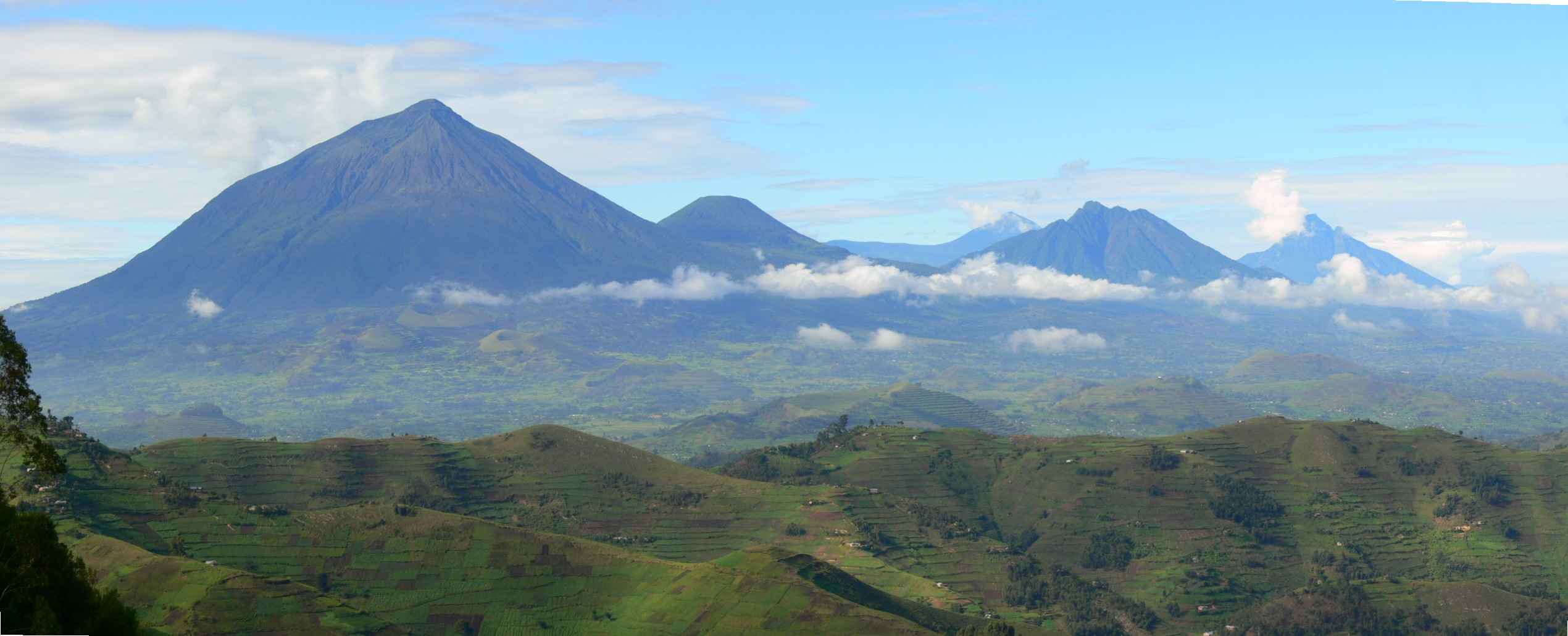
Travel information reviewed 25 October 2026Hero: Byekwaso Blasio / Wikimedia Commons, CC BY-SA 4.0.
Mgahinga Gorilla National Park at a glance
Mgahinga is Uganda’s smallest national park, but one of its most distinctive. On the country’s southwestern border with Rwanda and the Democratic Republic of the Congo, it protects bamboo and montane forest on the slopes of Sabyinyo, Gahinga and Muhabura. Visitors come mainly for guided mountain-gorilla visits, endangered golden monkeys and steep volcano walks.
Quick answers
Explore related African national park guides, Volcanoes National Park in Rwanda and Bwindi’s gorilla trekking sectors.
When is the best time to visit Mgahinga?
June to August and December to February are useful starting points for trip planning because they are often relatively drier. Rainforest weather is variable, with mist and heavy showers possible even in drier months.
Jun–Aug
Often favourable for longer volcano hikes; book gorilla permits and lodge rooms early.
Dec–Feb
Another popular window; morning starts still bring cold air and cloud.
Mar–May
Typically wetter, muddier footpaths. Check whether any UWA low-season permit incentive applies to your date.
Sep–Nov
Rain can make steep tracks demanding; forest colours and fewer visitors reward flexible trekkers.
Photography tip: carry a dry bag, lens cloth and protection for your camera even if the morning looks clear.
Mgahinga gorilla and golden-monkey permits (2026)
The Uganda Wildlife Authority publishes conservation tariffs by activity and visitor-residency category. Do not use an old universal US-dollar figure without checking the current tariff and any seasonal promotions. Rates can differ for foreign non-residents, foreign residents, other African visitors and East African citizens.
Check UWA’s official site and its 2026–2028 conservation tariff before payment. Ask UWA or your licensed safari operator to confirm the latest gorilla, golden-monkey and hiking charges, cancellation conditions and required identity documents.
Gorilla tracking is subject to UWA health and age rules; check all current visitor restrictions and never visit with an infectious illness.
Getting to Mgahinga: Kisoro, Ntebeko and air access
Most travellers overnight in Kisoro or around Lake Mutanda and arrange a private transfer to the park’s briefing and trailhead facilities in the Ntebeko area. Routes may be slow after rainfall. Verify the correct morning reporting point when your permit is issued.
| Base / access | Best for | Planning note |
|---|---|---|
| Kisoro town | Practical hotels, supplies and transfers | Confirm the distance and road surface to the actual trailhead. |
| Lake Mutanda | Scenic lakeside lodge stays | Ask lodges about very early park transfers and road conditions. |
| Ntebeko area | Treks and official briefing | Report at the exact time/point communicated by UWA. |
| Kisoro Airstrip | Domestic fly-in transfers when scheduled | Flight schedules, baggage and onward road transfers require confirmation. |
Road travel from Entebbe/Kampala takes a substantial part of a day; do not plan a long transfer followed immediately by a strenuous trek. Cross-border arrivals from Rwanda must account for immigration, border-opening hours and visa eligibility.
Mgahinga map: volcanoes and visitor bases
Use this OpenStreetMap orientation map to understand the three volcanic peaks, Kisoro and the national-park landscape. All plotted points are approximate regional reference points, not verified trekking trailheads or navigable routes. Follow park staff for actual walking routes.
Base tiles © OpenStreetMap contributors. Location markers and plan are schematic; use approved local guides.
How to plan a successful trek day
Previous evening
Confirm your UWA permit, briefing time, pickup, lunch, porter arrangement and passport/ID category. Prepare waterproof layers and boots.
Early morning
Eat before departure and arrive for the ranger briefing with time to spare. Consider a walking stick or hired porter.
During the trek
Expect slippery roots, steep slopes and an unpredictable walking duration. Your guides determine distance, proximity and time near primates.
After return
Allow recovery time and avoid a tightly scheduled border crossing or flight that afternoon.
Suggested three-night plan: arrive in Kisoro or Lake Mutanda; dedicate one full day to gorillas; spend a second activity day with golden monkeys or a shorter walk; depart the following morning. Add a day for a serious volcano ascent.
Mammals of Mgahinga: a practical field guide
Gorillas and golden monkeys are the headline animals. This is not a drive-through mammal checklist: many other animals are shy, nocturnal, use transboundary habitats or are unlikely to be seen on tourist routes. Some entries below are regional forest fauna rather than predictable sightings.
Tracked on ranger-led visits to a habituated group; sightings are permit-dependent.
A Virunga specialty; scan bamboo stands during official monkey walks.
Present but seldom a target of regular tourist walks; keep distance.
Elephants use transboundary forests; encounters are uncommon and require ranger guidance.
Elusive forest-edge mammal; look for ground disturbance rather than expecting sightings.
Secretive antelope that may appear along forest edges.
Small, elusive highland forest antelope; difficult to see.
Occasional in edges and more open habitats; rarely spotted on day treks.
Mostly nocturnal and not a routine visitor sighting.
Uncommon, well camouflaged in montane grassy patches.
Nocturnal; tracks may be more likely than encounters.
Forest-dwelling omnivore; signs of rooting may be visible.
Forest primate; look into the canopy and listen for movement.
Often heard calling around forests, much harder to spot.
Wetland-associated; not a reliable target in this mountainous park.
Birds of Mgahinga and the Virunga highlands
Altitude, bamboo and montane forest make Mgahinga rewarding for Albertine Rift birding. Ask for a specialist bird guide and listen before scanning dense cover. Not every species below is routinely recorded on accessible trails.
Loud calls and vivid plumage in montane forest.
Quiet forest-floor bird; requires patience.
Montane forest-edge and dense cover.
Skulking finch of bamboo and highland understory.
Bright highland sunbird; watch flowering shrubs.
Forest canopy and flowering trees.
High-altitude shrubs and edges.
Highland forest mixed flocks.
Listen for song in dense montane vegetation.
Marshy highlands in its regional range; not a guaranteed park sighting.
Canopy and forest edges.
Montane scrubby vegetation; use local guide for identification.
Flora: bamboo, montane trees and highland plants
Trees, bamboo and shrubs
Prominent high-montane tree, conspicuous in mature habitat.
Supports feeding golden monkeys.
High-altitude slopes; species ID needs care.
Unusual Afro-alpine plants on exposed high slopes.
Dominant woody heath on upper volcanic slopes.
Flowers, ferns and understory
Lush edges; avoid brushing against foliage.
Woody highland transition zones.
Moist, shaded gullies and sheltered woodland.
Epiphytes and ground orchids in humid forest; do not pick.
Coat shaded trunks and wet rocks.
Fern understory in cool humid forest.
Marsh and crater-wetland vegetation.
Plant IDs are illustrative of highland habitats; many species need expert field identification. Leave all plants undisturbed.
Things to do in Mgahinga Gorilla National Park
Gorilla trekking
Track a habituated family with UWA rangers. Secure a date-specific permit first; walking duration varies.
Golden-monkey tracking
Search bamboo habitat with guides for one of the Virungas’ most distinctive endangered primates.
Mount Gahinga hike
Climb through bamboo and heather toward the volcanic highlands, subject to weather and guide advice.
Mount Sabyinyo hike
A demanding steep summit option known for ladders and dramatic borderland scenery; assess your fitness and conditions.
Mount Muhabura climb
A long, physically demanding ascent with exposed high-altitude conditions. Plan a separate full hiking day.
Birding and community experiences
Ask UWA about guided bird walks and the current availability of recognised community-led cultural activities.
Where to stay near Mgahinga: lodges and hotels
Staying in Kisoro is convenient for supplies and transport; Lake Mutanda provides a more scenic base but may mean a longer early-morning road transfer. Always confirm real driving times to your assigned briefing point.
Travellers Rest Hotel, Kisoro
A straightforward base in town, convenient for arranging local transfers and exploring the southwest. The hotel has a dedicated Expedia listing; rates and room availability vary by date.
Check Travellers Rest on ExpediaMore accommodation in Kisoro
Compare rooms in and around Kisoro and ask each property whether it can organise morning transport to Ntebeko. Filter by refundable rates if permit schedules may change.
Compare Kisoro hotels on ExpediaLake Mutanda and the Virunga slopes
Scenic lodges can be ideal for a longer stay, but several high-end options primarily use direct enquiries rather than ordinary hotel-booking inventory. Compare road access and transfer logistics before choosing.
Affiliate disclosure: See.Africa may earn a commission from qualifying Expedia bookings at no additional cost to you. Affiliate buttons lead to Expedia and do not reserve gorilla permits.
Safety and park rules
Obey the latest briefing from Uganda Wildlife Authority: do not approach animals independently, do not feed wildlife, carry out all litter, and follow ranger instructions on distance, illness, photography and time with primates. Do not enter Uganda’s borderland trails without official park permission.
For families and travellers with mobility, medical or age-related considerations, ask UWA to confirm activity eligibility before purchasing permits.
Frequently asked questions about Mgahinga
Can you see gorillas in Mgahinga?
Yes. Mgahinga offers UWA-managed gorilla trekking, but permits are limited, the gorillas move freely and sightings are never guaranteed.
Is Mgahinga or Bwindi better?
Choose Mgahinga for a compact volcanic setting, golden monkeys and challenging hikes; Bwindi offers more trekking sectors and a larger range of accommodation bases. Permit availability often decides.
How many days are enough?
Allow at least two nights for one main trek. Three or four nights let you combine gorillas, golden monkeys and a mountain hike without rushing.
Can I self-drive inside the park?
This is a guided trekking park, not a self-drive game-drive destination. Use a car to reach the official briefing point, then walk with authorised staff.
When is the best time?
June–August and December–February often offer relatively easier hiking conditions, but rain can occur all year in the mountains.
Do permits include hotels?
No. Confirm the permit inclusions directly with UWA or an authorised operator; accommodation and road transfers are normally arranged separately.
What should I pack?
Waterproof walking boots, rain jacket, long trousers, gardening-style gloves for vegetation, drinking water and a warm layer for higher elevations.
Can I book a gorilla trek on arrival?
Do not rely on walk-in availability. Gorilla permits have limited capacity and should be secured before booking non-refundable travel.
Official sources and how this guide was checked
See.Africa reviewed official Uganda Wildlife Authority material and conservation publications on 25 October 2026. Trail conditions, prices, permit categories and access rules may change: always use written UWA confirmation and local ranger instructions as the final authority.
- Uganda Wildlife Authority — official park and booking information
- Uganda Wildlife Authority — 2026–2028 tariff (verify live document)
- Republic of Uganda — Mgahinga management and landscape report (December 2025)
- Uganda Wildlife Authority — State of Wildlife Resources (2026)
Our mapped points are approximate, and wildlife sightings cannot be guaranteed. Return to all See.Africa national park guides.
Leave a Reply