
Kafue National Park Guide
Choose your Kafue safari area with a detailed map, Busanga Plains advice, river camps, wildlife, birding, seasons, access and practical itineraries.
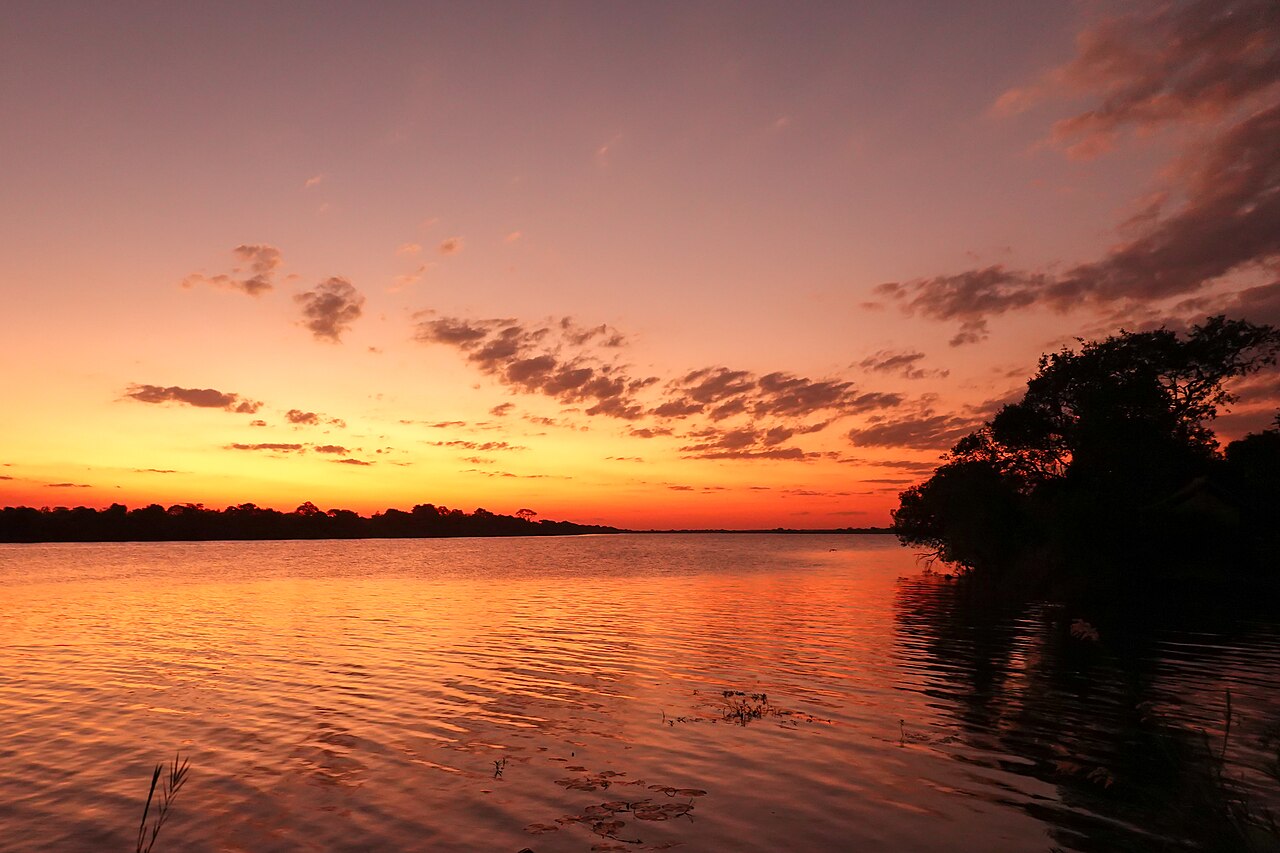
Sunset over the Kafue River in the park’s river landscape. Photo: This Photo was taken by Timothy A. Gonsalves. Feel free to use my photos, but please mention me as the author. I would much appreciate if you send me an email tagooty@yahoo.com or write on my talk page, for my information. Please contact me before commercial use. Please do not upload an edited image here without consulting me. I would like to make corrections only at my own source to ensure that the changes improve the image and are preserved.Otherwise you may upload an edited image with a new name. Please use one of the templates derivative or extract. · CC BY-SA 4.0. Resized and cropped for this layout.

Kafue National Park at a glance
Kafue rewards a safari built around habitats rather than a single famous sighting. Its rivers, miombo woodland, southern plains and seasonally flooded Busanga country feel like several journeys within one enormous park. A first visit works best when you choose one or two regions and give each time. The variety of antelope is a particular pleasure: learning puku, sable, roan and lechwe can be as memorable as finding a lion. This is a substantial destination in its own right, not a quick detour between Lusaka and Livingstone.
Official sources · checked 8 September 2026: African Parks: Kafue management and biodiversity · Visit Kafue: official day visitor and activity information. Confirm arrangements for your travel date.
When is the best time to visit Kafue?
For a first general wildlife visit, May–October is a useful planning window. Roads usually become more manageable as the wet season recedes, vegetation opens and wildlife uses remaining water. June–August brings cool mornings, while September and October can be very hot. Busanga operates on its own floodplain timetable: many visits concentrate in the later dry season, but exact opening and closing dates belong to the chosen camp. November–April can bring rich colour, birds and dramatic skies; rain may also restrict roads or close seasonal accommodation. River lodges with suitable access can offer a different experience from a remote plains camp in the same month. Ask about the route to your actual bed, not simply whether “Kafue is open.” Leave flexibility for a slower transfer after rain.
Typical seasonal pattern, not a forecast or a guarantee of road access. Current local conditions take priority.
Which Kafue area suits your trip?
| Area | Best for | What to expect | Planning point |
|---|---|---|---|
| Central Kafue River and Chunga | A practical first base | River scenery, woodland drives and a relatively accessible introduction to the park. | Match the camp to the correct side of the river and confirm the final crossing or transfer. |
| Lufupa and north-central country | A quieter mixed-habitat stay | Waterways, open patches and woodland reward several unhurried drives. | Longer internal transfers can consume much of a day. |
| Busanga Plains | Seasonal floodplain wildlife and wide horizons | Flood recession creates a changing mosaic of wet grassland, channels and drier islands. | Choose a camp whose operating dates and access fit your travel window. |
| Itezhi-Tezhi and Ngoma | Southern lake-and-woodland exploration | The lake landscape gives a different setting from the main river corridor. | A waterbody pin is not a boat launch; use agreed camp and park directions. |
| Nanzhila Plains | A southern safari with open-ground and woodland contrasts | A rewarding region for antelope and birding on a well-planned southern itinerary. | Allow time for access from the south and avoid treating Busanga as a nearby day excursion. |
Kafue entry fees, permits and opening hours
A complete, clearly dated current person-entry and vehicle tariff was not available in the official visitor material reviewed. Obtain an itemised quote from the park or your booked operator. Separate park entry, vehicle charges, accommodation or camping, activities and any conservation or transfer charges. Ask whether prices are per person per day or night, which residency category applies, and how a change of camp affects fees. Old campsite brochures can help identify facilities but should not be treated as a current total safari price.
Official sources · checked 8 September 2026: Visit Kafue: official day visitor and activity information. Confirm arrangements for your travel date.
Opening hours
Confirm the current entry, exit and activity reporting times with the park and your camp. Plan a daylight arrival. Guided night drives are separately arranged activities for overnight guests and do not authorise independent driving after hours.
Official sources · checked 8 September 2026: African Parks: Kafue management and biodiversity · Visit Kafue: official day visitor and activity information. Confirm arrangements for your travel date.
How do you get to Kafue?
Lusaka via Mumbwa is relevant to many central and northern arrivals; Livingstone, Kalomo and the southern approaches suit a different set of camps. The main east–west road through central Kafue provides access to the river region, but reaching a remote camp can still require a long final drive. Ask the camp for its exact turnoff, road condition, crossing arrangement and realistic arrival window. Flying into a confirmed safari airstrip can save a substantial transfer, especially for a short Busanga stay, but requires an agreed camp pickup and baggage allowance. Self-drivers should refuel outside the park, carry a useful water and food reserve, and travel with offline directions and a breakdown plan. A nearby lodge across the river may be farther away by road than the map suggests.
Official sources · checked 8 September 2026: African Parks: Kafue management and biodiversity · Visit Kafue: official day visitor and activity information. Confirm arrangements for your travel date.
Kafue safari map: 28 useful places
Use this map to compare bases and understand the landscape. Search by place or filter by type. All locations are approximate orientation points; current park, guide and lodge directions override the map.
Loading map near this section. All places are also listed below.
All 28 map places and access notes
- Chunga Gate · Gates & visitor centresCentral entry reference. Obtain the current open-road circuit and camp directions. Map source. Approximate.
- Chalanta Gate · Gates & visitor centresEastern/northern approach; confirm that it suits your booked camp. Map source. Approximate.
- Kabanga Gate · Gates & visitor centresNorthern approach reference; current access and reporting arrangements need confirmation. Map source. Approximate.
- Chunga visitor-base area · Gates & visitor centresPark-camp and administration area; verify the exact reporting point and available facilities. Map source. Approximate.
- Mukambi Safari Lodge · Camps & lodgesCentral river base. Confirm bank, entry and transfer arrangements. Map source. Approximate.
- Ila Safari Lodge · Camps & lodgesCentral Kafue River accommodation reference; verify current operation and inclusions. Map source. Approximate.
- Mayukuyuku Lodge · Camps & lodgesRiver-side base; separate park fees and activities may apply. Map source. Approximate.
- Mayukuyuku camping · Camps & lodgesCamping reference distinct from lodge rooms. Confirm ablutions, water and booking. Map source. Approximate.
- Kasabushi Lodge · Camps & lodgesRiver-corridor base; obtain precise arrival instructions. Map source. Approximate.
- Kasabushi campsite · Camps & lodgesConfirm equipment, water, camp rules and activity availability. Map source. Approximate.
- Kaingu Lodge · Camps & lodgesRiver-side accommodation reference. Ask which bank and access road your transfer uses. Map source. Approximate.
- Kaingu rapids camping area · Camps & lodgesMapped campsite reference; rapids are not a swimming invitation. Map source. Approximate.
- Pinnon Safari Lodge · Camps & lodgesCentral river-region base; verify the final road and included activities. Map source. Approximate.
- Mu-Fungata lodge and camp · Camps & lodgesMapped river-corridor option; confirm current operation and access. Map source. Approximate.
- Musekese Camp · Camps & lodgesNorth-central camp reference; arrange the responsible operator’s transfer. Map source. Approximate.
- Lufupa camp area · Camps & lodgesRiver-confluence region. Confirm which facilities and routes are operating. Map source. Approximate.
- McBride’s Camp · Camps & lodgesNorthern river-country base; plan the longer approach with the camp. Map source. Approximate.
- Mozhi Bush Camp · Camps & lodgesNorthern camp reference. Confirm operating season and route conditions. Map source. Approximate.
- Bongololo campsite · Camps & lodgesNorthern camping reference requiring a current booking and facilities check. Map source. Approximate.
- Shumba Camp · Camps & lodgesSeasonal Busanga-region base; dates and access depend on floodplain conditions. Map source. Approximate.
- Busanga Bush Camp · Camps & lodgesSeasonal plains accommodation; use the operator’s confirmed transfer. Map source. Approximate.
- Chisa Busanga Camp · Camps & lodgesBusanga reference; confirm seasonal operation and final access. Map source. Approximate.
- Busanga Plains Camp · Camps & lodgesPlains camp reference, not a live availability check. Map source. Approximate.
- Nanzhila Plains Safari Camp · Camps & lodgesSouthern plains base. Allow substantial time before combining with northern Kafue. Map source. Approximate.
- Nanzhila Lake Camp · Camps & lodgesSouthern lake-region base; verify water levels and arrival arrangements. Map source. Approximate.
- Konkamoya Lodge · Camps & lodgesItezhi-Tezhi-region accommodation reference. Confirm road and activity availability. Map source. Approximate.
- Musungwa Lodge — lake-side base · Camps & lodgesWider Itezhi-Tezhi base. Confirm boundary position and entry arrangements. Map source. Approximate.
- New Kalala — lake-side base · Camps & lodgesRegional accommodation reference; verify current operation and final road. Map source. Approximate.
Map references include official park material where specified below, plus OpenStreetMap contributors, checked 8 September 2026. Selected and labelled by See.Africa. Waterbody-centre pins and summits are geographic references, not destinations for direct navigation. Accommodation and airstrip operation must be confirmed. No live animal locations or verified driving route is shown.
A practical Kafue itinerary
Three nights: learn one region
Choose a river or southern base with suitable access. Use the first afternoon locally, then alternate a slow morning drive with a different habitat or a booked water activity. Repeating a productive circuit at another time of day often reveals more than constantly moving to unfamiliar ground.
Five nights: river plus Busanga
Spend two nights in river country and three on the plains, or reverse the order according to flights and camp availability. Treat the transfer as a significant part of the itinerary. A shorter stay in each place can leave too little time for weather or an unusually quiet drive.
Southern circuit: Nanzhila and the lake
Combine a southern plains stay with an Itezhi-Tezhi-side base when the route is open. Watch how grazing animals use grassland edges and how birds change near water. Arrange any boat activity before arrival rather than assuming every lakeside camp offers the same programme.
A specialist extension
Add guided walking, focused birding or an authorised night drive through the responsible operator. Ask about fitness, minimum age, group size and what happens in unsuitable weather. A specialist activity needs its own time; it should not compete with an already long transfer day.
Where should you stay in Kafue?
Choose geography before comparing room categories. A central river camp, a seasonal Busanga camp and a southern plains camp can all be excellent yet serve different trips. Mukambi, Ila, Mayukuyuku, Kasabushi and Kaingu illustrate the range along the wider river corridor; Musekese and Lufupa-side bases place you differently within the northern landscape. Busanga options include Shumba, Busanga Bush Camp and Chisa, subject to current operation. Nanzhila and lake-side properties support a southern itinerary. Confirm whether the accommodation itself is inside the park, across a river or in an adjoining managed area. For camping, obtain clear information on water, ablutions, fire arrangements and where to report; remote self-sufficiency should be planned rather than discovered on arrival.
Kafue mammals to look for
Kafue’s antelope diversity is one reason to spend time in more than one habitat. Puku favour suitable moist grazing, while sable and roan are associated with different woodland-and-grassland mosaics. Lechwe require the right wetland area, and Zambia’s different lechwe forms should not be confused. Large predators range widely: an impressive species list does not mean all are likely beside one camp. Ask the guide what the local conditions favour today.

African bush elephant
The broad ears, curved tusks and long trunk are unmistakable. Watch how a family spreads out to feed, then regroups before moving. Stop well back from the herd and leave its crossing route open; a close calf is a reason to retreat, not advance.


African buffalo
A heavy, dark bovid with a sweeping horn boss in mature bulls. Herds graze and rest together, while solitary bulls may stay close to cover. Buffalo can be difficult to read at close range: observe from the vehicle or follow your walking guide’s exact instructions.
_male_with_cattle_egret.jpg)

Lion
Lions spend much of the day resting, so search shade as carefully as open ground. Dawn and late afternoon improve the chance of movement, but a sleeping pride is a normal encounter. Listen to your guide and avoid surrounding animals with vehicles.


Leopard
Rosettes, a long tail and a powerful, low body distinguish this secretive cat. Search riverine trees, shaded rocks and dense drainage lines. A leopard can disappear in apparently thin cover; patient scanning is more useful than assuming that a radio report guarantees a sighting.
.jpg)

Cheetah
A lightly built cat with solid spots and black tear marks below the eyes. It often uses low rises to scan for prey. Give hunting animals room and never move ahead to create a photograph: a vehicle can interrupt an energetically costly hunt.


African wild dog
Large rounded ears, irregular dark-and-tan coats and white tail tips identify this wide-ranging pack hunter. Even in suitable parks, encounters are unpredictable. Let moving packs pass freely and never request a visit to a den or a pursuit across unpermitted ground.


Spotted hyena
Sloping shoulders and rounded ears help separate it from other large carnivores. This is an effective hunter as well as a scavenger. Animals travelling at dawn, resting near drainage lines or calling after dark reveal a social life easily missed on a hurried drive.
.jpg)

Hippopotamus
Ears, eyes and nostrils are positioned high on the head for a life largely spent in water. Pods may look placid, but hippos are powerful and territorial. Use designated viewpoints and guided boats; never walk between an animal and its route back to water.


Puku
A warm golden antelope associated with moist grassland and river margins. Males have ridged horns while females lack them. Compare the face, body proportions and habitat with impala and waterbuck. A grazing group can show how small changes in ground moisture divide feeding areas between antelope.


Red lechwe
An antelope adapted to wet grassland, with a raised rump and long, spreading hooves that help on soft ground. Males carry sweeping horns. Lechwe forms differ across Zambia: this red lechwe profile should not be used to identify the distinct Kafue Flats population solely from the park’s name.
_male.jpg)

Sable antelope
Backward-curving horns, strong facial markings and a dark adult male coat are striking field clues. Females and young animals are browner. Search woodland openings rather than expecting every herd on the riverbank; a slow drive through suitable habitat is worthwhile.
_adult_male.jpg)

Roan antelope
Large ears with dark tips, a pale reddish coat and a boldly marked face distinguish this substantial antelope. It can be local and elusive. Watch grassy woodland quietly and avoid turning the presence of suitable habitat into a promise that a herd will appear.
_Mlilwane.jpg)

Greater kudu
Large ears, narrow pale body stripes and the male’s long spiral horns help identify this woodland browser. Kudu can freeze and blend into scrub remarkably well. Scan the shady side of thickets; a pair of ears is often the first thing you notice.


Waterbuck
A shaggy coat, robust build and affinity for water are the main clues. Rump patterns differ between forms and regions. Look at the woodland–grassland boundary near rivers or lakes, where animals can graze while remaining within reach of shade and water.


Impala
The slender body, black tail stripe and dark markings above the hind feet are useful clues. Males have lyre-shaped horns. Pause to watch bachelor groups or territorial behaviour: familiar antelope are often the best animals for learning how a safari ecosystem works.
_male_Serengeti.jpg)
Kafue birds and habitat clues
A balanced birding visit mixes river margins, wet grassland and miombo. Cranes need suitable wetland habitat, while river specialists may be seen on a quiet boat outing. Pel’s fishing-owl is a difficult specialist target and should be sought with appropriate local guidance without disturbing roosts. Common kingfishers and fish eagles offer rewarding behaviour while you wait. Seasonal conditions matter more than a long undifferentiated checklist.

Wattled crane
A very tall crane with a pale neck, grey body and hanging throat wattles. Wet grassland and marsh edges are the key habitats. Watch with binoculars from an existing route; approaching a feeding or breeding pair can disrupt birds using a limited patch of suitable ground.


Grey crowned crane
The golden crown, white cheek patch and elegant grey body are unmistakable. Pairs or family parties feed in damp grassland. Watch from a distance and avoid approaching birds in breeding habitat or following chicks for photographs.
.jpg)

Pel’s fishing owl
This large ginger-brown owl roosts in dense riverside trees and fishes mainly at night. It is a specialist target even where habitat is excellent. Use a guide who protects roosting birds, and avoid flash, playback or repeated approaches.


African fish eagle
The white head and chest contrast with dark wings; its carrying call is a classic sound of African waterways. Scan exposed trees beside lakes and rivers. A bird returning to the same perch can offer better observation than following it in flight.
.jpg)

Pied kingfisher
A black-and-white kingfisher often seen hovering above open water before a vertical plunge. Check wires, reeds and low perches near shore. Following its feeding pattern is a useful way to watch behaviour without approaching a nest bank.
_male.jpg)

Malachite kingfisher
A tiny blue-and-orange bird that favours low perches beside water. It can disappear against reflections despite its bright colours. Scan patiently along reed edges with binoculars and remain on the permitted path or in the boat.
.jpg)

Southern carmine bee-eater
Brilliant carmine plumage and a long tail stand out when this seasonal visitor is present. It catches insects in flight and may gather near suitable feeding areas. Ask about current seasonal presence rather than expecting it on every safari.
_(16732824032).jpg)

Goliath heron
An enormous heron with a chestnut head and neck and grey wings. It often stands motionless in shallow water. Watch through binoculars and wait for a slow strike: its deliberate feeding rhythm rewards an unhurried boat or shoreline stop.
.jpg)

Saddle-billed stork
A tall black-and-white stork with a striking red, yellow and black bill. It stalks shallow water deliberately. Look along quiet margins and flooded grassland, where reflections can make a stationary bird surprisingly difficult to separate from its surroundings.


Martial eagle
A very large eagle with broad wings; adults have a dark upper chest and spotted pale belly. Search high perches and scan soaring raptors carefully. Size alone is unreliable, so use shape and plumage rather than a distant silhouette as proof.
.jpg)

Bateleur
A short-tailed eagle that rocks gently as it patrols. Adults show a red face and contrasting wing colours, while young birds are brown. Learn the wing shape first; backlighting can hide the features that make an adult so distinctive.
_male_Serengeti.jpg)

Southern ground hornbill
Large black birds with red facial skin often walk in family groups, searching for food. The white flight feathers are conspicuous when they fly. Keep to the road and never use food to draw a group toward the vehicle.
_male_(12714625605),_crop.jpg)
Kafue plants and habitats
Miombo woodland
Brachystegia and related woodland communities occupy much of the wider landscape. Seasonal leaf colour and canopy density change visibility, and a woodland drive can reward birding even when mammals are concealed.
Floodplain grassland
Busanga’s vegetation follows flood and drying cycles. Small differences in water depth create different feeding opportunities; a route used late in the season may be underwater earlier.
Riverine woodland
Larger trees and persistent moisture give shade, bird perches and sheltered movement corridors. Compare the river edge with drier ground a short distance away.
Southern plains and woodland edges
Nanzhila’s habitat mosaic makes transitions worth watching. Antelope may feed in the open and retreat to cover; stopping at an edge can be more useful than driving straight through it.
Lake margins
Itezhi-Tezhi’s exposed shoreline changes with water levels. Fresh growth can attract grazers, but mud, submerged obstacles and wildlife make informal shoreline access inappropriate.
Plant identification may require leaves, flowers, fruit and a knowledgeable guide. Do not collect plants or leave authorised routes to inspect them.
What can you do in Kafue?
Watch antelope carefully
Learn a few species well: horn shape, rump markings, group structure and habitat can turn an apparently quiet drive into a detailed safari.
Arrange a river outing
Use an authorised operator and confirm water conditions, launch and inclusions. A boat changes your view of bankside habitat rather than simply providing another way to chase mammals.
Explore Busanga in season
Allow several mornings and evenings for changing light and wildlife movement. Choose the camp and dates before building the rest of the journey around this region.
Book a guided walk
Walking highlights tracks, plants and the smaller details missed from a vehicle. Follow the guide’s route and instructions; independent walking is not implied by ordinary entry.
Rules and practical precautions
Use open authorised roads and follow the park’s current activity rules. Do not swim in rivers or lakes, drive off-road to a sighting, or approach wildlife on foot without the required guide. Catch-and-release fishing still needs the appropriate permission and open season. Confirm camp access and communications before entering remote sectors.
Give wildlife space
Never feed, surround or block an animal. Keep food secure, voices low and movements predictable. Your guide or ranger’s instructions take priority over a desired photograph.
Prepare for your actual activity
Bring water, sun or rain protection as appropriate, suitable footwear and charged equipment. Tell the operator about relevant mobility needs before booking so the route and vehicle can be matched to you.
Official sources · checked 8 September 2026: African Parks: Kafue management and biodiversity · Visit Kafue: official day visitor and activity information. Confirm arrangements for your travel date.
Kafue travel FAQ
How large is Kafue National Park?
Kafue covers about 22,400 square kilometres. Its size makes choosing a region and realistic transfer plan essential.
What is the best time for a first visit?
May–October is a useful general dry-season window. Busanga’s floodplain access and camp dates need separate confirmation.
Can I combine Busanga and southern Kafue in three nights?
That is usually too rushed for a rewarding first visit. Choose one region for a short stay or allow more nights for substantial internal transfers.
Are current entry fees included in lodge prices?
Sometimes, but inclusions vary. Obtain a written breakdown covering park entry, vehicle, accommodation, activities and transfers for your visitor category.
Do I need a 4×4?
A 4×4 is prudent for remote or wet routes. The official visitor information says some circuits around accessible visitor areas can be planned without one in suitable conditions; ask about your exact route.
Is Kafue good for birdwatching?
Yes. River, wetland, grassland and woodland habitats support a varied birding trip. Match specialist targets to the correct habitat, season and guide.
Sources, method and review date
This guide combines official park and operator information with editorial planning advice. Operational details were checked on 8 September 2026. Season descriptions are typical patterns, and suggested stays are planning recommendations. Wildlife profiles explain identification and habitat; they do not promise sightings.
Wildlife and image references
Species names and identification photographs were checked against the linked reference and image records. Photographs are identification examples and may have been taken elsewhere. Each image carries its own creator and licence credit.
Species reference links
African bush elephant · African buffalo · Lion · Leopard · Cheetah · African wild dog · Spotted hyena · Hippopotamus · Puku · Red lechwe · Sable antelope · Roan antelope · Greater kudu · Waterbuck · Impala · Wattled crane · Grey crowned crane · Pel’s fishing owl · African fish eagle · Pied kingfisher · Malachite kingfisher · Southern carmine bee-eater · Goliath heron · Saddle-billed stork · Martial eagle · Bateleur · Southern ground hornbill