
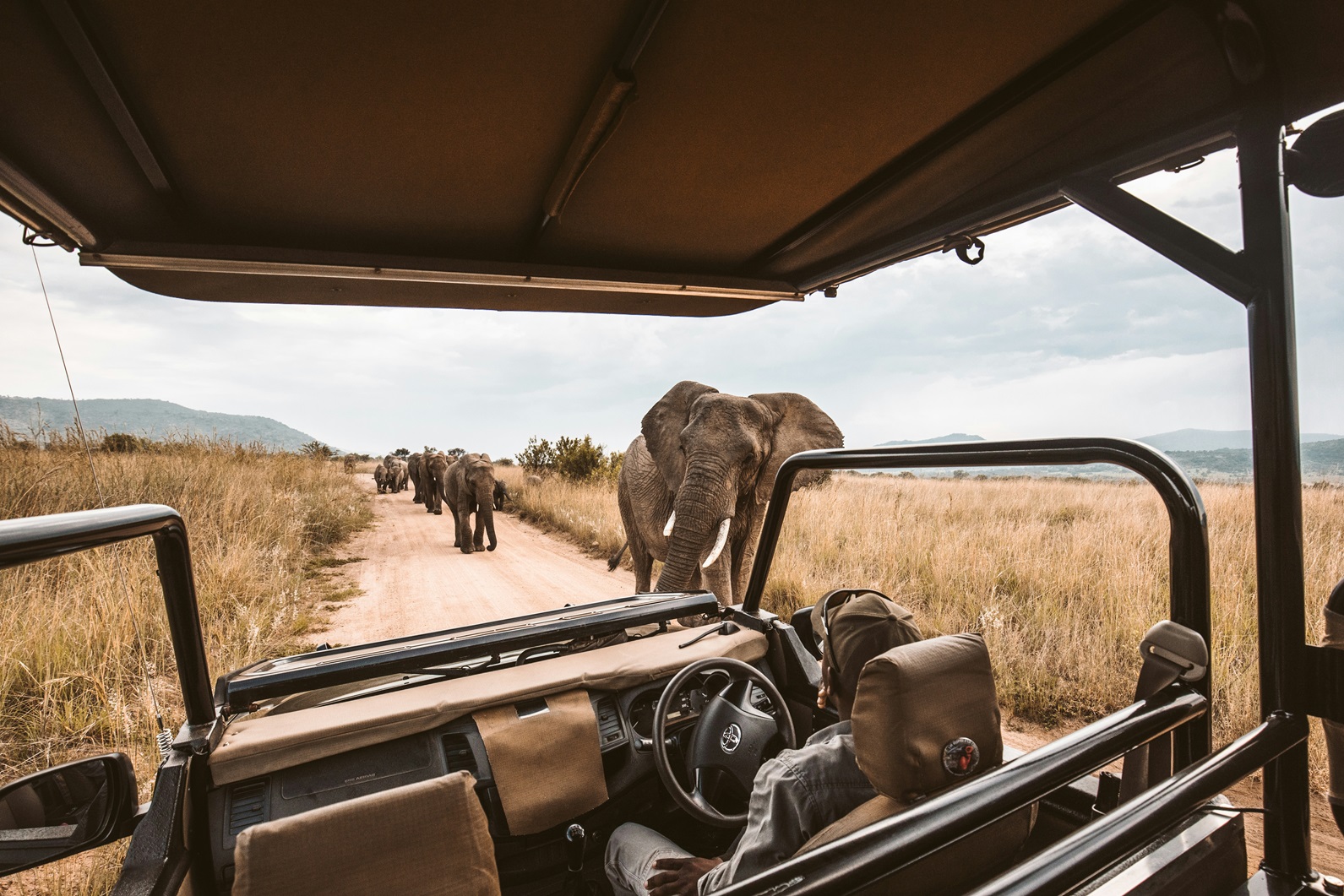
Best Malaria-Free Safari Destinations in Africa
South Africa is the strongest place to plan a true malaria-free Big Five safari. Madikwe and Pilanesberg give you classic savanna wildlife in the North West, while Addo and the Eastern Cape private reserves make it easy to combine safari with Cape Town or the Garden Route. This guide compares the destinations first — before you choose a lodge.
✓ Destination and malaria-status information reviewed 6 September 2026Quick answer: where is the best malaria-free safari in Africa?
Madikwe Game Reserve is our strongest all-round malaria-free safari destination for Big Five wildlife, lodge depth and a true private-safari feel. Addo Elephant National Park is the strongest self-drive option, Pilanesberg is the easiest from Johannesburg, and the Eastern Cape private reserves are best for combining safari with Cape Town or the Garden Route.
How we define “malaria-free” — reviewed 6 September 2026: we start with South Africa’s National Department of Health malaria geography, which places local transmission mainly in low-altitude parts of Limpopo, Mpumalanga and KwaZulu-Natal, and then require a destination-level confirmation from the relevant park, reserve or tourism authority where available. For example, SANParks explicitly calls Addo malaria-free, while the Pilanesberg Wildlife Trust explicitly describes Pilanesberg as malaria-free. “Malaria-free” does not mean mosquito-free, and another stop on your itinerary can change your malaria advice.
Best malaria-free safari destinations compared
| Destination | Province / area | Wildlife style | Best for | Planning advantage |
|---|---|---|---|---|
| Madikwe Game Reserve | North West | Big Five + wild dogs | Premium first safari | Deep lodge choice in malaria-free reserve |
| Addo Elephant National Park | Eastern Cape | Elephants + Big Five | Self-drive | SANParks park, malaria-free area |
| Pilanesberg Game Reserve | North West | Big Five volcanic landscape | Short Johannesburg trips | ~2 h from Johannesburg |
| Shamwari / Eastern Cape reserves | Eastern Cape | Guided private safari | Luxury + family | Pairs well with Cape Town/Garden Route |
| Kwandwe | Eastern Cape | Conservation-focused Big Five | Luxury + privacy | Private airstrip / Gqeberha access |
| Pumba | Eastern Cape | Big Five + lodge safari | Easy luxury add-on | ~110 km from Gqeberha airport |
| Gondwana Game Reserve | Garden Route | Private Big Five | Safari + coast | ~45 min from George Airport |
| Aquila Private Game Reserve | Western Cape | Accessible Big Five-style safari | Cape Town short break | ~2 h / 170 km from Cape Town |
Madikwe Game Reserve
Madikwe is one of South Africa’s premier Big Five malaria-free reserves and the destination we would choose first for a classic lodge-based safari without the malaria geography of Kruger. It has a strong elephant population, wild dogs, more than 350 bird species and a mature luxury-lodge market.
Addo Elephant National Park
Addo is the strongest choice if you want a malaria-free safari that still works extremely well as an independent road trip. SANParks explicitly states that the park is in a malaria-free area. Elephants are the headline species, but Addo also has lion, buffalo, rhino and a much wider conservation landscape.
Pilanesberg Game Reserve
Pilanesberg is one of the easiest malaria-free Big Five destinations to reach from a major international gateway. South African Tourism describes it as roughly a two-hour drive from Johannesburg, with around 200 km of tourist roads and both self-drive and guided options.
Eastern Cape private reserves
The Eastern Cape is the broadest malaria-free private-safari cluster: Shamwari, Kwandwe, Pumba, Kariega and other reserves offer guided game drives, high-end lodges and easy integration into a Cape Town or Garden Route itinerary. This is the region to choose when safari is one part of a broader South Africa trip.
Gondwana Game Reserve
Gondwana gives the Garden Route a genuine private Big Five safari option. Its current directions place the reserve about 45 minutes from George Airport, making it one of the easiest malaria-free safari additions to a coast-and-road-trip itinerary.
Aquila Private Game Reserve
Aquila’s strength is accessibility. The reserve confirms that it is malaria-free and approximately 170 km / two hours from Cape Town. It does not replace a deeper four-night Madikwe or Eastern Cape safari, but it is extremely useful for travelers who have limited time and want a safari-style experience from Cape Town.
Why South Africa dominates the malaria-free safari niche
South Africa’s official tourism guidance identifies Madikwe and Pilanesberg in the North West, the Waterberg in Limpopo and private reserves in the Eastern, Western and Northern Cape as malaria-free game-viewing options. That is unusually valuable because it lets travelers choose between self-drive national parks, private Big Five reserves, family lodges and ultra-luxury stays without leaving the same broad malaria-free travel strategy.
Map: malaria-free safari destinations
Markers show broad park/reserve planning locations, not lodge entrances or wildlife positions.
Malaria-free safari FAQ
Which African country is best for a malaria-free safari?
South Africa is the strongest answer because it has multiple established malaria-free Big Five regions, including Madikwe, Pilanesberg, Addo and private reserves across the Eastern and Western Cape.
Is Addo Elephant National Park malaria-free?
Yes. SANParks states that Addo is situated in a malaria-free area and recommends normal insect repellent, especially in summer.
Is Pilanesberg malaria-free?
Yes. South African Tourism identifies Pilanesberg as a malaria-free Big Five reserve in the North West Province.
Is Madikwe malaria-free?
Yes. South African Tourism describes Madikwe as one of South Africa’s foremost Big Five malaria-free reserves.
Is Kruger malaria-free?
No. Kruger and other low-lying parts of northeastern South Africa are associated with malaria risk, so use current official health guidance for those itineraries.
Does malaria-free mean no mosquitoes?
No. Mosquitoes and other insects can still be present. Use normal bite-prevention measures even in malaria-free safari areas.