
Naivasha Sanctuary Farm Guide
Naivasha Sanctuary Farm is a private wildlife conservancy and working farm on Lake Naivasha where visitors can walk, cycle or ride among giraffes, zebra and antelope, then add a boat trip or guided night drive.
Naivasha Sanctuary Farm at a glance
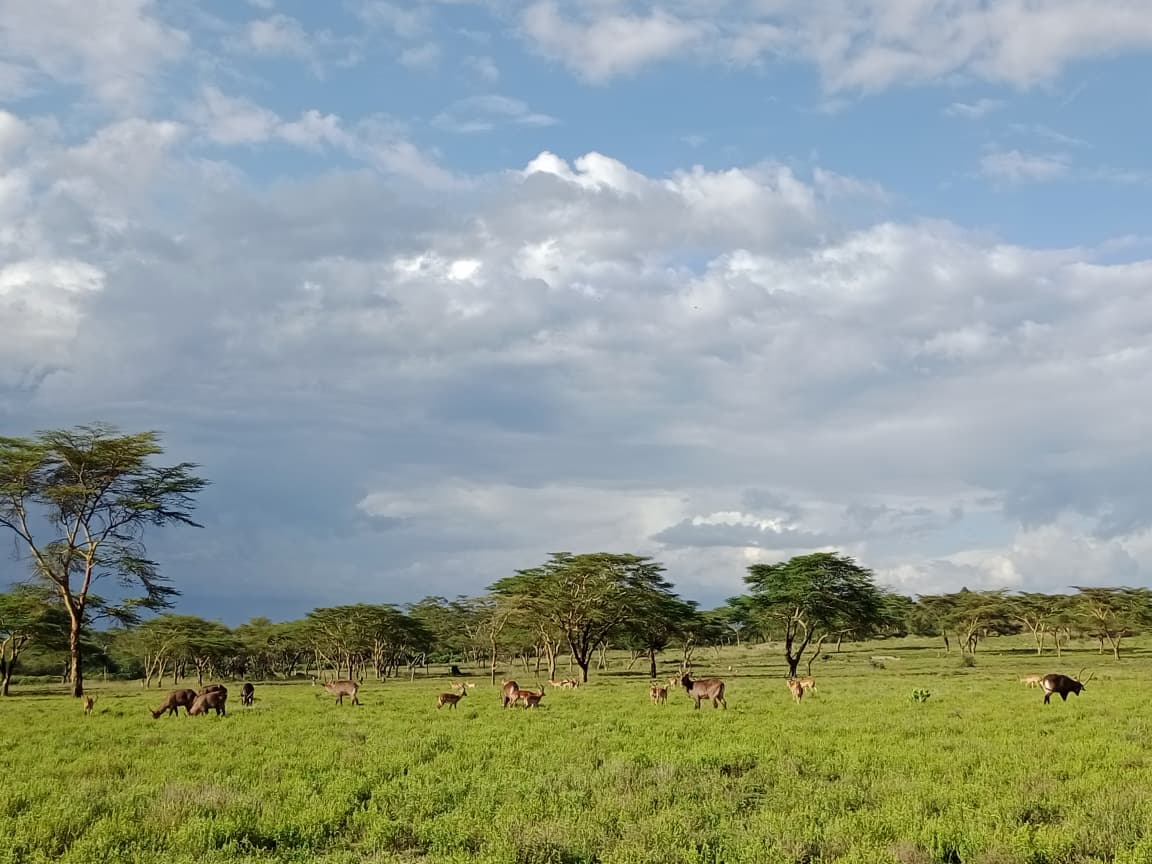
Naivasha Sanctuary Farm sits on the shores of Lake Naivasha in Kenya’s Great Rift Valley. Sanctuary Farm describes itself as a living, working farm and wildlife conservancy, with access to roughly 450 acres of wildlife habitat. The appeal is different from a vehicle-only national park: daytime visitors can explore on foot, by bicycle or on horseback, with wildlife including giraffes, zebras, waterbuck and antelope moving through the conservancy.
Quick answers about Sanctuary Farm Naivasha
Best time to visit Naivasha Sanctuary Farm
Naivasha Sanctuary Farm can be visited year-round. For walking, cycling and horseback riding, early morning is usually the most comfortable time. Drier months generally make tracks easier; wetter months bring greener scenery and strong birding around Lake Naivasha.
Best for walking
Start early before midday heat and use the open grassland while animals are active and light is soft.
Best for birding
Lake-edge vegetation, boat rides and greener periods give the widest mix of waterbirds and woodland species.
Best for night wildlife
Stay on-site or nearby if you want the guided 9 PM night drive rather than trying to fit everything into a Nairobi day trip.
Naivasha Sanctuary Farm prices and activity costs
Sanctuary Farm currently publishes prices for several activities. These were checked on 14 August 2026. Confirm directly before travelling because rates and availability can change.
How to get to Sanctuary Farm Naivasha
Sanctuary Farm is on the Lake Naivasha / South Lake side of Naivasha. The property says car is the easiest way to reach it. Taxis and boda bodas are available locally for shorter journeys, but private transport is recommended for comfort and convenience.
Drive to Naivasha
The official site describes Naivasha as about 90 km from Nairobi and around 1½ hours by road in normal conditions. Traffic can make this longer.
Taxi or boda
Useful for short local transfers. For a full day with equipment, children or an evening return, a private car is easier.
Daytime on foot
Once inside, walking and cycling are core experiences. Do not plan an unguided night walk: the property’s own safety notes warn about hippos.
Naivasha Sanctuary Farm map
This map is for trip orientation, not turn-by-turn navigation. The Sanctuary Farm pin and walking-plan points are approximate. Follow the property’s directions, signs and staff instructions on arrival.
The route overlay is an illustrative planning sequence, not surveyed trail geometry. Wildlife moves freely; there are no live animal-location claims on this map.
1-day walking guide for Naivasha Sanctuary Farm
This is a walking-first day rather than a self-drive loop. Distances and exact paths depend on staff guidance, weather, wildlife and where you start on the property.
08:00–09:00 • Arrive and orient
Confirm access, current activity availability and any wildlife/safety instructions. Begin with an easy walk while temperatures are cooler.
09:00–11:00 • Grassland wildlife walk
Move slowly through open areas for giraffes, zebra, waterbuck and antelope. A guided nature walk is the strongest option if you want ecological interpretation.
11:00–12:30 • Choose one active add-on
Book a one-hour horseback safari or hire a bicycle. Do not try to stack every activity into the same morning.
12:30–14:00 • Kijiko lunch / rest
Use midday for a break at the on-site farm-to-table restaurant rather than pushing a long walk through the hottest part of the day.
14:30–16:00 • Lakeshore / boat ride
A one-hour boat trip is a good way to switch from plains wildlife to hippos and Lake Naivasha birdlife. Crescent Island can be added separately.
16:00–sunset • Slow final walk
Return to open grassland for softer light and relaxed wildlife viewing. If you are staying overnight, rest before the 9 PM guided night drive.
Mammals you can look for at Sanctuary Farm Naivasha
This list prioritises mammals documented by Sanctuary Farm’s own activity pages or strongly associated with the immediate Lake Naivasha setting. Sightings are never guaranteed.
Masai giraffe
One of the farm’s headline animals and frequently featured in its walking and riding experiences.
Field notes
- Look for irregular, vine-like brown patches.
- Slow walking is ideal for watching browsing behaviour.
- Give animals space rather than approaching for a selfie.
Plains zebra
Zebra are central to the Sanctuary Farm walking, cycling and horseback experience.
Field notes
- Each animal has a unique stripe pattern.
- Watch herd spacing and ear position for behaviour clues.
- Often mixes visually with giraffe and antelope in open areas.
Waterbuck
Official Sanctuary Farm pages mention waterbuck among the species encountered in the conservancy.
Field notes
- Shaggy brown coat and pale rump markings.
- Males carry long ridged horns.
- Look toward greener lake-edge and meadow habitat.
Impala
Impala are specifically listed on the official horseback-safari page.
Field notes
- Males have lyre-shaped horns; females do not.
- Reddish coat with white underparts and black rear markings.
- Mixed feeder: grazes and browses.
Blue wildebeest
Wildebeest are included in Sanctuary Farm’s official riding wildlife list.
Field notes
- Sloping back, curved horns and a bearded face.
- Often calmer to watch from distance than while actively approaching.
- Look across open grazing areas.
African buffalo
Buffalo are listed on the horseback-safari page. Treat any encounter more cautiously than giraffe or zebra.
Field notes
- Large dark bovine with heavy horns.
- Never close distance on foot without staff guidance.
- Give a clear escape route and follow your guide immediately.
Hippopotamus
Hippos are seen from boat trips and may graze on land after dark. They are the reason night walking is specifically discouraged.
Field notes
- Watch from a boat or safe distance.
- Never stand between a hippo and the water.
- Do not approach the lakeshore on foot at night.
Spotted hyena
Sanctuary Farm lists hyenas among animals that may be seen during guided night drives.
Field notes
- Sloping back and spotted coat.
- Often detected by sound before sight.
- Stay in the vehicle and follow the guide’s spotlighting etiquette.
Show 6 more nocturnal / occasional mammals
Black-backed jackal
Jackals are explicitly mentioned in Sanctuary Farm’s night-drive description.
Field notes
- Look for a dark saddle over the back.
- Small, alert canid often moving quickly.
- Best chance is after dark with a guide.
Bat-eared fox
A nocturnal insect-eating fox listed among possible Sanctuary Farm night-drive sightings.
Field notes
- Huge ears and small pale body.
- Often hunts termites and other insects.
- Do not expect every night drive to find one.
Bushbaby
“Bush babies” are a signature nocturnal target on the official night-drive page.
Field notes
- Large reflective eyes and rapid leaps through branches.
- Species-level ID can be difficult at night.
- Listen as well as watch.
Hare
Hares are included among animals that may dart across tracks during the guided night drive.
Field notes
- Long ears and fast bounding movement.
- Exact species can be hard to establish from a brief spotlight view.
- Expect short sightings rather than prolonged observation.
Genet
The official night-drive page mentions a genet as a lucky, less common nocturnal sighting.
Field notes
- Cat-like body with spots and a long ringed tail.
- Excellent climber.
- Species-level ID at night may require a clear view.
Aardvark
Sanctuary Farm frames aardvark as a lucky night-drive sighting, not something visitors should expect routinely.
Field notes
- Long ears, pig-like snout and powerful digging claws.
- Feeds mainly on ants and termites.
- Treat any sighting as exceptional.
10 birds to know around Sanctuary Farm
Sanctuary Farm’s boat pages highlight fish eagles, pelicans, cormorants and kingfishers, while its gallery also features superb starlings and crested cranes. The exact mix varies with water levels, season and where you walk or boat.
African fish eagle
The classic Lake Naivasha raptor, often located first by its ringing call.
Great white pelican
Look for big white birds on open water or in groups over productive feeding areas.
Pink-backed pelican
A smaller, greyer pelican than the great white pelican, often associated with shorelines and roosts.
Reed cormorant
One of the cormorant types visitors may encounter fishing or drying wings near the lake.
Pied kingfisher
Black-and-white kingfisher often seen hovering before a plunge-dive.
Malachite kingfisher
A tiny jewel-coloured kingfisher best searched for on low perches near reed edges.
Grey crowned crane
Sanctuary Farm’s gallery features “crested cranes”; grey crowned cranes are a memorable wet-grassland species around Naivasha.
Superb starling
An iridescent blue-green and orange starling shown in Sanctuary Farm’s gallery.
Grey heron
Large, patient heron that hunts fish and frogs along shallow water.
African jacana
Look for the “lily-trotter” on floating vegetation in sheltered lake-edge habitat.
Trees, reeds and plants around Lake Naivasha
Sanctuary Farm combines open grassland, lake-edge vegetation, landscaped farm areas and mature trees. Plant occurrence changes with exact location and water conditions, so use this as a recognition guide rather than a definitive Sanctuary Farm botanical inventory.
Trees & shrubs
Fever tree
Yellow-green bark makes this East African wetland-edge tree easy to recognise.
Umbrella thorn
Classic flat-canopied savanna tree used by birds as a perch and by browsers for food.
Sycamore fig
Large shade tree of better-watered habitats; fruiting trees can attract birds and primates.
African olive
Evergreen tree found in parts of the Kenyan highlands and Rift Valley.
Croton
A familiar East African farm and woodland-edge tree, often planted for shade and agroforestry.
Candelabra euphorbia
Distinctive cactus-like succulent tree; its milky latex is irritating and should not be touched.
Flowers, reeds & waterside plants
Papyrus
Tall wetland sedge that forms important cover for birds and aquatic life.
Common reed
Dense reeds along water margins provide structure and nesting habitat.
Cattail
Emergent marsh plant with distinctive brown cylindrical seed heads.
Water lilies
Floating leaves and flowers create feeding habitat for insects and birds such as jacanas.
Water hyacinth
An invasive floating plant that can form mats on East African freshwater lakes.
Rift Valley aloe
A drought-adapted aloe of the wider Rift Valley; flowering spikes can attract nectar-feeding birds.
Things to do at Naivasha Sanctuary Farm
For another active day around Naivasha, explore Hell’s Gate’s cycling and cliff scenery. A longer Rift Valley itinerary can also include Lake Nakuru’s rhinos, birds and viewpoints, with separate park entry and transfer planning.
Guided nature walk
Explore the private sanctuary with a naturalist. The official price is currently USD 15 per guide per hour, for groups of up to 10.
Horseback safari
Ride through wildlife habitat with giraffes, zebra, impala, wildebeest, buffalo and waterbuck listed by Sanctuary Farm. Prior reservation is required.
Cycle the conservancy
Bikes are available for hire for independent daytime exploration among giraffes, zebra and waterbuck.
Lake Naivasha boat ride
Depart from Sanctuary Farm for hippos, fish eagles, pelicans, cormorants and kingfishers. Boats carry up to six.
Night game drive
A guided 9 PM nocturnal safari for hippos, bushbabies, hyenas, jackals and other night wildlife. Advance booking required.
Kijiko Restaurant
Farm-to-table dining on-site. Day visitors are welcome; booking a table is sensible at busy times.
Dairy experience
Sanctuary Farm offers a hands-on farm experience including milking a cow, particularly popular with families.
Camping
The property has an unfenced lakeside campsite with hot showers, kitchen facilities and safari-tent options. Wildlife awareness is essential.
Sanctuary Farm vs Crescent Island vs Hell’s Gate
| Place | Best for | How you explore | What makes it different |
|---|---|---|---|
| Naivasha Sanctuary Farm | Relaxed wildlife, riding, cycling, lake activities | Walk, guided walk, bike, horse, boat, night drive | Working farm + private wildlife conservancy + on-site stays and restaurant |
| Crescent Island | Dedicated walking safari | On foot, often reached by boat | Separate destination focused strongly on walking among plains game |
| Hell’s Gate National Park | Volcanic scenery, cycling, hiking | Bike, hike, vehicle | National-park landscape and active outdoor adventure rather than a farm stay |
Safety at Sanctuary Farm Naivasha
The property’s own house guidance warns that hippos roam on land after dark.
If you must move between accommodation and a car, use the supplied torch and follow host guidance.
Walking access does not mean animals are tame. Never corner or pursue giraffe, buffalo, zebra or antelope.
Buffalo deserve extra space and caution. Obey staff instructions immediately.
Wear the provided life jacket and follow the captain’s instructions around hippos and open water.
Wildlife, horses, water and an unfenced camping area all require active adult supervision.
Naivasha Sanctuary Farm FAQ
What is Naivasha Sanctuary Farm?
It is a private wildlife conservancy and working farm on Lake Naivasha. Sanctuary Farm says visitors have access to roughly 450 acres of wildlife habitat, with walking, cycling, horseback riding, boat trips and guided night drives available.
Can you walk at Sanctuary Farm Naivasha?
Yes. Daytime walking is a core experience and guided nature walks are available. The property explicitly says conservancy access is daytime only and warns against walking at night because hippos roam on land.
How much does Sanctuary Farm Naivasha cost?
There is no clear standalone day-entry tariff published on the official activity pages, so confirm day access directly. Current published activity rates include USD 15 per guide/hour for a guided walk, KES 3,000 for 30 minutes or KES 5,000 for one hour of horse riding, KES 4,000 per boat/hour, and KES 7,000 or KES 13,000 per car for one- or two-hour night drives.
What animals can you see at Sanctuary Farm?
Official Sanctuary Farm pages mention giraffes, zebra, waterbuck, impala, wildebeest and buffalo in the daytime sanctuary. Night drives may produce hippos, hyenas, jackals, bat-eared foxes, bushbabies, hares and, more rarely, aardvark or genet.
Is horse riding available?
Yes. Guided rides are offered between 7 AM and 5 PM, with different durations and experience levels. Sanctuary Farm says children from age three can ride. Prior reservation is required.
Can you do a night game drive?
Yes. The official night drive begins at 9 PM, requires advance booking and lasts one or two hours. It is a vehicle activity, not a night walk.
How long should you spend at Sanctuary Farm?
Allow at least half a day for a proper walk and meal. A full day works better if you also want riding or cycling plus a boat trip. Stay overnight if the night drive is a priority.
Is Sanctuary Farm the same as Crescent Island?
No. Sanctuary Farm is a separate private conservancy and working farm on Lake Naivasha. Crescent Island is a different walking-safari destination that can be reached independently or by boat.
How this guide was checked
See.Africa checked time-sensitive activity descriptions, published prices, access guidance and safety information against Sanctuary Farm’s own website on 14 August 2026. Official property instructions and guide/ranger advice always override approximate map points or general trip-planning guidance here.