
Ruaha National Park Guide
Great Ruaha River, huge elephant herds, serious predator country and one of Tanzania’s strongest wilderness safaris. This 2026 field guide is built around the decisions that matter on the ground: Msembe versus remote sectors, dry-season river strategy, fees, flights, road access and where each habitat pays off.
Information checked 6 September 2026Ruaha at a glance
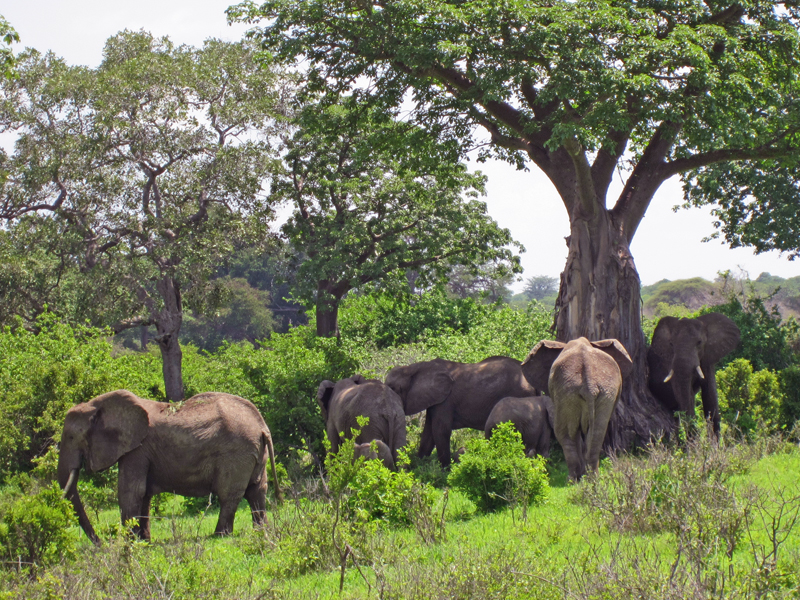
Ruaha is a park for travelers who want a more remote safari than Tanzania’s Northern Circuit. TANAPA lists the park at 20,226 km². Its signature is the Great Ruaha River and a transition between East and Southern African ecosystems: riverine woodland, baobab savanna, rocky kopjes and extensive miombo. That mix supports elephants, large buffalo herds, strong lion and leopard populations, African wild dogs and unusual antelopes such as greater kudu, lesser kudu, sable and roan.
Quick Answers
Best time to visit Ruaha
June to October is the clearest first recommendation for wildlife-focused visitors. As the dry season deepens, permanent pools, sand-river seeps and the Great Ruaha corridor become increasingly important to elephants, buffalo and predators. November to February is greener, quieter and strong for birds. March to May brings heavier rain, richer vegetation and more demanding road conditions.
Excellent balance of dry tracks, cooler mornings and increasing concentration along river systems.
Peak dry-season concentration and dramatic river wildlife, with hotter afternoons and dusty conditions.
Green scenery and strong birding. Rain can slow remote-track access, so treat long-distance circuit plans as conditions-dependent.
Ruaha fees: what should you budget?
The headline conservation fee is not the full safari cost. TANAPA’s current Ruaha page displays USD 70 for an international adult, USD 20 for an international child and TZS 20,000 for East African residents. Vehicle, walking, camping, concession, guide and tax components may apply separately.
| Item | Current planning figure | What to know |
|---|---|---|
| International adult conservation fee | USD 70 | Displayed by TANAPA; confirm live tariff and tax treatment before payment. |
| International child | USD 20 | Use TANAPA’s current tariff for the applicable age category. |
| East African resident | TZS 20,000 | Carry documentation needed for the category claimed. |
| Vehicle / activities / camping | Additional | Depends on vehicle class, campsite, guided walk and other services. |
Which Ruaha area should you choose?
Msembe and the Great Ruaha–Mwagusi river system is the best first base. It concentrates the greatest number of practical tracks, visitor services, air access and dry-season wildlife opportunities. Jongomero is farther west and makes more sense for travelers specifically seeking remote wilderness rather than a first one-day drive.
| Area | Best for | Access | Planning note |
|---|---|---|---|
| Msembe / Great Ruaha | First visit, elephants, hippos, predators, river birding | Main gate + Msembe Airstrip | Best infrastructure and densest cluster of mapped visitor points. |
| Mwagusi corridor | Lions, elephants, baobab scenery, sand-river wildlife | North of Msembe | Prime dry-season game-drive country; move slowly along drainage lines. |
| Miombo / northern interior | Greater kudu, sable, roan, woodland birding | Longer internal tracks | Lower encounter density but special species; route choice depends on conditions. |
| Jongomero / western sector | Remote wilderness, walking, low traffic | Jongomero Airstrip / lodge transfers | Not a quick extension from Msembe; plan as its own sector. |
Road and air access
TANAPA places Ruaha west of Iringa and describes the road journey via Tungamalenga as roughly 2–3½ hours depending on conditions. A 4×4 is recommended, especially during rains. Daily scheduled or charter flights use Msembe and Jongomero airstrips; lodge transfers are normally coordinated in advance.
Ruaha safari map
This map uses more than 20 visitor-relevant points, but it still remains an orientation map. Public OSM coordinates are used where reasonably verifiable. Broad habitat markers and a few remote-sector orientation points are explicitly labelled approximate rather than pretending to be navigation-grade.
How to plan a Ruaha safari day
Do not try to “cover Ruaha.” It is far too large. A good day is built around one productive river system, a few habitat transitions and enough stationary observation time to let wildlife appear.
Start close to water and sand-river systems. Predators are more active, elephants move between water and feeding areas, and soft light helps scan tracks and riverbanks.
Use viewpoints and river bends for hippos, crocodiles, waterbirds, buffalo and elephants. Stay in permitted viewing areas.
Shift toward the Mwagusi system. Sandy channels, baobab woodland and shade trees can hold lion, giraffe, kudu and elephant.
Use an official picnic site rather than improvising a stop. Ruaha heat can be substantial; hydrate and let the middle of the day slow down.
Choose one realistic loop back toward Msembe. Do not add remote miombo tracks late simply because they appear close on a map.
TANAPA currently states an 18:00 gate close. Build in a generous buffer for wildlife delays, rough track sections and photo stops.
Download or screenshot the current park map, save your lodge/camp contact and carry a charged phone or power bank. Treat this guide’s map as orientation only if signal disappears.
Mammals of Ruaha
Ruaha’s mammal list reflects its position between East and Southern Africa. The river systems favor elephants, buffalo and predators, while miombo and drier woodland create realistic chances for antelopes that many Northern Circuit visitors rarely see.
Dry-season herds gather along the Great Ruaha and sand-river systems. Give family groups and solitary bulls substantial space.
Ruaha is known for large prides. Dawn and late afternoon around river corridors and open woodland are productive times.
Scan mature trees, rocky drainage lines and shaded riverine cover, especially in low light.
More associated with open plains and less wooded sectors than dense riverine habitat.
Packs range widely, so a sighting is never predictable. Ruaha is nevertheless one of Tanzania’s important wild-dog landscapes.
Often overlaps with lion country and may be encountered around open plains, river systems and carcasses.
Ruaha’s dry-season herds can be very large. Look around river flats, springs and productive grassland.
Woodland and open savanna species; the jagged leaf-like coat pattern is characteristic.
Favor more open grassland and river flats, often alongside other grazers.
One of the everyday woodland antelopes and an important prey species for Ruaha predators.
Ruaha is one of Tanzania’s best-known places for greater kudu. Look in broken woodland and thickets rather than open plains.
TANAPA highlights Ruaha as an overlap zone where both greater and lesser kudu occur.
Focus on quieter woodland sectors. Adults have striking swept-back horns and mature males darken strongly.
Another reason to spend time in miombo rather than only hugging the river. Large, pale and horse-like with a strong facial mask.
A southern/eastern woodland antelope highlighted in TANAPA’s Ruaha species material.
Open grassland antelope with dark shoulder and thigh patches and a glossy reddish-brown coat.
Look in taller grass close to water and drainage lines, especially in cooler hours.
Strongly associated with the river system and wetter grassland, particularly in dry months.
Permanent river pools can hold substantial numbers as surface water contracts.
Open woodland and short grass around roads and river flats are reliable places to scan.
Secretive riverine and thicket antelope; often seen briefly rather than standing in open ground.
Tiny pair-living antelope of dry thicket. Slow driving makes a large difference to detection.
Birds to look for
Ruaha is a major birding park even for visitors who arrive for mammals. TANAPA reports more than 570 recorded species, reflecting the mix of river, miombo, open savanna and rocky habitat plus northern and southern migrant influences.
Formerly associated strongly with the “Ruaha red-billed hornbill” name; watch dry woodland and open bush.
Huge terrestrial hornbill of open woodland; family groups forage slowly across the ground.
Short-tailed eagle that rocks distinctively while soaring over woodland and plains.
Large powerful eagle; scan tall trees and thermals above open country.
Listen for the famous ringing call around permanent pools and the Great Ruaha River.
Easy beginner bird on exposed branches in open woodland.
Large social weaver of dry savanna and thorn country, often around bulky communal nests.
Small, fast-moving parrot endemic to Tanzania; listen for sharp flock calls around woodland and water.
Often perched away from open water in woodland, especially in greener months.
Large wetland stork with a striking red, black and yellow bill.
Smaller than the ground hornbill and widespread in dry woodland.
Colorful woodland bird often detected by repetitive calls before it is seen.
Flora: baobab savanna, riverine woodland and miombo
Ruaha’s vegetation is a major reason its wildlife mix feels different from northern Tanzania. Plant identification from a vehicle can be difficult, so these are field cues and habitat indicators rather than definitive botanical keys.
Trees & shrubs
One of Ruaha’s visual signatures, especially in drier savanna and rocky country.
Dominant structure in extensive miombo woodland, important for sable, roan and specialist birds.
Often mixed with Brachystegia in miombo systems and strongly seasonal in leaf color.
Acacia-type woodland supports giraffe, impala and many insect-eating birds.
Dry woodland shrubs and small trees adapted to seasonal drought.
Common woodland genus across drier savannas; exact species can be difficult to separate.
Part of mixed woodland structure away from the driest river flats.
Large riverine trees can provide deep shade and attract wildlife around seasonal fruiting.
Figs along drainage lines create cool canopy and important food for birds and primates.
Succulent shrubs and trees occur in dry rocky areas; avoid touching latex from unidentified plants.
Flowers, reeds, ferns & understory plants
Productive seasonal grass in open savanna and grazing areas.
Fresh growth near water draws buffalo, impala and other grazers during the dry season.
Mark wetter ground around springs, pools and slow river margins.
Permanent-water vegetation provides cover for waterbirds and smaller wetland wildlife.
Short-lived flowering plants respond rapidly to the rains and change the appearance of open ground.
Succulent species occur in rocky and seasonally dry habitats; exact ID requires closer botanical inspection.
Hardy understory plants adapted to dry woodland and rocky soils.
More noticeable in denser riverine cover than in open baobab country.
Green-season rains trigger temporary color in grassland and woodland openings.
By late dry season, tall pale seed heads dominate many open areas and influence grazer distribution.
Best things to do in Ruaha
The core experience: river systems at dawn and dusk, woodland loops between, and enough time to stop rather than chase distance.
TANAPA permits walking only as a guided activity in designated areas. Arrange through an authorized operator or park service.
Build dedicated stops into the day around river cliffs, pools, miombo and open baobab woodland.
Baobabs, kopjes, dry riverbeds and elephant herds create exceptionally strong landscape-and-wildlife compositions.
Longer drives into quieter sectors are worthwhile when road conditions, fuel and daylight allow.
TANAPA lists stargazing among Ruaha experiences; low light pollution is a major advantage of the remote setting.
Msembe or Jongomero flights reduce road-transfer time and make shorter Ruaha itineraries more practical.
Use designated sites such as mapped picnic areas, never an arbitrary riverbank where wildlife access is uncontrolled.
Ruaha pairs naturally with Nyerere/Mikumi-style southern itineraries when flight or road logistics are planned carefully.
Rules and safety
Ruaha’s low traffic does not make it a less regulated park. Stay on designated tracks, respect current speed limits, follow ranger instructions and never leave the vehicle except at authorized points. Night drives and drone use require specific permission; walking safaris are guided activities only.
Carry substantial drinking water, sun protection and enough fuel margin for detours. Give elephants and buffalo room to choose their own path. Around hippo pools and riverbanks, remain at designated viewpoints. For health preparation, seek current professional travel-health advice rather than relying on a park article.
Ruaha National Park FAQ
Is Ruaha National Park worth visiting?
Yes for travelers who prioritize wilderness, predators, elephants, wild dogs and unusual antelopes over the easiest logistics. It is particularly strong for repeat safari travelers or anyone wanting a lower-traffic Tanzania experience.
What is the Ruaha entry fee in 2026?
TANAPA’s current Ruaha page displays USD 70 for an international adult and USD 20 for an international child. Check the live tariff for tax, vehicle, activity, camping and category details.
What is the best time to visit Ruaha?
June to October is the most straightforward wildlife recommendation because dry-season water concentration improves game viewing. November to May is greener and excellent for birding but road conditions are more variable.
How many days do you need in Ruaha?
Three to four nights is a strong first target. Two nights can work for a fly-in visit, but Ruaha is too large to understand well in a single rushed day.
Can you self-drive Ruaha?
Yes, but a high-clearance 4×4 and current park information are strongly recommended. Distances are large and wet-season track conditions can change quickly.
Can you see African wild dogs in Ruaha?
Yes, Ruaha is an important wild-dog landscape, but packs roam over large areas and sightings cannot be promised.
Where should a first-time visitor stay in Ruaha?
The Msembe–Great Ruaha–Mwagusi area is the simplest first base because it combines air access, visitor services and a dense network of productive game-drive areas.
How do you get to Ruaha National Park?
By road from Iringa via Tungamalenga, or by scheduled/charter flight to Msembe or Jongomero. TANAPA gives roughly 2–3½ hours from Iringa depending on conditions.
Primary sources & live checks
See.Africa checked time-sensitive information on 6 September 2026 against Tanzania National Parks (TANAPA) pages and cross-checked public map coordinates for key visitor infrastructure. Fees, roads and activities can change. Current TANAPA/ranger instructions override approximate map guidance.