
Tsavo East National Park Guide
Plan Tsavo East with a detailed safari map, current KWS fees, red elephants, best seasons, gates, camps, wildlife and practical Kenya itineraries.
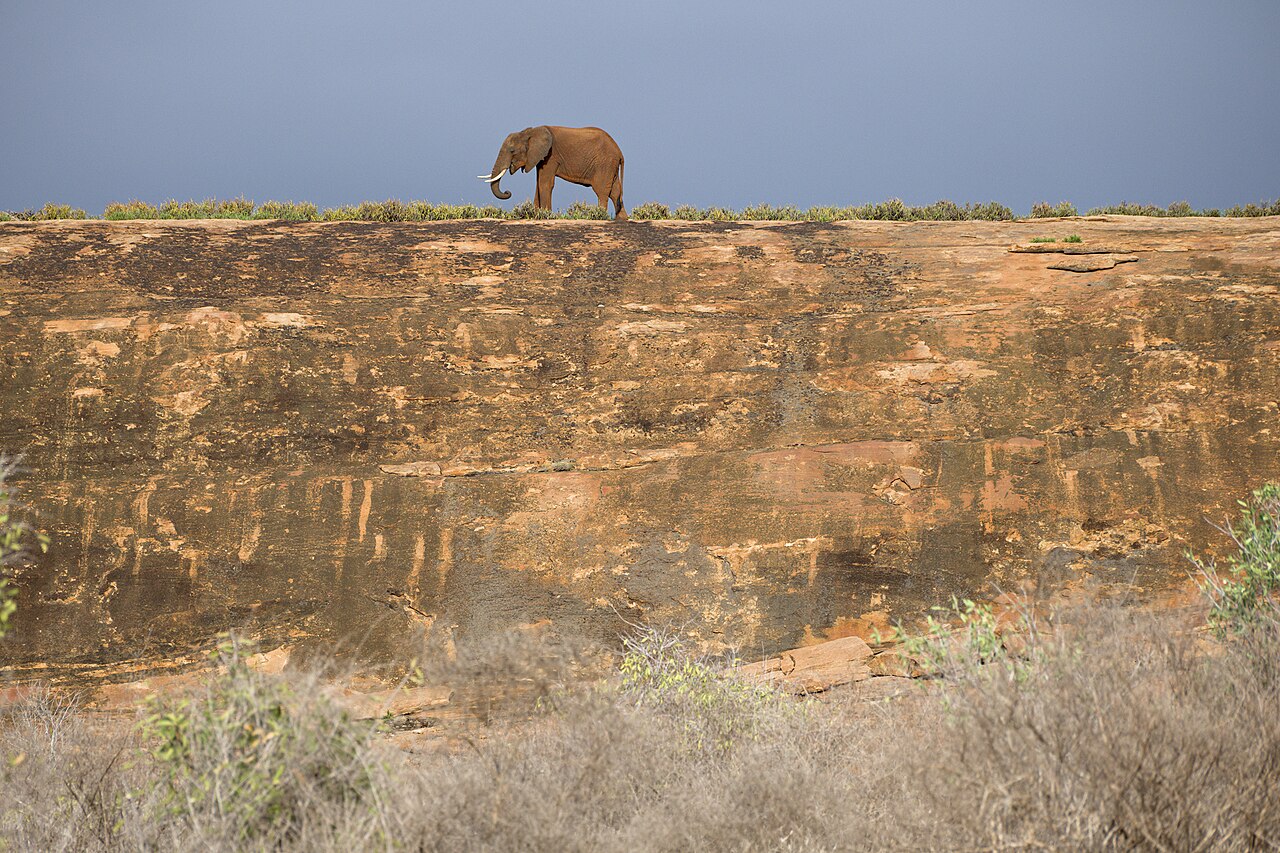
Elephant on Mudanda Rock in Tsavo East National Park. Photo: Rob Oo from NL · CC BY 2.0. Resized and cropped for this layout.

Tsavo East National Park at a glance
Tsavo East is the Kenya safari to choose for red-dusted elephants, broad dry-country horizons and a slower exploration of the Galana River landscape. Its scale rewards several nights in one well-chosen area. A short visit from the coast can work, but trying to see the whole park turns valuable wildlife time into long transfers.
Official sources · checked 8 September 2026: Kenya Wildlife Service: Tsavo East, live fees, access and rules · Sheldrick Wildlife Trust: Ithumba camp arrangements. Confirm arrangements for your travel date.
When is the best time to visit Tsavo East?
For a first wildlife trip, June–October and the usually drier January–February period are sensible planning windows. Water and remaining green forage can concentrate animals as the bush dries, while sparse cover improves visibility. Heat, dust and long distances still matter: an early drive and a midday rest are often more rewarding than an uninterrupted day in the vehicle. Rain can transform the park into a green landscape with excellent bird activity, but it also changes where wildlife feeds and which tracks are usable. March–May and the shorter late-year rains need more flexibility. The same month can look different in successive years; choose a lodge that can explain its local conditions.
Typical seasonal pattern, not a forecast or a guarantee of road access. Current local conditions take priority.
Which Tsavo East area suits your trip?
| Area | Best for | What to expect | Planning point |
|---|---|---|---|
| Voi–Ndololo | First safari and short stays | A practical southern base for arriving, settling into slow game drives and returning to camp without a cross-park commute. | Good for two nights. Confirm whether accommodation is inside the park or outside its boundary. |
| Aruba–Satao | Elephants and dry-country plains | Water points, scrub and open patches create varied viewing within the southern tourist sector. | Do not assume a dam or waterhole holds the same amount of water throughout the year. |
| Mudanda Rock–Manyani | Rock scenery and a different safari loop | A useful alternative to repeating the same roads around your lodge. Viewpoints can reveal the relationship between rock catchments and surrounding bush. | Ask which stops permit leaving the vehicle and whether the approach is open. |
| Galana River–Lugard Falls–Sala | River landscapes and a longer outing | The river corridor gives contrasting habitat, birds and striking rock scenery. | Plan this around a suitable eastern or river base; leave a comfortable return margin. |
| Ithumba / northern sector | A separately arranged specialist visit | A remote part of the ecosystem with different access and camp arrangements. | Do not treat an Ithumba pin as permission for an ordinary drop-in excursion. |
Tsavo East entry fees, permits and opening hours
The live KWS park page is the reference for the table below. These are person-entry amounts, not a complete safari price. Vehicle, accommodation, camping and any special activity charges need to be added. Confirm the applicable age band, residency proof and ticket period through KWS before paying. A lodge outside the boundary can have a different entry-cost pattern from a stay inside.
| Visitor category | Adult / listed amount | Child / other detail |
|---|---|---|
| East African citizen | KES 1,000 | KES 500 |
| Kenya resident | KES 1,350 | KES 675 |
| Other African citizen | USD 40 | USD 20 |
| Non-resident | USD 80 | USD 40 |
Official sources · checked 8 September 2026: Kenya Wildlife Service: Tsavo East, live fees, access and rules. Confirm arrangements for your travel date.
Opening hours
KWS publishes gate hours of 06:00–18:00. Allow time for entry formalities and return before closing; lodge activities have their own arrangements.
Official sources · checked 8 September 2026: Kenya Wildlife Service: Tsavo East, live fees, access and rules · Sheldrick Wildlife Trust: Ithumba camp arrangements. Confirm arrangements for your travel date.
How do you get to Tsavo East?
Choose the arrival gate with your lodge before finalising transport. Voi and Bachuma connect the southern safari sector with the Nairobi–Mombasa corridor; Sala is relevant to the Malindi-side approach. A rail arrival at Voi still requires a pre-arranged vehicle and a transfer to the correct lodge: the station is not a park entrance. Light-aircraft arrivals also need a confirmed camp pickup and the correct strip, which might be Voi, Aruba, Satao or another operational airstrip. A map symbol is not evidence of a scheduled flight. For self-drive, refuel and buy water before entering, save booking details offline and ask at the gate which loops are passable that day. Avoid planning an international departure immediately after a long bush transfer.
Official sources · checked 8 September 2026: Kenya Wildlife Service: Tsavo East, live fees, access and rules · Sheldrick Wildlife Trust: Ithumba camp arrangements. Confirm arrangements for your travel date.
Tsavo East safari map: 25 useful places
Use this map to compare bases and understand the landscape. Search by place or filter by type. All locations are approximate orientation points; current park, guide and lodge directions override the map.
Loading map near this section. All places are also listed below.
All 25 map places and access notes
- Manyani Gate · Gates & visitor centresApproximate visitor access point. Confirm the current gate, hours and approach with the park. Map source. Approximate.
- Sala Gate · Gates & visitor centresApproximate visitor access point. Confirm the current gate, hours and approach with the park. Map source. Approximate.
- Kasala Gate / northern approach · Gates & visitor centresNorthern access requires advance confirmation; not a routine southern safari stop. Map source. Approximate.
- Mudanda Rock · ViewpointsUse only the authorised stopping and walking area. Map source. Approximate.
- Lugard Falls · Water featuresApproximate water-feature location. Water levels and access vary; not a public launch or safe bank-access instruction. Map source. Approximate.
- Galana crocodile viewpoint · ViewpointsA named viewpoint, not a live wildlife report; remain in permitted areas. Map source. Approximate.
- Voi airstrip · AirstripsApproximate airstrip location. Confirm flight operation, landing permission and the correct camp pickup; no scheduled service implied. Map source. Approximate.
- Satao airstrip · AirstripsApproximate airstrip location. Confirm flight operation, landing permission and the correct camp pickup; no scheduled service implied. Map source. Approximate.
- Manyani airstrip · AirstripsApproximate airstrip location. Confirm flight operation, landing permission and the correct camp pickup; no scheduled service implied. Map source. Approximate.
- Ithumba airstrip · AirstripsRemote northern sector; prior arrangements required. Map source. Approximate.
- Ithumba camp area · Camps & lodgesSpecialist northern visit; no drop-in access implied. Map source. Approximate.
- Ndololo public campsite · Camps & lodgesApproximate accommodation location. Confirm current operation, booking, facilities and access with the host. Map source. Approximate.
- Voi Safari Lodge · Camps & lodgesApproximate accommodation location. Confirm current operation, booking, facilities and access with the host. Map source. Approximate.
- Voi Wildlife Lodge — outside base · Camps & lodgesApproximate accommodation location. Confirm current operation, booking, facilities and access with the host. Map source. Approximate.
- Satao camp · Camps & lodgesApproximate accommodation location. Confirm current operation, booking, facilities and access with the host. Map source. Approximate.
- Satao waterhole · Water featuresSeasonal conditions vary; this is a water feature, not a current animal location. Map source. Approximate.
- Galdessa camp area · Camps & lodgesApproximate accommodation location. Confirm current operation, booking, facilities and access with the host. Map source. Approximate.
- Ashnil Aruba · Camps & lodgesApproximate accommodation location. Confirm current operation, booking, facilities and access with the host. Map source. Approximate.
- Galana hippo-pool area · Water featuresGeneral mapped river feature; no sighting or safe bank access guaranteed. Map source. Approximate.
- Elephant’s View viewpoint · ViewpointsApproximate viewpoint or landform. Use only the currently authorised visitor approach and stopping area. Map source. Approximate.
- Crocodile Camp — Sala-side base · Camps & lodgesApproximate accommodation location. Confirm current operation, booking, facilities and access with the host. Map source. Approximate.
- Galana River Lodge — outside base · Camps & lodgesApproximate accommodation location. Confirm current operation, booking, facilities and access with the host. Map source. Approximate.
- Kulalu camp — outside base · Camps & lodgesApproximate accommodation location. Confirm current operation, booking, facilities and access with the host. Map source. Approximate.
- Bachuma Gate · Gates & visitor centresConfirm current opening, ticket formalities and the correct lodge approach with KWS. Map source. Approximate.
- Voi Gate · Gates & visitor centresConfirm current opening, ticket formalities and the correct lodge approach with KWS. Map source. Approximate.
Map references include official park material where specified below, plus OpenStreetMap contributors, checked 8 September 2026. Selected and labelled by See.Africa. Waterbody-centre pins and summits are geographic references, not destinations for direct navigation. Accommodation and airstrip operation must be confirmed. No live animal locations or verified driving route is shown.
A practical Tsavo East itinerary
Arrival day
Reach the agreed gate with time for formalities and a relaxed transfer drive. Keep the first afternoon close to your base; watch elephants, giraffes and antelope rather than trying to reach a famous landmark before sunset.
Full safari day
Use the cool morning for a slow loop through one habitat mosaic. Pause at open patches and scan before moving on. Return for lunch or use a designated picnic stop, then take a shorter late drive positioned around the required return time.
Third day / extra night
Add Mudanda or the Galana–Lugard area only if your base and current roads make it realistic. An early departure, packed water and a confirmed rest stop matter more than fitting every pin into one day.
Combine with the coast or West
A coast stay is an easy thematic pairing, while Tsavo West adds a contrasting landscape. Allow a separate transfer day or a relaxed change of base; the two parks should not be squeezed into one frantic sightseeing circuit.
Where should you stay in Tsavo East?
For a short first visit, pick a southern lodge or camp with straightforward access to your preferred gate. Voi Safari Lodge, Ashnil Aruba and Satao illustrate different positions within the safari landscape; compare actual driving location, meal plan and entry inclusions, not just room photographs. A Galana-side base suits visitors who value river country. Outside lodges can be convenient for cost and arrival logistics, but ask when game drives enter and how repeat entry is charged. Camping requires an explicit booking where applicable, equipment, water and a clear understanding of the site’s facilities. Named accommodation pins show orientation, not a live availability check or endorsement.
Tsavo East mammals to look for
Start with elephants, giraffes and dry-country antelope; give predators time rather than chasing a Big Five promise. Thorn scrub can hide large animals, and wildlife distribution responds to rain. Gerenuk, lesser kudu and fringe-eared oryx help make Tsavo feel different from the Mara. Rare rhinos or specialist northern wildlife should never be the basis of a short itinerary.

African bush elephant
The broad ears, curved tusks and long trunk are unmistakable. Watch how a family spreads out to feed, then regroups before moving. Stop well back from the herd and leave its crossing route open; a close calf is a reason to retreat, not advance.


Lion
Lions spend much of the day resting, so search shade as carefully as open ground. Dawn and late afternoon improve the chance of movement, but a sleeping pride is a normal encounter. Listen to your guide and avoid surrounding animals with vehicles.


Leopard
Rosettes, a long tail and a powerful, low body distinguish this secretive cat. Search riverine trees, shaded rocks and dense drainage lines. A leopard can disappear in apparently thin cover; patient scanning is more useful than assuming that a radio report guarantees a sighting.
.jpg)

Cheetah
A lightly built cat with solid spots and black tear marks below the eyes. It often uses low rises to scan for prey. Give hunting animals room and never move ahead to create a photograph: a vehicle can interrupt an energetically costly hunt.


African buffalo
A heavy, dark bovid with a sweeping horn boss in mature bulls. Herds graze and rest together, while solitary bulls may stay close to cover. Buffalo can be difficult to read at close range: observe from the vehicle or follow your walking guide’s exact instructions.
_male_with_cattle_egret.jpg)

Masai giraffe
Irregular, jagged patches and long legs mark this East African browser. Giraffes feed selectively in woodland and can remain surprisingly hidden among trees. Watch the tongue and lips selecting leaves, and leave plenty of space when an animal spreads its legs to drink.
_Arusha.jpg)

Plains zebra
Look beyond the stripes: herd spacing, ears and alarm behaviour can tell you what is happening in a grassland. Foals may rest while adults stand watch. Scan the edges of a herd for predators without losing sight of the zebras’ own social interactions.


Gerenuk
The exceptionally long neck and small head distinguish this dryland antelope. It may stand on its hind legs to browse beyond the reach of smaller antelope. Search thorn scrub and watch without crowding: its feeding posture is a behaviour to enjoy, not provoke.
.jpg)

Lesser kudu
A delicately built dry-country browser with many white body stripes and large ears. Males carry spiralled horns, but a female may be the first animal visible. It is more often glimpsed in scrub than standing in a convenient clearing, so slow, quiet driving helps.
.jpg)

Fringe-eared oryx
Long straight horns, bold facial markings and dark ear fringes identify this dry-country oryx. It is adapted to sparse cover and heat. Scan open bushland slowly and remember that distant herds can be obscured by haze even when the habitat appears empty.


Coke’s hartebeest
The elongated face, sloping back and angular horns are good clues. This form is often called kongoni. Groups use open grassland, where an alert individual may stand apart and scan for danger. Compare its shape with topi or wildebeest instead of relying only on colour.


Impala
The slender body, black tail stripe and dark markings above the hind feet are useful clues. Males have lyre-shaped horns. Pause to watch bachelor groups or territorial behaviour: familiar antelope are often the best animals for learning how a safari ecosystem works.
_male_Serengeti.jpg)

Waterbuck
A shaggy coat, robust build and affinity for water are the main clues. Rump patterns differ between forms and regions. Look at the woodland–grassland boundary near rivers or lakes, where animals can graze while remaining within reach of shade and water.


Yellow baboon
Generally slimmer and paler than the olive baboon, with long limbs and a dog-like muzzle. Troops feed on the ground and rest in trees. Watch grooming and interactions between youngsters, but secure food and never assume a habituated roadside troop is tame.


Kirk’s dik-dik
A tiny antelope with a pointed muzzle, large dark eyes and a short crest. Usually seen alone or in pairs in scrub, it can vanish behind a small bush. Slow down after the first animal disappears; its partner may still be watching nearby.
_female.jpg)

Spotted hyena
Sloping shoulders and rounded ears help separate it from other large carnivores. This is an effective hunter as well as a scavenger. Animals travelling at dawn, resting near drainage lines or calling after dark reveal a social life easily missed on a hurried drive.
.jpg)
Tsavo East birds and habitat clues
Mix dry thorn country with the Galana corridor. Ground birds and raptors reward a slow morning drive, while water-associated species need the right riverside habitat. Migrants add seasonal variety. A species occurring in Tsavo is not a promise that it will appear beside your camp.

Vulturine guineafowl
Blue neck-and-breast feathers, fine pale striping and a bare head distinguish this striking dryland guineafowl. Groups walk through scrub and across tracks. Stop early and let them cross; repeated short pursuits break up natural feeding behaviour.


White-headed buffalo weaver
The white head and warm orange-red rump distinguish this social dry-country bird. Look around thorn trees and rough twig nests. Watch from the track and avoid approaching active nests, where repeated disturbance can affect breeding birds.
_Serengeti.jpg)

Lilac-breasted roller
Bright lilac underparts and blue wings distinguish this conspicuous perch hunter. Check isolated branches along open woodland roads. Wait for the bird to hunt and return naturally instead of driving closer every time it shifts its position.


Secretarybird
A very long-legged raptor that hunts on foot through open grass. Its crest and long tail are useful at distance. Watch a walking bird with binoculars and leave its path clear; following closely can disrupt the search for prey.


Martial eagle
A very large eagle with broad wings; adults have a dark upper chest and spotted pale belly. Search high perches and scan soaring raptors carefully. Size alone is unreliable, so use shape and plumage rather than a distant silhouette as proof.
.jpg)

Bateleur
A short-tailed eagle that rocks gently as it patrols. Adults show a red face and contrasting wing colours, while young birds are brown. Learn the wing shape first; backlighting can hide the features that make an adult so distinctive.
_male_Serengeti.jpg)

Kori bustard
A heavy, long-necked bird that walks slowly across open ground. Its muted plumage blends into dry grass surprisingly well. Scan beyond obvious mammals and give displaying or feeding birds room; a bustard taking flight may have been disturbed.
_male.jpg)

African fish eagle
The white head and chest contrast with dark wings; its carrying call is a classic sound of African waterways. Scan exposed trees beside lakes and rivers. A bird returning to the same perch can offer better observation than following it in flight.
.jpg)

Pied kingfisher
A black-and-white kingfisher often seen hovering above open water before a vertical plunge. Check wires, reeds and low perches near shore. Following its feeding pattern is a useful way to watch behaviour without approaching a nest bank.
_male.jpg)

Superb starling
Iridescent blue-green upperparts, a pale eye and rusty belly make this familiar East African starling easy to learn. Camps and woodland edges often provide good views. Natural feeding behaviour makes a better photograph than a bird attracted with human food.
.jpg)
Tsavo East plants and habitats
Thorn scrub
Vachellia and Commiphora communities provide browse and shelter. The apparently empty spaces between bushes can hold small antelope; stop and scan instead of driving only toward distant herds.
Riverine woodland
The Galana corridor concentrates shade and moisture. Look for figs, palms and larger trees supporting birds, but do not assume a green bank is a safe place to walk.
Seasonal grassland
Fresh growth after rain redistributes grazers. A dry-season waterhole strategy may become less effective once temporary pools and grazing are widespread.
Rock and lava landscapes
Mudanda and the Yatta landscape illustrate how geology shapes drainage and habitat. Bare-looking ground is still part of a functioning ecosystem; stay on permitted roads and viewpoints.
Plant identification may require leaves, flowers, fruit and a knowledgeable guide. Do not collect plants or leave authorised routes to inspect them.
What can you do in Tsavo East?
Patient elephant watching
Spend time with a herd at a respectful distance and watch feeding, dust-bathing and social behaviour. Avoid stopping where your vehicle blocks its approach to water.
Galana scenery and birds
Make a river-focused drive an intentional day with enough time for quiet stops. Current KWS directions determine safe viewpoints around falls and rocky banks.
Mudanda Rock outing
Use the designated visitor access when open and treat the stop as a landscape experience as much as a wildlife opportunity. Wet rock and exposed edges require care.
Dry-country birding
Ask for a drive that pauses for guineafowl, buffalo weavers, bustards and raptors. A checklist becomes more useful when you note habitat and behaviour alongside a name.
Rules and practical precautions
Do not swim or approach the Galana River edge: crocodiles and hippos can be difficult to see. Ordinary park entry does not authorise independent walking, night driving or a visit to a restricted northern facility. Arrange any specialist experience with KWS and the responsible operator.
Give wildlife space
Never feed, surround or block an animal. Keep food secure, voices low and movements predictable. Your guide or ranger’s instructions take priority over a desired photograph.
Prepare for your actual activity
Bring water, sun or rain protection as appropriate, suitable footwear and charged equipment. Tell the operator about relevant mobility needs before booking so the route and vehicle can be matched to you.
Official sources · checked 8 September 2026: Kenya Wildlife Service: Tsavo East, live fees, access and rules · Sheldrick Wildlife Trust: Ithumba camp arrangements. Confirm arrangements for your travel date.
Tsavo East travel FAQ
What is Tsavo East best known for?
Tsavo East is best known for red-dusted elephants, expansive dry-country scenery and the Galana River. Its scrub, plains and river habitats reward a patient safari over several days.
How many nights should I spend in Tsavo East?
Two nights is a useful first-visit minimum; three gives room for a longer river or Mudanda outing. Choose the length around your lodge location and transfer time.
Can I see the Big Five in one day?
Do not plan on it. Large cats can be elusive and rhinos are not a dependable ordinary safari sighting. Elephants, antelope, birds and the landscape make a rewarding visit without a complete Big Five checklist.
Is Tsavo East better than Tsavo West?
East suits travellers wanting broad, dry-country game drives. West adds volcanic scenery, springs and varied terrain. The better choice depends on your route, preferred activities and available nights.
Can I self-drive from the coast?
Yes, provided your vehicle, gate choice and timing suit the trip. Confirm roads and the entry procedure with KWS, and arrange a reliable recovery plan before entering.
Are map pins precise driving directions?
No. Pins are orientation points drawn from public mapping and destination sources. Roads, access permissions and operating facilities must be confirmed with KWS or your camp.
Sources, method and review date
This guide combines official park and operator information with editorial planning advice. Operational details were checked on 8 September 2026. Season descriptions are typical patterns, and suggested stays are planning recommendations. Wildlife profiles explain identification and habitat; they do not promise sightings.
Wildlife and image references
Species names and identification photographs were checked against the linked reference and image records. Photographs are identification examples and may have been taken elsewhere. Each image carries its own creator and licence credit.
Species reference links
African bush elephant · Lion · Leopard · Cheetah · African buffalo · Masai giraffe · Plains zebra · Gerenuk · Lesser kudu · Fringe-eared oryx · Coke’s hartebeest · Impala · Waterbuck · Yellow baboon · Kirk’s dik-dik · Spotted hyena · Vulturine guineafowl · White-headed buffalo weaver · Lilac-breasted roller · Secretarybird · Martial eagle · Bateleur · Kori bustard · African fish eagle · Pied kingfisher · Superb starling